
Kang Hye-jeong, a prolific South Korean painter known for her fascinating, vibrant abstract art, has created a harmony of colours that takes any art lover into a universe of untamed imagination. Her approach to the Impasto technique, combined with her creativity, paints a very lively picture of mythical horses, flourishing landscapes, and humans. Kang’s artwork has taken her to prestigious exhibitions across the globe. From Seoul’s Artshow Personal Exhibition to the Beijing Gallery in China, her work is truly admirable. Her paintings, often devoid of traditional sketches, exude poetic beauty, inspired by nature’s bounty, and her white horses act as symbols of hope and positivity.
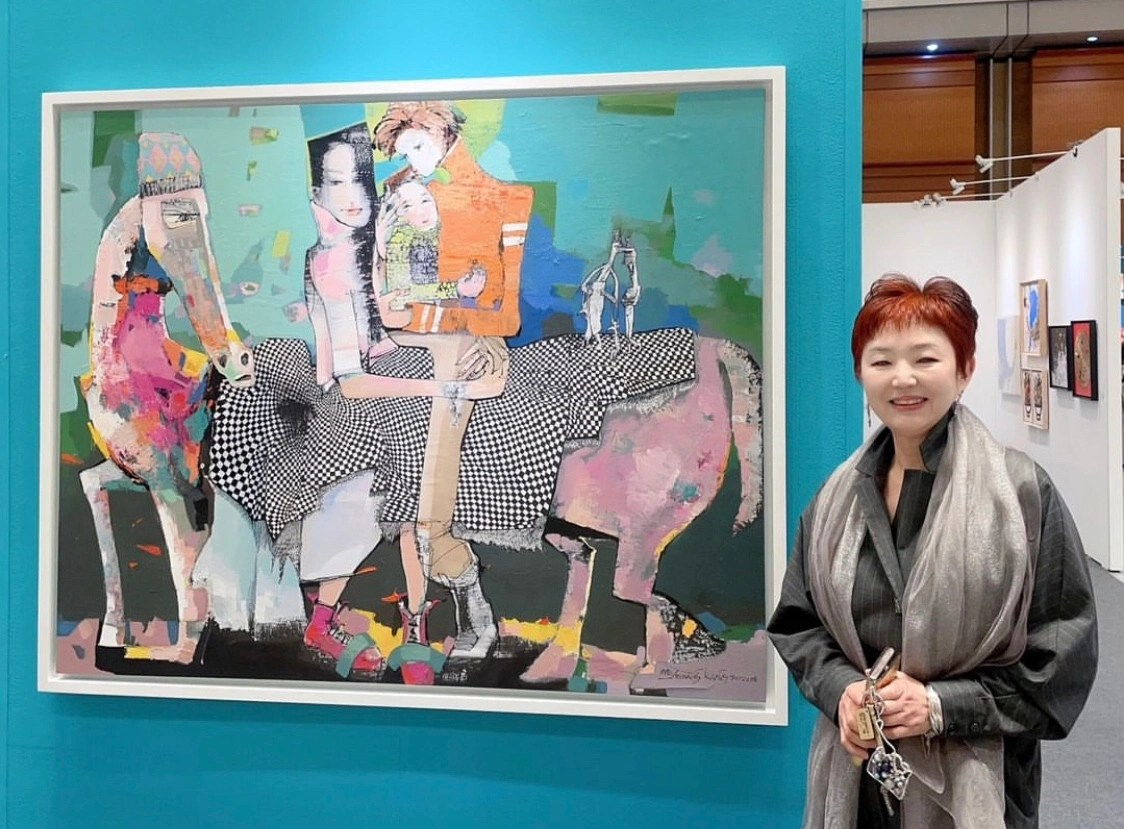
Kang’s latest work mainly concentrates on humans, and it’s greatly inspired by her own family and personal relationships with her loved ones. If you observe her paintings of the Three Sisters and Alpha and Omega, you will notice her talent for catching movement while preserving stillness. Her paintings are like living canvases, and they come to life through vivid colours and dynamic forms; they display grace, vitality, and a sense of motion.
What’s interesting is that Kang creates her own way to ensure the perfect colour harmony for her works. Her experiments with texture and gloss undoubtedly bring life to her paintings. In her art, she speaks a language of love, hope, and happiness. Her works are a reflection of her life, her passion, and her family. During the StArt Art Fair at the prestigious Saatchi Gallery in London, we got the chance to sit down with Kang and discuss her love for art in detail.
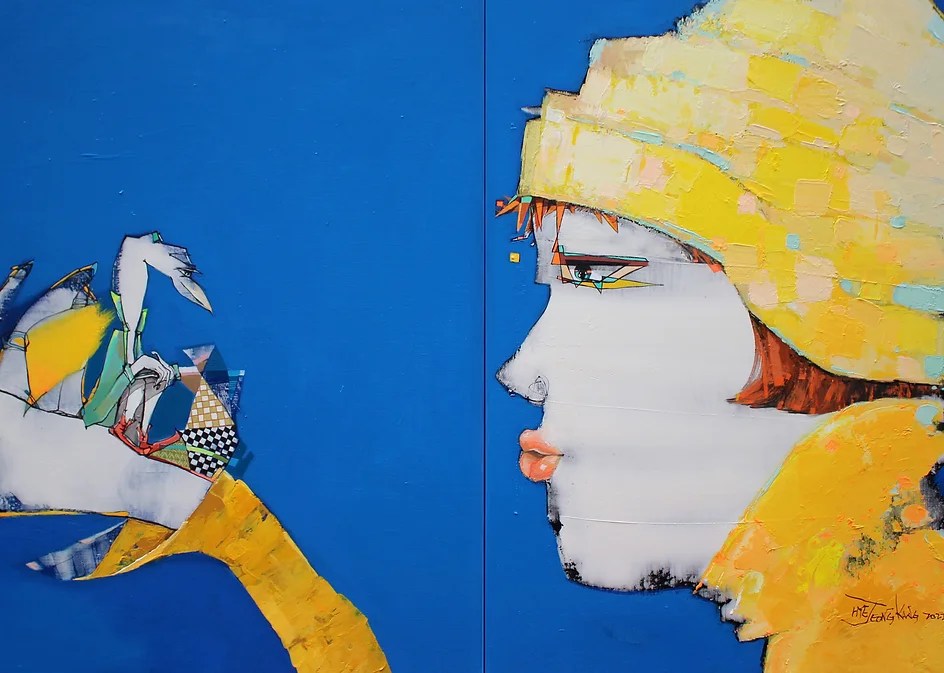
View of the Art: Your abstract art is known for its vivid and bold use of colours. Can you share your creative process for selecting and mixing the colour shades that dominate your paintings?
Kim Hyejeong: I make a loose pigment, which is the raw material for any colour; if they are mixed together with oil, they become an oil paint, and if they are mixed together with water, they will be a water-based paint. So, it depends on the colours and the textures. Sometimes, I mix colours with alcohol as well. These ingredients often help me to make the colour I like.
VOA: So, what’s the creative process like for you? Do you sketch before painting?
KH: I do not sketch. I paint my canvas black first, and then I paint the pattern. It also depends on the design, of course. I always have different designs and ideas in my head, and I have to make sure I have control over the colours I use. Whenever I use colours and put them onto the canvas, I use a special artist’s knife to mix those colours.
VOA: The Impasto technique is a distinctive element of your work. Could you explain how this technique allows you to achieve the texture and depth that are so prominent in your art?
KH: It is just a technique that some artists use. Whenever I use acrylic, I always see thin layers, so I add layer after layer, and that turns into the Impasto technique; this technique allows me to express my objects better by giving them volume.

VOA: Your participation in the StArt Art Fair at the Saatchi Gallery is a significant achievement. How do you feel about showcasing your work on such a global platform, and what do you hope to convey to the audience through your art?
KH: I was very happy and honoured. I have had a lot of outside exhibition experiences already – for instance, in the US. I was very excited to be here in London as well. Saatchi Gallery is such a great place to showcase your art. I am doing my work because I am very passionate about it; I desire to grow more as an artist, and, in all honesty, I don’t do it for money either.
VOA: Abstract art often allows for various interpretations. Is there a specific message or feeling you aim to evoke through your abstract pieces, or do you leave it to the viewer’s interpretation?
KH: My inspiration has always been my family. I had a good life, including my youth. My father was a teacher, and my mother was a stay-at-home wife and mother. She sacrificed her life to look after our family. I, myself, got married and have two daughters who are incredibly supportive. So, even when I go through difficult times, I have my wonderful family next to me. My message has always been about love, hope, and happiness. I use bright colours to express those themes as well.
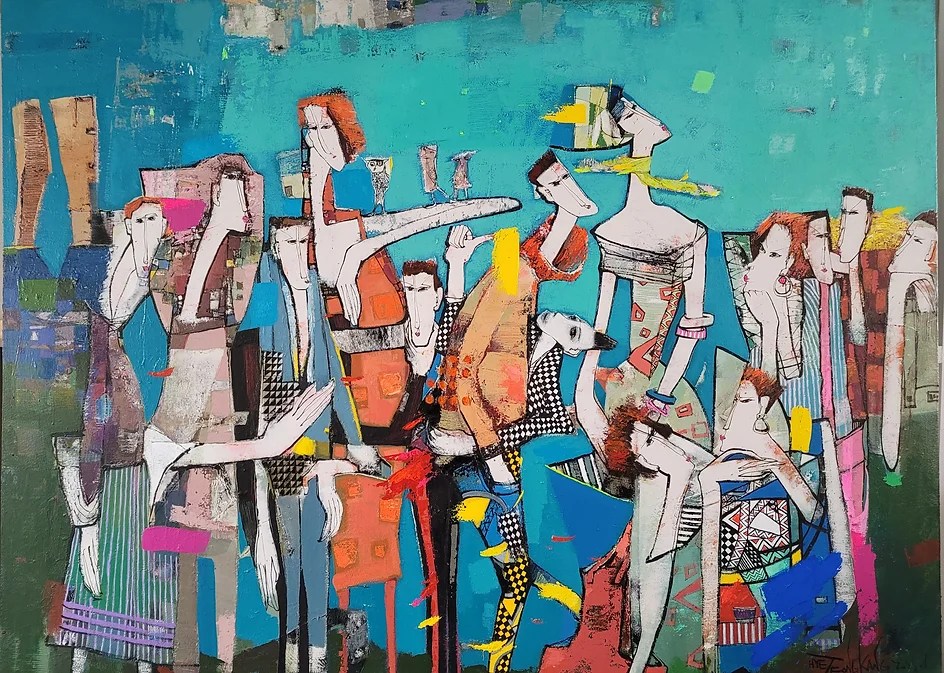
VOA: Creating unique shades of colour is a hallmark of your work. Do you have any special techniques or methods for mixing and discovering these distinctive colours that set your art apart?
KH: You know, I just use my feelings and senses to make my colours. I don’t calculate colours; I image them, and then I carefully take control over them.
VOA: Do you have any artistic influences or mentors who have shaped your journey as an abstract artist? How have they contributed to your artistic development?
KH: My mentor is my experience and my passion. I paint almost every day, twelve hours per day sometimes. And abstract art allows my imagination to roam freely whenever I make it, and, in addition, my art is free to interpret as you desire.

VOA: In your abstract art, how do you use your emotions and personal experiences to inform the creation of each piece?
KH: Family is often one of the main themes in my art. This is my practice and my experience, and I just keep on doing it.
VOA: As you continue to evolve as an artist, what future projects or directions do you foresee for your work? And what can art enthusiasts expect to see from you in the coming years?
KH: I have been painting for over fifty years. I started at the age of seven as a hobby, and I have been a professional artist for around twenty years now. When it comes to my future projects, I don’t really plan ahead. I just want to make people happy when they look at my art.
Written and interviewed by Maggie Gogler
View of the Arts is an online publication that chiefly deals with films, music, and art, with an emphasis on the Asian entertainment industry. We are hoping our audience will grow with us as we begin to explore new platforms such as K-pop / K-music, and Asian music in general, and continue to dive into the talented and ever-growing scene of film, music, and arts, worldwide.

 VIEW OF THE ARTS