
December, directed by Anshul Chauhan, is a powerful drama that, hypothetically, delves into the Japanese justice system while exploring the possibilities of offering a second chance to criminals. It does so through the story of prisoner Kana (Ryo Matsuura), a young woman who killed her classmate a decade earlier and whose case is being brought in front of the courts again to argue that her 20-year sentence was too harsh a judgment on a juvenile. Her victim’s father (Shogen) is determined to fight this, and enlists the help of his estranged wife Sumiko (Megumi) to make sure Kana remains in prison. But instead, he is forced to face his own failings, and whether it is possible to forgive his daughter’s killer.
With the actors’ performances bringing the characters’ struggles to life, December addresses profound questions about crime, punishment, and redemption. Recently, actors Shogen and Matsuura, with the film’s producer Mina Moteki, sat down for an interview with View of the Arts and shared their insights on the film and their experiences working on it.
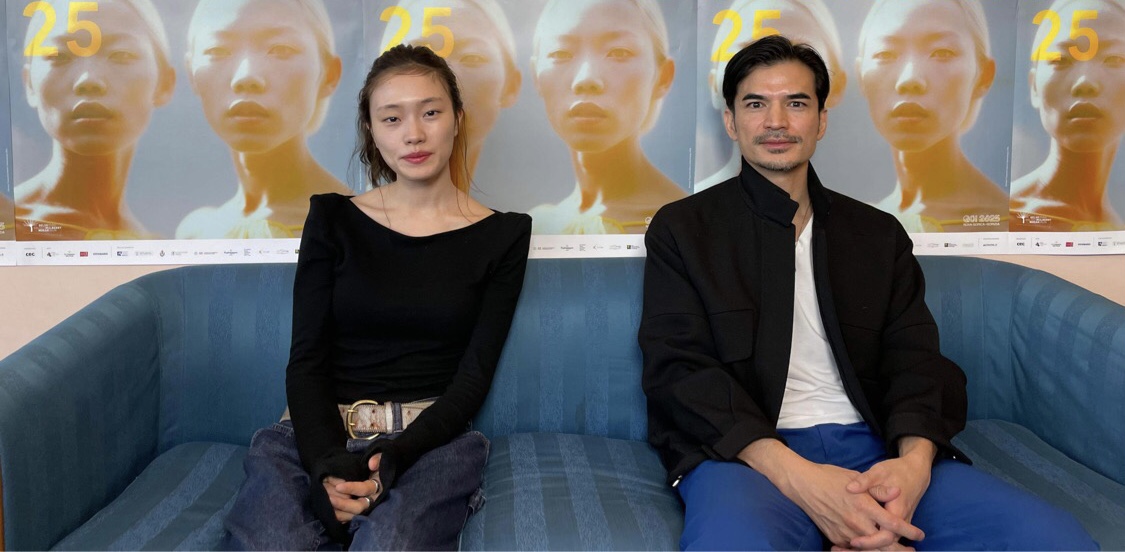
View of the Arts: We really loved the film, it was very powerful and beautifully acted as well by both of you.
Shogen and Ryo Matsuura: Thank you. Thank you so much.
VOA: First of all, I wanted to ask what was it about this story in particular that resonated with you both as actors and made you want to be a part of it?
RM: First and foremost, I have to say that I myself, I’m a big fan of this director [Anshul Chauhan] and I loved his previous movies, therefore, I really wanted to participate in the audition because I trust this director 100%. [Luckily], I passed the audition and [that’s the time] when I got to know more about the story.
After reading the script I realised that I needed to show my character’s readiness, and the feelings that [represented her]. Those were the first things that went through my head when I decided I wanted to take part in the audition.
Shogen: In my case, I have known this director for a few years now, and we have a good friendship. [Prior to making this film], we had talked about the fact that one day it would be great if we worked together. So because of this, I was lucky enough to be part of this project from an early stage.
What actually happened was that the director sent me two scripts and two original stories -original books from where the stories were taken- and the one that I liked the most was December. So, when I read the script for it, I started to think to myself ‘what if I was the one to whom such a thing happened? Could I actually forgive the perpetrator, the criminal?’ And with that in mind, I also thought that ‘I am not sure that I could actually forgive such a person’. Therefore, since I wanted to know how that would end and how it would go, that is what took me to decide to take this role.
Mina Moteki: I have been working with Director Anshul since our very first film, Bad Poetry Tokyo, so it was only natural that I wanted to continue making films with him. I have immense trust in his creative sense and output, leaving me with no choice but to be involved in his projects.
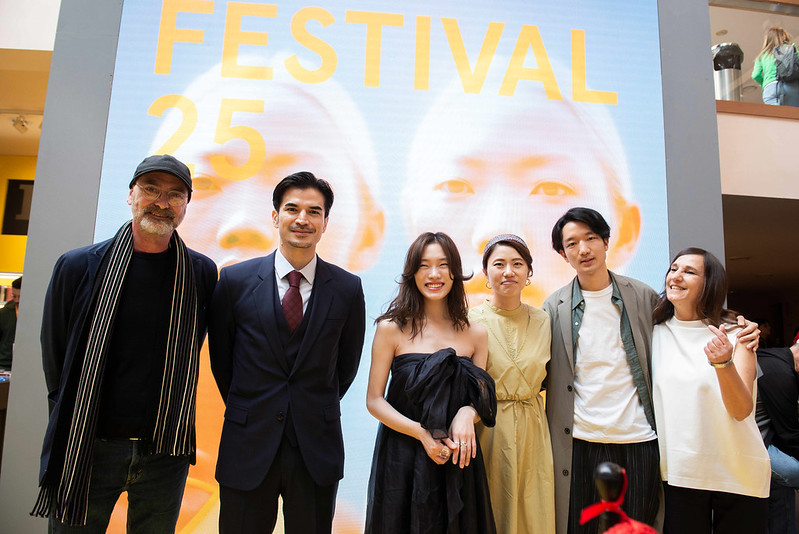
VOA: On that note, obviously this film has an interesting look at the Japanese criminal justice system, but also wherever a murderer does deserve a second chance. I would like to know, how did you feel about the way the film approached that particular issue, whether a criminal can restart their life and return to society?
RM: It really depends on what the perpetrator did. It really depends on the crime they committed. I think that there might be a possibility of giving a second chance to such a person. If the contents of what they have done can be taken into consideration.
Shogen: [In terms of the film]; I have to say that the original scenario wasn’t something that was based on the Japanese legal system. Of course, in order to make this film, we decided to research the Japanese legal system. But it’s not like the film wants to be perfectly precise and aligned with everything that is in the Japanese system. The point of this film is its essence, and its essence is forgiveness, that’s the theme. Also it is about, as the director said, ‘who is the true prisoner?’ Because it’s not just about the case itself, it is also about the people that are prisoners of their own past. So, from that point of view, that is the important point when you think about the film, it’s not the legal system we are talking about, it’s the human drama.
RM: And yes, this is what I had in mind as well.
MM: The initial story, crafted by Rand Colter, was a general concept applicable to any country. However, when we chose to set it in Japan, extensive research followed. We visited the Supreme Court, keenly observing people’s behaviour, attire, and the overall setting. We also delved into the Japanese juvenile system, though we maintained a balance, conscious that our tale remained fictional.
VOA: Actually, both of you had a really beautiful, yet very intense scene when you faced each other. I want to ask you, how was it to work together on that? What was it like to film it?
Shogen: That is the most difficult thing when facing each other. That scene was the highlight of the film. Even when I read the script, I thought that that was the most important scene to us. So if you liked the scene, we are honoured. Thank you.
MR: In my case, I was told by the director that I was not supposed to show any feeling of being sorry, rather that, I should be as strong as possible. This is what he wanted me to do. So, when it comes to that scene, I didn’t have any hesitation. I was trying to be self-confident in approaching that particular scene.
My next question is for Mina Moteki. You co-founded Kowatanda Films with Anshul Chauhan, how did that come to be? What kinds of films are you looking to make together, and what does December represent for you?
MM: We crossed paths at a studio while working as CG animators in 2011, and he shared his ambition to become a director. This idea of “creating something from scratch” was mind-blowing to me as animators usually receive well-defined tasks. Filmmaking, on the other hand, felt like walking in a fog, knowing the goal but unsure of the path. At the beginning, we started with whatever resources we could gather to bring his dream to life.
December truly reflects our growth as filmmakers. When you compare it to our previous works, you’ll notice a significant increase in scale. With the support of investors, we decided to create a more commercial film, showcasing the trust we’ve gained and the expansion of our creative possibilities.
What were some of the challenges you faced whilst making this film from a production perspective?
MM: Pushing our boundaries and increasing the scale posed challenges in managing everything with a small crew. Additionally, working with multiple locations added complexity. For instance, the inside courtroom scenes were shot in a studio, while the exterior was filmed in another prefecture, requiring meticulous attention to continuity and maintaining the desired mood throughout.
VOA: What are you looking to produce in the future with Kowatanda films?
MM: We firmly believe that good films should leave a lasting impact on the audience’s mind long after they’ve watched them. To achieve this, we prefer to have open endings in our films, allowing space for audience discussion. Stories possess great power, and our goal is to continue creating compelling narratives that linger in the minds of our viewers.
Interviewed by Roxy Simons
Written by Maggie Gogler and Roxy Simons
View of the Arts is a British online publication that chiefly deals with films, music, and art, with an emphasis on the Asian entertainment industry. We are hoping our audience will grow with us as we begin to explore new platforms such as K-pop / K-music, and Asian music in general, and continue to dive into the talented and ever-growing scene of film, music, and arts, worldwide.

 VIEW OF THE ARTS