
Warning: Spoilers ahead.
Just off the coast of Panama, in the indigenous Guna Yala province, sits an island town vibrant with colourful clothes and happy faces. Ustupo is home to a community of some 2,000 Guna people, whose rich culture and pride in their community is kept well alive to date. 50 years ago, French Oscar-winning documentary filmmaker Pierre Gaisseau took his wife Kyoko and their child Akiko to the island to live amongst the community for a year while documenting their experience. In this new film, we learn that the original footage was confiscated by the bank due to production running out of money. But the Guna people, unpaid for being filmed, felt betrayed, and that they were owed the film. One Guna man’s sincerity is felt in the words he told to the director of the French fiduciary bank: ‘This documentary must remain for eternity. It contains the foundation of the Guna people’s dignity.’

GOD IS A WOMAN is named after the production that never came to light. Its modern rebirth aims to spotlight the indigenous community in a dissimilar way to its origin: instead of sensationalising the people as some exotic exhibit for Western audiences to peer at, the documentary throws us directly into the Guna people’s perspective instead. The documentary serves as a hard reset on the brains of those who view the West as the centre of the world: instead shining light on a community in which traditions and modern technology coexist, and the inhabitants of which are extremely aware of the prejudice that dismisses this. We see this in a conversation captured between three men who recount Gaisseau kicking people out of a particular shot for holding plastic bottles, as this disrupted his vision of a completely separate, undeveloped society. ‘Still today, there are people with this “romantic” mentality,’ a Guna man explains, ‘As if we indigenous people weren’t allowed to change. As if time had been frozen since the Spanish Conquest.’
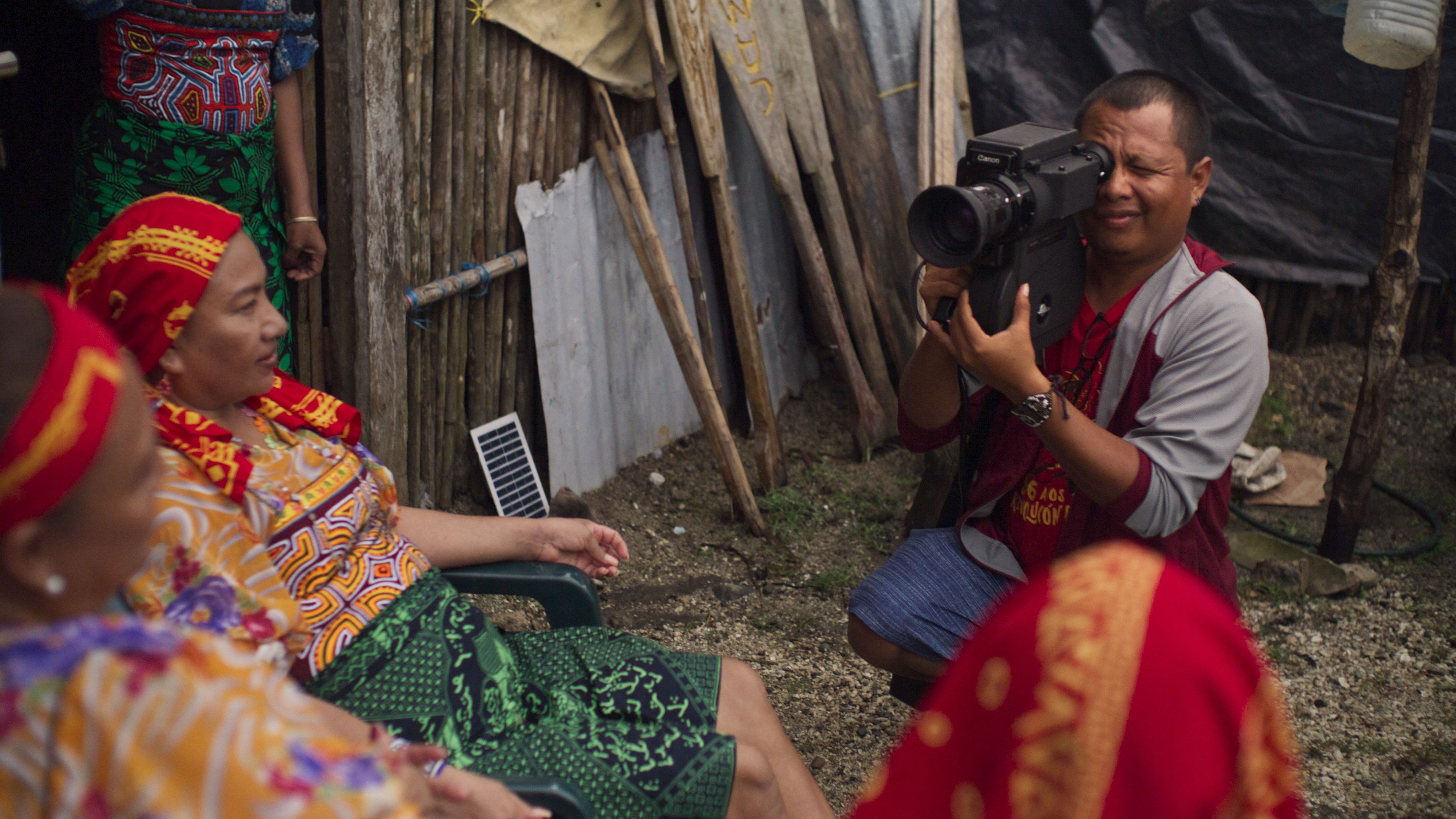
We meet some remarkable people in the film, including Turpana, who we follow during a lot of the present-day journey in finding the old film footage. We also observe the 50-year time difference in a woman and her daughter’s lives as the inna ritual of the latter as a young child was fully documented on film, and half a century later she and her mother tearfully relive the celebration when the film is unearthed. This ritual is one of three that Guna women experience in their youths, and there are no such rituals for men, thus inspiring Gaisseau’s naming of the original documentary.
Throughout, the film is fairly basic in cinematography, but there’s a powerful slice of cinema during its climax where individual Gunas are filmed, eyes shut, with a projection of the old footage played across their visages. The music echoes in and out, and the scene is slightly psychedelic in feel. Without words, the hypnotising sequence puts out a clear message: these are their stories, and no one else’s.
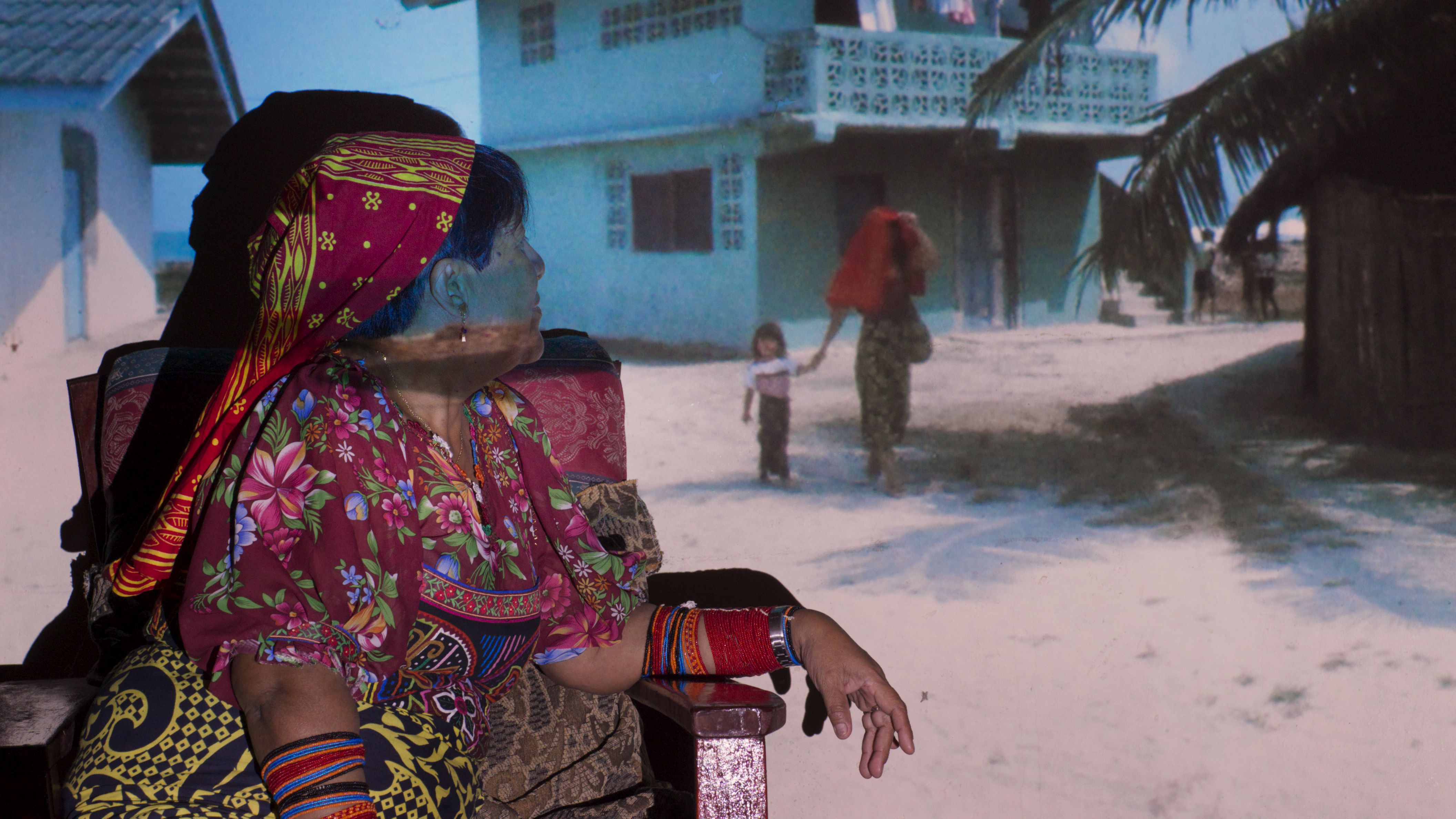
The documentary does well to explicitly capture the true perspective of the community. The film’s strength is in its seizing of opportune moments, particularly of the people’s emotional reactions to the old film showing at the end. With an occasional basic violin soundtrack, decent cinematography, and more than adequate directing, GOD IS A WOMAN presents its story gracefully while tying together a story spanning 50 years.
Rating:
Written by Maddie Armstrong
The film was also screened at TIFF 2023.

 VIEW OF THE ARTS