
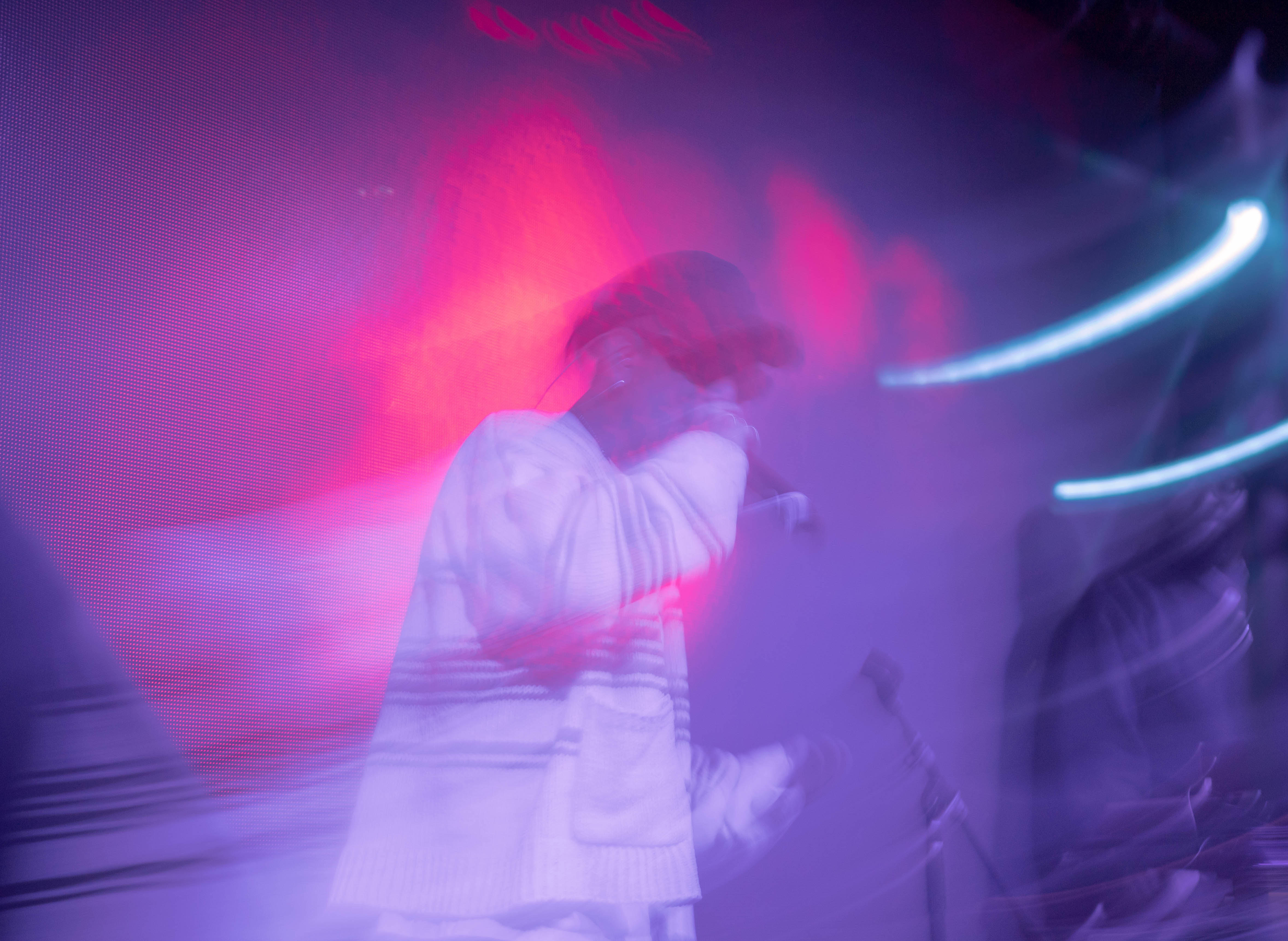
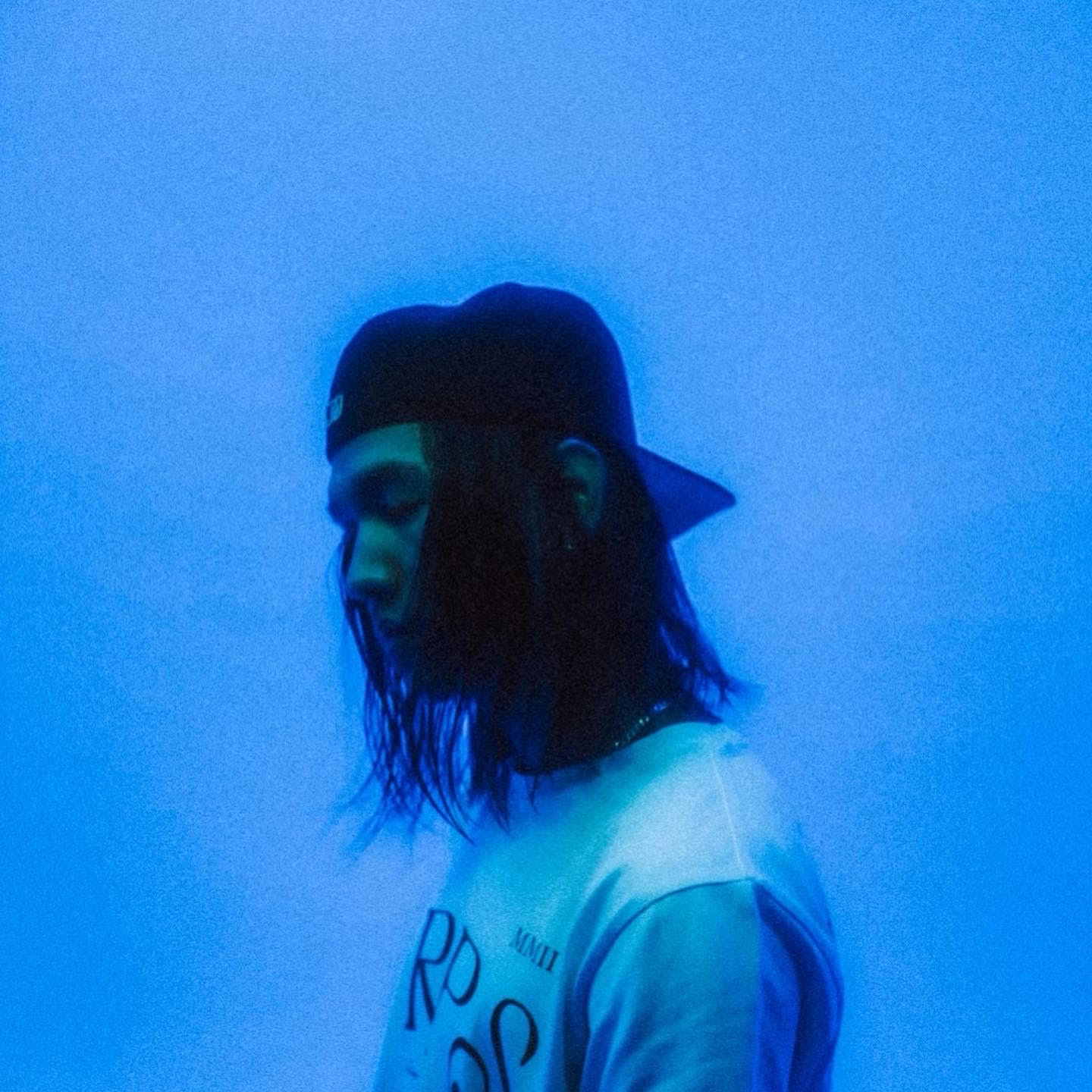
In the heart of Los Angeles, where the rhythm of the music industry beats strongest, Sangstaa creates sounds in which he expresses the various emotions of life. His journey from Korea to Raleigh, North Carolina, and then to the lively streets of LA has become a moving story, echoing themes of inner conflicts and endurance. For Sangstaa, the adventure with music began in the heart of his home. With his dad strumming the guitar and his mom playing the piano, the artist found his calling in life: music.
View of the Arts sat down with Sangstaa to uncover the story behind his music and life. The artist’s musical style, which spans between R&B and Hip-hop, is deeply influenced by his upbringing. With the release of the third album, Pretty in Blu, in November, Sangstaa, in a vulnerable manner, dug deep into themes of self-doubt, devastation, and the beauty found within – making it a superb release. During our interview, Sangstaa not only peeled back the layers of his identity as an artist but also showed us that he is a storyteller whose songs and lyrics echo in the hearts of those who listen.
View of the Arts: First of all, let’s talk about how it all started. Was there a moment when you realised that music was for you?
Sangstaa: I grew up in a musical household. My parents both are into music; dad plays the guitar and my mom plays the piano – she used to be a piano coach. And going to church, I was always into singing and I also felt like music was something that I wanted to pursue. When I was a little kid, I remember being asked what I wanted to be when I grew up and my answer was a “singer”.
VOA: After listening to your music, including your recent album Pretty in Blu, it appears that your musical essence lies between Hip-hop and R&B. I’m curious to know how you personally define your music style and what approach you use when writing your lyrics?
Sangstaa: Yes, I am very R&B & Hip-hop influenced due to the environment I grew up in. In Korea, I was listening to a lot of Blues/R&B and classical music – it’s what my mom used to play all the time. When I moved to America, I was introduced to Hip-hop & Rap. Then I learned the roots of those genres and realised that it all comes from black culture. Growing up in North Carolina helped a lot with my sound.
VOA: Back in November, you released your third album, Pretty in Blu, featuring eleven songs. Could you walk me through the creative process behind it? How much of your personal experience influenced the making of this album?
Sangstaa: Pretty in Blu is about seeing the beauty in what you’re going through. Blue represents self-doubt, devastation, depression, etc. Pretty in Blu basically means that you’re pretty even when you’re going through it. It’s 100% from my actual life experiences. I was going through depression and made this [album] during that time. Most of the songs are about my heartbreak, while iKANT! is a song I wrote for my old self, basically telling myself that I can’t keep on living like this anymore. It helped me a lot when I was making this album.
[When it comes to making music in general], the creative process is pretty simple; I usually make the beats first then I just kinda freestyle melodies until something sticks. Then I articulate my emotions and thoughts directly into the song.
VOA: Regarding the new release, on which songs do you believe you delivered your best, both technically and emotionally?
Sangstaa: I think my favourite song on the album is #5 she knows. My friend, Luke White, played the guitar and as soon as I heard the chords, I immediately recorded vocals to it. Probably made the full song in 30-40 minutes. Additionally, the outro holds particular significance for me due to the sentiments expressed in the lyrics.
VOA: Improvisation is a large part of the creative process for many artists. How strictly do you separate improvising and composing in your work?
Sangstaa: I rely on improvisation entirely. I don’t deliberate on what I intend to achieve or the kind of song I wish to create; I simply freestyle until I come up with something I appreciate, then build upon it and continue. If I’m not satisfied within the initial 10 minutes, I abandon the idea. I avoid overthinking in music because I genuinely enjoy the process when it flows naturally. It doesn’t imply a lack of effort; rather, I choose not to approach it as a test. As long as it remains enjoyable, I persist.
VOA: Would you say the music that inspires your work matches what you listen to when you’re part of an audience? Or are you a fan of other genres other than your own?
Sangstaa: Indeed, I appreciate various genres. I delve into classical music and classical Rock, and I’ve even created Rock songs. My music aligns with what I personally enjoy hearing, and I draw classical influences into many of my chord progressions.
VOA: The role of an artist is always subject to change. What’s your view on the tasks of artists today, and how do you try to meet these goals in your work?
Sangstaa: I cannot speak on behalf of other artists, but I believe that the core of music lies in developing a passion for it and consistently infusing your authenticity into your work. While I am involved in the marketing aspects, it doesn’t bring me the same enjoyment as creating music does. For me, it’s all about the love of music.
VOA: How does it feel when you release music in general? Personally, I believe that when artists share their work, it’s like they reveal their soul to the public. I have immense respect for that, and I’m curious to know how you feel when putting your music out there for people to judge.
Sangstaa: I feel very relieved whenever I drop my music. I intentionally avoid dwelling too much on feedback because my music is a personal expression, crafted primarily for myself rather than others. However, when someone reaches out and expresses their enjoyment of my music, it brings a great sense of fulfilment. I’ve mentioned before that sharing my music with someone feels almost as personal as revealing my thighs.
VOA: It is the job of the artist to win over an audience, but listening is also an active, rather than a passive, process. How do you see the role of the listener in the musical communication process?
Sangstaa: I think the “listeners” are the most important part. At the end of the day, my goal is to reach as many people as I can with my music. I want my music to resonate with every single person who feels how I feel. I think simplicity is the best recipe for music.
VOA: Are there any particular artists or musicians who have had a significant impact on your musical style or career? If so, how have they influenced you?
Sangstaa: Yes I do have many artists that have influenced me. Mostly my friends, Cloudy Nueve (RIP), my roommate, Trent the Hooligan and my friend Beezy, who taught me how to record music. And of course the big artists as well. I can’t pick one person because I am influenced by so many different people and sounds. I think I am a product of all of those people together.
VOA: When you are not working and writing songs, what do you do to get away from it all and relax?
Sangstaa: When I’m not making music, I’m making food or working out. I focus on staying physically healthy (probably my second priority) and also making money. I like to hustle. I also play a lot of League of Legends.
VOA: What can your fans expect from you in 2024?
Sangstaa: In the year 2024, I plan to persist in creating the highest quality music while maintaining the same level of vulnerability that defines me as an artist. I’m gonna be experimenting a lot with different sounds and different approaches to the creative process. I’m going to tour and keep doing what I’ve been doing, just at a bigger level. To all those who support me, your encouragement means everything; without you, I am nothing. Thanks for interviewing me, it makes me feel appreciated. It feels good being able to talk about these things honestly.
Written and interviewed by Maggie Gogler
Featured image courtesy of 70mm_
View of the Arts is an online publication that chiefly deals with films, music, and art, with an emphasis on the Asian entertainment industry. We are hoping our audience will grow with us as we begin to explore new platforms such as K-pop / K-music, and Asian music in general, and continue to dive into the talented and ever-growing scene of film, music, and arts, worldwide.

 VIEW OF THE ARTS