
Len Adz, formerly known as Jomalxne, sat in his dimly lit studio and was happy to answer all of my questions. His latest single, Dizzy, featuring Yonko, had just been released, marking a new chapter in his musical life.
Dizzy was a celebration of weekends and parties and a reflection of Len’s own experiences. He recalled hot summer days spent with friends and laughter buzzing through the air as they danced the night away. The song captured the essence of those carefree moments with its down-to-earth beats and catchy lyrics.
Collaborating with Yonko on Dizzy was an obvious choice for Len. The two had been childhood friends, growing up in the same neighbourhood and sharing a passion for music from a young age. It has been years since they last worked together, but the chemistry between them is still there. Yonko’s soulful vocals caught my attention two years ago, so seeing these two collaborate on a new song was a real treat for me.
With his recent name change from Jomalxne to Len Adz, Len felt like he was stepping into a new chapter of his life. He had chosen the name Len Adz as a nod to the animation artist Len Lye, whose work had inspired him deeply. I recently caught up with Len and discussed not only his newest single but also his past releases and music in general.
View of the Arts: You have just released a new single called Dizzy, featuring Yonko, a Soul singer who is known for his strong vocals. Could you tell me more about the song itself as well as your work with Yonko?
Len Adz: This song is about the weekend and parties. It talks about how much I looked forward to the weekend starting from Monday and having friends over for a party. I wrote it last summer and worked with Smugglers and LINRACE on it on Discord, and I actually had a hangover from the party the night before as I was doing it. And that’s how a ‘dizzy’ song was produced.
I felt that you can’t think of having a party without an artist like Yonko (@yonkorea), so I absolutely wanted him to be on it, and he came up with some mad lyrics. I’ve been friends with him since the time we were little kids (growing up) in the same neighbourhood, and we’ve written songs together since we were young, and then I did some features on his album a few years ago. It’s been quite a while since we worked together, and the song came out really well, so it was a meaningful experience, and I’m proud of it.
Some artists gave us some verses for this song and I’m currently working on a remix version with their material, so you have something to look forward to.
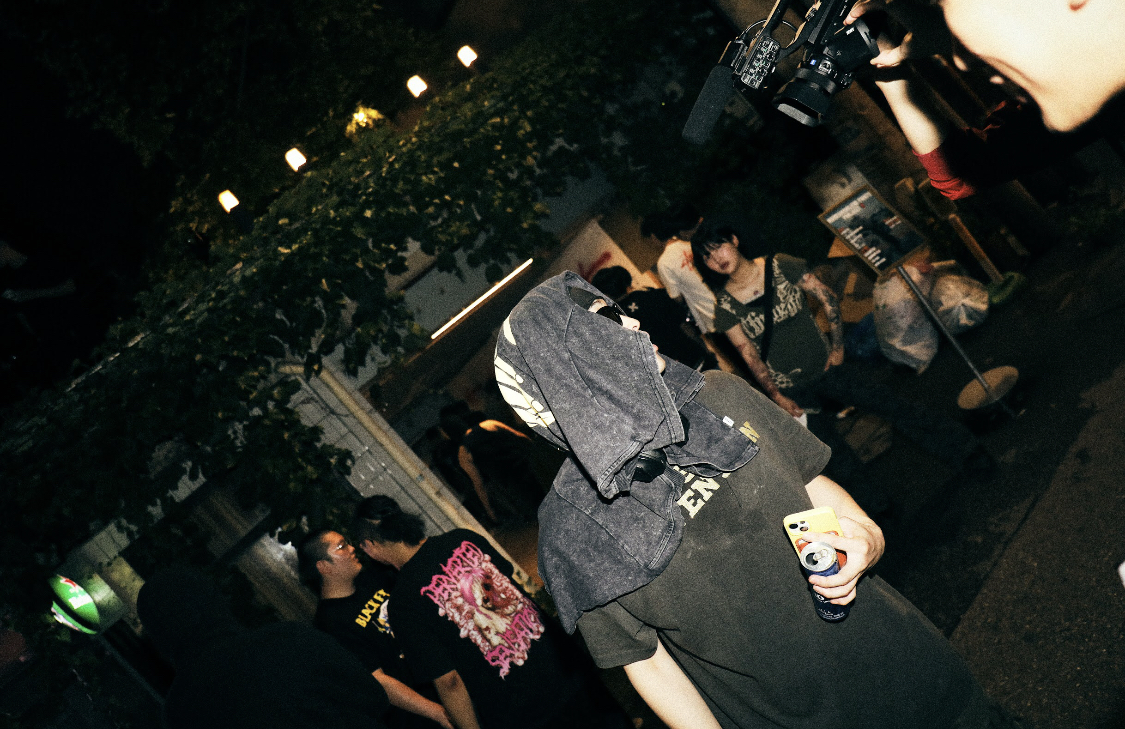
VOA: What was on your mind when you were writing the lyrics?
LA: It was the weekend, and I wanted to party [laughs]. The song is about the weekend when I called my friends over, got dizzy from being drunk on tequila, and partied while listening to sets by DJs. At the time, I was going to a lot of parties where BRLLNT (@brillyondabeat) was playing music and his set would get me hyped up, which is how I came up with the lyrics “Brilly got me banging”.
For the intro and the outro, I was recording myself a lot around then to get ideas for songs, and a conversation with my friends outside a club that got recorded was fun, so I put it in. I think this type of element added a sense of actually being there, so it’s one of the songs that I’m really satisfied with. I hope this song gets played every Friday.
VOA: Dizzy shows a different side to you again. Could you elaborate on that?
LA: Last summer was a season of many changes for me. I met Gyumin (@somanyego) and got new energy, and I also met a guy called Knghyuk (@knghyuk) at his part. The energy I felt then still thrills me.
I did this song at Koreanharlem’s party, and it got the biggest response among my set . Additionally, as I changed my name from Jomalxne to Len Adz, there were also a lot of changes in my music and my attitude. While the album Shades at Night showed a new side of me that I haven’t revealed before, I thought this song would show a side of me that’s mixed with the colours of Jomalxne.
View of the Arts: The last time we spoke was back in 2022, when you released your single called WESH under the Jomalxne name. But recently, you released BAPESTAR and a double single, Shades at Night and In the End (feat. Gyumin, a.k.a. So Many Ego), under a new nickname, Len Adz. Before we discuss your new music, could you tell me why you decided to change the name?
Len Adz: Initially, when contemplating the name Jomalxne, I recognised that I was creating a frame for myself within that name. I wanted to break free from that and manifest new energy, extending beyond the confines of that name, and this led me to seek a more distinctive identity. I saw an exhibit of Len Lye, who was an animation artist in the early 20th century. I was significantly inspired by his work and consequently came up with the name Len Adz for myself.
VOA: While BAPESTAR is filled with a positive Hip-hop vibe, Shades at Night marks a departure into new musical territory. The swift tempo and stylish musical arrangements represent a departure from the familiar Hip-hop sound you’re known for. Can you provide more insight into Shades at Night and explain the decision to explore a different genre with this particular song?
LA: For Shades at Night, I was immersed in Techno and EDM sounds, exploring ways to integrate those elements into my music. This is why you sense that Techno vibe, allowing the tempo to be slightly faster. It’s also tied to the ambiance of the lyrics, conveying the message of “I wear shades at night when I party”. I worked on this song with Producer Koo (@kudetat9) and asked Pierre Blanche (@pierreblancheoffical), the Korean Techno DJ team, to do the mixing and mastering to enhance the Techno vibe.
VOA: In the End is a really great track as well. It is also a collaboration with an emerging Hip-hop artist, Gyumin. What was the creative process behind this song like?
LA: During that period, I wrote this song for the party called Korea Harlem. Being a fan of Linkin Park, I revisited their song In the End, and I realised that I had misinterpreted some of the lyrics. Instead of hearing “Got so far”, I perceived it as “God so far”. Given my doubtful emotions, especially during a somewhat depressed phase, I interpreted Chester as expressing a sense of God being distant or far away, asking for hope, etc. That emotional interpretation fuelled the making of this song.
Regarding the collaboration with Gyumin, we not only worked together at that event but also performed there. I drew a lot of positive energy from him, and I am definitely open to collaborating with him again in the future.
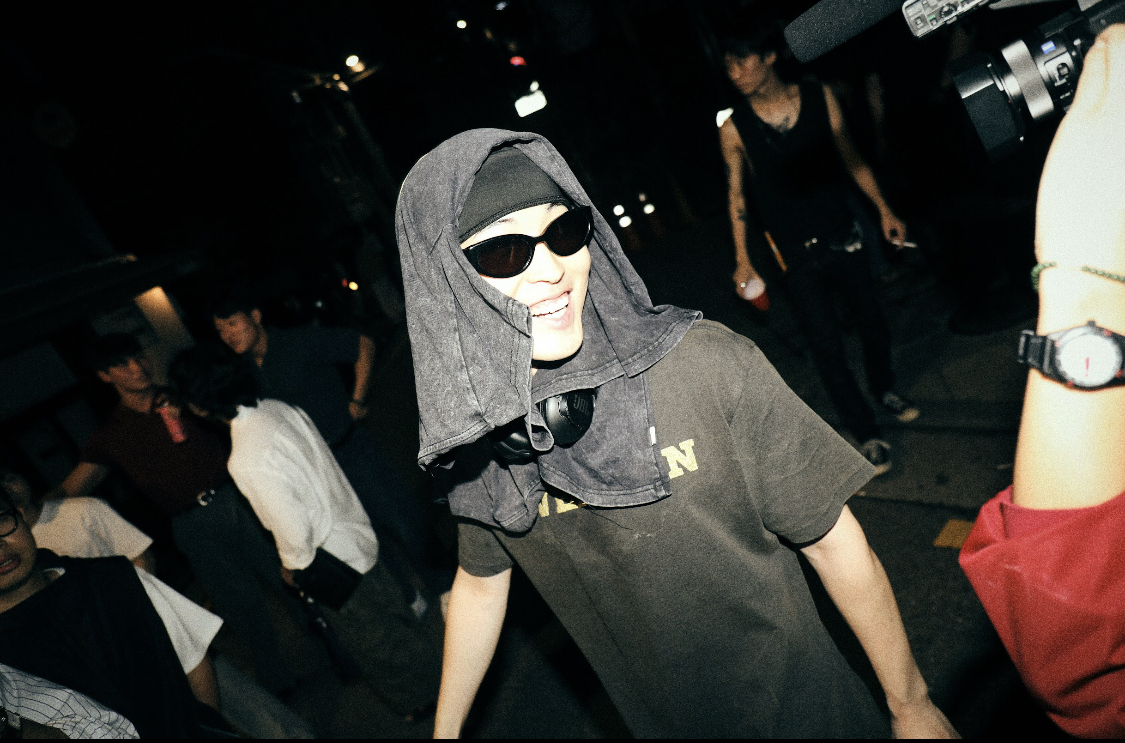
VOA: Could you elaborate on the lyrics for Shades at Night? What was on your mind when writing the lyrics at that time?
LA: Essentially, I was reflecting on a period of my life when I wore sunglasses consistently, both day and night, finding a sense of comfort in doing so. It felt like a shield, providing a certain level of comfort and concealment. However, I began questioning why it felt so reassuring. Initially, Shades at Night was titled City of Shadows, which eventually became the title for my double single. I perceive Seoul as a city of shadows, considering the high suicide rates in Korea. The city is characterised by shadows and darkness, compounded by the accumulated burdens and struggles of its people, which I aimed to depict in the song.
It’s essential to understand that there’s a cultural tendency here to suppress emotions and refrain from expressing oneself too openly. This suppression leads to a buildup of emotions, contributing to the overall darkness.
VOA: With regards to Hip-hop and music in general, how does the music influence your confidence?
LA: I aspire to be the kind of artist who challenges conventions, akin to those who refuse to compromise with or accept the status quo. When I engage in my creative process, I aim to overcome the limitations of reality. The inspiration behind my journey into music lies in the desire to emulate such artists and engage in similar ways. Music gives me confidence when I work on my own material and when I come up with something new.
VOA: Korean Hip-hop often reflects the cultural landscape and societal dynamics. How does your music connect to or comment on Korean culture, and do you find inspiration from your experiences or observations in daily life?
LA: As an individual, a person living in this society, I do know what’s happening when it comes to social issues. But when I am making music, I don’t intentionally try to incorporate that into my work; I express what I want.
VOA: The language of music is often considered universal, yet lyrics play a crucial role in conveying emotions and messages. Have you considered expressing yourself through English lyrics to reach a broader audience, or will you stick to Korean only?
LA: I actually really enjoy writing lyrics in English. I know my English isn’t 100% accurate, but I am trying to write lyrics with the English that I know. Having said that, I do love writing in Korean as well, but it is also really fun to make my English lyrics rhyme right now.
VOA: The Korean Hip-hop community has seen significant growth and collaboration in recent years. How do you view the sense of community within the Korean Hip-hop scene, and are there specific artists or producers you admire for their contributions in shaping this community?
LA: While the Hip-hop scene and community thrive in Korea, I find myself on the periphery of that culture, so I don’t have extensive insights to share. Nevertheless, there are individuals within Korea actively involved in this genre. They collaborate, draw inspiration from each other, and offer support within the community. Though I may not possess many details, artists like Jay Park and Changmo stand out, playing a role in encouraging emerging artists to create music.
VOA: Hip-hop has a tradition of addressing social issues and sparking conversations. In the context of the Korean Hip-hop community, do you believe that artists have a responsibility to use their platform to address societal concerns? How do you see your role in contributing to or reflecting on social issues through your music?
LA: Personally, my music doesn’t carry explicit political messages. However, when an artist shares their life experiences, it inherently becomes a reflection of society. Many artists adopt this approach, narrating their personal stories. Observing international artists, it’s evident that contributing to society doesn’t always involve explicitly singing or writing about it in their songs. Successful artists often channel their support back into society, investing in areas that require assistance and backing. I believe this is a significant and impactful way for artists to contribute positively to society.
VOA: Any new projects in the pipeline?
LA: First, I’m currently working on the music video for Dizzy and some new songs. I don’t know which ones will get finished first, but I’ll definitely be coming out more often this year with great songs.
Written and interviewed by Maggie Gogler
Translator / Interpreter: Roc Lee
Featured image courtesy of Eunhye Kim
View of the Arts is an online publication that chiefly deals with films, music, and art, with an emphasis on the Asian entertainment industry. We are hoping our audience will grow with us as we begin to explore new platforms such as K-pop / K-music, and Asian music in general, and continue to dive into the talented and ever-growing scene of film, music, and arts, worldwide.

 VIEW OF THE ARTS