
For those in the arts, once you get a taste of creativity, it comes naturally. Surprisingly, while many of us know what our calling is, Chinese-Australian actor Harry Song was on a different path, focused on his academics and planning a gap year. Little did he know, that his true passion would be awakened while auditioning for a student film, inspiring him to step out of his comfort zone.
In 2015, Harry returned to his hometown of Shanghai, China, after relocating to Sydney, Australia, at the age of 8. It was during his time at the Shanghai Theatre Academy that he found himself surrounded by like-minded individuals, granting him the freedom to embrace his true self and pursue his passion for acting. This journey also led him to fully embrace his Asian identity, shaping him into the actor he is today.
Despite an 11-hour time difference, Harry was ready to discuss his acting career in great detail. Engaging with him felt akin to chatting with an old friend, as his warmth shone throughout our interview while he discussed his journey into acting and memorable roles like the chilling character of Alvin in Repression. We delved into philosophical reflections on the significance of finding one’s supportive community and the gratification derived from refining one’s skills. With his upcoming project, Eat Up, Harry is ready to show his talents and comedic chops in sci-fi comedy.
View of the Arts: Firstly, what got you into acting, and was it something you had always gravitated towards whilst growing up?
Harry Song: Oh, man, this story is something [laughs]. I used to work at Deloitte as an auditor, and you wouldn’t believe how many times I heard people saying I was like Simu Liu because he used to work there too. They’d be like, “Oh, you’re the Marvel guy!” It’s one of those jobs everyone thinks is steady and prestigious, but once you’re in, you realise it’s not for you. Still, I stuck with it for three years, planning to quit and go backpacking to find myself [laughs]. But just before I made that leap, a friend of mine told me about this student film that his girlfriend was working on at NIDA, one of the big acting schools in Sydney. She said, “Hey, you should come audition for it.” I’d never even considered acting before because I went to a school where everyone was focused on getting good grades.
So, I walked into the audition room, and I vividly remember feeling like I was having an out-of-body experience [laughs], like I was observing myself from the ceiling. I was incredibly uncomfortable, but then I just decided to go for it. The scene called for my character to confront his mom angrily, and I just let loose, pouring all my energy into it. Surprisingly, they loved it. Looking back, I’m pretty sure I was terrible in that short film [laughs], but something clicked for me during that experience. I realised how much I enjoyed expressing myself through acting. Until then, my life had been all about following a predetermined path – getting good grades, going to a good university, and landing a stable job. I never stopped to think about what I truly wanted or what I was passionate about.
VOA: Were there any specific actors or a particular film you watched in your childhood that made you want to become an actor?
HS: I’ve always loved film, but anything outside of the typical jobs, like being a lawyer, doctor, or finance professional, was never considered. However, after attending acting school, I realised, or at least for me, that I appreciated what it means to be an actor and the essence of acting.
I started to appreciate avant-garde styles of theatre and performance that might be confusing to someone without training. Initially, they might think, “I don’t know what’s going on, and I’m not really interested.” But I found that my appreciation for all forms of art grew, and I began watching more diverse performances. Returning to your question, someone like Daniel Day-Lewis is incomparable. When you hear and see him in interviews, and then witness his characters in every movie he portrays, you can’t help but be amazed. He is not acting, he’s fully embodying another persona.
VOA: Although you moved to Australia at the age of 8, you were born in Shanghai, and in 2015 you went back to attend the prestigious Shanghai Theater Academy. What was that experience like, and what made you want to go back?
HS: Well, I have family in Shanghai, so I’ve always had a connection there. But growing up in Australia, I constantly sought to assimilate. I somewhat rejected my Asian identity, leading to identity struggles, especially in a heavily sports-oriented school environment. Not only was there a focus on sports, but academics as well. Competing against predominantly private schools aggravated this identity conflict. However, it wasn’t until I returned to Shanghai that I discovered my true self and embraced both my Australian and Chinese heritage. This experience completely altered my perception of what it means to be a minority. In Australia, the prevalent stereotype was that academically gifted minorities pursued careers like law or medicine.
At the Shanghai Theatre Academy, I encountered Chinese individuals who resembled me and excelled as singers, dancers, and actors, with great attitudes. Some might view this observation as arrogant, but it was truly inspiring to witness, especially considering the contrast with my experiences in Australia, where conformity seemed to be the norm.

VOA: Did you feel that it gave you a boost of confidence that you can do this?”
HS: Absolutely, it gave me confidence in who I am as a person and the realisation that it’s okay to be different. You hear that sentiment all the time, but I believe it’s not fully grasped until you experience something like that. I think everyone in the world is trying to find their tribe, dealing with their own unique struggles, and seeking connection. I don’t want to delve too deeply into philosophy [laughs], but I felt like I was stuck in a job I didn’t enjoy, a situation many people can relate to. It’s comfortable and safe to just go along with it, but I believe that by doing so, they miss out on fulfilling their potential and truly experiencing what it means to be alive and passionate about their pursuits.
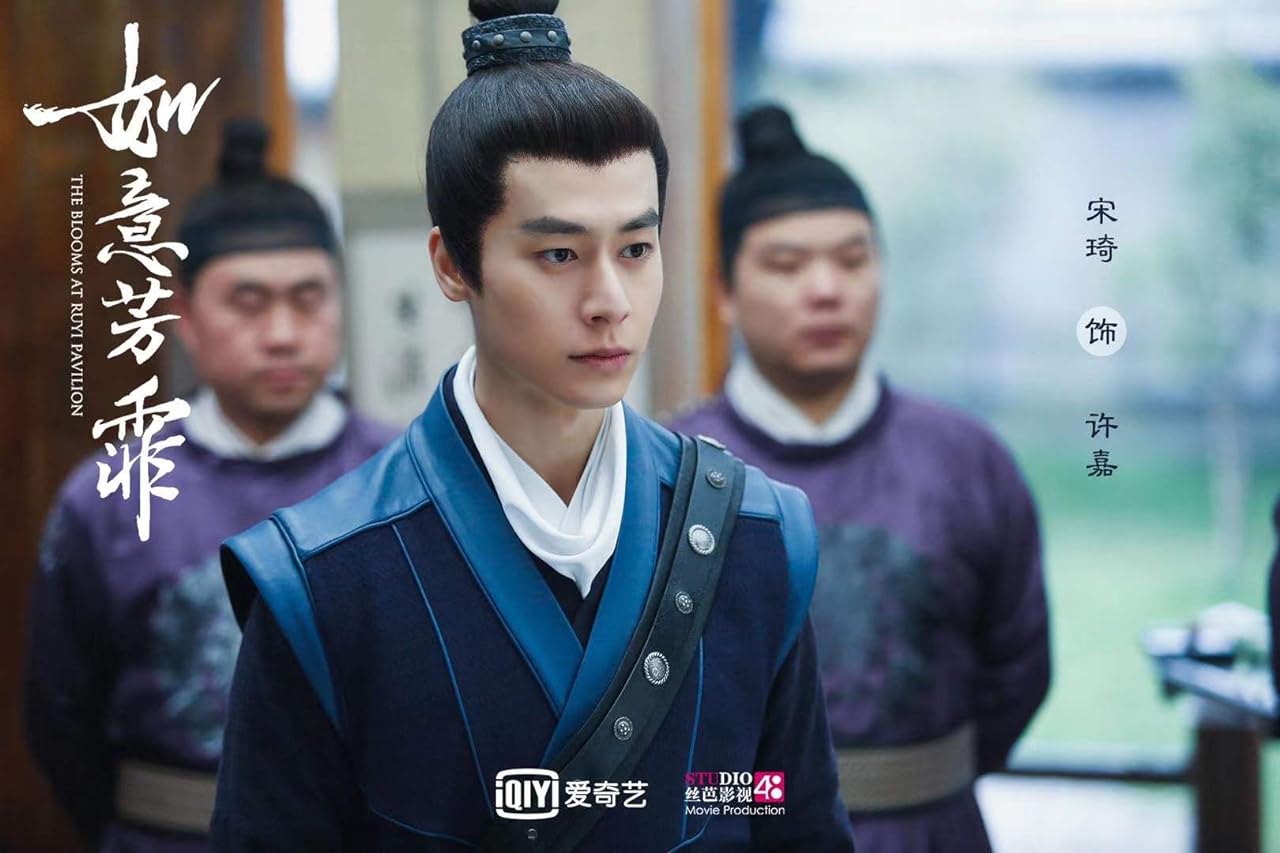
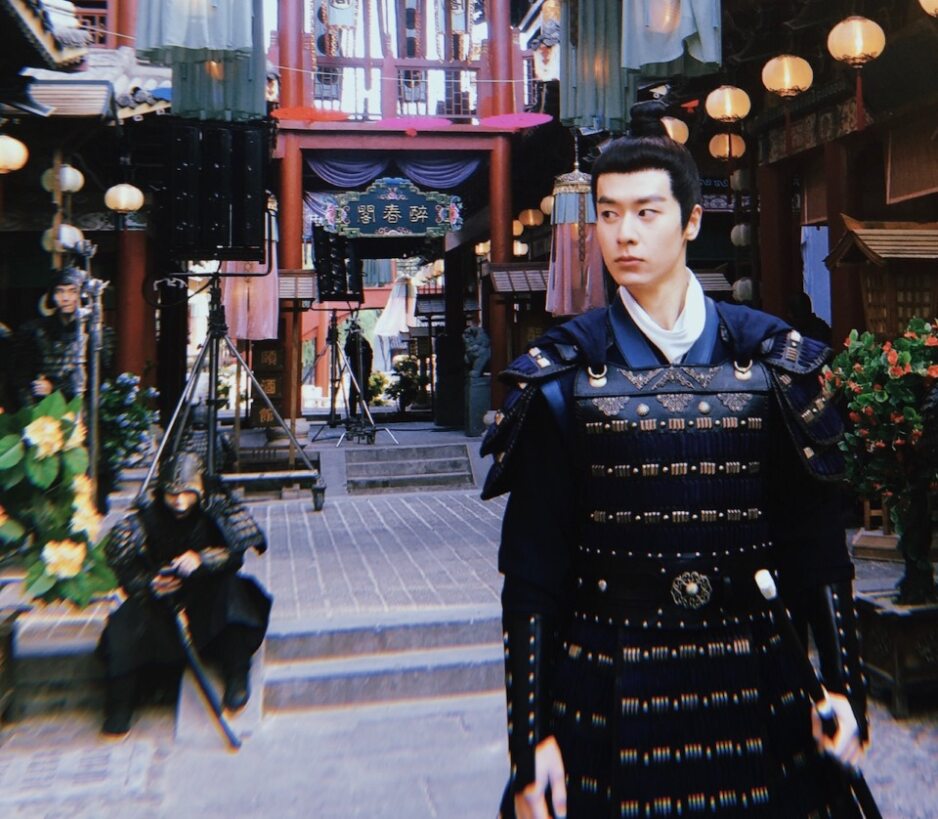
VOA: Your versatility shines through your various roles, including your portrayal in C-dramas like The Blooms at Ruyi Pavilion. In your role as Xu Jia, what was it like to immerse yourself in traditional attire and martial arts scenes?
HS: Oh gosh, when I auditioned for the Shanghai Theatre Academy, I had to relearn Chinese because I hadn’t kept up with it while growing up. I remember having to write Pinyin, which is Romanized Chinese, and I recall thinking, ‘What the heck is this?’ They said they wouldn’t accept me because of this, but they offered me the chance to audit the classes and earn credits in the second year to redo everything.
So, the point I was trying to make is that it was very difficult. The whole time I was in China, it was a journey not only to learn acting but also to familiarise myself with Chinese culture and history. I was clueless about China, but as the years went by, my Chinese improved. Now, when I speak it, you can’t tell that I grew up overseas. However, when you’re doing a show like The Blooms at Ruyi Pavilion, it’s another level. Imagine an international student in the UK doing Shakespeare [laughs]. That was me, as the language is completely different. With 40 episodes, there was quite a lot of dialogue, so reading the script was a challenge. A native Chinese person might read those 40 episodes in one morning if they really dedicated themselves. But for me, one episode took me six days, as I had to look up everything in the dictionary because some words just did not make any sense to me; they were completely alien.
That was a big challenge, and that was even before getting on set [laughs]. Then, having to become someone from that period – you have to be stoic, and there are rules for everything: how you act in front of royalty, how you are in front of women, and how you act in front of people of your own status – it’s completely different. I remember struggling so much, thinking, how am I going to do this? So, I remember a big transformation because my character was a guard. Putting on the armour and feeling the weight and the structure, the beauty of it, transformed me immediately because it gave me a sense of grandeur like being in a time machine. It was my first big production done on a large scale, and it was very eye-opening.
VOA: How important is it for you to star in shows that feature your heritage?
HS: Believing in the work is extremely important to me, not necessarily the background. I can play anything, but believing in the director, their vision and the morals they’re trying to convey is key. So with something like The Blooms at Ruyi Pavilion, which was basically a teen drama, very similar to K-dramas, that was a process. I will try to stay away from soaps, not necessarily dramas. Not that there’s anything wrong with more popcorn-type works. But for me, the kind of work that draws me in and makes it more fulfilling is when someone watches it and comes out feeling like their idea or preconceived notion on some topic has changed.

VOA: And how does filming for TV compare to film?
HS: Oh, my God, it’s completely different for TV shows; the pace is a lot faster. In a movie, you might only do a couple of things a day. You’ll correct those scenes, and you’ll be able to do them over again until you and the director figure it out. Because as you’re filming, oftentimes they’re trying to work out how you’re going to do something – your ideas and your feelings for a scene. You have ideas going into it, but when you’re doing it, it can change, evolve, and work out the subtleties. You have time to figure these things out on a film, but on a drama, the cost is huge. So, you might have two or three takes on something, and then they will have to move on; there is a lot more pressure. It’s more like all we need is to get this expression or feeling from you, whereas on a film set, it’s more like, how is this character feeling? You can take your time digging into that character and what’s happening in that scene.
VOA: In 2021, you starred in the sci-fi film Guidance, which raises thought-provoking questions about whether taking a pill to examine human behaviour would be enlightening or detrimental to social interaction. What attracted you to the script, considering its intriguing concept, particularly relevant in today’s modern world?
HS: I remember reading the script for the first time in my Beijing hotel room the night before an audition for another project. Normally, the night before an audition, I would be fully focused on the world of that audition, but for some strange reason, I started reading Guidance, maybe out of curiosity. I’m so glad I did because as soon as I started, I couldn’t put it down. I read the whole thing in about an hour and was immediately so excited about it that I actually felt my heart pumping faster. I remember telling my manager that I had to have this role. What attracted me to it was that I love sci-fi for one, but also the fact that it was fundamentally a human story exploring the wonderfully flawed nature of humanity. I don’t know why; it’s just something that really fascinates me: to delve into human behaviour and investigate our complicated emotions that truly make us unique as a life form.
Another reason was that I could feel the lofty artistic ambitions of the script. It was so poetic and a beautiful story between two lovers set in an alien yet familiar, not-too-distant future. At the time, AI wasn’t really as front of mind as it is today, and so it just felt so out there, mysterious, dangerous, and cool. Being able to work with and learn from other talented artists is always a key factor in picking projects. I knew just from reading the script that the director/writer for the film, Neysan Sobhani, would be the same type of person as me. I could feel his artistic ambitions and passion for his craft through his writing, that he would be someone who works from the heart and is driven by his vision and sole goal of making the best film possible, rather than being distracted by other things.
This indeed turned out to be the case. I remember our first meeting did not involve any kind of acting; it was just a casual get-to-know-each-other type of conversation at a café. We talked about everything from movies and artists that we loved to our backgrounds and thoughts on the script. This way of auditioning is pretty rare; it showed me that Neysan cared about whether the actor fit the role from a fundamental level and that he cared about working with people who had the same artistic sensibilities as him. Right from that meeting, I was sure it would be a project I would be very proud of. As a matter of fact, Neysan and I still speak pretty much weekly. We’ve become very close friends and have each other’s support in the film industry.
VOA: This leads me to your most recent project that saw you as the lead role in the harrowing short film Repression. What motivated your decision to join this film with its complex narrative, and could you share how you initially became involved in the project?
HS: Well, I had just signed with my agency in Australia, and that was after COVID. But I remember coming back from China to Australia for the Chinese New Year to be with my family. On Australia Day, January 26th, I went to a friend’s place for lunch, and he said, “Oh, did you hear about this disease coming out of China?” I kind of just brushed it off, thinking, “Okay, whatever.” [laughs] I had only planned on being in Australia for two weeks, so I only brought two weeks of stuff. And I haven’t been back to China since. So that changed my life upside down, and that took some getting used to, knowing I wasn’t going to go back, then accepting that my career was going to take a turn, and then finding agencies.
Anyway, going back to Repression, that was the first thing that came from that agency; it was quite a shift from the drama roles, and I think that’s why I was drawn to it. Because in China, I was never approached to play characters like this. As I have a very boy-next-door look, and every role given to me was very nice and proper. But I really enjoyed playing a villain and indulging in dark thoughts to break that barrier. For me to show people that I could do something like this was the biggest motivation, and then talking to the director about it, he had dealt with a few issues in his life, and I saw how much this film meant to him.
Because it’s easy to look at this film and say, “Oh, it’s about murdering and hate.” But actually, what the director was trying to say is the feeling of being trapped in whatever circumstance in life you’re in and then relinquishing that in certain ways. Just trying to find yourself in this crazy world, he likes to express things in a dark way because he believes the world is not dark, and he was very passionate about working on this project. Anytime I watch it back again, I’m like, “We did that,” and it leaves my heart palpitating from everything that happens. I really enjoy that type of artistry.

VOA: Repression has some graphic violent scenes incited by the lead character Alvin. When it comes to portraying that type of character, how do you even begin to prepare for a role like that?
HS: I think physical actions are not difficult because you can easily do something very drastic physically, and then you get into the mood quickly. But I think giving yourself permission to indulge in evil and then not overdoing it is difficult. Because it can be very easy to do some stereotypical expressions that can come across as over-acting. But it’s easy to play evil, not easy, but it’s helpful to put yourself in that kind of world where those things can overreact and become easy to fall into. So restraining yourself is the hardest part.
VOA: Did you find it a challenge to act out that violent opening scene?
HS: No, that wasn’t difficult. The scene where I’m trying to convince the guy to fix my tire and flirt with him was more challenging in terms of blocking and getting the shots, but that was more of a directorial thing. But from an acting perspective, no. I like playing villains; it just comes very naturally [laughs].
VOA: It’s recommended that viewers watch Repression with either a great sound system or through headphones. I would agree with that, as there is very little dialogue, it allows the sound to help tell the story. As there were minimal lines to learn, did you find it harder to portray the character through emotion alone?
HS: No, that wasn’t difficult at all. We get drilled into us in theatre school that dialogue or speaking is just one tool in an actor’s tool kit; we spend years learning to live in imaginary circumstances and to communicate all sorts of desires with just our bodies and our actions. As long as we have an active intent in each scene, then it doesn’t matter if we speak or not. Emotions, facial expressions, words, voice, movement, and actions are all equal in the service of living truthfully under imaginary circumstances.
VOA: The film received an incredible amount of attention being selected for festivals such as the Sydney Underground Film Festival and the New York City Horror Film Festival. How did it feel to be part of something so special?
HS: I think I’ve been very lucky with each and every one of my projects, even the earlier stuff that you probably didn’t find in your research that wasn’t so great. Those earlier projects that were perhaps not as high quality, they formed part of my learning experience in becoming a better actor. I also didn’t know better, so it also felt fun to work on those at the time. With later projects that were larger in scale and received more public attention or were more determined in their artistic vision, the overwhelming emotion is ‘proud’. I just can’t believe how fortunate I am to have those life experiences and to be able to work with such talented people who are among the best in their field.
VOA: Is there a standout experience from your career that you feel helped shape you into the actor you are today?
HS: My acting career has been a series of serendipitous events. It’s definitely not something that could have been planned. I am so thankful for each and every one of those moments. I guess if I had to list a few pivotal moments, they would have to be finding acting in the first place. Before I was an actor, I was in a very unhappy place working in the financial world. It was only by accident that I got the chance to audition for a short film without having had any previous thoughts about becoming an actor. After getting the role in that audition, I then absolutely fell in love with acting. I loved how I could freely express myself in my characters. It felt liberating in a way that real life rarely is.
Another pivotal moment would have to be gaining entrance into the Shanghai Theatre Academy. STA honestly changed me in so many ways, not just as an actor; it showed me who I really am as a person rather than who I think I should be. I will be forever grateful for my time there. The school gave me so much freedom and so many opportunities to be challenged and then grow from countless failures. I was able to take extra classes outside of my curriculum, have teachers help me in their own time to improve my Chinese, have access to and befriend some of the world’s most renowned acting teachers, and be given permission to participate in projects outside of school where I found out what needed more work and was then able to go back into the safety bubble of the school to improve on them.”
VOA: You have a short film titled Eat Up set to hit the festival circuit soon. Could you share a glimpse of what it’s about? Additionally, what do you find most enjoyable about attending film festivals, and do you experience nerves when it comes to the initial audience reaction during the first viewing?
HS: Eat Up is a rare opportunity for me to flex my comedic muscles. It was with the same director as my previous short film, Quiet Night Thought. It is so important to be relaxed, feel safe, and be given permission to be silly in comedy. I definitely got this from the director, Yuxin Cao. I think I amazed myself with how much fun I had on that set and how much those creative juices were flowing as a result. I’m not sure how much I can say about what it’s about, but it’s a sci-fi comedy that is full of heart and familial love!
The audience will definitely see me perform in a way that is completely different from any of my previous projects. I love watching my films at film festivals! Aside from caring more, I feel like I’m just another member of the audience, experiencing the film as if I knew nothing about it, which is somewhat true because I usually don’t know anything outside of the scenes I was personally involved in. So, it’s always a thrill to see how the final film has come together in post-production and I appreciate the magnificent talents of so many creative geniuses that have gone into the creation of the film.
VOA: You’ve worked with a great deal of wonderful talent, is there a specific director or actor you would love to collaborate with in the future?
HS: Oh, my God, I just saw Dune: Part Two, and it was amazing. I always admire films that can achieve commercial success while maintaining artistic expression. Too often, when you attend film festivals like Raindance in the UK, the Sydney Underground Film Festival, and the Shanghai Film Festival, you encounter all these amazing international films that are excellent, but not many people will ever see them because they’re not commercial. So for something like Dune, which I find artistically amazing but also widely accepted by the global audience, that’s very tricky. And so Denis Villeneuve is up there, and, oh my god Daniel Day-Lewis, if he ever comes out of retirement, I don’t even have to work with him. I just want to watch his films [laughs]. He’s so committed, you know, just to watch how he works when the cameras are not on.
VOA: Finally, what does 2024 have in store for Harry Song?
HS: We’re in March already which is crazy. All I can say is I hope to meet more creative individuals, and I auditioned for something last week. It’s an independent film, and the director is amazing, as is the casting director. They’re just so passionate about bringing more Asian talent into the frame because one of the big problems at the moment is, and I don’t think it’s because audiences won’t accept. But there aren’t enough creatives from minorities in the industry to tell stories that people can resonate with but also tell minority stories properly, so it was amazing to see these directors working hard to make things happen.
VOA: Well, we can’t wait to see what you do next, and thank you for your time. We really appreciate it.
HS: Thank you, guys, for your support and everything you all do as well. I feel like the world is getting smaller and smaller these days. The East and West used to be very far apart, but now they are getting closer and closer, and it’s through the hard work of people like View Of The Arts that this happens. So I’m very, very appreciative of you reaching out.
Written and interviewed by Kirsty Bright
Featured image courtesy of Harry Song
View of the Arts is an online publication that chiefly deals with films, music, and art, with an emphasis on the Asian entertainment industry. We are hoping our audience will grow with us as we begin to explore new platforms such as K-pop / K-music, and Asian music in general, and continue to dive into the talented and ever-growing scene of film, music, and arts, worldwide.

 VIEW OF THE ARTS