
In the evolving indie music scene, few artists offer a narrative as compelling as Liang Lawrence‘s. With a life that reads like a globe-trotting adventure, Liang’s early years spanned eight countries, shaping her worldview and musical artistry. Her debut EP, letters to myself, released last year, immediately attracted over a million streams within just a few weeks – a truly impressive achievement for such a young artist.
Liang’s sound is an interesting mix of indie folk, soft rock, and electronic elements, drawing comparisons to artists like The Japanese House, beabadoobee, boygenius, and Lizzy McAlpine. She recently performed at a BBC Introducing Showcase and has supported acts such as Adam Melchor, Will Joseph Cook, Sophie May, and New Rules.
Now, with the release of her second EP, What’s Dead and Gone, Liang continues to explore the difficulties of personal growth and artistic development. During our candid conversation, Liang opened up about how her multicultural upbringing has influenced her music, the challenges she faced in finding stability through songwriting, and her evolving approach to creativity.
I feel incredibly lucky and grateful to have so many kind and understanding people looking out for me and my music.
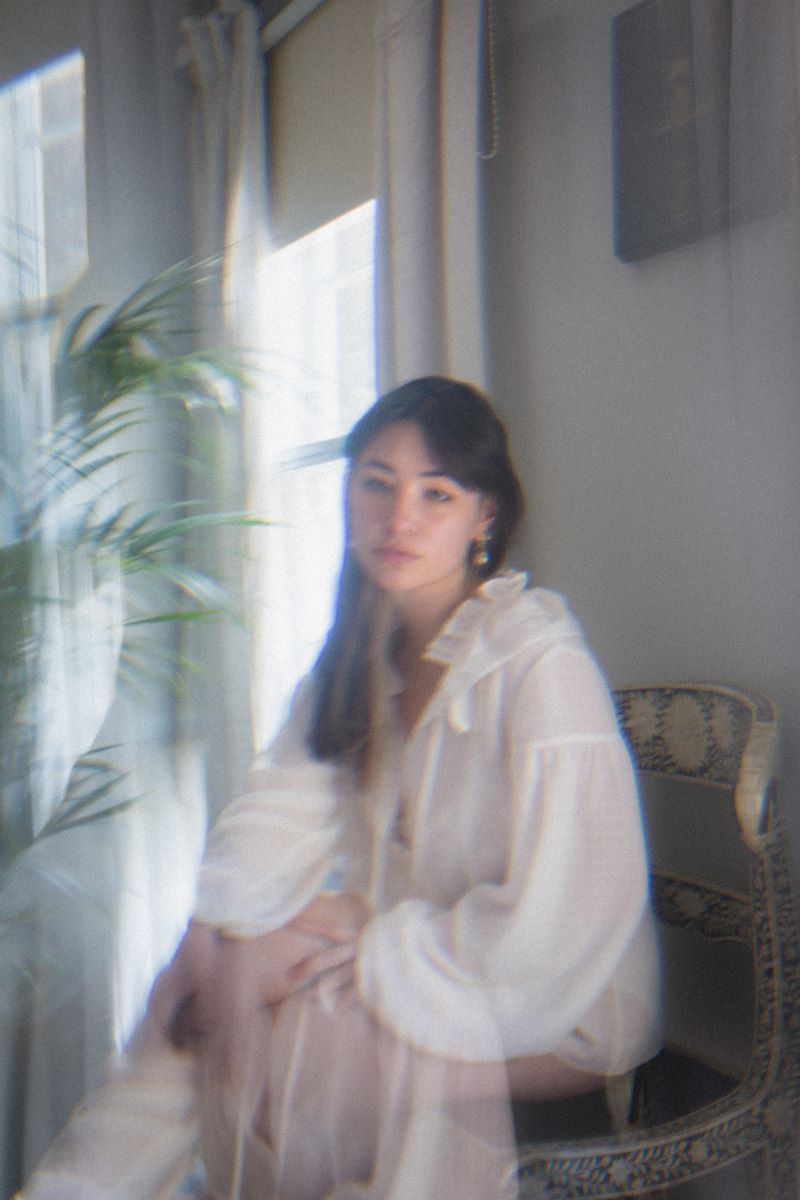
View of the Arts: Liang, you’ve had a fascinating upbringing, having grown up in 8 different countries before turning 18. How has this multicultural background influenced your music and artistic expression?
Liang Lawrence: I’d like to think it’s made me quite an open person and I mean that in both very open to being vulnerable but also very open to learning from other people’s experiences and stories.
View of the Arts: Moving between countries at a young age must have been challenging. How did you find consistency and stability in music during those times?
LL: I think writing and music was the only thing I thought I could control and had to myself. It was the only way I felt that I could express myself whilst having such an unsettled feeling all the time. I’m part of a family that very much dealt with the grievances of moving around by “just getting on with it” and I think I never wanted to feel like a bother or a burden expressing just how overwhelming things felt but the music was able to turn something I thought would be annoying and difficult into something lovely and easy for people to hear. I remember the first few times I’d finished writing a song and it was the proudest I’d ever felt.
View of the Arts: You mentioned that music has been “a grounding force for you”. Could you elaborate on how learning to play the guitar and writing songs from your bedroom helped you navigate the difficulties of your childhood and teenage years?
LL: I think it gave me something to completely lose myself in. I always struggled to focus at school but the second I started to write or learn a song, I was fixated on getting it perfect and spending as much time as needed to get there. To this day, I am terrible at explaining how I feel, I practically go mute when I’m asked to talk about how I feel but if I’m able to write a song and explain it in the context of a story it feels a lot less scary.
View of the Arts: Your debut EP, letters to myself, was a huge success, racking up over 1 million streams in just a few weeks. How did it feel to see such a positive reception to your first major release?
LL: I was shocked and I’m not sure the support I’ve received since putting my music online has ever felt real, to be honest. I feel incredibly lucky and grateful to have so many kind and understanding people looking out for me and my music. It does just make me want to get better at writing and storytelling in hopes of connecting with these already so supportive people even more.
View of the Arts: You just released your second EP, What’s Dead and Gone, which contains 6 songs that explore themes of youth, romance, and modern femininity. How much of your personal journey over the past year influenced this release?
LL: They could not be more influenced by my personal journey over the past year, to be honest. All of these songs were written in the year after my first EP, which came out almost exactly a year ago. I spent the majority of the past year of my life just dying to understand myself and trying to feel true to myself, my femininity, and my sexuality, to be honest. It resulted in plenty of terrible and wouldn’t-ever-go-back-there experiences, but equally, I think I needed to go through them to understand myself better.
I was practicing some pretty reckless behaviors by myself and with others, sometimes strangers, and just realized that so much of my validation came from other people, specifically men. Once I kind of circumnavigated that, I realized that so much was tied into it. I had a period where I was almost experiencing what I can only understand as gender dysphoria and just feeling like I wasn’t “a good woman,” and I couldn’t express myself sexually without crying, and I never wanted anything to do with my own body unless someone else wanted it. All that to say, those are the feelings that were governing my headspace when I wrote these songs.
View of the Arts: The title What’s Dead and Gone is quite interesting. Can you tell us how you came up with it and what it signifies for you?
LL: To be honest, it was more of a title for myself than anyone else. I just wanted to mark the end of the bad habits, feelings, and people this project revolved around. In the most dramatic and lowest of times, I really felt like whatever personality and character I had in me was dead and I was just this corpse that was unattractive and uninteresting walking around, so there are also a lot of references to death throughout the EP.
View of the Arts: While I truly love all the songs on this EP, two of my favourites are Set Me Up and If Only. Could you share more about the creative process behind these tracks? Specifically, I’d love to hear about your approach to the musical arrangements and what was going through your mind when you wrote the lyrics.
LL: Those two songs stem from the same story, they’re just talking about two very different angles and feelings that were sparked by the same situation. I wrote them just a month apart from each other as well so I think I was finally able to process the situation in a way that meant I could almost choose how to approach it. I find I can only really write about something once I’ve processed it. I wrote Set Me Up with a lovely writer/producer, Hugo M Hardy. Truly one of my favourite people ever. It was our first session and I came in with this experience that I wanted to tell a story about that painted me as the villain in a way.
Set Me Up talks about letting someone fall in love with this ideal version of you and love that that’s as far as it will go. It was a really interesting spot to be in and it was just a realisation both of us were projecting this ideal on our relationship and ourselves. We changed the demo of this song a lot, it was a bit more of a soft rock sound at first and then I wanted to give more space to the lyrics and story so we stripped it back a bit and slowed it down and Joey Walker and I put it in this electronic folk world that gets busier and “messier” as you get further into the song/story.
If Only was the last song I’ve ever written about this relationship I had and I think it was very much just an acceptance that there was a part of me that wanted something to work out between us, which I think I felt guilty about for a long time for several reasons. But I think I was combatting that guilt and not sitting with it for months because of how they treated me and who they were and the nature of our relationship and then eventually wrote ‘If Only’ as almost a surrender. Joey and I wanted to keep it pretty stripped, especially being the last track of the EP. Then when we added strings we just knew that was all it needed and I immediately cried when Jed Bevington played the outro in the studio.
I think “What’s Dead and Gone” is even more introspective than ever. It’s the most honest I’ve ever been in my music.
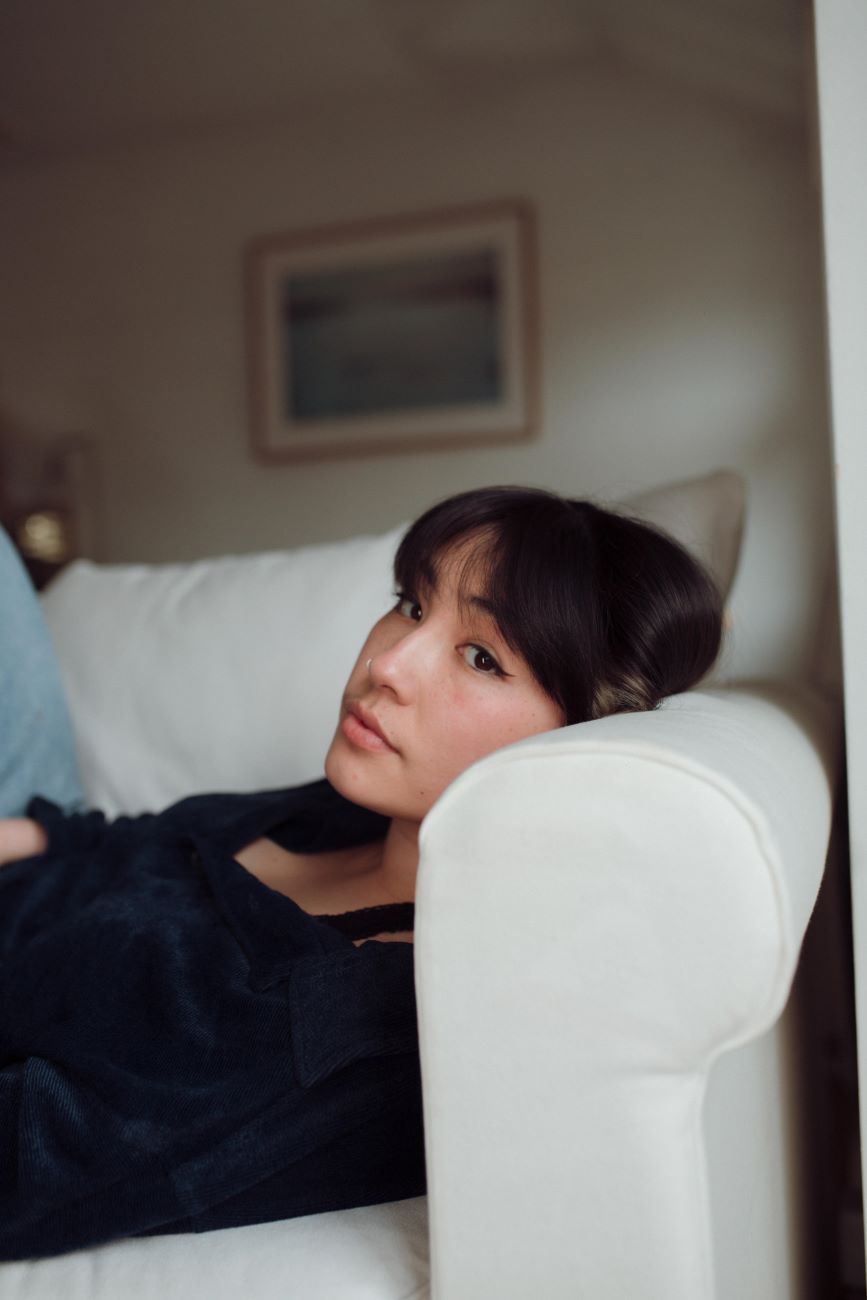
View of the Arts: Your music leans into indie folk, soft rock, and electronic territories. How do artists like Clairo, The Japanese House, and boygenius inspire your sound and songwriting?
LL: I love how honest and almost “in real time” all of their writing is. Eulogy was the first song we worked on in this project and that soft rock and electronic folk sound just really suited the way the stories needed to be told.
View of the Arts: You’ve supported various artists and played at a BBC Introducing Showcase. What have been some of the most memorable moments from these experiences?
LL: My guitarist and I recently played some amazing shows in China supporting HONNE and I think those were just so special for so many reasons. I got to see my family and be back home for the first time in five years all while doing what I love. Not to mention the crowds were the biggest we’d ever played and they were so sweet.
View of the Arts: As an artist with an Asian background, how do you perceive the representation of Asians in the music industry? Do you feel a sense of responsibility to bring more visibility to Asian artists?
LL: I think especially in folk, indie, and the singer-songwriter world, I do often feel incredibly out of place and frequently think about how I don’t look like most of my peers. I believe it’s the industry’s responsibility as a whole to recognise that POC have been overlooked and silenced in all genres for years and years, so shedding light on POC artists with, ultimately what is the most important aspect; that they have different voices and experiences and stories to tell through their music, is always so important. I will never stop sharing Asian artists I love and am inspired by and I think it’s so important that it’s made clear that there is room for all of us and pitting artists against each other for the token space of “Asian Indie Pop Girly” (just as an example) is incredibly toxic and undermining.
I think it’s also important to note that when asking an Asian artist about their sense of responsibility to represent an entire continent of people isn’t very considered which is part of the problem. There are five different regions within the continent of Asia, made up of 48 countries of which have incredibly different cultures and incredibly rich and complicated histories. I feel incredibly lucky and grateful to be where I am but the space I take up in this industry could never be used to represent “Asian artists”.
View of the Arts: You’ve drawn comparisons to artists like Clairo and beabadoobee. How do you feel about these comparisons, and how do you see your musical style?
LL: I love Clairo and beabadoobee, I love how they are experimenting with different genres in pop. I also love both of their vibes. I think at the core of my music it’s always incredibly honest and telling some kind of story which means that I’m able to experiment with my sound until I find one that feels most like me. I think I’m still coming to grips with my sound and that’s so fine and so important but I’m excited as it feels closer and closer with every song I write.
View of the Arts: Your EP letters to myself was very introspective. How do you feel What’s Dead and Gone differs from or builds upon your previous work?
LL: I think WDAG is even more introspective than ever. It’s the most honest I’ve ever been in my music. In terms of sound, I think it’s a real step towards the live band sound that I ultimately want to settle in because that’s what I love.
View of the Arts: When you are not working and writing songs, what do you do to get away from it all and relax?
LL: To be honest just spending time in nature is when I feel most relaxed. I love going for sea swims so when I can get away to a beach I am the happiest.
View of the Arts: What are your plans for the future? Are there any new musical directions or projects you’re excited to explore?
LL: I’m super excited to continue to explore working with my band. I love collaborating and the idea of creating a project with my band and then getting to perform the song is so exciting to me. I’m in a real country/grunge/midwest emo phase so hopefully there will be stuff coming in that world soon. I also am just excited to get even more honest in my music than I have ever been. As grateful as I am for the people who have found me through social media, I’m interested to see how things change as I worry less about my social media presence and “image” and more just about the stories I’m telling.
Written and interviewed by Maggie Gogler
View of the Arts is an online publication that chiefly deals with films, music, and art, with an emphasis on the Asian entertainment industry. We are hoping our audience will grow with us as we begin to explore new platforms such as K-pop / K-music, and Asian music in general, and continue to dive into the talented and ever-growing scene of film, music, and arts, worldwide.

 VIEW OF THE ARTS