
Warning: Spoilers ahead.
Set amongst the fairytale-like rural landscapes of Belgium, Anthony Schatteman’s Young Hearts takes us into the lives of Elias (Lou Goossens) and Alexander (Marius De Saeger) as they pry open their feelings for one another – and navigate first love. With musical magic from Ruben De Gheselle, the film suffocates you with sensory delights as you’re pulled into a serene scene: so much so that if it featured poorer actors, they’d simply be an afterthought.
The film is like eight tablespoons of sugar with a teeny teaspoon’s worth of salt grains dashed on top. It tries to pull heartstrings with the occasional character conflicts but instead just continues to be sweet; the inevitable happy ending is just so obviously on the horizon. But the predictable plot isn’t necessarily a bad thing. Young Hearts does not exist to be a revolutionary tale; it is a beautifully ordinary look on life, about the new, complex feelings of young teens, and the growing pains that come with such experiences. What viewers – particularly the LGBTQIA+ community – will primarily get out of the film is comfort. It delves deep into themes encompassing figuring out oneself, coming of age, and dealing with the disapproval of others.

Goossens is stellar at carrying Elias’ emotions, most of all during a scene that involves him coming out as gay – something he’d concealed out of fear of people’s reactions. In scenes involving such a huge amount of tears, the young actor puts those with more experience in the industry to shame – being able to convey anxiety, insecurity, and exhaustion all believably and simultaneously.
While the first arc largely takes us on a sightseeing tour of the Belgian countryside, the latter parts of the film narrow the shots with faces filling the frame, pulling us closer into the characters’ world as feelings develop. This is best done during Elias and Alex’s reunion near the end of the film; everything else in the scene is dramatically blurred as the shallow depth of field only allows for focus on the two boys’ emotion-filled faces. The score is gently placed throughout when dealing with the tender feelings of the young boys, but as the film reaches its highest conflict, the music withers out for a while; the fairytale has seemingly died, and they must face reality. A chirpy, weightless song about love introduces us to the story, and a gorgeous soundtrack moves with the more intense moments, but this is harshly ripped from both the viewer and Elias once his world briefly seems to fall apart.
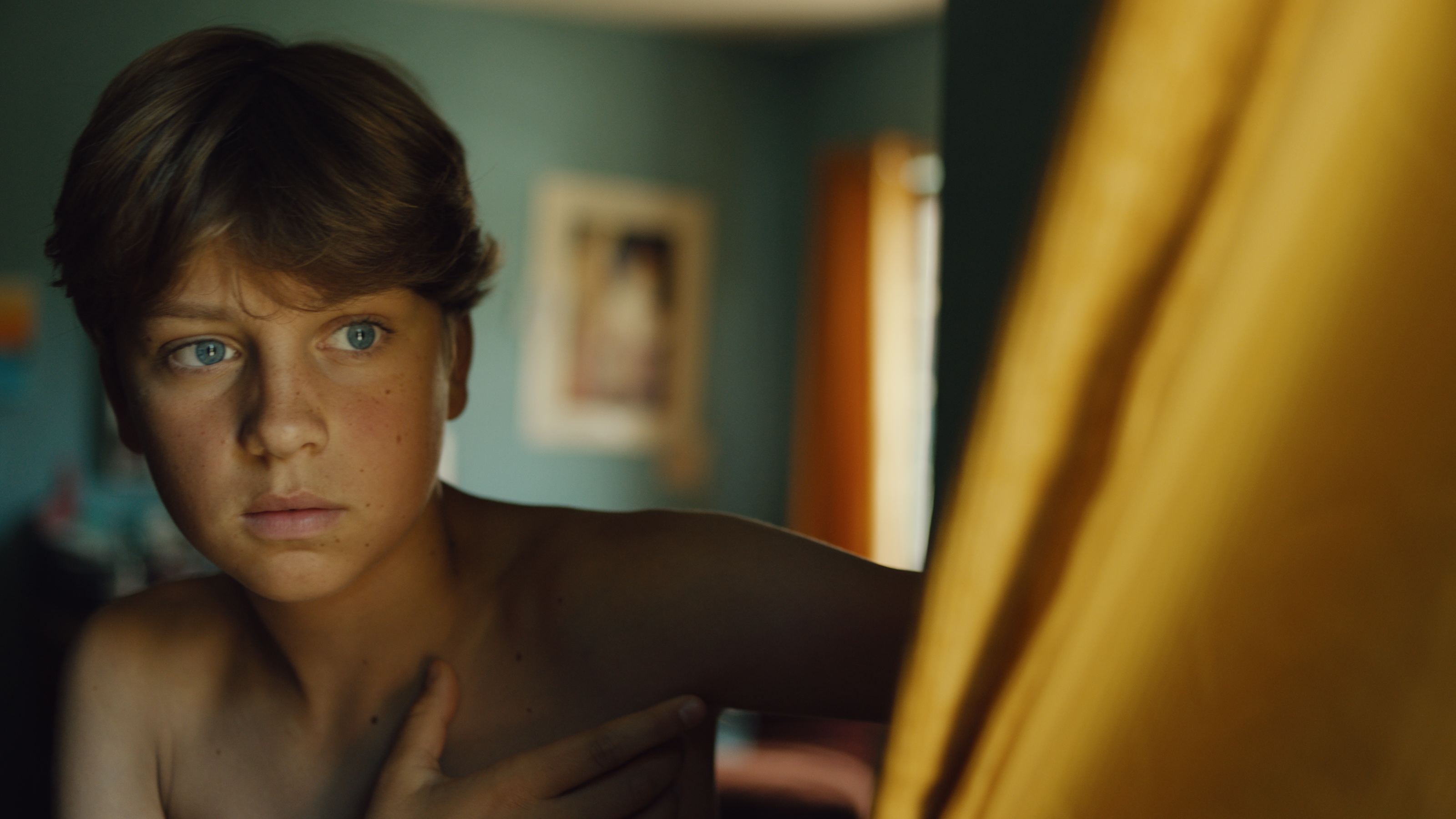
Young Hearts was written with love. The pacing is as gentle as you’d expect, and the dialogue is realistic. During the story’s climax, Elias defeatedly tells his grandpa (Dirk van Dijck) that he wants to die, to which the man replies: “If you need me once you’re dead, I’ll be on the terrace.” Such lines can only make viewers chuckle with familiarity, as sarcastic remarks in the face of problems are an utterly human trait, and sometimes the most effective method of all in getting a friend off their feet. If the movie’s intention was to soothe the audience and comfort them with its hopeful spirit, then it certainly succeeded. Young Hearts serves as a reminder that all kinds of true love – whether romantic, filial, or neighbourly – should be cherished. Grandpa Fred said it best: “That’s not something you come across twice in a lifetime.”
Rating:
Written by Maddie Armstrong
View of the Arts is an online publication that chiefly deals with films, music, and art, with an emphasis on the Asian entertainment industry. We are hoping our audience will grow with us as we begin to explore new platforms such as K-pop / K-music, and Asian music in general, and continue to dive into the talented and ever-growing scene of film, music, and arts, worldwide.

 VIEW OF THE ARTS
Ich bin gespannt auf den Film wenn er in Germany zu sehen ist.Die Rezessionen sind ja viel versprechend.