
In the film industry, where originality often takes a back seat to commercial formulas, Meryam Joobeur is a truly authentic storyteller. Her latest project, screened in the Competition at the 74th Berlin International Film Festival, Who Do I Belong To, beautifully connects themes of family, its identity, and the ramifications of extremism with a deft touch.
Joobeur’s narrative weaves a tale of familial strife and societal unrest, led by an emotionally charged performance from Salha Nasraoui as Aicha. The film follows Aicha’s harrowing journey to uncover the truth behind her sons’ involvement with extremism. As familial bonds clash with moral dilemmas, the film depicts themes of motherhood, morality, and the complexities of societal norms with great finesse. Shining with its authentic performances and atmospheric cinematography, Who Do I Belong To is a moving exploration of identity and belonging.
We recently had the opportunity to interview Meryam Joobeur regarding the film, discussing her narrative approach, cinematography choices, and the hopes she holds for the film and its impact on the audience.
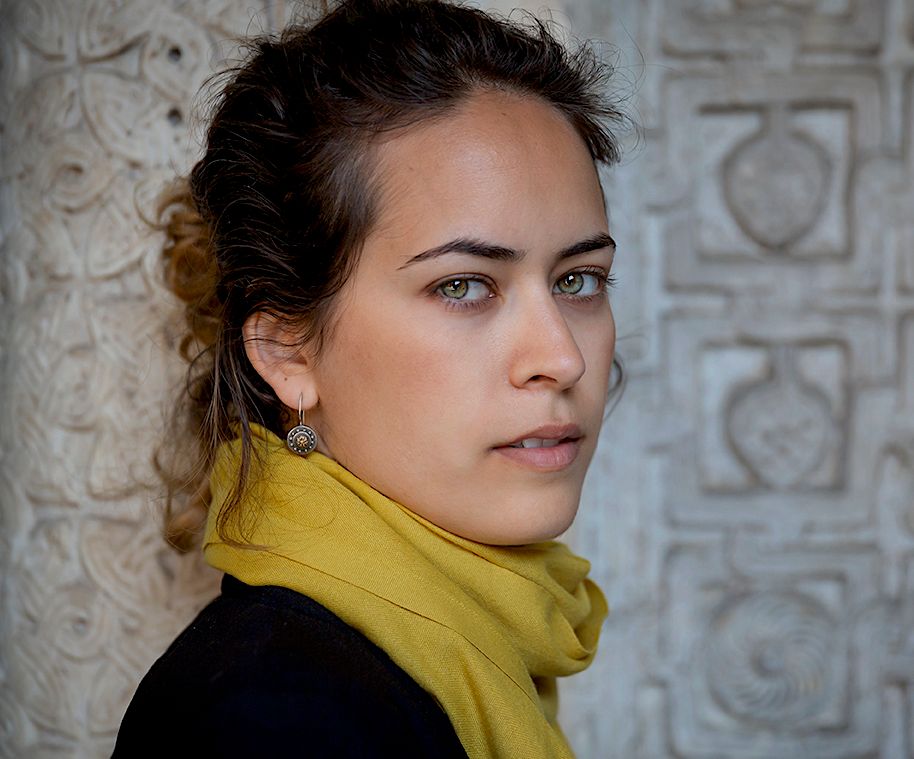
View of the Arts: Back in 2020, I remember watching Brotherhood, which starred some of the same actors as the ones featured in Who Do I Belong To. While in Brotherhood, you took a sensitive but wildly brave approach to confronting moral dilemmas and family tragedy, with Who Do I Belong To, you yet again took the same approach, but this time you focused on a female perspective, turning the narrative into a feature. Why have you decided to do a feature this time?
Meryam Joobeur: What’s interesting is that I already had the idea to make this feature film while I was shooting the short, Brotherhood. In the short, I focused on the father’s perspective and the father-and-son dynamics. But during the shoot, I found myself really attracted to the female characters. So, I think that was the first idea I had: what if this happened instead, and what if it was told from the mother’s perspective, and how I could thematically evolve it? It kind of happened supernaturally, instinctively, and, you know, the fun thing for me is that I felt like I was exploring new territory.
VOA: But when you made that short film, were you writing the screenplay for the feature film at the same time, or did you just have some ideas floating around?
MJ: I started writing the screenplay a few months after we finished the shoot, but I was thinking about it. As soon as I had the idea in my head, I started talking to my collaborators about it, and they were excited about it as well. And everything kind of just snowballed, you know.
VOA: How did you approach the portrayal of complex familial relationships and societal morality in the film, especially concerning the character of Aicha and her sons’ involvement with extremism?
MJ: It was definitely a challenging subject. What I try to do is kind of explore it through the universal lens of extremism in general. To think more about the dilemma of the mother when your child does such an extreme and violent act. And in my mind, I was thinking, okay, what is the root of that? I think, for any parent who’s experienced having a child that did something extreme, I’m sure emotionally – the confusion, the denial, the pain, the hope – all of that comes into play, and I kind of approached it in that manner. What is the emotional part of something like that? Instead of looking at it through a political and social lens, [I wanted to show] these characters’ feelings, really. You know, I also think that in life, sometimes a lot of things go unanswered.
I wanted the film to illustrate how the capacity for violence or good is a universal capacity. It’s not certain cultures, or certain religions, or certain people who are more prone to it. It’s really universal, and that’s what I believe.
VOA: The shift in focus to female characters reflects a desire to examine themes like the victimisation of women. Could you elaborate on this decision and its significance within the narrative?
When I chose the direction of this film, I didn’t realise that it had a deeply personal significance in the sense that when I was making the film, I was also reflecting on what it means to be a woman. And I think one of the hard things for us as women that we wrangle with is the history of violence towards women. It’s something that’s really hard to wrap your mind around, and it’s a very painful thing as a woman to realise that there is a higher risk for us than men. Especially during war, the abuse of women is used as a weapon. What I was trying to illustrate is that violence towards women doesn’t just affect women. And that’s why we see the character of Mehdi really haunted by his actions – there’s also an impact on men amidst everything. But, of course, there are people out there who have no empathy, but broadly speaking, I would like to think that if you commit an act of violence, it will impact you, and a piece of your soul will be destroyed [in some ways]. So, for me, it was important to illustrate that by inflicting violence, you are also inflicting the violence on yourself, on the community, and, in the case of this film, on the family as well. That’s why the relationship between Mehdi and Brahim is a complex one. The wounds of guilt and trauma are really interrelated in that relationship.
VOA: The cinematography, particularly by Vincent Gonneville, plays a significant role in capturing the emotional and physical exploration of the family dynamics. How did you work with the cinematographer to achieve the visual atmosphere of the film?
MJ: I’ve been working with Vincent for a long time, over a decade or so. We definitely put a lot of attention into the little details when shooting a scene, trying to figure out what’s important and how to illustrate it. For this film, the challenge was to create a sense of true magical realism, which is not easy. Obviously, we were inspired by the actual location and place, so the colours are true to that – we paid a lot of attention to the colour pink and its connection to femininity, as well as the colour red. We definitely paid attention to that, but a lot of things were also instinctive; we just did what felt right, you know.
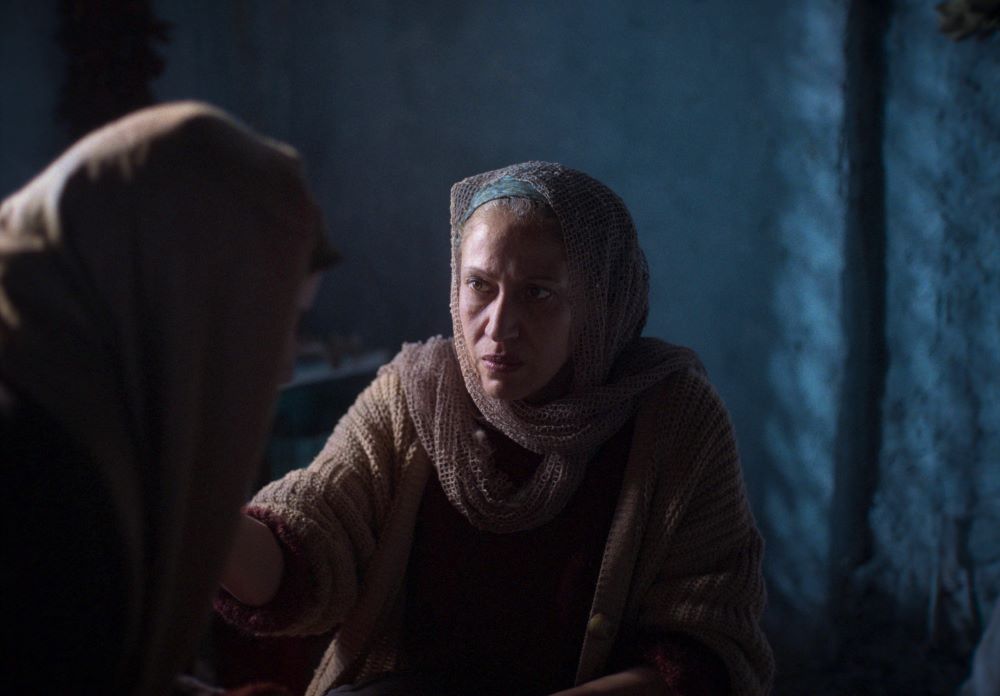
VOA: The film’s aesthetic shifts between realism and a folkloric atmosphere. Could you discuss the decision-making process behind this stylistic approach and its impact on the storytelling? I love how you left the film open for the audience to interpret in their own way.
MJ: That’s what I wanted; I wanted the audience to be free to interpret the film. We were thinking, while editing, how we could make a film where we give the viewer just enough information or context but leave it open enough for you guys to create your own relationship with the film and your own interpretation. I’m very comfortable with people having their own relationship with the film and their own interpretation. It is actually exciting for me, but it was a challenge to try to figure out a balance.
In terms of magical realism, I’ve always loved metaphors and archetypes. Interestingly enough, this film was inspired a lot by the village where we shot it. And in this village, and in Tunisia in general, but particularly in this village, there is a strong belief in magic, so people will tell you that they’ve seen spirits. There is a very strong tradition when it comes to mythology and magic. The magical realism is actually closer to the reality of the place where we filmed.
VOA: How do you see the film contributing to discussions about identity, belonging, and the impact of extremism on families, both in Tunisia and globally?
MJ: My aspiration, and perhaps why I left it somewhat open to interpretation, is for it to spark dialogue among people. I envision individuals engaging with one another, interpreting, and challenging each other’s perceptions of the film’s meaning. Reflecting on my own journey, particularly during my twenties, I recognised a common phase where one desires to change the world, harbouring overarching conclusions about societal complexities. However, with age comes the realisation of the inherent complexity of things. For me, the truth lies in the belief that healing oneself can lead to healing communities and, potentially, extending that healing to the external world.
Previously, I viewed healing as a monumental task, believing it required addressing grand-scale issues before any progress could be made. Yet, with time, I’ve come to understand that healing begins on an individual level. This realisation has fuelled my desire to focus on families, viewing them as the fundamental building blocks of society. If we can cultivate better communication, forgiveness, and the resolution of resentments within families, there is hope for broader societal change.
Thus, my intention in creating a film about family is twofold: to explore the dynamics of familial relationships, including unresolved resentments, and to show that family extends beyond blood ties. I perceive family as constructed and fluid, echoing my belief that identity is similarly fluid. Currently, I observe people clinging tightly to their identities, often leading to conflict and violence born out of fear. However, I hold hope that we can develop a more fluid and playful relationship with our identities, acknowledging their constant evolution.
Throughout the film, characters grapple with shifting identities, particularly as traditional roles and expectations dissolve. This mirrors my own journey during the filmmaking process, prompting me to question who we truly are when stripped of societal labels. It’s a daunting process, but from my experience, it also offers a sense of liberation and freedom.
Ultimately, my hope is that the film stimulates conversations about identity and encourages viewers to contemplate who we are beyond the labels we cling to. It’s a challenging journey, but one that, from personal experience, offers growth and understanding.
VOA: Looking at Brotherhood and Who Do I Belong To, I was wondering, will you continue with the same themes in your future projects or would you like to tackle a different subject?
MJ: To be honest, I haven’t yet decided on my next project. The truth is, I wrapped up this film about a month ago, so it’s still fresh in my mind. I find it fascinating how, once a project is completed, my mind starts to wander towards the next creative endeavour. As we discussed earlier, I’m naturally inclined to delve into the essence of things and to explore their roots. So, regardless of the subject matter or social context, you can be sure that my future projects will always seek to uncover the underlying essence of the subject matter.
VOA: My last question is about Aicha, played by Salha Nasraoui. What was it like to work with her on that film? She is absolutely stunning in the film – she has some incredible and emotionally charged moments. So, I would love to know, how did you collaborate on this project and during the shoot?
MJ: Salha was one of the most invaluable allies throughout the making of this film. She stood out among the creative collaborators, wholeheartedly championing the story from its inception. Salha actively participated in training the actors, drawing from her extensive experience as a gifted theatre actress. The bond of trust that Salha and I had and still have was crucial in tapping into the essence of her character. Alongside the other actors, we forged a strong and close-knit relationship, allowing us to explore the depths of the story with authenticity. Salha’s portrayal was remarkable; she poured her heart and soul into the role, demonstrating immense courage and trust throughout the process. I am deeply grateful for her dedication and contribution to the film.
Written and interviewed by Maggie Gogler
Featured image courtesy of Berlinale
View of the Arts is an online publication that chiefly deals with films, music, and art, with an emphasis on the Asian entertainment industry. We are hoping our audience will grow with us as we begin to explore new platforms such as K-pop / K-music, and Asian music in general, and continue to dive into the talented and ever-growing scene of film, music, and arts, worldwide.

 VIEW OF THE ARTS