
Creative individuals often express their vulnerability in stark contrast to those who choose to conceal their emotions behind layers of metaphor and abstraction.
For South Korean artist Sunburnkids, the release of his debut full-length album, Elephant in the Room, presents a daring leap into the deep recesses of his life, unearthing scars he once kept hidden. As an artist who not only creates music but also dives into self-taught skills in fashion and visual storytelling, Sunburnkids offers a creative vision that’s as clear as it is complex, taking listeners on a journey through personal reckoning and emotional catharsis.
The title Elephant in the Room is both a reflection and an exploration of those unspoken truths we carry with us – truths that, much like the proverbial elephant, loom large but often remain unaddressed. “I had some flaws I wanted to hide in my life, and I believe everyone has their own too,” Sunburnkids shares. He draws a parallel between his own experiences and the silent burden that many carry. “Like the saying ‘elephant in the room,’ these were topics that felt taboo – things everyone knows but no one talks about.” Yet, through the making of this album, those hidden flaws are laid bare, not for spectacle, but as a means of connection and guidance for those listening. “A little kid told me that my music became their life,” he recalls. “I wanted to help guide that child through the many moments they will experience as they grow.”
Sunburnkids’ music moves past personal confession into something deeper; it is a form of healing, a journey through which he hopes others might find solace. His song Red Cheek Boys is one of the most poignant pieces in the album, accompanied by a visually beautiful yet sad music video. The track, as Sunburnkids explains, was born from a deeply personal trauma – one originated from a childhood relationship that left a deep-rooted impact. “At that time, my cheeks would blush, and I engaged in something intimate with a girl, though I was too young to understand shame,” he says. The shame from that encounter, though buried, later surfaced as he found himself the target of threats and mockery from his friends. “I created this song and music video to convey what needed to be broken, and to show that the fear I should have been wary of was not the judgment of others, but something deeper within.”
The video’s transitions from colour to black and white, then back to colour, symbolise not only this internal struggle but also the process of reclaiming one’s narrative. The scene of a crying child, drawn in animation, and surrounded by others, captures the isolation and weight of carrying an untold story. Each element in the video is incredibly crafted, combining the visual and lyrical to paint a portrait of shame, growth, and redemption. “It’s about what we hide, but also about how we break free from those confinements,” Sunburnkids says.
While Elephant in the Room carries a heavy emotional load, there are moments of musical lightness that lift its weight. Crook blends a jazzy vibe with thoughtful lyrics. Sunburnkids explains that his creative process for the song, as with much of his work, begins with capturing his emotions on paper. “I always start with pen and paper, capturing the emotions I felt at that moment,” he says. “With Crook, I felt like I was standing in a courtroom, surrounded by a crowd closing in on me.” The jazz arrangement was a deliberate choice, its fluidity capturing those moments of breath and freedom in the face of pressure. “That sense of transition was essential,” he adds. The song’s jazzy layers reveal how, for Sunburnkids, music is more than a backdrop to lyrics, it’s a vehicle for storytelling itself.
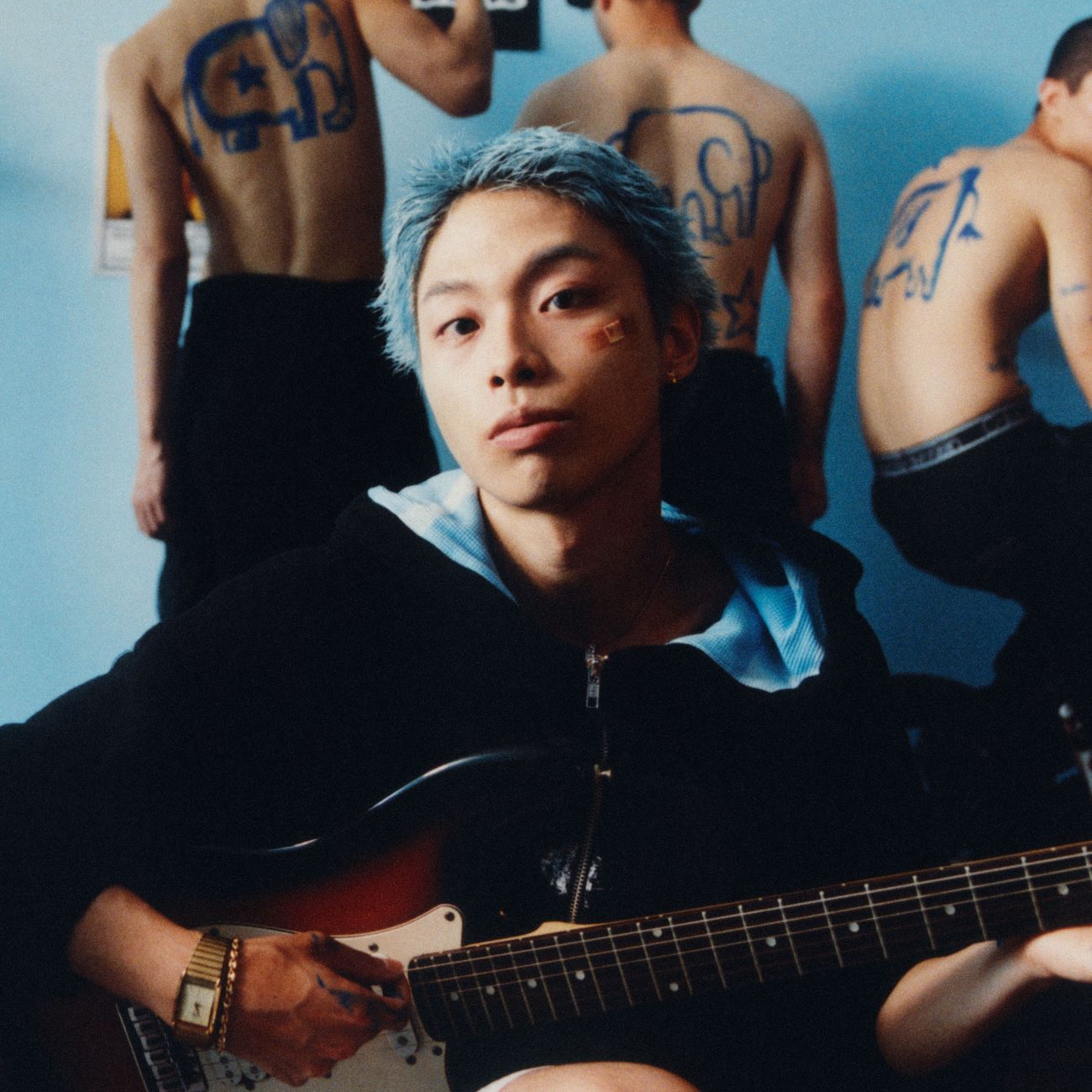
The complexity of Elephant in the Room does not lie solely in its lyrical honesty but also in its sonic diversity. Tracks like The Fence and Fisher Man presents a range of musical influences, each serving to amplify the themes of human connection, fear, and transformation. Collaboration plays a vital role in these tracks, with Sunburnkids involving his family and even children to bring his stories to life. “I wanted to tell stories through other people’s souls,” he says. “That’s why my mom, my sibling, and even the children were involved. I feel they gave voice to the lives behind my lyrics and added weight to the message I wanted to convey.”
Involving children in both the creative process and the album’s message brings an additional dimension to the project. For Sunburnkids, the children’s involvement was not merely an artistic decision; it was an eye-opening experience. “I used to think children weren’t very honest, but seeing them reflect their lives in their creations made me realise how I should be creating my own work,” he admits. Their honest interpretations of his stories shaped not only the sound of the album but its heart as well.
Yet, for all its collaborative spirit, Elephant in the Room remains an intensely personal work. Its making was cathartic for Sunburnkids, a means of confronting the flaws he had long hidden. “This album was a personal challenge for me to overcome,” he reveals. “I’ve always avoided talking about my flaws with anyone, and for a long time, I wore a mask to hide them.” In this way, the album stands as both a reckoning and a release, a path through pain and into self-acceptance.
As an artist who has taught himself everything from music to fashion, Sunburnkids’ independence has shaped his incredible and original sound and vision. “I don’t think anyone truly understands my life,” he says, with a quiet determination. “How could anyone grasp the depth of the colours, scents, and emotions I experienced back then? So I knew I had to face it myself, without making excuses.” His faithfulness to clarity in his lyrics reflects this need for understanding – for himself and his audience. “Sometimes, just one line would take me over a week,” he shares. “I wanted my lyrics to be a reflection of my life. My lived experiences had to become my lyrics.”
Without a doubt, Elephant in the Room is a powerful reflection of Sunburnkids’ journey through shame, fear, and personal growth. As he looks ahead to future projects, the artist envisions a new chapter, one where he explores life after overcoming these challenges. “If this album was about understanding my flaws and the world’s misery, then I want to write about what life looks like after overcoming those challenges,” he says.
For anyone looking to find their voice in their creative world, Sunburnkids shares advice that reflects his journey: “It’s not about reaching a huge audience, but if you can reach just one person – someone close to you – and give life to that person through your lyrics and expressions, then you’ve achieved something real.” And in that way, his music reaches beyond personal catharsis, perhaps becoming a lifeline for those listening and guiding them, one song at a time.
Written and interviewed by Maggie Gogler
Featured image courtesy of Sunburnkids
View of the Arts is an online publication that chiefly deals with films, music, and art, with an emphasis on the Asian entertainment industry. We hope our audience will grow with us as we explore new platforms such as K-pop / K-music, and Asian music in general, and continue to dive into the talented and ever-growing scene of film, music, and arts, worldwide.

 VIEW OF THE ARTS