
The Korean hip-hop scene has undergone a dramatic evolution in recent years, gaining widespread recognition. From the underground to mainstream success, the genre has attracted attention for its great mix of Korean culture and international influences. Artists in Korea are increasingly showing their individuality and creating distinct sounds that attract not only their local audiences but also those overseas. This shift has seen a new generation of artists brave enough to speak out and challenge societal norms while using their platforms to spark meaningful conversations.
Korean hip-hop shows, particularly the latest one, RAP:PUBLIC, have become essential platforms in the industry. These shows offer a stage for established artists and spotlight emerging voices, bringing attention to lesser-known rappers who may otherwise struggle to gain recognition in a competitive music industry. After watching RAP:PUBLIC, one can admit that the program proved to be invaluable for both types of artists. For the newcomers, the recognition and connections made through it opened doors to collaborations, performances, and future projects. For the established names, this show surely is a reminder of their influence. It also allows them to mentor and encourage younger or less-established rappers, helping them maintain their relevance in a rapidly changing scene.
RAP:PUBLIC invited many talented individuals, including James An, a Korean-Canadian artist whose music career began in 2020 with his debut release, Impressions. Since then, he has released albums like Young, We Love The Vibe, Meditation, and his latest work, I Have No Friends And I Must Party. His music reflects his style and willingness to address social issues through his lyrics. Despite his impressive catalog, James continues to climb the success ladder on his own terms.
Shortly after the show concluded, we had the opportunity to reconnect with the artist to discuss RAP:PUBLIC in great detail. Our conversation covered everything from his team, BLOCK 3 – which featured an impressive lineup of rappers, including HAON, SINCE, Reddy, Kyle Yang, DOMMIU, Junha Noh, and Chaboom (final lineup) – to the invaluable lessons gained from collaborating with some of Korea’s most promising hip-hop talents.
I feel very lucky to have been a part of BLOCK 3 because the team had great chemistry, with many members prioritizing teamwork, communication, and shared values – James An
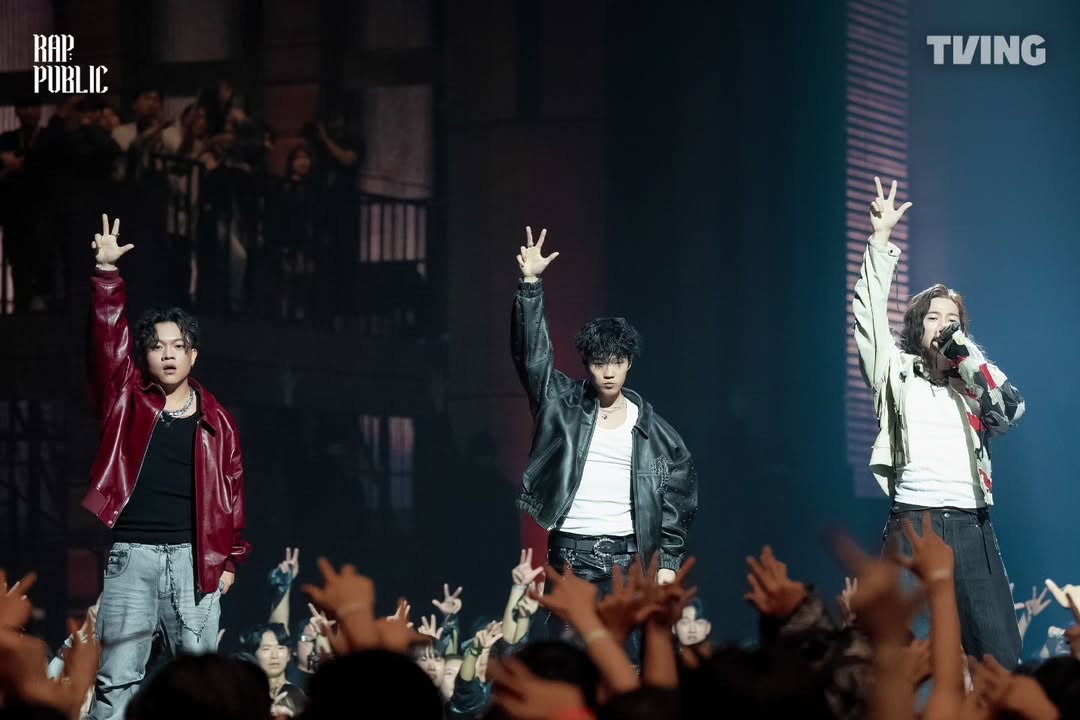
View of the Arts: Starting off with the basics, how did you first hear about RAP:PUBLIC, and what made you participate in such an intense survival competition?
James An: At first, it was announced and I was informed about it under names like RAP NATION, etc. A few months before the shooting began, I got a call from CJ ENM about having a meeting with them about the program. I was very eager to learn more about it and also answer their questions about me in connection to the program. The meeting lasted a few hours, and I thought about the program quite positively because I got the impression that it would be a great opportunity for me to not only show my rap but also my character and personality to the audience. It also seemed like a new format with teamwork and strategy involved in addition to just rap.
VOA: In RAP:PUBLIC, survival wasn’t just about individual talent but also about teamwork. How did you manage and adapt to the dynamics within BLOCK 3, especially with rappers like Haon and Reddy on your team?
JA: I felt very confident in my ability to work in a team and maximize our teamwork, and this was one of the main elements of the program that I looked forward to. Being a team player is something that I have personally taken a lot of pride in, and am very passionate about. I’ve been fortunate to have been a part of diverse teams and organizations in different settings with different goals, and I’ve learned a lot from inspiring and fantastic leaders and teammates throughout my life. Of course, RAP:PUBLIC turned out to be a very particular and intense environment, and I had to react quickly throughout the program and constantly find ways to contribute in ways that I could in different circumstances.
I feel very lucky to have been a part of BLOCK 3 because the team had great chemistry, with many members prioritizing teamwork, communication, and shared values. Personally, I aimed to develop trust and transparency with everyone and consistently encouraged different opinions. I focused on ensuring that each member felt comfortable sharing their ideas, regardless of whether they were good, bad, useful, or not. The power dynamics within these blocks and among rappers are unique, with various factors at play that differ from other teams, organizations, or settings. For instance, rappers with less experience or smaller followings might feel less confident expressing their opinions.
Throughout the program, I tried not only to acknowledge and appreciate diverse perspectives but also to validate the emotions we experienced—many of which felt like a roller coaster. A big shoutout to HAON and Reddy hyung for leading the team so effectively and positively! Their influence in setting the tone for the entire block was both significant and essential. I can’t begin to fathom how much pressure they must have been under.
VOA: The concept of forming ‘blocks’ and surviving as a team while competing within the group must have been challenging. How did you balance cooperation with competition within BLOCK 3?
JA: For me, I’ve learned that cooperation and trust can go a long way, and that was the approach I took throughout the program. I also tried to think long-term, to communicate, and help make group decisions in a way that would allow us to maintain and further foster our relationships even after the program. I personally tried to prioritize the team, our goals, and our performance over my personal goals because I believed that the team’s performance and progress would be far more beneficial and rewarding for everyone involved, including myself. At times, it was challenging to balance this, but I think I always tried to trust the team, as well as the individual members in the block. As long as we did our best, shared our perspectives openly without judgment as much as possible, and made decisions as a team, I had faith that we would go far in the program – and beyond as well.
I think we had an overall very positive vibe as a team, and we also had great leadership from Haon and Reddy hyung – James An
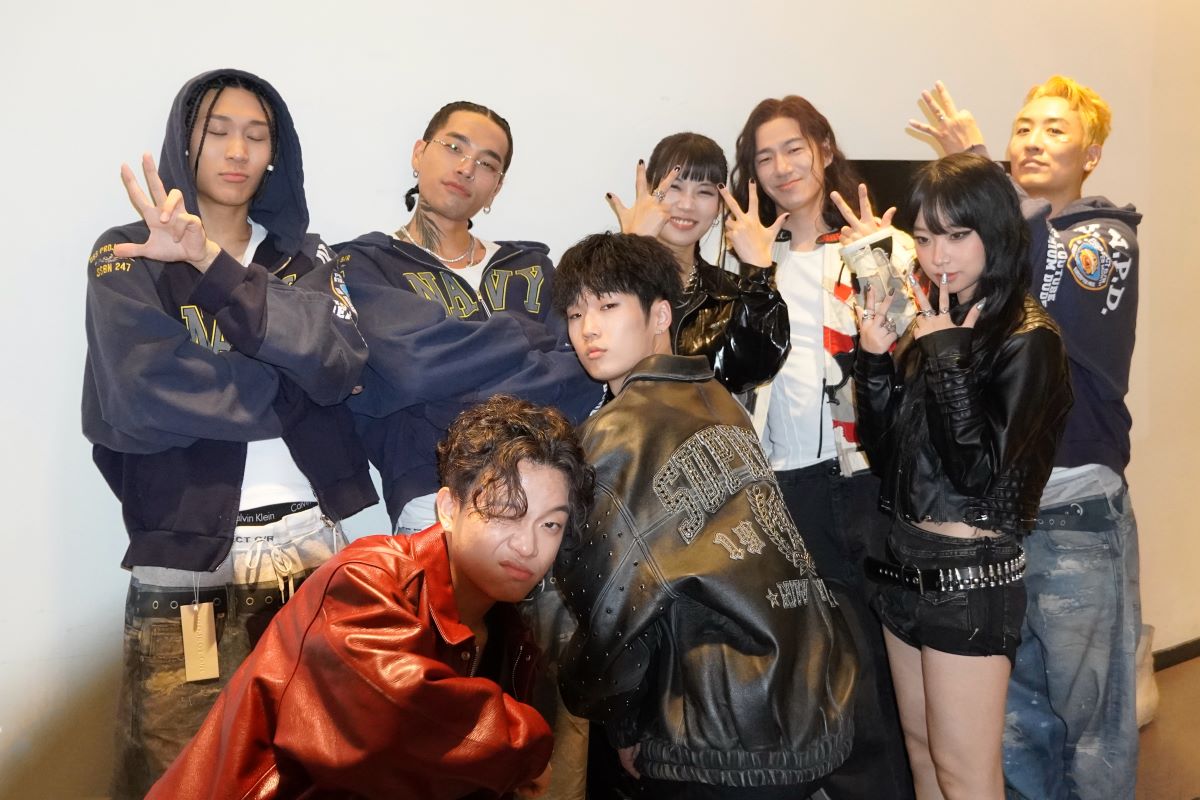
VOA: Creating and performing rap under pressure is a huge task. Can you walk us through your process of writing music on the go during the challenges?
JA: Before the program began, we were informed, and they emphasized the importance of having many verses memorized, explaining that they would be like “bullets” you could use in the program. So, many rappers prepared as many verses as they could that they could potentially spit. I also went through all my old verses and organized which ones might be useful in various BPMs and genres.
Even if you have many verses memorized, performing them during the shoot brings a lot of pressure, and you have to react quickly. As individuals, we spit what we had memorized, but we did write a new verse together during one of the Block Missions as part of our strategy. We did have time to prepare for different missions, but sometimes things happened suddenly. For example, in the very first Block Mission, I was the last rapper on my block to go, and I had no choice but to rap something on this trap/rage beat that had a very high BPM (I expected to go in the middle when they played a boom bap beat with a BPM in that genre). I also knew it wasn’t enough to just rap; everyone here could rap well, and you needed to do something extra to gain the votes.
VOA: The Mask Off challenge at the beginning of the show was particularly exciting as it tested both skill and identity. How did you approach that stage, and what significance did revealing or maintaining your anonymity hold for you as a rapper?
JA: The Mask Off challenge was quite intense because it was the very first performance, and we had no idea it was going to be in a 1 vs. 1 format. I honestly thought it was just going to be each rapper taking turns performing in front of everyone, kind of like the 2nd stage in past Show Me The Money programs. Sudden rules and factors like these really seem to elicit real and raw reactions from the participants in the moment. It was a learning experience.
Throughout the program, I realized the importance of developing an awareness of what these rappers like because they are the ones who vote. I eventually got a better idea of what their tastes are in comparison to the general viewers, listeners, and hip-hop fans. I wanted to show what I do well, but I wonder if maybe I should’ve tried something new to better captivate the rappers there in the first performance.
VOA: Since the Infinite Cipher challenge was exclusive to block leaders, how did observing their quick thinking and adaptability influence your approach to the competition? What lessons did you take away from watching these leaders handle unpredictable moments?
JA: That’s the moment I felt tremendous respect for the leaders, as well as all the participants. It was an awe-inspiring moment early on in the program. It also hit me that we’re going to have to be ready to react and adapt quickly to sudden announcements and rules. Because the fact that everyone can rap well is a given, I felt like my way of contributing to the team is to think strategically. It was difficult to predict what kind of missions we’d be given, but whenever an announcement was made, I tried to actively think of all the different options, approaches and shared them with the team.
I’m proud of and thankful for different moments throughout the program, like the semi-finals performance of 3 with HAON and Kyle, and the beatbox performance with Yun Ha, DOMMIU, and OSUN – James An
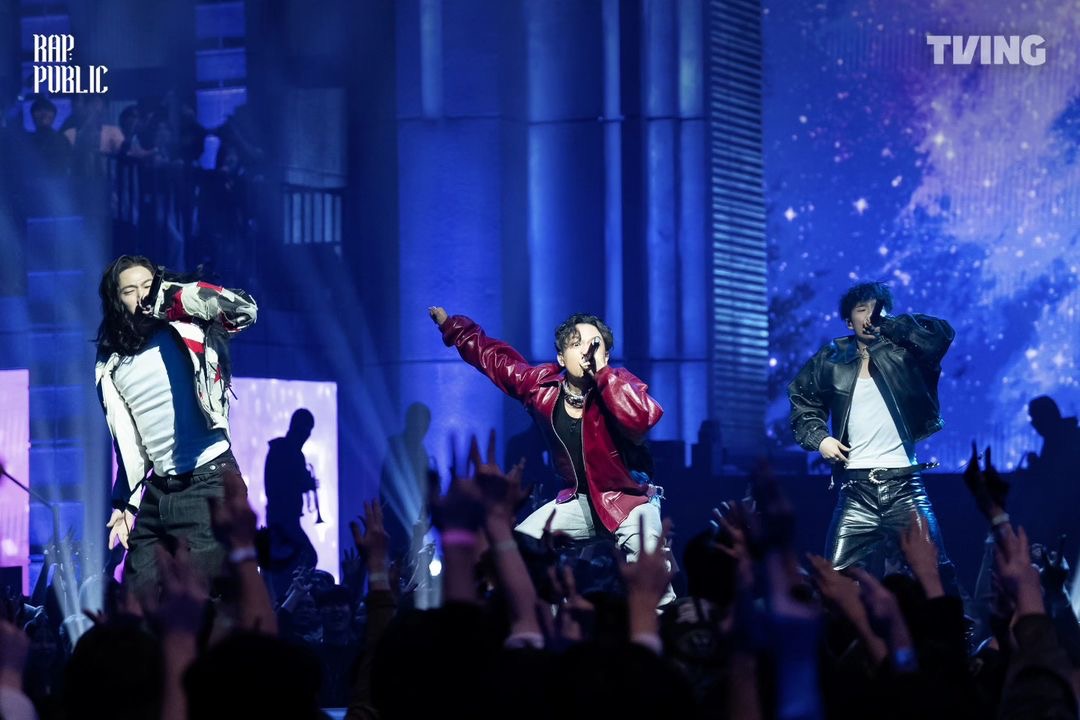
VOA: The Beef Challenge seemed to bring out some of the most intense rivalries in the competition. How was that for BLOCK 3?
JA: Surprisingly, most, if not all, blocks refrained from utilizing the Beef Challenge, perhaps out of fear of making enemies or facing repercussions. Towards the end of the period when the Beef Challenge could be used, it was employed in unexpected ways as part of different blocks’ strategies to negotiate teammate changes and split Block Money. Because we were the block with the least amount of Block Money at that time, we felt quite desperate to initiate a Beef Challenge or two but were unable to do so due to the other blocks’ strategies, and all the slots were already filled.
VOA: The competition’s structure relied heavily on the votes of fellow rappers. How did you build alliances or manage rivalries to ensure your survival?
JA: I personally tried to stay true to myself with my votes, basing them on my own standards, although they could change throughout the program. I didn’t go around telling other rappers things like, “Hey, I voted for you,” or anything like that [laughs], but I sincerely focused on enjoying their performances, because that in itself is an incredible opportunity and experience in this program. It was nice to interact with different rappers and express how much we liked and appreciated each other’s performances. For me, I was more focused on developing trust with my team so that we could better work together and make decisions as a team. The leaders not only did that but also communicated better with other leaders in different blocks regarding building alliances or managing rivalries.
VOA: Reaching the finals as part of BLOCK 3 was a great achievement. What qualities and strategies do you think made BLOCK 3 stand out in the competition? Reflecting on the final battle, what do you think gave Block 2 the edge that led to their victory?
JA: I think we had an overall very positive vibe as a team, and we also had great leadership from HAON and Reddy hyung. I also think we had a strong narrative as a team in the program right from the beginning with the first Death Match, where all three of the rappers volunteered to go. We also had some great strategies that led us to certain victories in the Block Missions, including getting SINCE and Chaboom on board (shout out to both!).
I think the final round was very interesting because the style of each team contrasted a lot. I loved the performances by BLOCK 2 because it felt like they absolutely did and showed what they thought and believed was dope! What I also liked was that each rapper showed his best and shined as well. I respect the BLOCK 2 homies and sincerely congratulate them! And I’m proud of my team – we did our best (and everyone in the program certainly did).
VOA: While there were talented female rappers like Since and DOMMIU in the finals, their presence was still a rarity in the overall competition. Why do you think there were so few women represented in RAP:PUBLIC, and what steps can the industry take to encourage greater female participation and visibility in hip-hop?
JA: It’s hard for me to answer the first part of the question because I do not know exactly what the selection criteria were from the perspective of the program and its producers, but overall, I think they focused on recruiting diverse rappers and characters to a certain extent. I heard they interviewed over 400 rappers.
I think part of the lack of representation is intertwined with hegemonic masculinity and hypermasculinity in hip-hop, as well as in society in general. (On a related note, how are women portrayed in hip-hop lyrics? How are they portrayed in the media?) The fact is, there are a lot of incredible, talented, and inspiring female rappers – needless to say! Shout out to all the dope female MCs. Representation is very important, and we need to create a more inclusive environment, industry, culture, and genre for all genders, as well as diverse communities and identities. I think we also need to better educate ourselves about underlying biases, stereotypes, and standards. I know I have a lot to educate myself on.
VOA: Throughout the show, you collaborated with rappers of different skill levels and experiences. What was the most memorable collaboration or learning experience for you?
JA: I think the team performance with Yun Ha, DOMMIU, and OSUN was very memorable because it was our first victory as a team, and we won by one vote! One of my greatest learning experiences through a collaboration was our semi-final song, 3, with Haon and Kyle. It was my first time preparing and doing a group performance by making our own song, and stage in a program like this. It was really cool to prepare our stage together, and the process was very fun and a wonderful learning experience for me. We had to think about not only the song and the stage performance but also other things like what kind of lighting we wanted to use, how we were going to move around and use the stage, our outfits, and so on.
There is nothing but respect for the other blocks and rappers, and I think we all honestly wanted and wished the best for everyone involved – James An
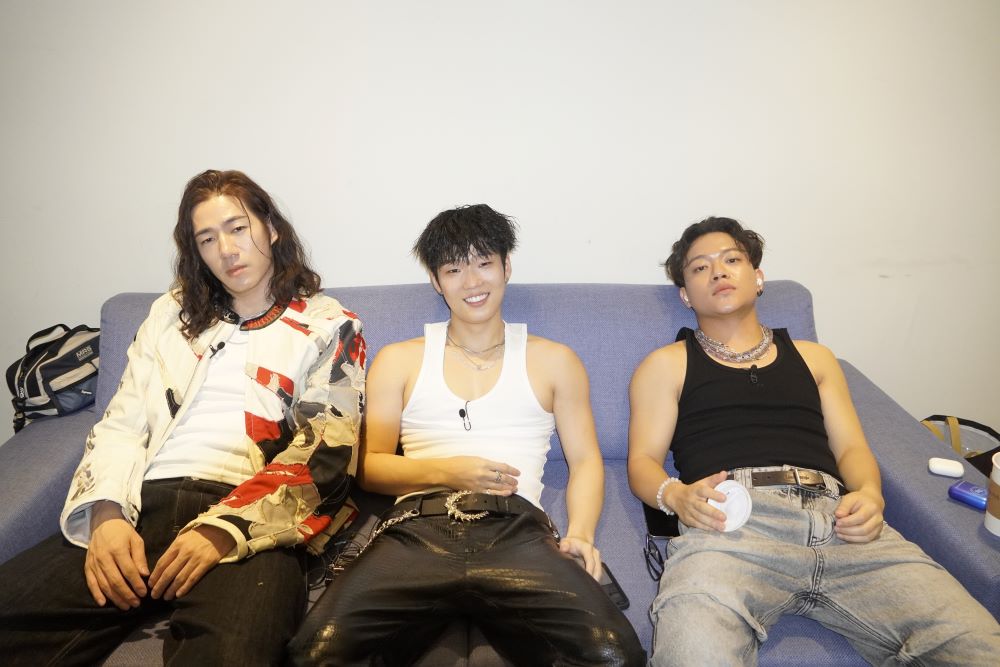
VOA: Every rapper has a unique style and voice. How did you ensure your individuality shone through in a group setting where styles could easily clash?
JA: The program was personally challenging because most of the beats were trap and rage beats, with not many boom bap beats, which I am most comfortable with. Even if there was a mission with boom bap beats, the time and opportunity had to match as well. I like rapping with a groove, as opposed to rapping fast with a tight flow. I think, for me, I was able to rap in a very stable way, and I never forgot my lyrics once or made a mistake with my rap, and I’m proud of that! Using lyrics that showed my “Harvard” character was also part of my strategy to differentiate myself in the program.
VOA: The Death Match and Revenge Match between BLOCK 3 and 2 were particularly intense. What was the atmosphere like in the team during those battles, and how did you mentally prepare for them?
JA: Honestly, I think it really came down to us doing our best. Of course, we tried to think about what kind of strategy the other block might come up with and so on, but in the end, what matters is that we did and showed our best as a team. There is nothing but respect for the other blocks and rappers, and I think we all honestly wanted and wished the best for everyone involved. The emotional reactions of fellow rappers when rappers from other blocks got eliminated were so real and raw, and we couldn’t help it.
Regarding the first Death Match, I was the one who suggested the high-risk idea of us sending strong rappers under the relatively safe assumption that most blocks would send less strong rappers, who seemed fit to go to the Death Match, as they would want to ensure the survival of stronger rappers. Reddy hyung thankfully volunteered right away, and I was immediately inspired and ready to follow. What’s very important is that each decision had an impact on the team and its future dynamics. For example, because Haon came to us and shared transparently about the selection process for the first Death Match, we were able to come up with a good strategy, and because Reddy hyung volunteered, our team spirit soared. The process and results of the first Death Match seemed to have defined what kind of team we are.
VOA: With a $300,000 prize on the line, there must have been a lot of pressure. How did you handle the stress of competing in such a high-stakes environment?
JA: JA: I think I just focused on the upcoming mission. We honestly didn’t have room to think too much because we were so immersed in the program with all the sudden missions, announcements, and rules. I didn’t feel a lot of pressure myself (but I’d assume the leaders felt so much pressure that I cannot fathom) because it was a team effort; I trusted my team, and we relied on each other. I think what helped with the pressure was the trust we developed.
VOA: Looking back at your journey in RAP:PUBLIC, what’s one moment or performance that you’re most proud of, and why?
JA: I’m proud of and thankful for different moments throughout the program, like the semi-finals performance of 3 with HAON and Kyle, and the beatbox performance with Yun Ha, DOMMIU, and OSUN. I’m also a little proud of myself [laughs], for the different strategies that I came up with and contributed to the team, like sending stronger rappers to the first Death Match, and writing a new (diss) verse as a team for the Block Mission against BLOCK 6. I have to say, I’m most proud of my performance in the very first Block Mission. Like I said, I assumed I’d go somewhere in the middle on a boom bap beat, but unexpectedly, I became the very last rapper to go on our BLOCK against BLOCK 2. I’m not sure if people had high expectations for me at that time, and even though we eventually lost with one rapper remaining in each BLOCK, I feel like I shocked everyone there with my “Harvard” trap verse and performance. When the episode came out, I remember rewatching my part just to see the cheering and positive reactions from my fellow teammates – it was one of the most affirming and uplifting moments for me.
It was especially memorable and uplifting to hear compliments or affirmations not only from my team but also from rappers whose music and styles are quite different from mine, like Loopy, Nosun, FLEEKY BANG, Foggyatthebottom, Marv, and Double Down, to name a few – James An

VOA: The show showed the competitive yet collaborative nature of hip-hop. What’s your perspective on hip-hop as a tool for storytelling, competition, and unity after this experience?
JA: I’m really proud of and thankful for different moments throughout the program, like the semi-finals performance of 3 with HAON and Kyle, and the beatbox performance with Yun Ha, DOMMIU, and OSUN. I’m also a little proud of myself [laughs] for the different strategies that I came up with and contributed to the team, like sending stronger rappers to the first Death Match and writing a new (diss) verse as a team for the Block Mission against BLOCK 6. I have to say, I’m most proud of my performance in the very first Block Mission. Like I said, I assumed I’d go somewhere in the middle on a boom bap beat, but unexpectedly, I became the very last rapper to go on our Block against BLOCK 2. I’m not sure if people had high expectations for me at that time, and even though we eventually lost with one rapper remaining in each BLOCK, I feel like I shocked everyone there with my “Harvard” trap verse and performance. When the episode came out, I remember rewatching my part just to see the cheering and positive reactions from my fellow teammates – it was one of the most affirming and uplifting moments for me.
VOA: Were there any moments in the show where you doubted yourself, and if so, how did you overcome those doubts to keep pushing forward?
JA: I never doubted my ability to perform on the show, but there were some moments of insecurity or inadequacy because I felt like I didn’t have a strong or long career and a big following as a rapper compared to a lot of the participants in the program. At times like this, I really appreciated the affirmation from other participants. It was especially memorable and uplifting to hear compliments or affirmations not only from my team but also from rappers whose music and styles are quite different from mine, like Loopy, Nosun, FLEEKY BANG, Foggyatthebottom, Marv, and Double Down, to name a few. It just kind of reminded me that hip-hop can transcend differences and boundaries through our love and appreciation for hip-hop, and this feeling made me feel so positive and confident in myself throughout the process as well. I think these small moments of solidarity and appreciation come together to become a positive source of motivation and inspiration.
VOA: Finally, how has participating in RAP:PUBLIC shaped your career moving forward, and what can fans expect from James An in the future?
JA: Honestly, I learned so much throughout the program. It was an incredible experience in so many ways. The greatest part of it was that I got to foster relationships with various rappers whom I normally wouldn’t have interacted with and got to know them on a more individual level. Concerning music, this experience opened my mind, and I feel more inspired than ever before to create different types of music. In 2025, I want to work on not limiting myself and experimenting further. At this moment, I think I can say that fans and listeners can expect a wider spectrum of hip-hop from me in the future. One more thing… fans can expect something from Block 3!
Written and interviewed by Maggie Gogler
Featured image courtesy of Mnet
View of the Arts is an online publication dedicated to films, music, and arts, with a strong focus on the Asian entertainment industry. With rich content already available to our readers, we aim to expand our reach and grow alongside our audience by delving deeper into emerging platforms such as K-pop and Asian music more broadly. At the same time, we remain committed to exploring the vibrant and ever-evolving global landscape of film, music, and the arts, celebrating the immense talent and creativity that define these industries worldwide.

 VIEW OF THE ARTS