
Mad Tsai has emerged as one of the most compelling voices in modern pop, using his music to explore identity, queerness, and the emotional turbulence of coming-of-age. His songs often subvert the traditional narratives of high school romance and self-discovery, reshaping them from a queer perspective that challenges heteronormative ideals. Through his storytelling, Mad Tsai creates a space where queer experiences bring visibility to those who have long been sidelined. With a keen sense of humour and an ear for catchy melodies, his work connects with listeners who have felt like outsiders in their own stories. His latest single, One of the Boys, challenges the notion that masculinity defines acceptance within the LGBTQIA+ community. Through sharp lyricism and unapologetic pride, the song reclaims the phrase from those who use it to distance themselves from femininity, turning it into a bold celebration of queer identity.
The struggles of queer individuals, including in the United States, remain deeply entrenched in systemic discrimination, cultural stigma, and political hostility. While progress has been made, with LGBTQIA+ artists achieving mainstream success and bringing greater acceptance, challenges persist. The rise in anti-LGBTQIA+ legislation, the policing of queer and trans bodies, and the persistent attacks on self-expression shows the fragility of these gains. Globally, the landscape is even more fractured, with many countries still criminalising queerness, silencing voices before they have the chance to be heard. Music, as a universal language, is a lifeline in such an environment – artists like Mad Tsai offer comfort, validation, and strength to those traversing hostile spaces.
Representation goes beyond visibility; it is the foundation for future generations to dream, to love, and to exist without fear. When artists like Mad Tsai create narratives that reflect authentic queer experiences, they do more than entertain – they heal, inspire, and empower. The impact of seeing oneself mirrored in art cannot be understated, as it offers an alternative to isolation, a source of hope where there was once only silence. The music industry, long dictated by rigid gender norms and marketable archetypes, is gradually evolving, but that change requires voices like Tsai’s to remain steadfast. By continuing to challenge societal expectations and refusing to adhere to outdated norms, he ensures that queerness in his music is not a trend but an enduring, necessary force. In an era where authenticity is both a privilege and a battleground, Mad Tsai stands at the vanguard, proving that queer stories deserve not just a seat at the table but a voice that resonates across generations.
In a recent interview with View of the Arts, Mad Tsai discussed his newest single, One of the Boys, as well as his previous releases and his perspective on the queer world. So sit down, relax, and enjoy reading the interview!
Life is so much more once you graduate, become an adult, and figure out who you are as a person and what you really like to do.
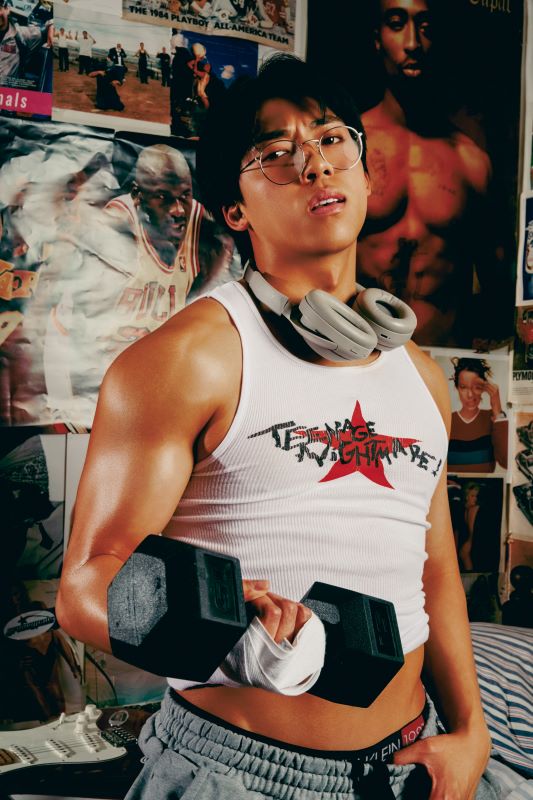
View of the Arts: Before discussing your music, I would like to know, what was the role of music in the early years of your life that made you want to become an artist? Do you feel that you chose your “passion” [in reference to music], or did it choose you?
Mad Tsai: Honestly, I wasn’t planning on becoming an artist. It’s something I always wanted to do, but I didn’t really know if I had the means to do it, and I didn’t really know how to go about it. So, I focused more on school. My original plan was to become a journalist because I was an English major at UCLA. Everything just kind of happened all at once when I started posting videos of my original songs, and people started paying attention to them. So, my passion definitely chose me, and I felt like I just let it happen because it’s what I really wanted to do in the back of my mind.
VOA: You have just released your new single, One of the Boys. Could you walk me through the creative process for this release?
MT: So essentially, the last project I released, Teenage Nightmare, was like my baby – it was very personal and deep, reflecting my background and my story. It felt like I took a chunk of myself and put it into the project. I felt very emotionally connected to it, but at the same time, I felt very emotionally exhausted because it was so personal. I didn’t want to make the next songs as personal and sad, and I didn’t want to keep exploring my trauma anymore. I wanted to make a fun song. I wanted something fun, danceable, and something I would enjoy singing live and in the studio. So that’s the wavelength I’ve been on for these next singles – very in-your-face, fun, and very unhinged. It’s just what I want to do in the spur of the moment.
The thing that inspired One of the Boys was that I went on a date about a year and a half ago with somebody who was bashing feminine gays. He was like, “I’m one of the boys; I’m not one of those feminine gays.” He kind of really differentiated himself from other queer people, which really pissed me off because I hate the idea that you have to be masculine to be accepted in the LGBTQ community. So I wrote this song to reclaim the term “one of the boys” and make it as super gay as possible, so it’s not seen as this pinnacle of heteronormativity and straightness that people want to strive for because I don’t think that’s something we should strive for as queer people because we are queer.
VOA: You co-wrote the lyrics for One of the Boys with Maria Landi. How do you ensure that the song reflects your personal feelings when collaborating on the lyrics? Also, what was the collaboration process like with Maria on this track?
MT: Honestly, everything for the lyrics was kind of in the spur of the moment. I gravitate towards visual storytelling or anything that can give you an image of what’s happening. I love building out a story with the song. One of the Boys is definitely not as narrative-heavy as other songs like Stacy’s Brother or Killer Queen, but it still has a lot of visual cues through the lyrics and tells a story about crushing on somebody and wanting to do things with them.
The collaboration process with Maria was really great – it was our first time working together in the studio, so I was a bit nervous, but I really loved working with her because she wasn’t trying to write the song for me. She added in ideas, different melodies, or lyrics to add in. She kind of came up with the call-and-response part in the pre-chorus, which I absolutely loved. I love working with writers who approach the process as more of a collaboration, rather than just writing the song for me or just singing in my face.
VOA: Incidents of song theft, such as what happened with your track One of the Boys, are surprisingly common in the music industry despite the digital footprint that makes it relatively easy to trace the origin of a song. Why do you think this kind of intellectual property theft continues to occur in an era where digital evidence is so easily accessible? Do you believe it’s due to loopholes in copyright enforcement, the pressure for artists to release new music quickly, or perhaps the industry’s competitive nature that drives individuals to take unethical shortcuts? Additionally, how do you think this issue reflects on the current state of digital music distribution platforms, and what changes would you like to see to better protect artists’ work?
MT: Basically, when that person stole One of the Boys and claimed it as his own song, I originally wasn’t going to talk about it. But then I realized it had already accumulated 100,000 streams, and that’s when I started talking about it and made those videos calling him out. I think what makes it so easy for something like this to happen is #1: The internet is so large now, and a lot of things don’t get noticed. I think it’s the “dead internet theory,” where you barely see what’s on the surface of what’s out there. That’s why it’s so easy for people like the person who stole my song to get away with things like this – his pictures weren’t even of him, and none of his songs were his. It’s very easy to fake becoming a person and basically not get traced.
Second of all, I think the use of AI is a factor. He stole my song a total of 9 times. In the 8 other versions, besides the original copy of the song, he used AI to remix it, and that made it undetectable in the metadata, so I would have never noticed had I not gone down the rabbit hole and found it myself. I think DSPs need to assess AI mixing of already existing songs, because if you change it enough using AI, it won’t be tracked in the metadata. That’s something we really need to get a hold of before it gets out of hand.
I feel like I used to be ashamed of being myself and living authentically, but now I think I’ve learned a lot through being an artist and putting out music these past few years.
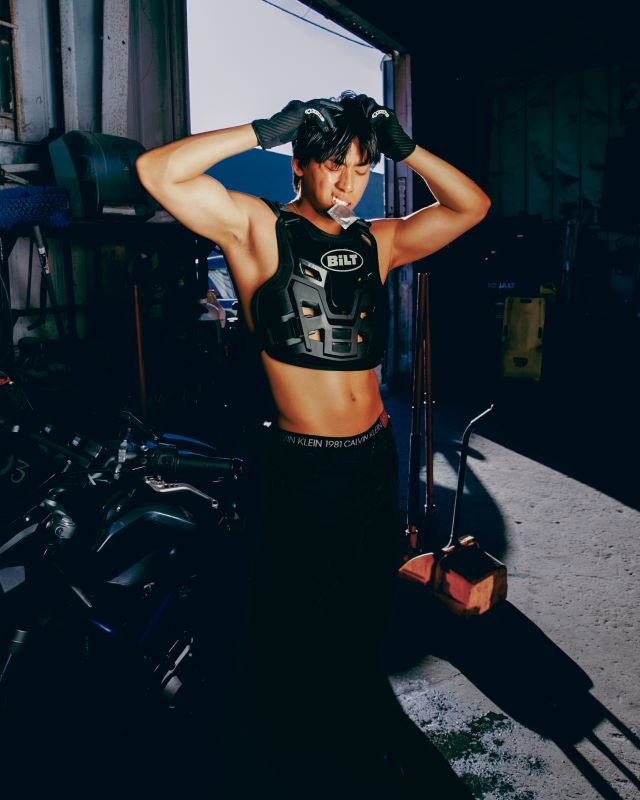
VOA: Your music often plays with and subverts traditional coming-of-age narratives, particularly the American high school experience. What aspects of those narratives did you feel excluded from growing up, and how do you reimagine them in your music and videos?
MT: The entire last project, Teenage Nightmare, kind of played on that theme of coming-of-age and not necessarily feeling like I belonged in my own coming-of-age story. Particularly because I watched a lot of coming-of-age movies, and I never really saw myself in those roles. As someone who is queer and also Asian, it felt like I didn’t fit into those kinds of roles, or I could never see myself in those situations. I feel like that was a big part of it.
I think the idealism of being a part of American coming-of-age culture is a huge part of it, versus the reality of what it actually is, because I don’t think the media reflects what’s truly happening in our lives. I feel like that was a big loss in my coming-of-age years because I was mourning something that never really existed.
VOA: In Teenage Nightmare, you explore the illusions surrounding romance, identity, and the “American dream.” How has your understanding of these themes evolved since your early songwriting days, would you say there is such a thing as the “American Dream”?
MT: I think it’s always been there in a lot of my music, even from the start. The first EP, Homecoming, played into a lot of themes of coming-of-age and figuring yourself out as a person. I feel like my understanding of these themes evolved as I processed my coming-of-age years a bit more, as I grew up and matured. As I became an adult, I was able to sit back and really think about how I grew up and my upbringing, gaining a new perspective on it.
I think everyone has their own perception of what America should mean and what the American Dream we’re chasing is, and I think that changes for everybody.
VOA: In My Head builds on the storyline from Stacy’s Brother but takes a more melancholic turn. How do you approach the balance between humor and heartbreak in your songwriting, and what does that emotional contrast mean to you?
MT: I think, when I think of myself as an artist, I see myself as like a character – someone I’m playing who’s not really myself, but at the same time, there are parts of myself that really peek through, like the real parts of me and experiences I’ve gone through that shine through sometimes. In My Head was one of those moments where I became really vulnerable, and that was something I really wanted to put out there because it was purely me. That was something I felt like I needed to share because it was personal.
In contrast to Stacy’s Brother, which was a fictional narrative that I wrote for a song, I feel like it’s important to have a balance of these things. Having an artist persona and a personal persona are both important, and sometimes it’s good to blend them, but sometimes it’s good to keep them separate. I like to do both because I honestly don’t like people peeking too much into my personal life or over-analyzing it, so sometimes I try to treat it like I’m playing a character. This allows me to do both more vulnerable songs and more in-your-face fun songs that are more fictional.”
VOA: You’ve mentioned how Tumblr shaped your aesthetics and creative voice. How do you think growing up in the digital era has influenced not just your music but the way you tell stories and connect with audiences?
MT: I’ve always loved Tumblr when I was a teenager, and I think that’s what really made me gravitate towards being an artist because it made me realize very early on that a lot of the artists I was drawn to were amazing at building out a world. There’s a certain aesthetic that came with the songs or the projects, and even their personas were like a costume – they were playing a character. It felt like you were being sucked into this world. I really, really loved Lana Del Rey and Marina and the Diamonds growing up, and I think what made me love them so much was not just their amazing music, but also who they were as people and the world they were building around their stories. I thought it was so beautiful, and you could tell there was passion and intention behind all of their music. Not only did I want to be a songwriter, but I also wanted to create a world – visuals, music, a look – everything like that.”
VOA: Your music videos are cinematic, bringing, at times, complex narratives that feel personal and larger than life. What’s your process for developing these visual stories, and how do they deepen the meaning of your songs?
MT: I think the songs I write are often very narrative-driven, so sometimes it’s an easy process to create these music video treatments, and sometimes it’s not as straightforward. In My Head was a different process because I had to start from the ground up since there wasn’t a strict narrative to follow. In terms of developing the treatments for these music videos, I have to sit back and listen to the song a million times, then picture what I’m feeling in the moment or what kind of visual cues I’m getting. Pinterest is my best friend because I love going through Pinterest to find visual cues for music videos. It really helps me to build out mood boards, storyboards, and create these worlds.
VOA: You’ve spoken about feeling like a “background character” in your own life at times. Now that you’re actively reshaping your narrative through your music, what does stepping into the main character role look and feel like for you?
MT: I feel like I used to be ashamed of being myself and living authentically, but now I think I’ve learned a lot through being an artist and putting out music these past few years. I’ve reached a point where I’ve kind of stopped caring about what people think. I can’t please everybody, and I can’t give every single person on the planet exactly what they want, so the best I can do is just be myself and try my best to live as authentically as I can. I think that’s the thing I’m really trying to bring into 2025 – just making music that makes me happy in the moment and that I want to release, along with stuff that the fans will love as well.
Being an artist, as a person who is an artist, I think is genuinely terrifying. You never really know what the reception will be until you put the song out and it’s out in the world.

VOA: Many of your songs, from Killer Queen to Stacy’s Brother, touch on themes of rebellion and transformation. Do you see your music as a way of rewriting the past, or is it more about creating a new space for queer representation in pop culture?
MT: I think it’s a bit of both. Yes, Killer Queen and Stacy’s Brother build on outlandish narratives that obviously haven’t happened in real life, but at the same time, I think it’s fun, and it creates a space where people can feel free. Even though they might not fully relate to it on a personal level, it’s a fun space to think about and escape into. I always appreciate when people come up to me and tell me that Killer Queen and Stacy’s Brother helped them break out of their shells because it kind of introduced them to being a little bit more weird or a little bit more out there. I think that’s what really makes me happy as an artist—when I see fans feel comfortable in themselves after listening to my music.”
VOA: Who would you say are your current musical inspirations?
MT: The pop girls right now are just doing it better than anybody else. I love Sabrina’s album; I think she did a phenomenal job on Short n’ Sweet. I also love Chappel – she’s so talented and has so much potential to be a massive pop star. I’m so happy to have a vocal queer pop star out there who’s being vocal about everything, including the issues we have in the music industry. I also really love Lady Gaga’s new song; I think it’s such a great time for a comeback, and the song was amazing.
I’m also influenced by K-pop a lot now. I think I’ve found myself listening to K-pop more and gravitating toward the world they’ve been building through their music videos, choreography, and songs. Le Sserafim is a group I love, along with NJZ and (G)I-dle. I think K-pop has definitely influenced my music as well.
VOA: You once joked that the fun part of having a “shit coming-of-age” is getting to advise others going through the same thing. If you could send a message to your younger self – or to any listener who feels like an outsider – what would it be?
MT: I would say hang in there because I feel like when I was a teenager, I thought every day was the end of the world. I felt like my youth was the end-all-be-all for my entire life, and that if I couldn’t succeed in my coming-of-age years, I would never succeed in life. But that’s not true. When you’re a teenager in middle school or high school, you’re basically in a little fishbowl, stuck with the same people, doing the same things every day. Life is so much more once you graduate, become an adult, and figure out who you are as a person and what you really like to do.
VOA: How does it feel when you release music in general? Personally, I feel like when an artist exposes their work it’s like revealing their soul to the public. I have major respect for that, and I’m curious, how do you feel when you put your music out there for people to judge?
MT: Being an artist, as a person who is an artist, I think is genuinely terrifying. You never really know what the reception will be until you put the song out and it’s out in the world. And I think that’s a really terrifying aspect of just being an artist or being creative in general. You never know if it’s going to hit well with your audience or not. You have to just keep remembering that, at the end of the day, if you make art for yourself, that’s really all that matters, and you can’t please everybody.
I used to be in this state of mind that I had to please everybody and make songs that everyone would like, which is virtually impossible. Not 100 percent of people are going to love what you do, but you have to remember that there’s a niche for everything. As long as you’re doing what you love, people will gravitate toward that.
VOA: Now that you have released new music, what else can we expect from you this year?
MT: Well, I have a lot of big things coming this year. My main focus right now is releasing as many singles as I possibly can throughout the year and just having fun with it. I want to give fans the songs they want. I’ll be teasing more songs, and I’m also going to be working on my debut album in the midst of releasing new singles. Hopefully, I’ll be able to go on tour this year and perform live for all the fans. I really, really want to do a lot of things this year, and I feel like I’m in a state of mind where I’ve never been hungrier as an artist. I’m dying to get out there, release music, go on tour, and give the fans exactly what they want.
Written and interviewed by Maggie Gogler
Featured image courtesy of Kevin Hernandez
View of the Arts is an online publication dedicated to films, music, and arts, with a strong focus on the Asian entertainment industry. With rich content already available to our readers, we aim to expand our reach and grow alongside our audience by delving deeper into emerging platforms such as K-pop and Asian music more broadly. At the same time, we remain committed to exploring the vibrant and ever-evolving global landscape of film, music, and the arts, celebrating the immense talent and creativity that define these industries worldwide.

 VIEW OF THE ARTS