
Music is not only just sound, it is a living archive of history, culture, and emotion. For Belle Sisoski, it is a powerful connection between past and future, a space where both coexist in harmony. With The Revelation, her latest release, she doesn’t simply compose; she creates an immersive sonic world blending the ancestral echoes of Southeast Asia with the modern textures of cinematic and electronic music. Every note, every instrument, carries a story – a dialogue between heritage and reinvention.
As a multi-instrumentalist, Belle moves effortlessly between centuries-old boat lutes like the Sape, the resonant depth of traditional drums, and the atmospheric sweep of contemporary production. But beyond her technical mastery lies something even more profound: a devotion to honouring the roots of these sounds while reshaping them for a new generation. With its raw, untamed resonance, throat singing enriches her music, creating a powerful interplay between the grounded and the otherworldly.
In the music industry shaped by trends and commercial appeal, she distinguishes herself. Rather than simply seeking representation, her work challenges how cultural identity can be authentically integrated into global music. Apart from keeping her heritage alive, Belle is also transforming it, making sure these traditions grow and adapt instead of being forgotten.
In our conversation, Belle reflects on her creative process and the deeper philosophy that guides her work. From the painstaking research behind mastering traditional instruments to the unfiltered emotional energy of live performance, she invited us to the world she has built – one where music is both a celebration of the past and a vision of the future.
I don’t follow a set formula when composing. I let the story, theme and narrative dictate the sound, ensuring each element has purpose.
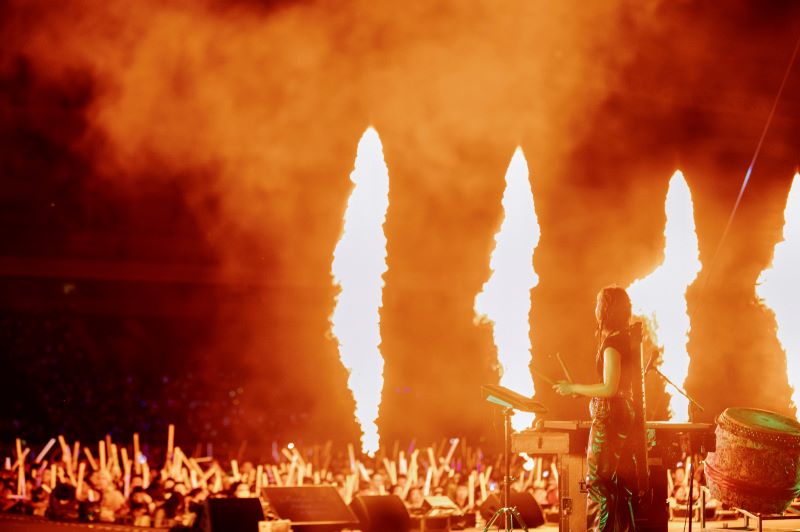
View of the Arts: Your latest release, The Revelation, beautifully mixes traditional Southeast Asian instruments with modern cinematic and electronic elements. What narrative or emotional journey did you aim to create with this piece, and how did you select the specific instruments to bring that vision to life?
Belle Sisoski: With The Revelation, I wanted to create more than just a piece of music. I wanted to create an experience, an awakening. This track is a fusion of ancestral echoes and modern soundscapes, connecting Southeast Asian musical heritage with cinematic and electronic elements. The instruments I chose each hold deep cultural significance. Their voices, layered with throat singing and immersive textures, tell a story of rediscovery, of finding the past within the future.
VOA: As a multi-instrumentalist who masters the piano, violin, boat lutes like Sape, traditional flutes and drums, how do you approach composition? Do you start with a particular instrument or melody, or do you allow the narrative to dictate the sonic palette?
BS: I don’t follow a set formula when composing. I let the story, theme and narrative dictate the sound, ensuring each element has purpose. Sometimes, a melody comes first; other times, it’s a rhythm or an instrument that sparks the idea. Whether it’s the warmth of the Sape, or the textured chord progressions of cinematic strings.
VOA: Your music celebrates traditional Southeast Asian sounds while incorporating contemporary genres like EDM. How do you balance authenticity and innovation without compromising the cultural essence of the instruments you use?
BS: Blending Southeast Asian instruments with EDM and cinematic music requires a deep respect for my Borneon tradition. I study each instrument’s history and playing techniques to preserve its authenticity while giving it a new voice within contemporary soundscapes. The goal isn’t just to incorporate these sounds. It’s to amplify their presence in a way that feels both natural and relevant on a global stage.
VOA: Throat singing is a rare and powerful vocal technique. What drew you to it, and how do you integrate it into your compositions while maintaining harmony with the complex instrumentation?
BS: Throat singing is raw, primal, and deeply connected to the earth, Mother Nature. Its layered overtones add an ancient, meditative quality to my music. I integrate it subtly, using it to complement rather than overpower the instrumentation. It brings depth and emotion, acting as a bridge between the organic and the electronic elements in my compositions.
VOA: Your work is rooted in cultural preservation yet boldly experimental. How do you see your role as a musician in keeping traditional Southeast Asian music alive and relevant in the global music market?
BS: I see my role as both a preserver and an innovator. Southeast Asian musical traditions are rich, and my goal is to revive these sounds, not as museum pieces, but as living, evolving elements of modern music. By weaving them into electronic and cinematic compositions, I hope to spark curiosity and keep these traditions alive in new, unexpected ways.
VOA: In a world dominated by commercial tunes, what drives you to create such unique, genre-blending music? Have you faced challenges in gaining recognition or navigating the industry because of your unconventional sound?
BS: I’ve always been drawn to storytelling through sound, even when it goes against industry norms. My music doesn’t fit neatly into any one genre when navigating the mainstream market. But I believe authenticity resonates more than trends. My listeners connect with the depth and uniqueness of my sound, and that’s what drives me forward.
VOA: Your one-woman performance presents your mastery over multiple instruments simultaneously. How do you orchestrate such complex arrangements live, and what technical challenges do you face when translating studio compositions to the stage?
BS: Performing live is an extension of my creative process. Managing multiple instruments and vocals simultaneously requires careful orchestration, but I also leave room for improvisation. I structure each set by translating studio compositions into a seamless live experience, making sure each instrument’s voice is heard while maintaining the energy of a full, immersive performance.
VOA: With The Revelation, you’ve created a distinct sonic identity. How has your musical philosophy evolved over the years, and what personal or artistic experiences have shaped this journey?.
BS: Over the years, my music has grown into a fusion of storytelling, tradition, and modern production that reflects my journey. Travel, research, and personal experiences have deepened my connection to the instruments I use, shaped how I approach sound, and constantly pushed me to refine my craft. The Revelation represents that evolution. It’s a piece that reflects my belief that heritage and innovation don’t have to exist separately. They can thrive together.
Improvisation keeps my performances alive. When I play live, I let the moment dictate subtle changes in melody or rhythm.
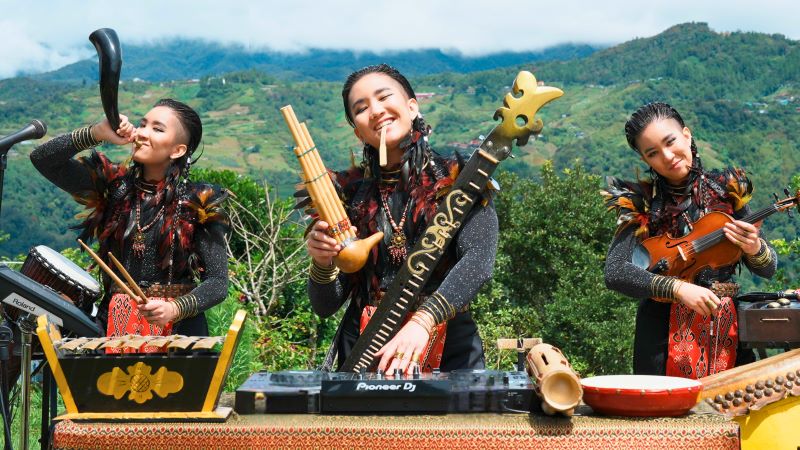
VOA: Instruments, especially boat lutes like the Sape and Tapi, carry deep cultural and historical significance. How do you approach learning and mastering them, and what kind of research or mentorship goes into understanding their cultural contexts?
BS: Traditional instruments like the Sape and Tapi from my cultural roots aren’t just tools for music. They carry centuries of history. Learning them requires patience and deep respect. I study under musicians who have spent their lives mastering these sounds, ensuring I understand not just how to play them, but the cultural context they come from. That knowledge shapes how I integrate them into my work.
VOA: Do you incorporate improvisation into your music? If so, how do you channel your emotions in the moment, and how do you think this spontaneity influences the audience’s experience?
BS: Improvisation keeps my performances alive. When I play live, I let the moment dictate subtle changes in melody or rhythm. This spontaneity allows me to channel raw emotion into the music, creating a more intimate experience for the audience.
VOA: Cinematic music is a prominent feature in your compositions. Do you visualise specific scenes or narratives while creating, or is the storytelling aspect more abstract and open to interpretation by the listener?
BS: I often visualise scenes when composing. My music is meant to be immersive, but I also leave space for listeners to interpret it in their own way. The cinematic quality comes from building tension and release, much like a film score, guiding the listener through an emotional arc.
VOA: As a female multi-instrumentalist and throat singer, you defy many stereotypes in the music industry. How do you deal with these challenges, and what message do you hope to convey to aspiring female artists who look up to you?
BS: I’m constantly embracing my individuality rather than conform to traditional molds. Your uniqueness is your greatest strength. Stay authentic, push boundaries, and create your own path.
VOA: Your choice of traditional clothing and distinctive fashion style beautifully complements your musical identity. How do cultural heritage and personal expression influence your wardrobe choices, and do they play a role in enhancing the storytelling aspect of your performances?
BS: My choice of traditional clothing isn’t just aesthetic. It’s an extension of my musical identity. What I wear on stage reflects the same blend of heritage and modernity that defines my sound. It’s another layer of storytelling, allowing me to visually represent the cultures that inspire my work.
VOA: Looking forward, how do you envision the evolution of your sound? Are there other traditional instruments or musical cultures you’re eager to explore and incorporate into your future projects?
BS: My journey is far from over. I’m constantly exploring new traditional instruments from my culture that could further expand my sonic palette. The goal is to keep evolving and pushing my music into new spaces while staying true to the essence of what I stand for. The Revival and The Revelation is just the beginning of that evolution. This is my sound. This is my story. And there’s so much more to come.
Written and inteviewed by Maggie Gogler
Featured image courtesy of Belle Sisoski
View of the Arts is an online publication dedicated to films, music, and arts, with a strong focus on the Asian entertainment industry. With rich content already available to our readers, we aim to expand our reach and grow alongside our audience by delving deeper into emerging platforms such as K-pop and Asian music more broadly. At the same time, we remain committed to exploring the vibrant and ever-evolving global landscape of film, music, and the arts, celebrating the immense talent and creativity that define these industries worldwide.

 VIEW OF THE ARTS