
When Drag Race Philippines season one was announced, fans were more than excited to finally see what the Asian queens could bring to the stage. The show’s success opened doors for future seasons and the recently announced Drag Race Slayasian, where Asian queens from international franchises will compete together in an All-Stars format – a dream come true for fans. It’s about time the Asian divas received their well-deserved flowers, and quite frankly, they know how to not only put on a show but also bring another level of theatrics to the runway. It’s what fans love – authentic talent with a passion for being loud and using their culture to educate.
Season one of Drag Race Philippines quickly became one of the most beloved franchises for international fans. The first cast introduced icons like Brigiding, who was already somewhat of a legend before even setting foot in the workroom. While expectations were high for all the cast members, they were even higher for Brigiding. As the caring, nurturing mother of the House of Ding, she understands the importance of drag families as a safe and secure space – a place for young drag artists to find their way as they explore their identities in a world filled with fear and uncertainty. Bridging offers her wisdom, support, and personal experiences to help the next generation find their footing in the drag world, something she learned from her very own drag mother, DeeDee Marié Holliday.
For someone of Brigiding’s calibre and experience in the scene, one might expect her to carry an air of grace befitting her fame. Instead, she remains connected to her community, even hosting her own interview series on her YouTube channel, now in its second season. A true all-around superstar, we caught up with her to discuss Drag Race Philippines, the importance of community, and her latest role in the theater production La Voix Humaine x Boses.
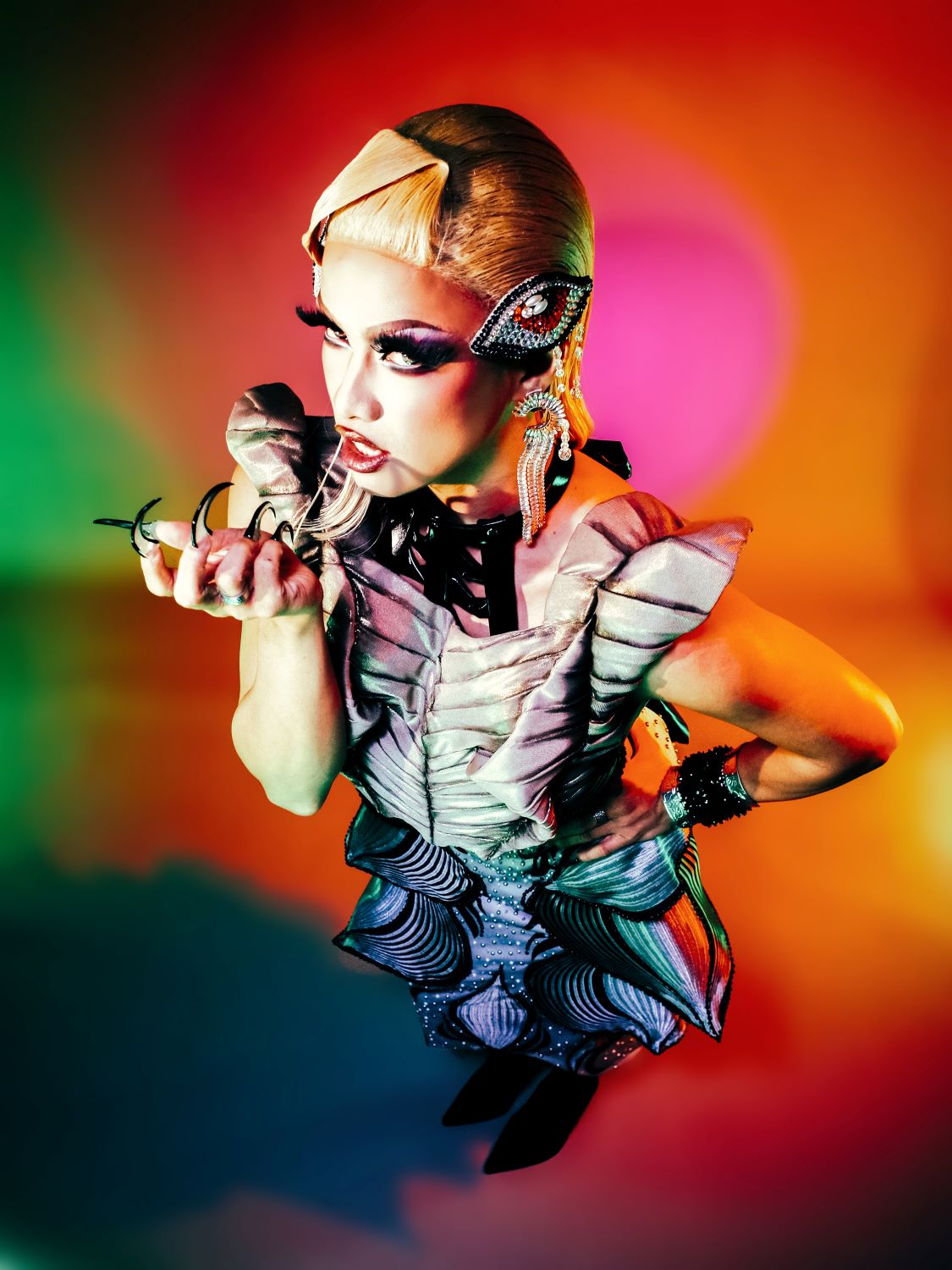
View of The Arts: As a cast member of the first-ever season of Drag Race Philippines, did you all feel pressure to deliver?
Brigiding: Yes! RuPaul’s Drag Race is the biggest drag competition, and for the Philippines to have its own franchise, the excitement and anticipation for the very first season were off the charts – and naturally, so was the pressure to deliver.
VOA: Even though the Drag Race franchise includes many international seasons airing simultaneously, the Philippines continues to dominate and capture fans’ attention. Do you think that is due to the cultural aspect, the creativity of the queens, or both?
Brigiding: It’s both! The Philippines has a rich and diverse culture, shaped by strong pre-colonial traditions and influences from various colonisers, making it truly unique.
Our country is a paradox – political and social inequalities push people to seek joy and remain optimistic. That’s why Filipinos embrace laughter, feel-good moments, and choose happiness despite hardships. Filipino queens are very creative; we have so much to show and give, so it’s no surprise our past three seasons have performed so well.
VOA: Drag comes in many forms, but there is a strong presence of drag families in the Philippines. How do they take shape and impact the local drag scene
Brigiding: Filipinos are very family-orientated; we are also known to be conservative. Within the drag community, creating a safe and supportive space is essential. Drag families play a vital role in empowering the community, ensuring that the industry remains strong and inclusive.
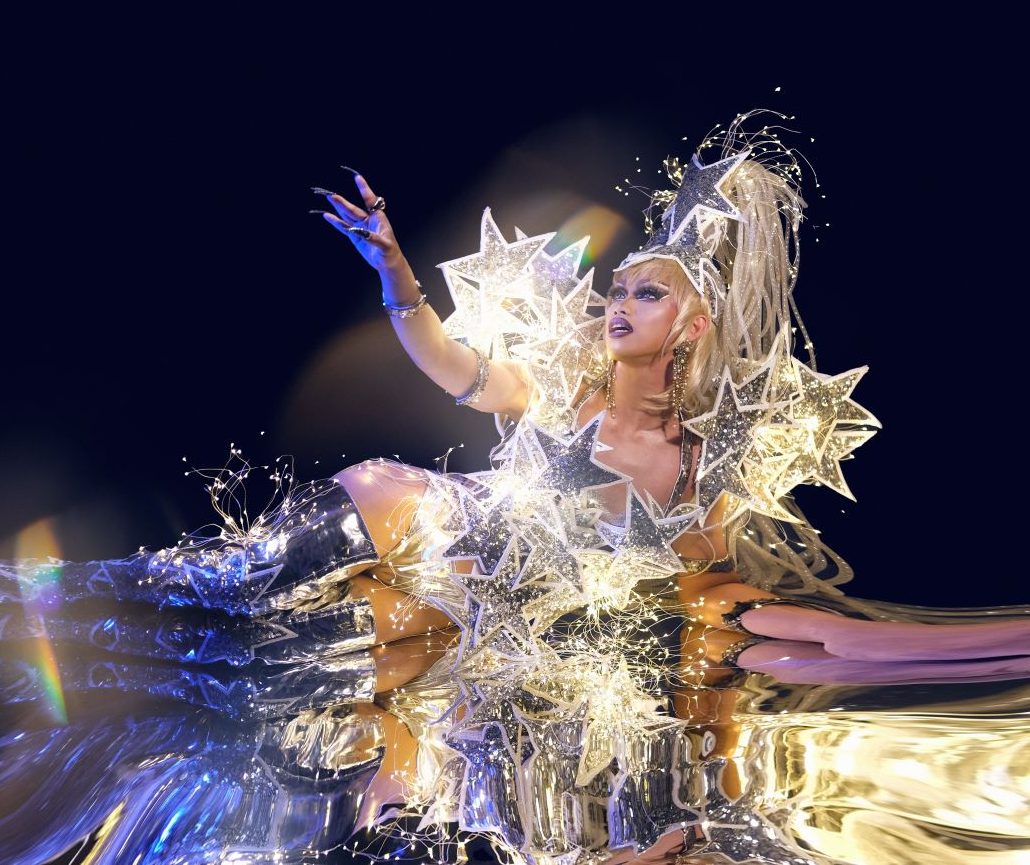
VOA: How does having a drag mother like DeeDee Marié Holliday influence your experience in the drag community?
Brigiding: She made me feel safe – that’s the essence of sisterhood and motherhood. I’m very thankful to her and the many drag mothers who came before me. I’ve learned so much from them; they taught me both the good and the bad – what to do and what not to do.
VOA: You are the mother of the House of Ding, your own drag family. What is it like to be a mother to younger artists, and what values do you emphasize in your approach to drag?
Brigiding: I have always been nurturing by nature, but when I was younger, I never imagined myself becoming a drag mother. Looking back, it’s one of the best things that ever happened to me. I am very proud of my house and incredibly proud of my kids. I think it’s beautiful to share my experiences with the next generation of drag queens. Building my legacy brings me so much joy.
VOA: Did your house influence and help Zymba Ding’s performance on the show?
Brigiding: We were there to support and empower Zymba, but her journey in the third season of Drag Race Philippines was entirely her own. Hearing her say that she used what she learned from the house to get ahead in the game was truly an honor. I feel very blessed to have such incredibly creative and good-natured kids in my house.
VOA: Your YouTube channel is brimming with content, from vlogs to performances, but I wanted to touch on Brigiding: The Brand. Now in its second season, what made you want to start a talk show-style series?
Brigiding: I’ve always wanted to create a show that allows an online audience to listen and understand our stories beyond what they see on stage. Then, one day, I was hanging out with Tita Baby (one of the top queens of Drag Race Philippines Season 3), who is a very good friend. She encouraged me to pursue my idea, emphasizing the importance and impact of having a talk show that showcases queens and gives them a platform to share their voices. Drag queens are often seen but not heard. Brigiding: The Brand changes that by giving them a voice.

VOA: What do you love most about interviewing, and how do you prepare for your interviews?
Brigiding: I love the research and the unexpected surprises with each interview—how every story unfolds right before our eyes.
VOA: If you could sit down with any drag artist, who would it be and why?
Brigiding: RuPaul. RuPaul inspires me with her wisdom, resilience, and fearless authenticity. She has shown that drag is more than just a performance; it is a form of self-expression.
VOA: You launched CAKE – a drag laboratory – in 2019, an interactive experience that allows both artists and audiences to explore their emotions and interpretations, something quite rare in drag shows. What sparked the idea, and how was the initial reception?
Brigiding: My travels exposed me to incredible shows that inspired me to create a platform that breaks boundaries. Before, drag performances were confined to a few bars with limited opportunities and restrictions on format and how to perform. I wanted something bigger – CAKE is a fusion of drag artistry, theatre, and a stage for self-expression, advocacy, and creativity beyond nightclub restrictions.
VOA: What do you think makes it so popular, and would you take it to other places around the world?
Brigiding: I don’t want to say that it’s “popular”; it’s more like it’s well-received for its uniqueness and impact.

VOA: You’re currently starring in La Voix Humaine x Boses, a theatrical production that blends drag and opera. You always seem to push yourself artistically – has that always been your mindset?
Brigiding: Yes, I got it from my father! I was raised with strong musical and performance influences from him. He has always been very supportive of the performing arts and constantly challenged my perspective as an artist. I love breaking boundaries and pushing myself to my limits. I put a lot of thought into my performances, thoroughly researched my ideas, and enjoyed exploring new things and embracing challenges.
VOA: You’re regarded as an icon among many in the drag scene. What words of advice were given to you when you started out, and what words do you pass on to those beginning or searching for guidance?
Brigiding: No matter how far you go in life, stay grounded and never forget the value of humility. I always make it a point to honor those who came before me – those who paved the way and opened doors for me, for us, and for our generation of drag artists.
There’s a Filipino saying, ‘Wag malasing sa isang basong palakpak,’ which translates to, “Don’t get drunk on praise and applause.” It’s a reminder to stay humble and not let fame go to your head.
VOA: After more than 12 years in drag, what has been a standout moment in your career?
Brigiding: I think one of my proudest moments is establishing my house, the House of Ding. There’s so much joy in raising beautiful dreamers and watching them achieve their goals. Just look at Zymba – meeting her, mentoring her for over a year, and then seeing her make it to Drag Race Philippines was truly a defining moment. I couldn’t be prouder.
Written and interviewed by Kirsty Bright
Featured image courtesy of Niccolo Cosme
View of the Arts is an online publication dedicated to films, music, and arts, with a strong focus on the Asian entertainment industry. With rich content already available to our readers, we aim to expand our reach and grow alongside our audience by delving deeper into emerging platforms such as K-pop and Asian music more broadly. At the same time, we remain committed to exploring the vibrant and ever-evolving global landscape of film, music, and the arts, celebrating the immense talent and creativity that define these industries worldwide.

 VIEW OF THE ARTS