
Before stepping into the spotlight as a musician, Sunny Lukas lived and breathed sports – seriously, he was a total athlete. From football and national-level basketball to competitive tennis and 15 years of golf, he fed off rhythm, movement, and energy, all of which now drive his approach to music. Like any athlete prepping for a big game, Sunny treats every performance with the same focus and ritual, warming up, locking in, and giving it his all. His creative process is less about formulas and more about feeling – if the melody catches him first (which it usually does), the rest just flows like a smooth rally on the court.
His latest single, DEJA VU, hits with that same rhythmic intensity with early 2000s-style guitar riffs and emotional lyrics that bring a familiar vibe. Created with a tight-knit team of collaborators across Beijing and New Zealand, the song brings the lasting pain of a love that’s hard to forget – the kind that haunts you in the best way possible. But Sunny isn’t just vibing off old flames; he’s jumping into emotions, stacking similes and metaphors like a modern-day poet in streetwear.
With visuals as globally diverse as his sound, collaborations with creatives from the UK to Dubai, and an entrepreneurial beachside massage brand in the works, Sunny is building a strong, colourful style that’s all his own. Whether making music, launching a startup, or hitting the road on tour, he’s bringing the sunshine – literally and creatively – wherever he goes.
Straight after releasing his new single DEJA VU, we had the privilege of sitting down with the artist to discuss the creative process behind the song, his approach to songwriting, and even touch on his previous release SITUATIONSHIP. We also found out why Jackson Wang has been one of his musical inspirations.
For me, melody usually comes first when I’m working because it sets the overall tone and structure of the song. Once you add the lyrics, everything comes together.

View of the Arts: I’m always curious about how artists find their path. Was music something that felt like a calling from a young age, or did you decide to pursue it later on? What first inspired you to start creating music?
Sunny Lukas: I was passionate about sports before getting into music. I was an athlete; I grew up playing football, was on a national basketball team, and played competitive tennis from middle school through college. I also played golf for 15 years. Sports have always been a major source of motivation and inspiration for my music. I believe that playing any sport involves a crowd, an audience that feeds you energy, which directly impacts your performance. To me, it feels just like being on stage – the energy from the crowd is transferable. Like sports, music is heavily based on rhythm, which is why a lot of my music is super rhythmic and upbeat. I love to move around and express myself freely, whether on stage, in the studio, or during production. Just as athletes go through a process of preparation and warm-up before a match, musicians go through a process before releasing a song or performing on stage. Sports have always been a huge inspiration for me.
VOA: You recently released your new single, DEJA VU. Can you tell me about the creative process behind it? What was on your mind when you were writing the lyrics?
SL: This song came about around a year ago. It started with one of my songwriters, Julius Black, who sent me a bunch of beats and random ideas. At the time, I was more focused on a Y2K-inspired direction, and this particular beat stood out because of its nostalgic guitars and early 2000s retro vibe. It’s super upbeat, similar to a lot of Keshi’s songs, and I wanted to create something that gets into your feelings.
I reached out to one of my songwriter buddies, Junshu, who flew in from Beijing. He also attended Berklee College of Music, and this was our first time working together. He came through, top-lined a few melodies, and one of them became the main chorus of the song. When it came to writing the lyrics, I worked with Jono and Struan Finlay – my producer, who also worked on my previous single, Role Model. We wanted to create the idea of an imaginary person, this girl who was so special that even after the relationship ended, traces of it lingered everywhere. No matter where you go, who you’re with, or what you’re doing, she remains unforgettable. The song carries a sense of nostalgia and melancholy, but I wanted it to feel lively and spirited at the same time. I also tried to express myself more freely in the second verse, making it super rhythmic. I love the soft touch we added to the vocals.
VOA: I love how the guitar takes center stage in DEJA VU; that groovy chorus is fantastic. Did you collaborate with other composers on the musical arrangement? How did the melody and those arrangements come together? Also, when you’re making a song, what usually comes first for you – the melody or the lyrics?
SL: The original beat was produced by Julius Black, who specialises in folk, singer-songwriter, and guitar-based music. That was his idea. Then, my buddy Junshu, a songwriter, top-lined many of the main melodies. The final production and finishing touches were handled by Struan Finlay, with whom I had worked before. In total, there were four of us involved in creating the song. I contributed significantly to the writing, melodies, and lyrics. The entire composition is rooted in the guitars and chords, which drove the song’s direction.
For me, melody usually comes first when I’m working because it sets the overall tone and structure of the song. Once you add the lyrics, everything comes together. While lyrics are incredibly important, I see them as the icing on the cake. After all, a song wouldn’t be a song without a melody – without it, it would just be a poem.
VOA: Your music often reflects themes of love. How does drawing from such personal experiences shape your songwriting process, and do you ever find it challenging to balance emotion with creative storytelling?
SL: When I first started making music at 15 years old, most of the songs I wrote weren’t even about love; I didn’t know what love was. Instead, I focused on positive themes, my life, chasing my dreams, and learning from others. But as I’ve grown up, matured, and gained more life experiences, I’ve found it interesting to write about love from my perspective. I want to share my experiences with the world because the way I experience love is unique.
I also want people to understand what kind of person I am in relationships, as I act very differently when I’m in one. Through my music, I aim to give listeners a glimpse into my point of view. Writing about love has also enhanced my storytelling abilities. I use more similes, metaphors, and descriptive language, which makes my lyrics more vivid and engaging. It also allows me to experiment with different sounds, as love is a universal theme with endless possibilities. In my music, I explore both the highs and lows of love – the toxic and the positive elements. However, I don’t draw inspiration solely from love; I also take inspiration from my friends, my likes and dislikes, my personal life, and even just my energy at the moment.
VOA: You also released the music video for SITUATIONSHIP. How do you typically collaborate with your team when developing visuals?
SL: For me, the goal is to work with as many people as possible from different backgrounds and nationalities. Recently, I moved to Dubai, which is such a melting pot of cultures, allowing me to meet people from all over the world. And not long ago, I connected with a creative director from the UK named Will Beach. He was the head touring creative for Anne-Marie and has worked with artists like Ed Sheeran, Designer, and Jack Harlow. We linked up on Instagram, did a bunch of shoots together, and through that, I also met a studio owner and a few dancers. Collaborating with people from different regional backgrounds brings a lot of diversity to the creative process. Their unique perspectives help expand my own, push me out of my comfort zone, and add new dimensions to my work.
VOA: Having drawn inspiration from both Western pop stars like Justin Bieber and Asian icons such as Jackson Wang, how do you balance these influences while staying true to your own artistic identity?
SL: Growing up, Justin Bieber was a huge inspiration for me. He was the main reason I got into music. One day, I turned on the TV and thought, ‘Who is this guy with long blonde hair who sounds like an angel?’. From that moment, I wanted to be just like him. He gave me the confidence to express myself creatively through music.
Jackson was the first artist I saw who shared the same background, culture, and country as me. I admired how he pushed past Western limits and brought together the East and West; it had a huge impact on me.
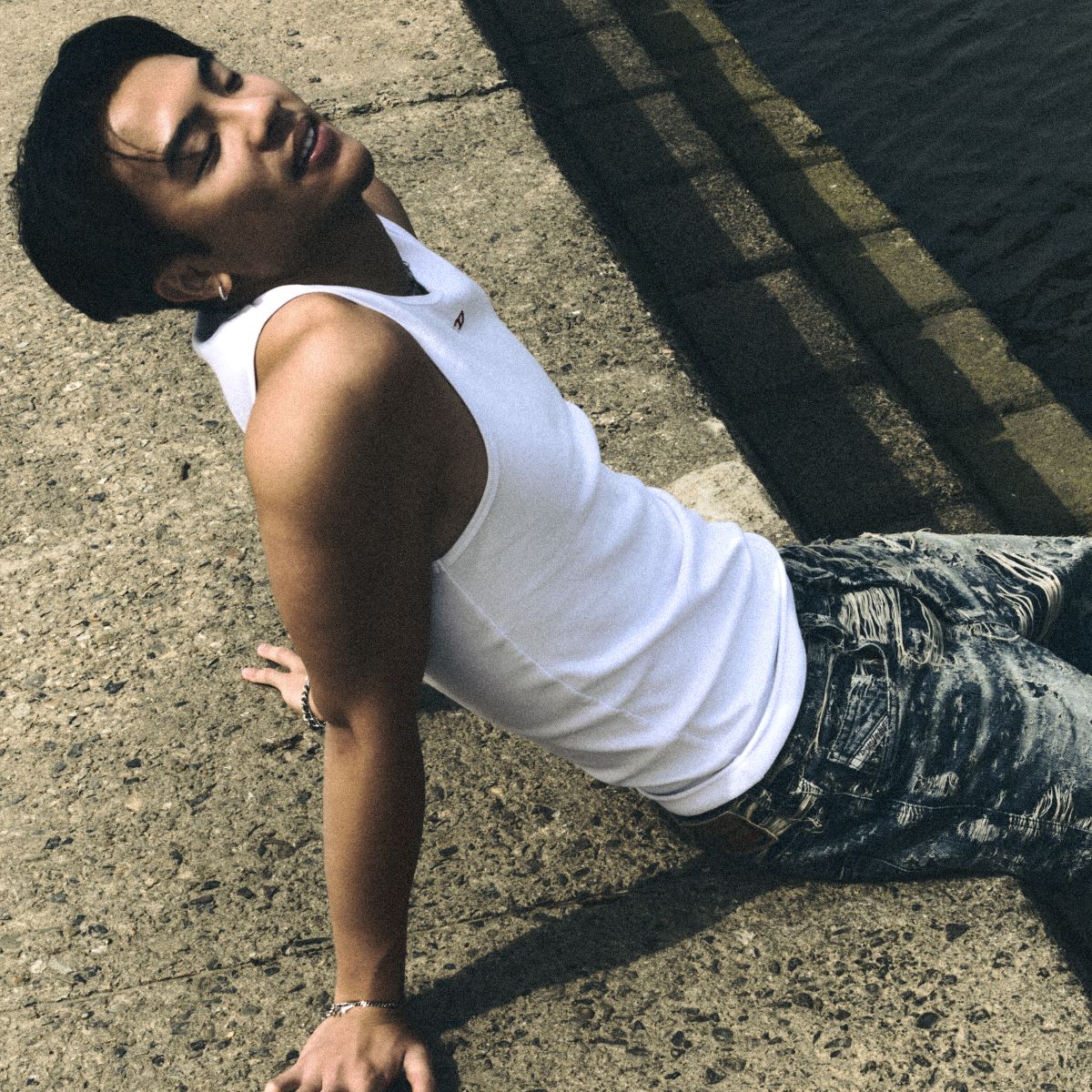
My sound has also been influenced by fashion. The way I dress plays a big role in my artistic identity, and both Justin Bieber and Jackson are international superstars known for their style. I take a lot of inspiration from them – not just musically, but in the way I present myself. My outfits, fashion choices, and overall confidence all contribute to my artistry. Over time, I’ve nurtured and polished my identity as an artist. Now, I’m proud to have found my own style: vibrant, sunny, disciplined, athletic, tan-skinned, and diverse.
Jackson Wang was the first artist I saw who shared the same background, culture, and country as me. I admired how he pushed past Western limits and brought together the East and West; it had a huge impact on me.
VOA: Survival shows like The Next can push artists to their limits. Looking back, how did the experience of performing outside your comfort zone help you refine your stage presence and vocal approach? Are there lessons from that intense environment that still influence how you prepare for performances today?
SL: The stage was a major challenge for me. It was one of the toughest experiences I’ve faced, especially as each round became more difficult, the stage grew more complex, and the entire process became more demanding.
For me, vocals weren’t my strongest suit, so I had to train relentlessly. It’s not just about technique; it’s more about being in the moment and truly feeling the music. Immersing yourself in the whole experience is key – it’s as if you’re in a movie, and the audience is there to watch. The more immersed you are, the better you play the role. I think that’s more important than focusing solely on technical skills because when people see that you’re feeling the music, they can connect with you on a human level.
Also, working with so many different artists from diverse backgrounds is unpredictable. You never know what you’ll get or what kind of person you’ll interact with. Sometimes, you may not get along, but I’ve learned that not everything you assume will go right will be the right answer for you. Sometimes, two wrongs can make a right. I’ve learned to adapt, to be resilient, and to remain open-minded as an artist.
VOA: May is shaping up to be an exciting month for you with your upcoming North American tour. Can you share more details about what fans can expect from the tour?
SL: This North American tour consists of six cities, running from the second week of May until the end of the month. I’ll be touring with four other amazing artists: KIRE, Mad Tsai, HOHYUN, and Uzuhan – two Korean-American artists, two Taiwanese artists, and myself. The tour is hosted and presented by Connected Live Entertainment, a platform dedicated to promoting Asian Gen Z independent artists to American audiences. They are a fantastic collective, and I feel incredibly blessed to be part of this tour. The last time I toured in the U.S. was in 2018 for the Voice of Summer tour, so this will be my second U.S. tour. I’m excited to meet new people and reconnect with old fans!
VOA: I’ve heard that you’re launching your startup brand, WARMSTEP. Can you give us a sneak peek into it? What inspired you to start this venture?
SL: I’m excited to begin my entrepreneurial journey in Dubai. I’ve always had a growing passion for massage therapy. Growing up in China, I received massages regularly – foot massages, back, neck, and head massages – on a day-to-day basis. I’m particularly interested in exploring this space in Dubai, where beach clubs are currently very popular.
My vision is to bring massage therapy to the beach in a minimal yet premium express format. This concept wouldn’t compete with traditional spas; instead, we would offer 15-minute professional, high-quality massages right on the beach. Clients can relax while getting a tan, listening to great music, and sipping a cocktail, creating an overall fantastic experience. This venture truly reflects who I am as a person: embracing sunshine, relaxation, and diversity.
VOA: Having grown up in Hong Kong, moved to the States, and later returned to China, you’ve been exposed to such diverse musical cultures. How have these different musical influences shaped your sound and approach to music? Do you intentionally incorporate elements from each place into your work?
SL: Growing up in Hong Kong, I was surrounded by a diverse and multicultural environment. Attending an international school allowed me to connect with many different communities, which has greatly influenced the diversity in my music. I also grew up listening to a lot of local Cantonese pop, which is often very melodic, emotional, and ballad-driven. That influence has shaped my approach to melody, and I naturally tend to write slower songs. However, being so in touch with the international music scene has also led me to explore more rhythmic styles in my work.
VOA: How does it feel when you release music in general? Personally, I feel like when an artist exposes their work, it’s like revealing their soul to the public. I have major respect for that, and I’m curious, how do you feel when you put your music out there for people to judge?
SL: At first, for me, it was all about courage and persistence. I remember when I released my first single in 2015, I was only 15 years old at the time. It took about a year to write that song, which was called Nostalgic. I was in high school, probably my sophomore year, and I was incredibly nervous about putting it out. I kept panicking, wondering what my classmates and teachers would think. We had an online school platform, sort of like a client portal, and I uploaded the song there. To my surprise, everyone got excited about it. Then, I posted it on SoundCloud, and it did well. That led to an opportunity to perform it at the school formal. I was dragged onto the stage, and the energy in the room was insane; everyone knew the lyrics. I had no idea the song would gain so much hype. When I saw that the entire school could sing the chorus, I thought, ‘Wow, I didn’t know I could do something like this.’ That experience built my confidence and made me look forward to making more music. Later, during my senior year, I did a solo show at school, and once again, everyone knew my songs, especially Everyone Is Beautiful and Body Solid Gold. Seeing how easily people connected with my music motivated me to keep going.
VOA: With new music and the upcoming tour, what other exciting things can we look forward to from you?
SL: Yeah, so I have an album coming out this summer. We’re looking at seven to eight songs, featuring a lot of R&B elements – my roots, my personal life, and some experimental sounds. The album will have both high-energy tracks and sentimental moments, so stay tuned for that. As for the rest of the year, I’m not entirely sure yet, but I have a lot of exciting content planned. I also hope to participate in more talks and panels for you all.
Written and interviewed by Maggie Gogler
Featured image courtesy of Sunny Lukas
View of the Arts is an online publication dedicated to films, music, and arts, with a strong focus on the Asian entertainment industry. With rich content already available to our readers, we aim to expand our reach and grow alongside our audience by delving deeper into emerging platforms such as K-pop and Asian music more broadly. At the same time, we remain committed to exploring the vibrant and ever-evolving global landscape of film, music, and the arts, celebrating the immense talent and creativity that define these industries worldwide.

 VIEW OF THE ARTS