
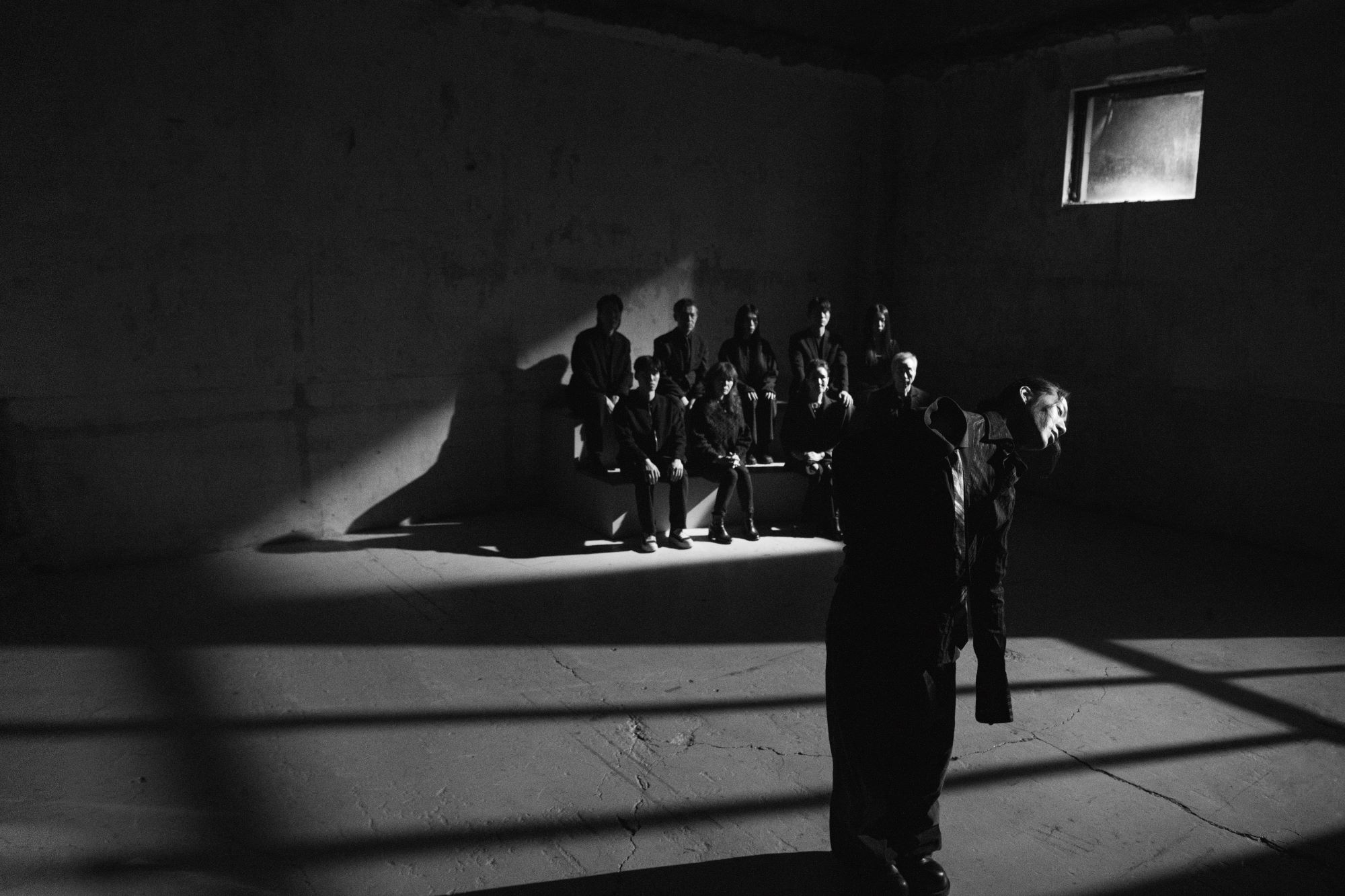
James An returns with Silhouettes, a double single release that touches on vulnerability and the emotional aftershocks of making music in an increasingly commodified hip-hop scene. During our interview, James speaks with sharp self-awareness about the contrasts he lives within: artist and performer, teacher and student, creator and critic. And the opening song, Blue Ink, shows this straight away with the line “barely pass the vibe check after mic check next chapter,” which introduces a personal look at feeling out of place and doubting yourself, and James doesn’t shy away from the discomfort of these emotions.
That visual and lyrical focus on storytelling continues in Hypocrite, a darker, grittier track that explores both inner conflicts and outward falsehoods. James admits his discomfort with expressing anger, but chooses to embrace it here, not as aggression, but as release. “You and me and anyone and everyone hate,” he raps, reflecting the uncomfortable truth that self-criticism is inseparable from his creative process.
What’s most compelling about James is the balance he strikes between lyrical richness and collaborative openness. Whether it’s Nosun’s presence on Blue Ink or KP’s energy on Hypocrite, James gives space to others without losing his own voice. His approach is built on trust in fellow artists, in his audience, and in the slow, sometimes painful, shaping of his own path. Looking ahead to new collaborations with female artists and fresh musical directions, Silhouettes feels like an important moment in James’s journey, melding vulnerability, daring creativity, and honesty into a powerful evolution of his sound.
I honestly feel very fortunate and grateful that I’ve been surrounded by the kindest, most inspiring, and genuine people throughout most of my life.
View of the Arts: I’m really glad we get to talk again, this time about your new release, Silhouettes. I’d love to start with Blue Ink. In the opening line, you say, “barely pass the vibe check after mic check next chapter,” which – at least to me – suggests self-doubt or pressure in the music scene, questioning whether you fit the mold or stand out. Do you often feel that tension between being honest and performing? And when you were writing that track, what was going through your mind?
James An: Since I started rapping, I’ve always felt like I do not fit the mold and do not belong. I think it partly has to do with the thought that my stories and lyrics are far different from the narratives of the rappers I grew up listening to and those I listen to today. I think it also has to do with a lot of self-doubt and pressure in the industry, part of which I put on myself; I’ve experienced a lot of imposter syndrome as a rapper whose life has been very different from those of other rappers. I think there is a tension between being honest and performing in that, when I’m performing, I’m not only trying to be honest with my emotions and energy in the way I spit the lyrics, but also to strive to experience and emit energy that I have not before. While writing this track, I wanted to acknowledge my feelings towards my journey thus far while confidently embracing my identity.
VOA: You wrote, “I grab my Meisterstück and soak it with ink / go pay off the smudged debts my lyrics.” That metaphor is powerful – almost like you’re writing to settle a moral or emotional score. What are those “debts” you’re addressing in the song?
JA: Acknowledging my privileges is an important process for me, not only as an individual but also as an artist. I have many debts – both literal and metaphorical. Reflecting on the opportunity costs of different careers and paths I could have taken, I feel indebted to everyone who has given me so much, both financially and emotionally. I wonder if my decision to pursue this career and write my lyrics will ever pay off these “debts.”
VOA: In your lyrics, you say “always different from others, no longer human” and “whether it’s privilege or skill, I fall short of expectations.” Do you feel like chasing your goals has changed how you see yourself, or how others see you?
JA: I think it’s very important to reflect on myself and my journey from time to time because such reflections can sometimes help me not only improve as an individual but also celebrate the process, small achievements, and developments. I feel that the more and more I continue creating music over time, I can get more negative in terms of my perception of my own self-worth. Over time, I think I’ve come to appreciate my slow and gradual process of furthering my career and journey. What has helped me throughout this process is being grateful and even protecting my sense of gratitude.
VOA: The hook repeats “blue ink bleedin’ on my notepad / blue fingertips… blue lips… blue suede.” There’s a whole world built around the colour blue. Is that colour symbolic of something for you – melancholy, style, identity?
JA: This part of my lyrics, as well as the title of the song, was inspired by a moment when I was writing my lyrics with blue ink. The blue ink bled through the page, and it got on my fingertips, which eventually smudged around my lips when I unknowingly touched my chin with my fingers. The blue ink is an embodiment of my lyrics that slowly spreads. Blue lips and blue suede are also homages to ScHoolboy Q and Vince Staples, respectively.
VOA: Your style often nods to old-school hip-hop, which is refreshing, especially now, when so much of the genre feels overly commercialised. How do you strike a balance between honouring those roots and pushing your own sound forward in today’s scene?
JA: I often think about what my fans and listeners would like and genuinely appreciate – the ones that really love hip-hop music and culture. Thinking about that helps me stay rooted in the type of music that I love and want to express. One way I try to maintain a balance is to create different songs that might fulfill different purposes or have different intentions. I feel like my lyrics have definitely become a central part of my craft, but I am careful to not let it limit my sounds or experimentation with them. Putting more effort and thought into my lyrics and having more fun overall have definitely helped. I feel that, if I have more fun with the process, the listeners can feel that too.
VOA: Blue Ink features Nosun, another strong rapper you previously went head-to-head with on Rap: Public. Your styles are quite different, but you really complement each other here – his verse is raw and street-tough, with lines like “no second chances, living ain’t for the weak” hitting especially hard. How did this collaboration come about, and what made you feel his voice was the right fit for the track?
JA: In the beginning stages of creating this song, I knew I wanted a feature artist who really loved hip hop and rapping itself. When I heard the beat for the first time (produced by BRIAN MADE), I immediately fell in love with the energy and sounds of the beat. After writing and recording my different verses and hooks, I sent the beat along with my recordings and asked Nosun right away. Nosun was personally one of the most impactful rappers I’ve met on Rap: Public, and I had a very good feeling he would kill this beat. Thankfully, he told me he really liked the track and told me he’s down. I knew he could spit, like for real, and he did on this track. I feel that his verse and voice added a powerful sharpness and raw impact to the track, and I’m very thankful to Nosun. He’s a real, genuine, down-to-earth homie, and I’m lucky to have gotten to know him.
I feel like my lyrics have definitely become a central part of my craft, but I am careful to not let it limit my sounds or experimentation with them.

VOA: In Hypocrite, you paint a pretty bleak picture of social dynamics, describing people as cockroaches and manipulators hiding behind fake smiles. Was there a specific experience or moment that sparked this track, or is it a buildup of what you’ve observed over time?
JA: I honestly feel very fortunate and grateful that I’ve been surrounded by the kindest, most inspiring, and genuine people throughout most of my life. I can’t name one specific instance, but there have been moments of disillusionment, or should I say, moments when I was reminded yet again that certain people are not who they deliberately portray themselves to be. It’s one thing to be sycophantic, but another to be selfish and constantly try to take and take.
VOA: You rap, “people who fake ignorance are the scariest,” and later admit, “you and me and anyone and everyone hate.” There’s a striking self-awareness in that; are you deliberately holding a mirror to your own contradictions, too? How important is self-criticism in your music?
JA: Self-awareness is very important to me as a person, and also in my lyrics. Although I always strive to be a good person, I am far from perfect, and I want to be known, accepted, and maybe even loved for my imperfection. I do not want to create an impression of myself that people can easily fall in love with superficially. If someone gets to know me, I would like them to get to know me without any disillusionment. I am always changing, and full of contradictions, and the least I can do is acknowledge that from time to time. I also need to come to terms with the fact that, sometimes, I’m not too different from those whom I criticise.
VOA: The track feels emotionally and mentally heavy; there’s anger, exhaustion, and truth-telling. When you write from such a raw place, what toll does that take on you as an artist, and how do you take care of yourself afterward?
JA: Expressing anger is something that I’ve always felt uncomfortable doing, just as an individual. I’ve always told and convinced myself that anger is not good; however, as an artist, I want to embrace different emotions without prejudice, and hopefully express them honestly and artistically. Depending on the kinds of emotions and feelings I’m expressing in my songs, it can be emotionally exhausting or cathartic. I think it was more of the latter for this track because the emotions and thoughts expressed in this song were more of a release for me. When the song comes out nicely and I feel like the emotions emitted in the song are real, that in itself makes me feel very happy and sometimes even proud. When I hear feedback from the listeners that they have felt something real or special, that’s the best feeling. That is when I truly feel that I have done something well or meaningful
VOA: KP’s verse builds on your message but with a slightly different tone; it’s more survivalist, even militaristic. What made you want to bring him into this track, and how did you both approach balancing your energies while keeping the message unified?
JA: Honestly, KP was one of the rappers that left a lasting impression on me from Rap: Public, and he was one of the rappers on the show that I wanted to collaborate with right away. Part of my lyrics was inspired by his performance and lyrics on the special performance stage of Ambush (with Khundi Panda, Punchnello, and Luci Gang) towards the end of Rap: Public. In his verse, he spits (translated into English), “What did you do in November? I got rid of the f***ers around me.” I thought to myself like damn, that’s a dope line, and it got me thinking about people I would like to distance myself from. Since he inspired me, I naturally thought that he’d need to be on the track.
When I invite other artists to the track, I send them a note about how I was inspired to write this song, some overall themes, etc. to provide context, but I always give full control and respect to the feature artist’s creativity and expression (of course) and try not to give any feedback (except the fact that I love what they did). After I heard KP’s verse, I played around with the arrangement of the song with Haz Haus (recording engineer) and RIMINISSI (the producer of the beat) to make the song more complete. I think it’s incredible how he’s just recently graduated from high school, and I’m in my early 30s, and we’re here together on the same track through our love for hip-hop. Thank you, KP!
VOA: Hypocrite aims at fake personas and performative culture. In today’s music world, where image often overshadows substance, how do you stay grounded and protect your authenticity?
JA: I think what has definitely helped me stay grounded in this industry is finding like-minded artists that share similar values to mine or stay true to their values. We don’t necessarily have to share the same values or tastes, but I think it’s very important to find fellow artists who return sincerity with sincerity. I like to believe that this has a lot to do with my collaborations with other artists. It’s kind of like looking out for each other. It’s a lonely journey, and it’s important to rely on each other and be there for others. Directly communicating with my fans, whether that’s through writing replies on comments, receiving and sending Instagram DMs, or meeting them offline before and after performances, is incredibly meaningful and helpful in keeping me grounded and centered. I’m very grateful to my listeners and fans for their unfailing support.
VOA: You also released music videos for each track. Who came up with the concepts, and what was the filming process like for you?
JA: Music videos are an integral part of my music. I’ve always loved watching music videos, and the experience of listening to my favorite artists’ music while watching the visuals has always been meaningful and helped me interpret and experience music in special ways. I want to strive to do the same for my listeners and fans.
As an artist and educator, I want to provide listeners and viewers with various ways to access and engage with my music and art. I think music videos can help provide an opportunity and experience where listeners and viewers can more actively participate in the art with their own interpretations as opposed to simply consuming art. I was very lucky to work with Min Lee, who is a phenomenal director who directed my past music videos, such as A Streetcar Named Desire and Sweet Truth. I initially share my songs, lyrics, some notes on the original inspiration of the songs, and some themes that I’d like to explore and express further through visuals. I always try to give full control and respect to the music video directors’ creativity and vision as long as they align with my overall vision and message. The process was very organic and fun, and I’m very thankful to Min Lee and the filming team for the incredible work they did for both Blue Ink and Hypocrite. I feel like they took the songs and created a whole new experience with them through very creative concepts and production.
VOA: What can we expect next from you?
JA: I’m not sure exactly which songs I will release next, but I’ll be releasing songs that have a far different vibe than that of this release. They will all be different in terms of sound, lyrics, and themes. I’m having a lot of fun creating music in pairs, so I think I’ll be releasing more double singles soon. Stay tuned for my future releases with incredible and talented female artists! Lastly, I would like to extend a huge thank you to View of the Arts for their support and encouragement throughout my journey. Thank you for reading this. I hope you enjoy watching both of my music videos: Blue Ink (feat. Nosun) and Hypocrite (feat. KP). Please look forward to my future releases later this year as well! Thanks!
Written and interviewed by Maggie Gogler
Featured image courtesy of Kim Sehwan
View of the Arts is an online publication dedicated to films, music, and the arts, with a strong focus on the Asian entertainment industry. With rich content already available to our readers, we aim to expand our reach and grow alongside our audience by delving deeper into emerging platforms such as K-pop and Asian music more broadly. At the same time, we remain committed to exploring the vibrant and ever-evolving global landscape of film, music, and the arts, celebrating the immense talent and creativity that define these industries worldwide.

 VIEW OF THE ARTS