
Crystal Lake have long proven that metalcore can be brutal and precise, and that balance is on full display as they prepare to release their sixth studio album, The Weight of Sound, on January 23. When I interviewed YD (Yudai Miyamoto) – the band’s founder and last remaining original member – he spoke less about trends or genre labels and more about life experiences. To him, heavy music is a connection where sound becomes culture once it reaches people.
After more than 20 years, YD views Crystal Lake as a band in constant motion. Despite line-up changes and challenges along the way, the band’s identity has never been about preserving a single sound. Instead, it’s about honesty, allowing past influences, friendships, and personal growth to naturally guide the music. Touring in the US and Europe has helped the band see how their experiences with other musicians and fans influence their tight yet powerful sound.
One of the key ideas behind The Weight of Sound is that it doesn’t try to follow trends. YD sees music and culture as always coming back around. Rather than chasing what’s “new,” Crystal Lake focus on what feels real and true to themselves. That’s why the album can feel familiar without looking back.
Throughout our conversation, YD also reflected on how cultural differences frame the way heavy music is received around the world. Japanese audiences tend to respond with emotion, American crowds with bold, immediate energy, and European listeners with a more intellectual sensitivity. The UK, he said, can appear reserved at first, but once trust is earned, the connection becomes powerful. It’s a reminder that metal isn’t the same everywhere; it’s influenced by where it comes from.
With The Weight of Sound to be released soon, Crystal Lake will bring that philosophy to the stage when they return to London in March. More than two decades into their journey, the band isn’t trying to prove anything; they’re simply continuing to express who they are. And in doing so, they remind us that heaviness is not only about volume or speed, but about meaning and the full weight of sound itself.
In terms of composition and the way I make music, my approach hasn’t really changed for nearly twenty years. Some of the songs on the new album were actually written a while back, and this is our first full-length release in about six years. Because of that, the core of my songwriting and overall style has remained consistent.
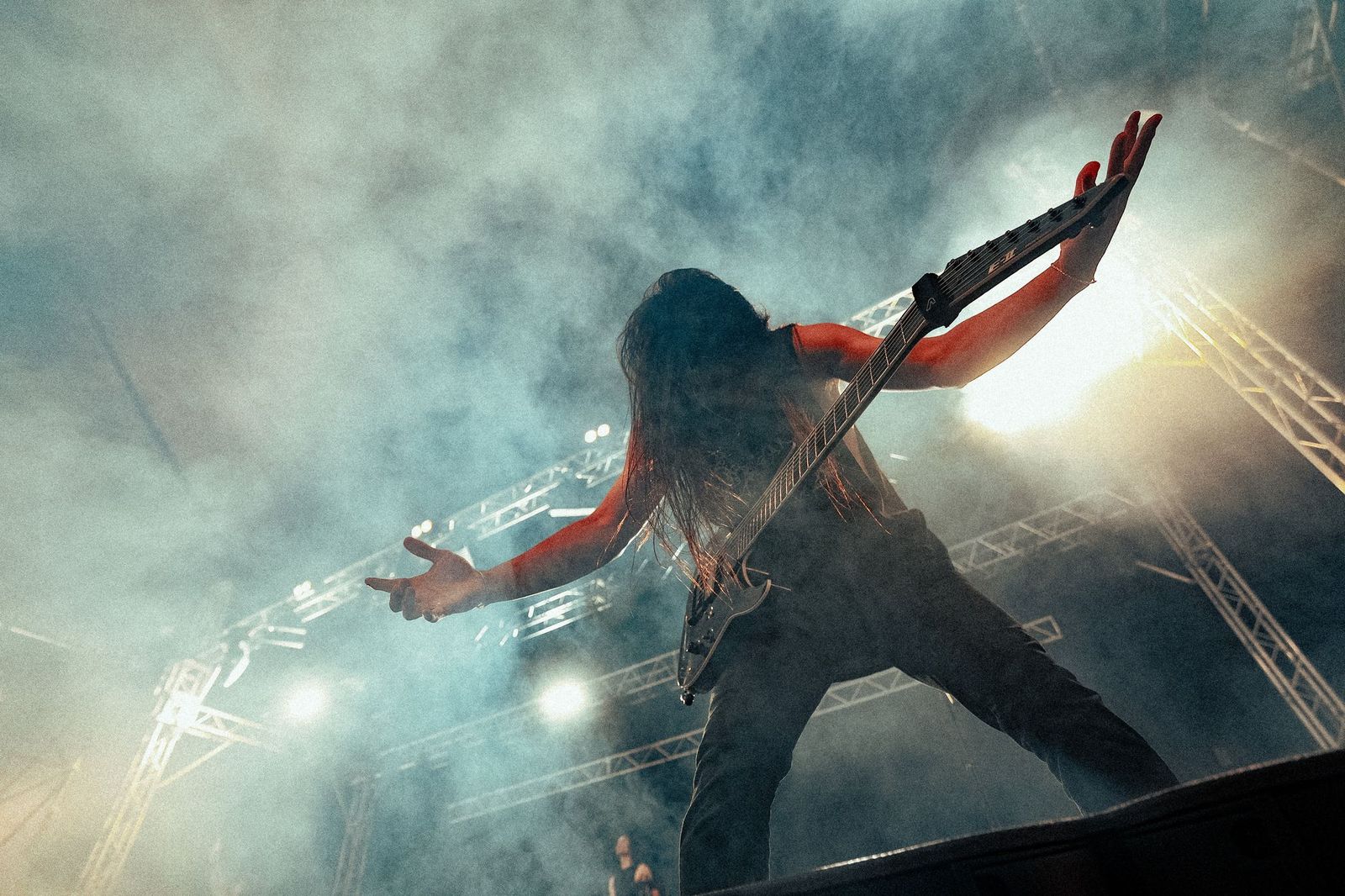
VOA: As the founder and last original member of Crystal Lake, how does it feel to carry the band forward while continuing to rebuild and evolve its identity?
YD: Honestly, even now, it comes down to something very simple – I just love music, and I love being in a band. Over time, it stopped feeling like a career or a motivation I had to force. It became part of my life, something completely natural. Before I realised it, being in Crystal Lake was simply who I am.
There were moments, especially when members and vocalists changed, where things were difficult, and I questioned whether I should keep going. But during those times, the support from my friends and fellow musicians meant everything to me. Their encouragement reminded me why I started in the first place and how important it is to keep creating, even through uncertainty. I’m grateful for the people I’ve met through this band and for the life it’s allowed me to live. That support is a big reason why I’m still here, continuing to build and evolve Crystal Lake.
VOA: With a new year comes a new album for Crystal Lake, The Weight of Sound. How does this release reflect your mindset now, and the direction the band is moving in?
YD: In terms of composition and the way I make music, my approach hasn’t really changed for nearly twenty years. Some of the songs on the new album were actually written a while back, and this is our first full-length release in about six years. Because of that, the core of my songwriting and overall style has remained consistent.
What has influenced me, however, is working closely with American musicians. Becoming more familiar with the rhythm of the English language – its flow, pronunciation, and melodic patterns – felt new and refreshing. That experience naturally shaped how I approached melodies and vocal lines on this album. So while the foundation of my style remains the same, those collaborations brought in a fresh perspective that subtly influenced the songs.
VOA: The new record is undeniably heavy, but there’s also a strong sense of control and precision behind the sound. For people outside the genre, metalcore can sometimes feel chaotic – like everyone is playing for themselves – but as musicians, you can hear the connection underneath. How did you strike a balance between raw aggression and precision during the production process?
YD: People talk a lot about genre and trends, especially in heavy music. With this album, there are definitely strong elements of old-school metalcore – the flow, the melodies, and the riffs are very hardcore at their core. But I don’t really think in terms of chasing trends or trying to sound “new” or extreme.
I’ve been thinking a lot about how trends work – not just in music, but in fashion and culture too. Everything moves in cycles. What feels new now often comes back from the past. Because of that, I don’t feel pressure to always be on the cutting edge. Instead, I focus on expressing what feels honest to me, shaped by my own experiences and the growth I’ve undergone over time.
Some people describe the album as nostalgic, and I find that interesting. Maybe it’s because when you’ve lived through certain eras, that experience naturally comes through in the music. Everyone carries those memories, and that shared human experience creates connection – not trends.
Touring the US and Europe also had a big influence on me. I’ve made many close friends through music – musicians from bands like Volumes, Fire From The Gods, and others. These connections happened naturally, just by being on the road together, sharing meals, and even BBQ. Through those encounters, you realise how small the world really is. All of that – life experience, friendships, time – feeds into the music. That’s where the balance comes from: not forcing aggression or control, but letting both exist naturally through the life I’ve lived and the people I’ve met along the way.
Lately, what I keep returning to are the very natural experiences from my own life – things I’ve lived through. Those experiences become the story of the songs.
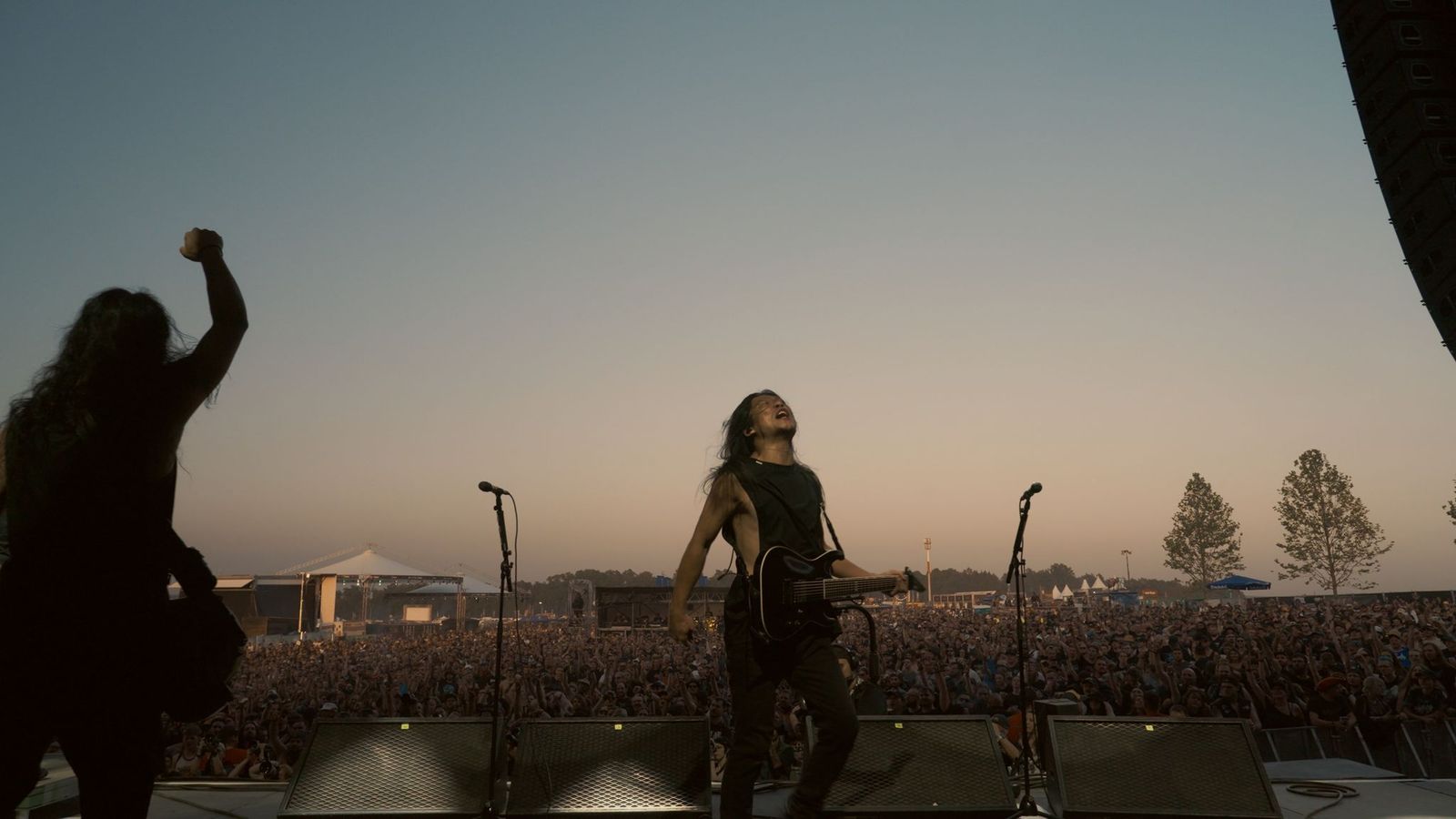
VOA: On this album, you collaborated with artists like Jesse Leach, Myke Terry, Taylor Barber, and others. How did you decide which voices fit which tracks?
YD: Take a track like Neversleep [feat Mike Terry] for example. When we choose a vocalist or collaborator, it’s not about whether they sing clean or scream – it’s about the person. We choose them because they’re friends. That song holds a great deal of meaning for us. Neversleep is like an all-night party. It represents those nights when you don’t sleep because you’re creating, connecting, and sharing energy with people you trust. That feeling of staying awake together – musically and emotionally – is what the song is about. I wanted to fill that track with the presence of real friends, not just featured artists.
Other songs on the album feel more like pure art pieces, where the focus shifts slightly, but with Neversleep, it was about friendship, connection, and the kind of bonds that keep you going without rest. Also, the most important thing is that the song can stand on its own, even without collaborations. I always write the music so it works independently first. Collaborations are not there to complete the song – they’re more like accents. They allow me to add small details, personal tastes, or elements that I personally love.
Of course, I do think about whether someone fits a particular song, but honestly, what matters more to me is whether I like the person. That part was difficult to explain because I really had to think about it. In the end, it’s less about “should we do this collaboration or not?” and more about whether the connection feels right. If the person inspires me and feels natural to work with, then I want to bring that energy into the song. That’s how I decide.
It really depends on the song, so let me give you a more specific example. The first track, Everblack, [feat. David Simonich) is extremely heavy and intense, so I wanted to bring in friends who could match that strength and energy. Then there’s The Undertow [feat. Karl Schubach], which is a more melodic track. For that one, I focused on a melodic hardcore style. As I mentioned earlier, my band, Crystal Lake, has a variety of styles – some are really melodic, while others are really heavy. The Undertow comes from the melodic hardcore and punk rock I listened to growing up.
When I was looking for the right emotional vocal for this track, I thought of Misery Signals, a very emotional American band. They actually disbanded last year, but we had always wanted to tour with them and had a lot of respect for them as a senior band. Including their style on The Undertow felt like a kind of farewell, a way to honour our roots and connect the song to the music that influenced us. That’s how I decided on that collaboration.
VOA: The Weight of Sound is the softest track on the album, yet the title suggests a different kind of heaviness. What does that song mean to you?
YD: Compared to the other tracks, this one gives a much softer impression. In my 20-plus years of making music, there’s something I’ve been saying on stage recently that I didn’t always dare to express before. It’s about the idea that each sound we play, each note, comes together to become music. And when we perform that music, as a band, and it reaches people, that becomes a culture in itself.
So, the “weight” in The Weight of Sound reflects that concept – the idea that every sound we make, the act of creating music together, forms our culture and identity. That’s the image I carry for the album as a whole.
In terms of the song’s content, as I said at the beginning, we focus on doing what we love freely, without being tied down by trends. Crystal Lake is a flexible band; we mix in influences from many different sources. We don’t confine ourselves to a single style, but instead express ourselves authentically.
VOA: Looking at the tracklist – songs like Everblack, Dystopia, and Coma Wave– there’s a clear thematic weight. What ideas or emotions were guiding the album’s narrative?
YD: The theme is really about where it comes from. Lately, what I keep returning to are the very natural experiences from my own life – things I’ve lived through. Those experiences become the story of the songs.
What I’ve come to realise more strongly is how much being Japanese influences my sense of melody. I’m reminded of that a lot. I spend time with people from all over the world – Americans, Europeans, people from across Asia – but there’s something distinctive about the Japanese melodic sensibility. That sense of melody might be what gives Crystal Lake its emotional core. I think it’s rooted in our identity as Japanese artists.
I just love music, and I love being in a band. Over time, it stopped feeling like a career or a motivation I had to force. It became part of my life, something completely natural. Before I realised it, being in Crystal Lake was simply who I am.
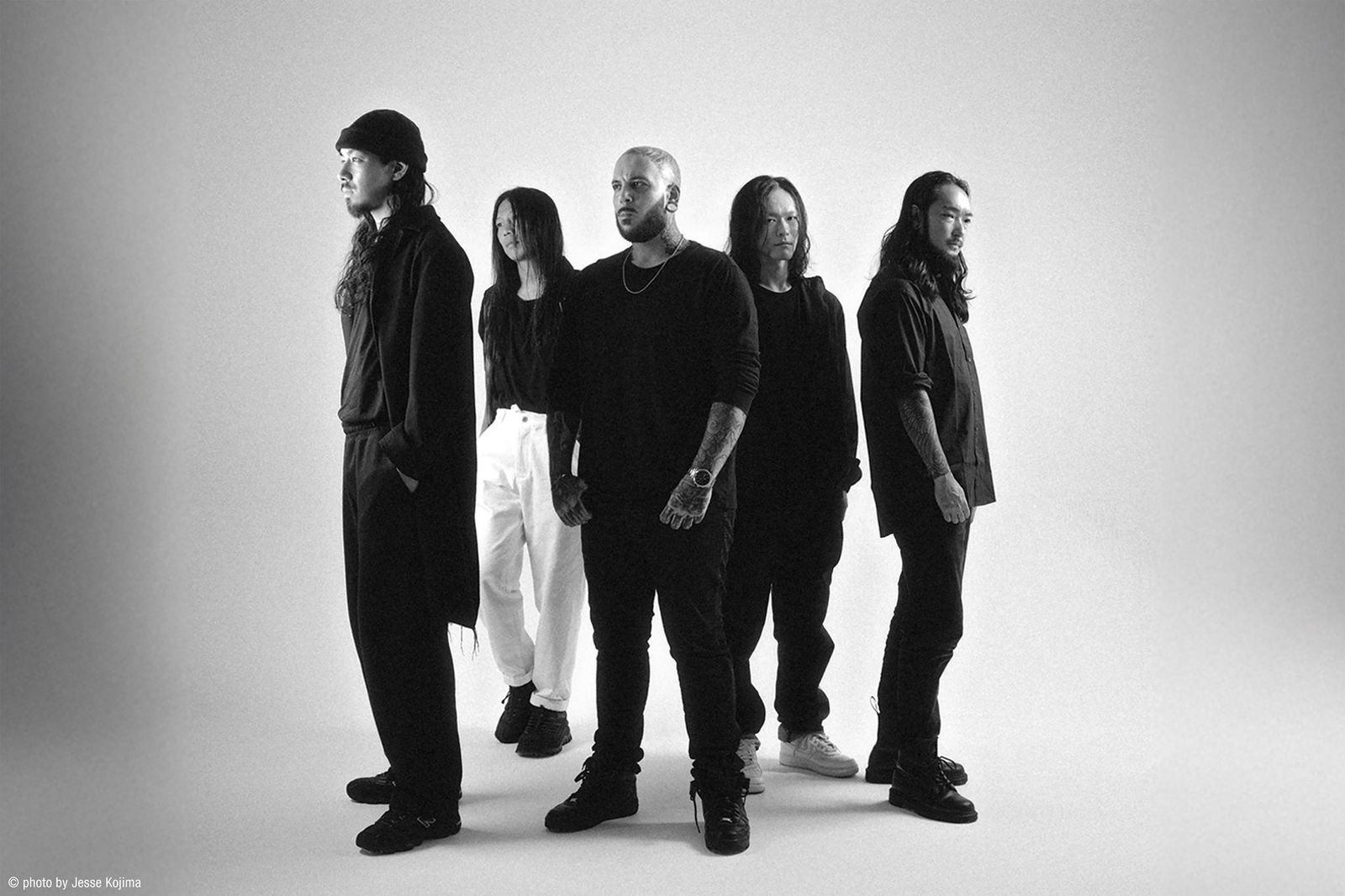
VOA: From a production standpoint, what was the biggest challenge you faced while recording The Weight of Sound?
YD: I’d say working with John, who comes from a completely different culture, was the highlight. Everything went so smoothly, and it was a great way to learn new ways of expressing things in another language.
Recording vocals abroad for the first time was also a big challenge. I’ve known my engineer, Jeff, for nearly ten years, but this was our first time actually working face-to-face in the studio. Even though we’ve grabbed beers together whenever I was on tour near his hometown, being in the studio with him was a whole new learning experience. More than anything, the biggest challenge was simply going abroad on my own and handling the entire process by myself.
VOA: Was there a moment during recording where a song completely changed direction because of a production choice – something that surprised even you?
YD: I took the lead on tracking everything but the vocals, and since my bandmates are also proficient in the recording process, the fundamental workflow was familiar. The vocal sessions, however, were a highlight. It was incredibly intriguing to observe how nuanced English expressions could alter the placement of accents and transform the rhythmic impression of a track.
VOA: You’ve been active for over 20 years and toured across the world, playing to audiences on nearly every continent. From your perspective, metal is received very differently depending on where you are. I’ve felt this myself – I’m originally from Poland, where bands like Vader and Behemoth shaped a very instinctive connection to extreme music. Japan has that same intensity – people feel the music immediately. But in places like the UK, it can take more effort to draw that reaction out of the crowd. As an artist, how do you experience these differences between audiences from city to city or culture to culture?
YD: There are many cultural differences, not just between audiences but in how people think and respond in general. I could honestly talk for an hour just about Japan alone. In Japan, performances tend to be very emotional – many bands express passion on stage in a way that feels quite intense and heartfelt compared to other countries.
In the U.S., the energy is more straightforward and powerful – it’s bold, flashy, easy to understand, and something people can instantly enjoy together. Europe, and I mean this in the best possible way, feels more delicate and intellectual. There’s a sensitivity there, almost like the roots of classical music, and you can sense that depth in how audiences receive the music.
These differences come from deeper cultural foundations in how people experience art. For example, in the UK, my initial impression was that people take a more reserved stance toward new things – there’s a strong sense of pride in their own culture, so they tend to observe first with their arms crossed, so to speak. But once they understand what you’re trying to express and connect with it, the audience response can grow incredibly strong and wide-reaching.
VOA: With the European co-headline tour starting at the end of February, including a UK date in March, how are you preparing to translate this new material into a live setting?
YD: Since this is a co-headlining tour and our new album is about to be released, our main goal for this tour is to let as many people as possible know about the record. However, rather than just focusing on the new songs, I’m putting together a setlist that will combine our new tracks with older songs we don’t usually play at festivals. I want to make it a special experience that both our long-time fans and new listeners can truly enjoy.
Written and interviewed by Maggie Gogler
Interpreter Akari Mochizuki
Featured image courtesy of Crystal Lake & Shotaro
We’d like to thank The Noise Cartel for their support in facilitating this interview.
View of the Arts is an online publication dedicated to film, music, and the arts, with a strong focus on the Asian entertainment industry. As we continue to grow, we aim to deepen our coverage of Asian music while remaining committed to exploring and celebrating creativity across the global arts landscape.

 VIEW OF THE ARTS