
We met CLOUDIAN at the Courtyard Theatre just hours before their London show, catching them in a quiet moment before the chaos of touring. It was a warm, easy conversation – full of laughter and honesty. Despite clearly still recovering from illness after their previous stop in Italy, the group remained in high spirits, balancing fatigue with excitement at finally bringing their music to the UK.
Brighten explained, the contrast between studio work and live performance lies in precision versus feeling – where recordings demand accuracy, the stage allows for something looser and more immediate. CLOUDIAN’s sound, often based on cinematic and almost fantastical concepts, is ultimately about connection. Whether building songs from a single piano idea or shaping entire projects around emotional themes, their process is complex yet fluid. Even their recent single, Faded Night, express this philosophy: a personal track born of transition, reflecting their move from a six-piece to a trio, while exploring passion and hardship.
Despite the structural change, the band’s foundation remains steady. Brighten still leads the conceptual direction, while each member contributes their own texture, whether through OM’s carefully placed violin arrangements or Logan’s drumming style. There is no sense of loss, only movement forward. If anything, the shift to a trio has sharpened their focus, pushing each member to take on more work, but rather than intimidating them, it drives them to do more. Sitting with them, it was easy to lose track of time; fifteen minutes passed quickly, yet it was enough to understand that CLOUDIAN are not only growing, but confidently reshaping the face of rock.
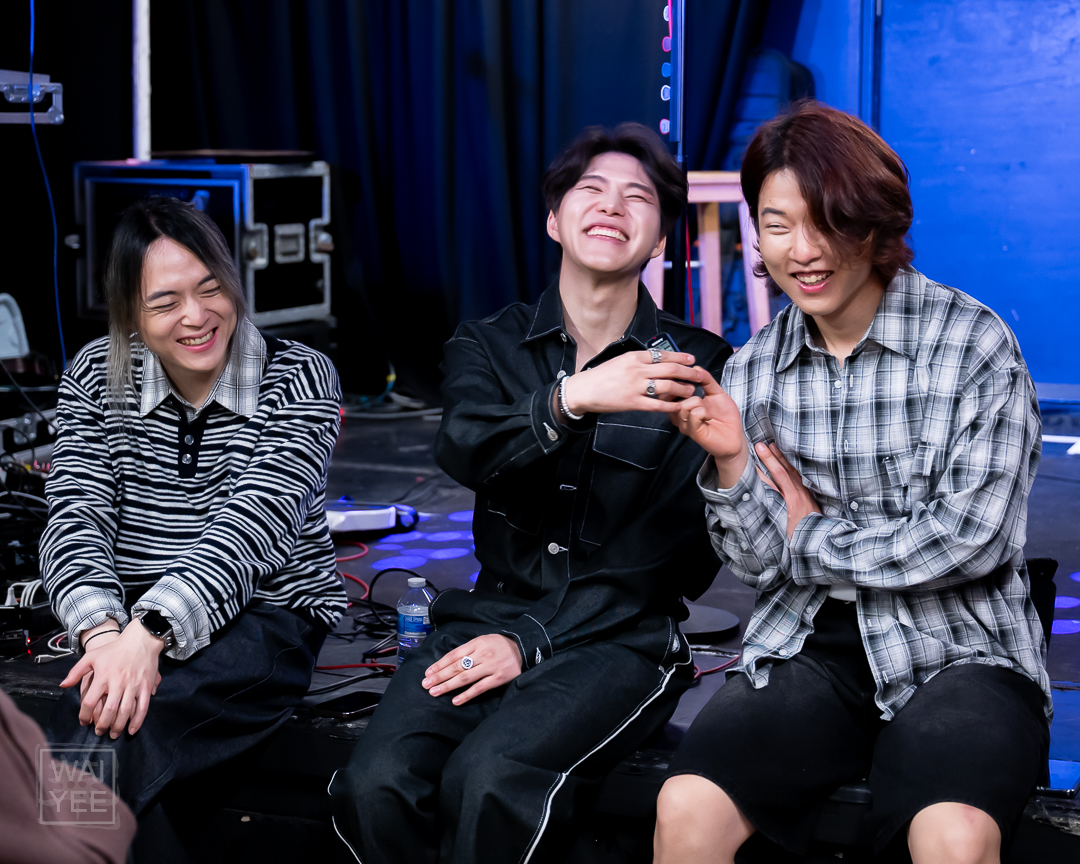
View of the Arts: You are currently on tour, so I wanted to ask – how has it been for you being in Europe again, and especially performing in London for the first time?
Brighten: I don’t know, it feels a bit… distracted, in a way. We are really excited to come to the UK for the first time as a band and perform here. Before this, we were in Italy, and we had a great show, but after that – and even during the show – he and I got really, really sick. We’re still recovering now. So yes, we wish we could enjoy more of Europe, but we’ve mostly had to stay in bed. At the moment, we’re just trying not to mess up the shows while we recover.
VOA: Have you had time to see anything around the city yet?
Brighten: Not really. We haven’t had much time to look around. Just a bit, like King’s Cross station [laughs], and some street views. That’s about it so far
VOA: How does performing live change the way you experience your own music compared to the studio? When you’re recording, everything is controlled, but on stage it’s a different environment – so how does it feel bringing your music to a European audience?
Brighten: In the studio, it’s more about accuracy – everything has to be precise. But live, we actually try to make it a bit rougher, more real, so it feels like something is happening right in front of you. That’s the energy we want to give to the audience. Our music has a kind of cinematic, fantasy-like concept, so when we perform, we try to turn it into a full experience. That’s the kind of show we want to create.
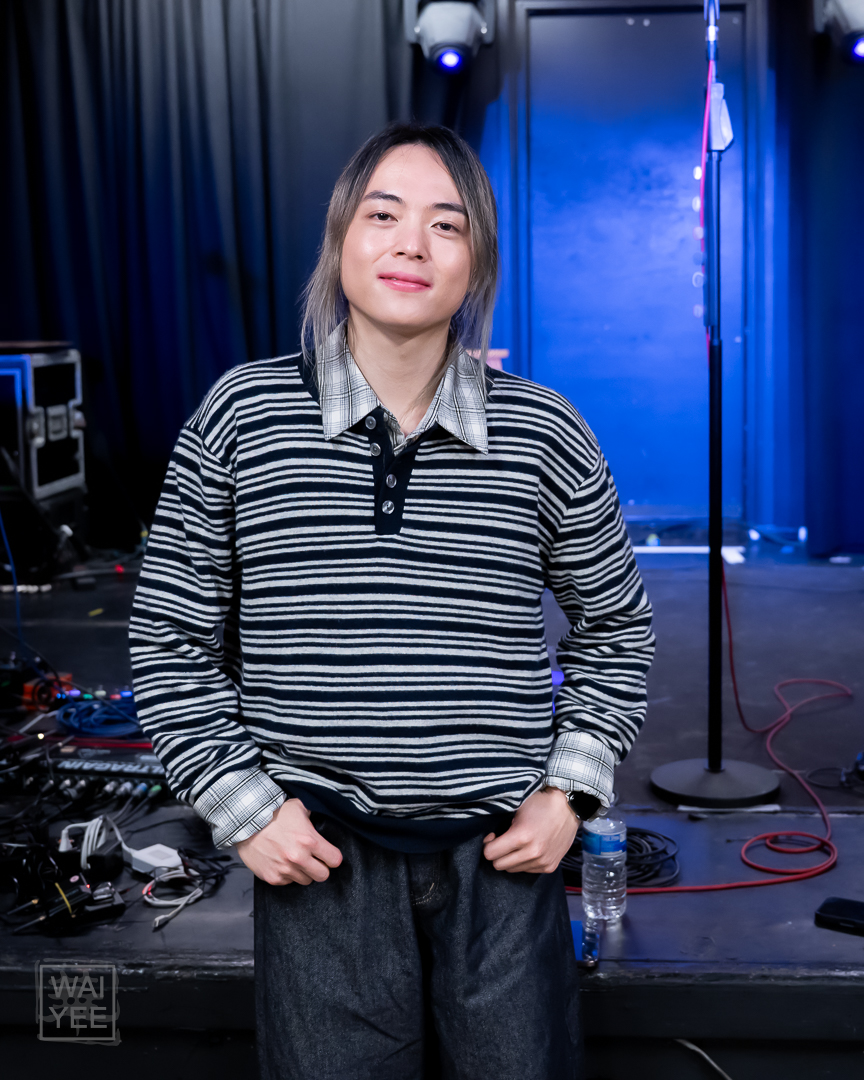
VOA: The last single I heard from you was Faded Night, which I absolutely loved. Your vocals are very original – you don’t sound like a typical rock vocalist, and that really stands out. What was your state of mind when you created the track, and what inspired it?
Brighten: Thank you – that means a lot. We recently became a trio after being a six-member band, and the song reflects that transition. It’s about passion and depression, and how both of those emotions fade over time. Even for the members who left and those who stayed, there’s no resentment. It’s more like – your time here has ended, and you have to move on, while we still have things to do. That’s just life.
VOA: It will be very interesting to see you perform as a trio, especially since your earlier work was created as a six-piece. You still have that strong rock edge, but how do you approach things now? With fewer members, there must be more pressure – how do you handle that?
Brighten: Yeah, there is definitely more pressure. Going from six to three members means each of us has to do almost double the work on stage. It’s a lot, but if you have enough time to practise and adjust, it’s not impossible. We just have to work harder and be more prepared.
VOA: When you became a trio, was that something that felt natural to you, or did it take time to adjust?
Brighten: I think we already knew each other very well. When we decided to become a trio, it was quite straightforward – we just said, “Okay, you do this, I’ll do this, and you do that.” And then it was like, “Okay, let’s go.” It felt very natural for us.
VOA: Now that you are a trio, do you find there are more creative differences, especially with more responsibility on each member?
Brighten: I don’t feel it’s very different. Even when we were a six-piece band, I was the one who created the bigger picture – the structure and concept of the music. The other members would then bring in their own skills and details. That process hasn’t really changed. I still draw the bigger picture, and the others build on it.
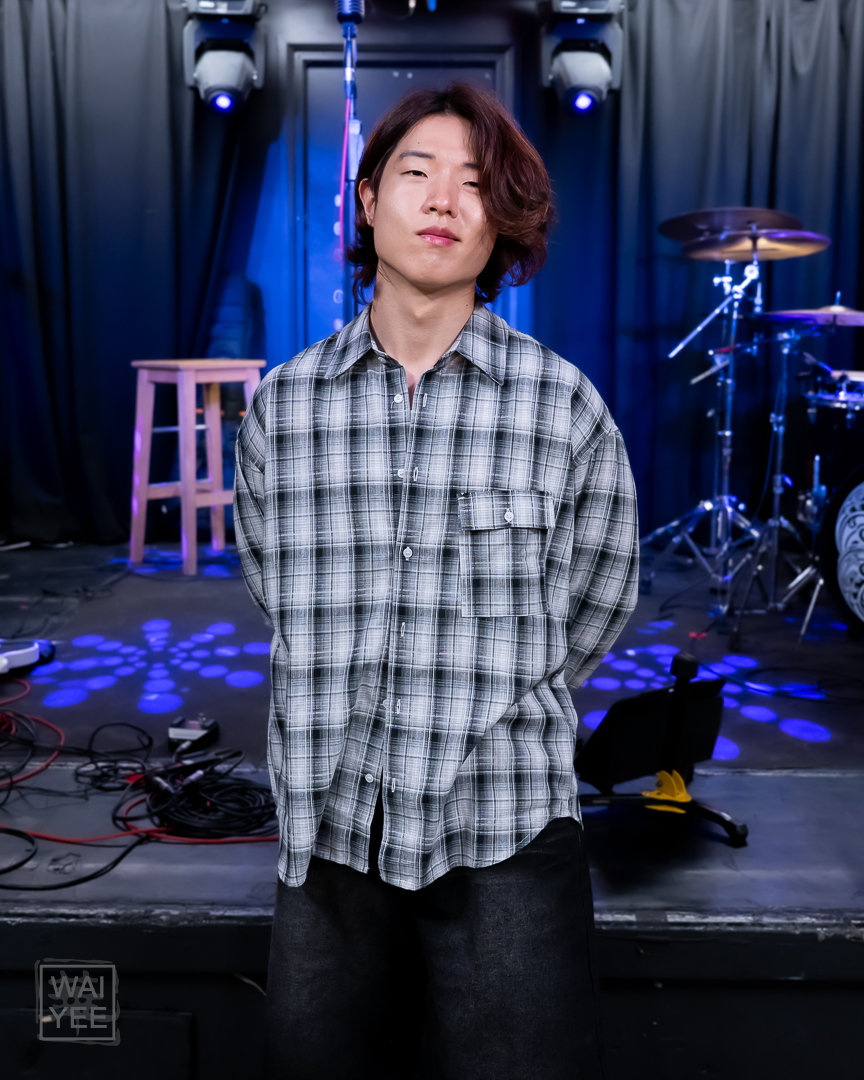
VOA: When you write songs, what usually comes first – melody, lyrics, or concept?
Brighten: It depends, but usually we focus on the concept first. We are telling stories about human emotions, but we often present them in a more cinematic or fantasy-like way. Even if the feeling itself is something very normal, having a strong concept makes it feel more special, like something beyond everyday life.
VOA: That’s really interesting. So when you have a concept, how does the melody come to you? Do you hum it, or does it come through instruments?
Brighten: Every song starts differently. Sometimes the lyrics come first, sometimes the melody, and sometimes it begins with an instrument. For example, on one track, OM started playing a piano part, and we thought, “This is really good – let’s build from here.” We weren’t even planning to use that part for the song at first, but then I added lyrics and melody, and when we combined everything, it just worked perfectly.
VOA: Your recent single Faded Night is a beautiful track. I really love your vocals – they feel very original, not like a typical rock voice. What inspired the song, and what was your state of mind when creating it?
Brighten: Thank you so much, and that’s a great question. We had just become a trio after being a six-member band, and the song reflects that moment. It’s about passion and depression, and how both emotions fade over time. For the members who left and those who stayed, there’s no resentment. It’s more like – your time here is over, and you move on, while we still have things to continue. That’s just life. If you still have passion, you want to hold onto it because it won’t last forever. And even the difficult emotions will eventually fade.
VOA: It must be very different performing now as a trio, especially since your earlier work was created as a six-piece. How do you approach that change on stage?
Brighten: Yes, it’s definitely more pressure. Going from six members to three means each of us has to do almost double the work. It’s a lot, but if you have enough time to practise and adjust, it’s not impossible. We just have to work harder and be more prepared.
VOA: Is there a song in your discography that was especially difficult or meaningful to create? For example, comparing it to something like Faded Night, was there a moment where you thought, “This is really tough”?
Brighten: Yeah, I think our previous album LUCE was very, very challenging. A lot of the guitar parts were quite progressive, and some songs had unusual time signatures – like seven beats instead of the usual four. So it would go like one, two, three, four, five, six, seven – it’s not easy to keep that structure. That made it especially difficult for our drummer, Logan. He had a really hard time with it, but he did an amazing job.
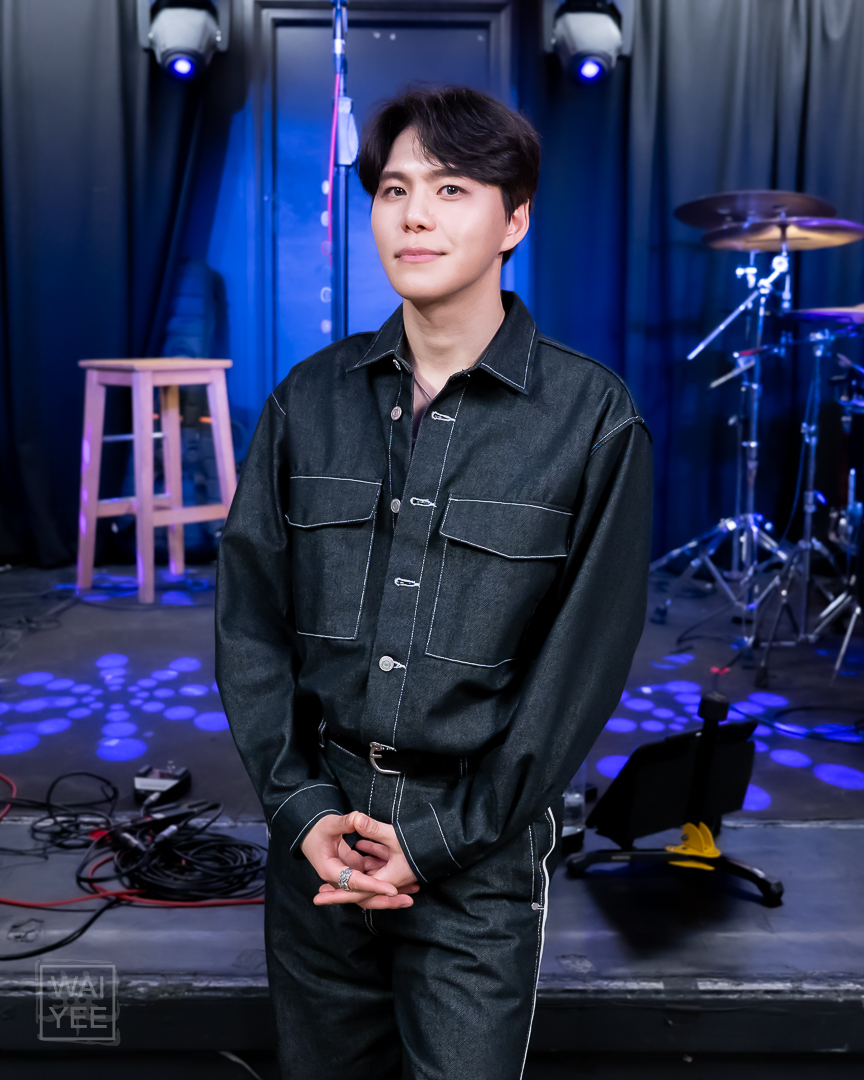
VOA: Your vocals carry a lot of emotion, and that really stands out. How do you personally connect to the songs when performing them live? And how do you work on your vocals, especially since singing in the studio and performing live can be very different?
Brighten: I think of it in two parts: technical and emotional. The technical side is things like stretching and vocal exercises – that’s like shaping a bowl or a plate. The emotional side is the food. So if the technical side is strong, I can deliver the emotion properly. That’s why I work hard to maintain it, even when I’m not feeling well, like tonight.
VOA: Do you ever change the key of a song when performing live, especially if you’re not feeling your best?
Brighten: No, we usually keep the same key. But I might sing it a little differently. The delivery can change slightly depending on the situation.
VOA: So how do you approach delivering emotion live, compared to the studio?
Brighten: In the studio, it’s more about accuracy. Live, it’s more about emotion. To really deliver that emotion, I think you have to face it properly yourself. If I feel it honestly on stage, then the audience can feel it too. It becomes something I can give to them more naturally.
VOA: OM, the violin is a very interesting element in your music, especially since it’s not easy to incorporate into rock. How do you decide when and how to use it in your songs?
OM: It’s definitely not easy to integrate the violin into rock music. You can’t have it playing all the time, like a guitar or bass. Instead, we use it in specific moments where it can really add something – like a certain atmosphere or emotion. It becomes more of a key element in particular sections, rather than something that runs throughout the entire track.
VOA: Logan, your drumming is very powerful. I’ve always felt that drums are the heartbeat of a band. What influences your style, and how do you shape the energy of a song through rhythm?
Logan: Before I joined the band, I listened to a lot of rock music, but I hadn’t really played it seriously. So when I joined, it was actually very difficult because the drum parts are quite complex. I had to train a lot in the beginning.
In terms of influence, I listened to bands like Slipknot and Metallica, and I really admire Travis Barker. When it comes to my playing style, I don’t necessarily aim to sound “powerful” in a typical way. I actually try to make my playing feel more cold and sharp – very precise. But I think people might experience it differently, and that’s okay. I just want to focus on accuracy and clarity in my performance.
VOA: Finally, do you have any new music coming up? Are you planning to release anything soon?
Brighten: Yes, actually – right after this tour, we’re planning to release a new track. After that, we’re hoping to tour again and eventually work towards more music. That’s our goal right now.
Written and interviewed by Maggie Gogler
Feature image © Kirsten Wah-Finn for View of the Arts
View of the Arts is an online publication dedicated to film, music, and the arts, with a strong focus on the Asian entertainment industry. As we continue to grow, we aim to deepen our coverage of Asian music while remaining committed to exploring and celebrating creativity across the global arts landscape.

 VIEW OF THE ARTS