
Ryoo Seung-wan has done it again with his twelfth feature – albeit in terms of commercial, rather than critical, success.
His latest film Smugglers has earned nearly £30 million since its July 26 premiere in South Korea, making it the fourth-highest grossing film of the year in the country and the summer box office champion. It received its world premiere at the Locarno Film Festival in early August and is now heading to Toronto International Film Festival.
It’s the 1970s and a group of women in the small seaside town of Guncheon have a physically demanding job of being haenyeos. Literally translated as “sea women,” the word refers to those who dive underwater to collect oysters and other sea life for a living. Among them are Chun-ja (Kim Hye-soo), a relative newcomer to the town, quiet and cautious Jin-sook (Yum Jung-ah), her younger brother, and father. Due to the nearby chemical factories’ dumping of toxic waste into the sea, however, their harvesting efforts start to become increasingly futile.
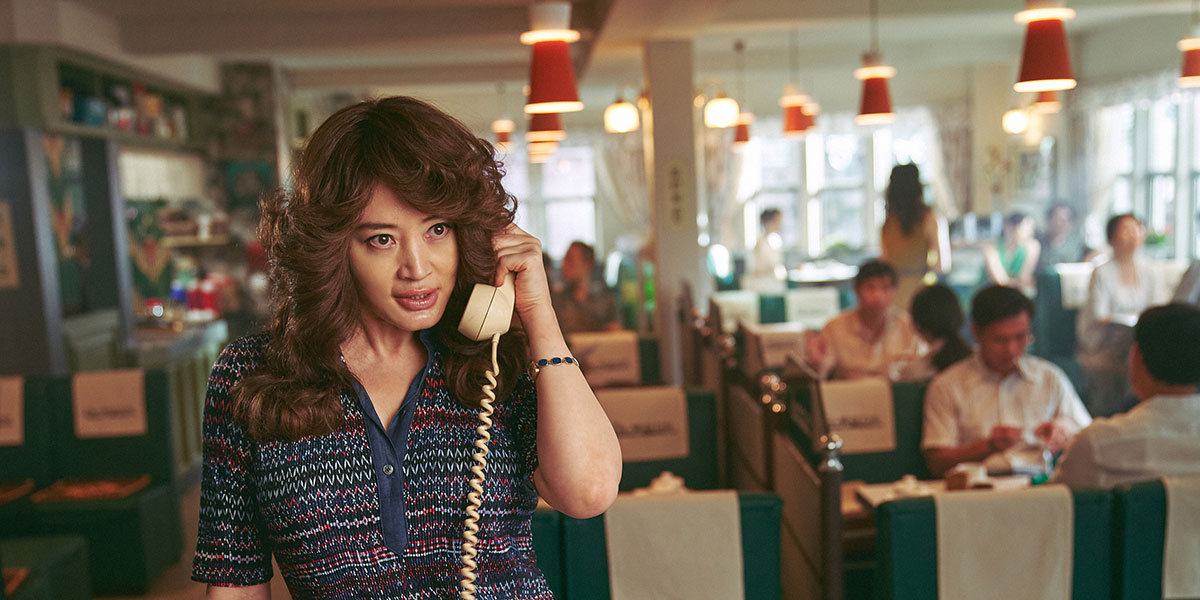
Despite government crackdowns on illegally imported goods, a black-market economy is thriving in the country. Jin-sook and Chun-ja convince their hesitant crew to change their trade to smuggling. So, the haenyeos start diving to retrieve crates of products dumped in the sea, rather than abalones and conches, filled with everything from Marlboro cigarettes to Japanese radios. They hit the jackpot overnight and everything goes so well until it doesn’t.
Jin-sook’s father, the ship’s captain, finally gives in to his worries and refuses to go smuggling anymore. The two female protagonists convince him once again to pull off their last and biggest job. But the plan goes terribly awry as customs officers catch them red-handed, leading to a fatal incident and prison sentences from which only Chun-ja escapes unscathed.
What’s described above, particularly the female divers’ work routine, is introduced in an extended opening sequence similar to that of Ryoo’s 2015 crime action hit Veteran. The difference here, however, is the regrettable lack of compact editing. This lumbering effect largely continues throughout the rest of the film, resulting in a jarring rhythm that doesn’t fit quite the crime thriller genre.
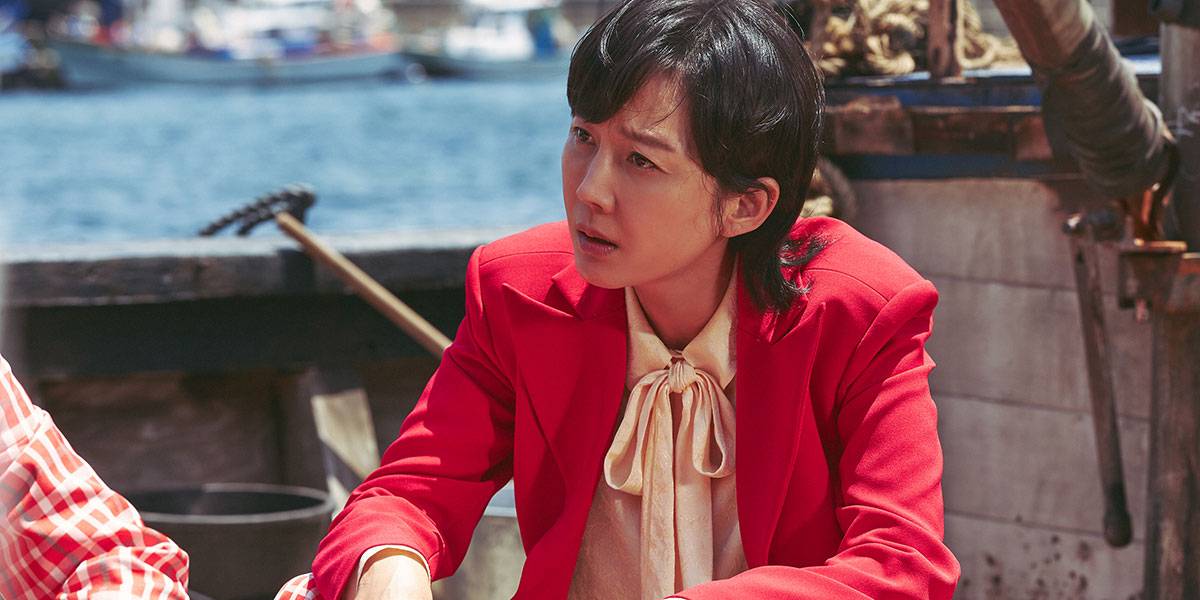
In the two years since the tragic incident, Chun-ja has taken her trade to Seoul. But she faces her nemesis in Sergeant Kwon, a sadistic “smuggling king” and a Vietnam War veteran played by Zo In-sung (The King; The Great Battle). In order to save her skin, Chun-ja offers to expand Kwon’s currently stagnant business to Guncheon. Waiting for her at home, however, are corrupt customs chief Lee (Kim Jong-soo; Kingmaker), cabin-boy-turned-local-gangster-boss Do-ri (Park Jung-min; Time to Hunt), and Jin-sook who thinks Chun-ja has betrayed her.
Although the film’s plot, with its double crosses and “night before” flashbacks, is largely predictable, Smugglers boasts a high technical competence. There’s no lack of wide-collared flashy suits and funky melodies to successfully convince the audience of its lively 70s setting. Among the film’s highlights is a superbly choreographed hotel fisticuffs sequence that doesn’t disappoint in shock value – after all, Ryoo is Park Chan-wook’s prodigy. An underwater fight sequence in shark-infested waters promises another thrilling turn, but here the pace of the editing drags once again.
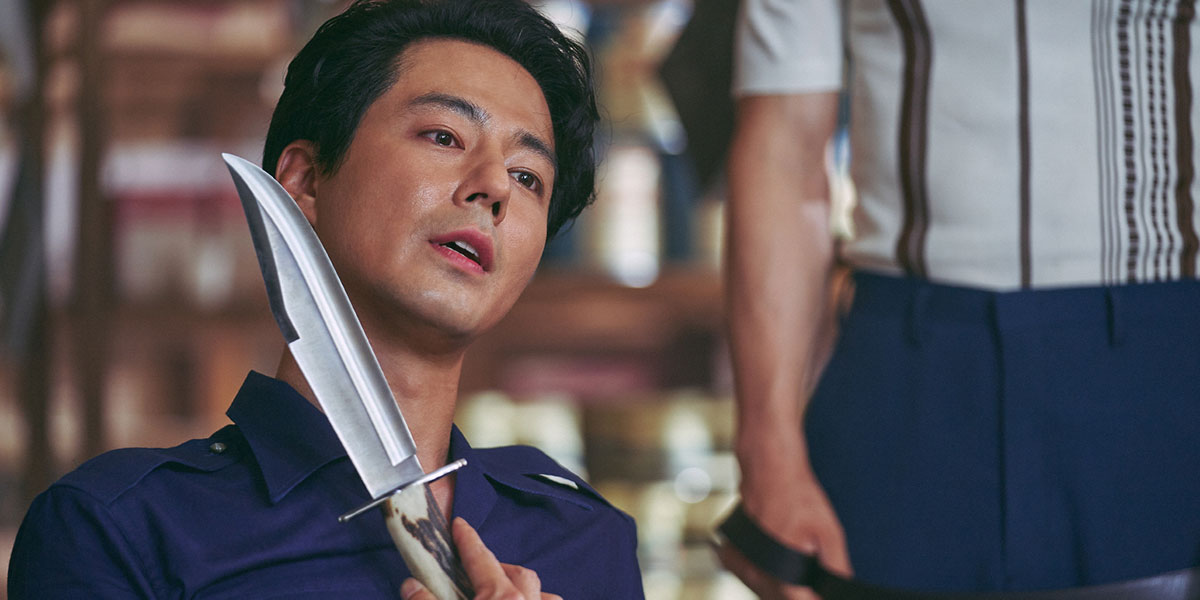
Although Yum Jung-ah (The Mimic; Alienoid) and Kim Hye-soo play their parts of strong independent women amply well, Ryoo elicits a bit too much overacting from his cast. The film really hammers home the underdog situation of the “second sex.” It almost seems as if high-angle shots are reserved only for the female characters and low-angle shots for their male counterparts throughout. It’s thoroughly fun to watch Ryoo poke fun at the fragile male ego as Chun-ja and Jin-sook easily pit the predatory men against each other. But while it’s commendable that Ryoo’s trying his hands at a story with more robust female characters – something that’s desperately needed and wanted in today’s Korean popular cinema – their portrayal in the film has a major room for improvement.
For a film that’s been lauded as a “female-centric” narrative, the women in the story, e.g., the divers other than Chun-ja and Jin-sook, are relegated way back into the background. Even Kwon’s right-hand man gets more attention than them. With a running time of 129 minutes, Smugglers could have easily worked well as an ensemble film, had these supporting roles been not written so thinly.
Partly because the two films were released only a week apart, some viewers have called Smugglers “the Korean Barbie.” However, the comparison to Greta Gerwig’s feminist blockbuster is a strained one. In the rather sucker-punch ending of Smugglers that goes on to set up a potential sequel, lessons learned in the overlong prologue are forgotten: the triumph of capital remains intact and only the strongest survive. Now, isn’t that the ultimate patriarchal argument?
In the end, Smugglers leaves the impression that it tries to be so many things and fails to excel at any of them.
Rating:
Written by Amarsanaa Battulga
View of the Arts is a British online publication that chiefly deals with films, music, and art, with an emphasis on the Asian entertainment industry. We are hoping our audience will grow with us as we begin to explore new platforms such as K-pop / K-music, and Asian music in general, and continue to dive into the talented and ever-growing scene of film, music, and arts, worldwide.

 VIEW OF THE ARTS