
During the 74th Berlin Film Festival, just two days before the festival’s curtain called, I had the distinct pleasure of engaging in a candid conversation with the filmmaker Anthony Schatteman. His film, Young Hearts, earned a special mention from the discerning children’s jury in the Generation Kplus Best Film category.
Young Hearts is rooted in the director’s own experiences and familial dynamics, and the film emerged as a subtle and heart-warming vehicle for self-discovery and acceptance. Against the backdrop of the Belgian countryside, Schatteman’s narrative unfurled, weaving together threads of love, friendship, and the poignant quest for identity.
Despite the virtual setting of our interview via Zoom, our conversation was filled with honesty and a great discussion about the casting choices, directorial approaches, the collaborative alchemy of filmmaking and LGBTQIA+.

View of the Arts: How’s Berlinale for you? You must be running on adrenaline at this point [laughs].
Anthony Schatteman: Yeah. It’s just because the [time here at Berlinale] has been intense. We had the premiere last Saturday (17.02), and it was an emotional moment for me. I was sitting next to my father and my mother at the screening, and I ended up crying. That was the first time they saw it. The film’s story is based on my personal journey…
VOA: Yes, that’s my first question. Could you share your experiences and process in creating the screenplay for the film? And what inspired the theme of first love within the context of the Belgian countryside?
AS: As previously mentioned, Young Hearts draws deeply from my personal experiences and family background. Growing up, my father, a renowned singer, cast a significant shadow over my life. However, despite his fame and success, our relationship was fraught with tension, largely due to my reluctance to reveal my true self to him.
In 2012, during my final year of film school, I made a short film, but the narrative was far from what I felt, and at the time, the prospect of delving into my own story seemed daunting, and I hesitated to expose my vulnerabilities on screen. However, prompted by a challenge from my professor to create something authentic, I found myself compelled to confront my truth. However, I eventually penned a narrative centred around my relationship with my father. In my early years, our bond was strained due to my apprehension about revealing that I am gay. As the son of a prominent 90s singer, my father’s career held immense significance, and I found myself immersed in the glamorous world of show business from a young age. Yet, amidst encounters with icons like Kylie Minogue, I was really afraid that he was going to compare me to the feminine artists that he was surrounded with. Despite his lack of overt criticism, the pervasive heteronormativity of our society left me feeling isolated and misunderstood. While my brother’s romantic pursuits were met with encouragement, I couldn’t shake the sense that I didn’t belong and that my truth would never be fully accepted.
Thus, in the short film, I focus on the dynamic between myself and my father, ultimately portraying a positive evolution in our relationship. Despite encouragement from others to expand this narrative into a feature-length production, I initially hesitated. I wanted to explore something else for my first feature film, but the stories I wrote never really came through in Belgium. They said it’s a good idea, but maybe not for your first film. But then, I thought that this film would be a great educational tool for those who have never learned about LGBTQ culture or homosexuality itself. And the film would be good for those who struggle with coming out.
There was a day when I had a conversation with one of the Flemish broadcasters while working on a show for them. I expressed my longing for more representation of gay characters in TV and films. To my surprise, the broadcaster suggested turning this desire into a feature film. At first, I was worried about the potential reception, but when we applied for funding, the Film Commission was very positive about the project and unanimously approved it. The film took place in my childhood town – the school, the streets – everything was part of my life. I poured my heart and soul into this film.
VOA: But when you wrote the screenplay, were you thinking of your characters when you came out yourself? Were you the same age? Or were you older?
AS: No, I was much older.
VOA: Why did you decide to make your protagonists children?
AS: It was important to cast young actors for this project. There are many coming-of-age stories and narratives centred around coming out. I wanted to offer something different. I realised the lack of age-appropriate films that explore themes of love and friendship without going into overtly sexual content. Recognising the importance of preserving innocence in storytelling, I set out to make a film with a narrative that also suits young audiences who are not yet preoccupied with adult themes.
Thus, I decided to focus on characters at an age where thoughts of sexuality are still distant, yet the capacity for love and emotional connection is big. Selecting this delicate age range was very important.
VOA: How did you approach capturing the emotional journey of the characters, particularly Elias and Alexander?
AS: From the outset, we approached the casting process with discretion regarding the personal inspiration behind the story. Instead, we framed it as a narrative centred on the universal themes of love and friendship, emphasising the importance of following one’s heart. While we didn’t explicitly mention that it revolved around two boys falling in love, opting to focus on broader themes, some concerns naturally arose during auditions. During the casting, there were kids who voiced apprehensions about portraying a gay character, reflecting common uncertainties at their age about how others might perceive them. However, I chose not to address this aspect directly during casting discussions, as I believe sexual orientation shouldn’t define a person’s portrayal of love and friendship, especially at a young age when many are still exploring their identities. To ensure a supportive environment, I had the assistance of Olivier, a trusted friend who is a professional child psychologist and therapist. His presence provided both the young actors and myself with a resource for addressing any questions or concerns they might have had regarding homosexuality.
Marius, whom we cast first, came to play Alexander, and after finding him, we needed to select the right counterpart to ensure a harmonious dynamic between his character and the character of Elias, who was played by Lou. From the moment they crossed paths in the casting room, we observed the chemistry between the two boys. With many kids present during auditions, we decided to engage in fun activities rather than scripted readings, allowing the boys’ connection to naturally unfold. We spent time together bowling, enjoying ice cream, and discussing emotions. I gradually revealed that the story was about me and my experiences, sharing my short film as context.
Remarkably, when asked if they wanted to represent characters grappling with homosexuality, they expressed an understanding of the story’s significance, and they simply took on the opportunity to be part of this film. Despite differing backgrounds, we bonded over shared emotions; we built trust and exposed our vulnerability. Their decision to work alongside their real-life siblings, such as Lou’s brother playing his on-screen sibling, contributed to a sense of security on set.
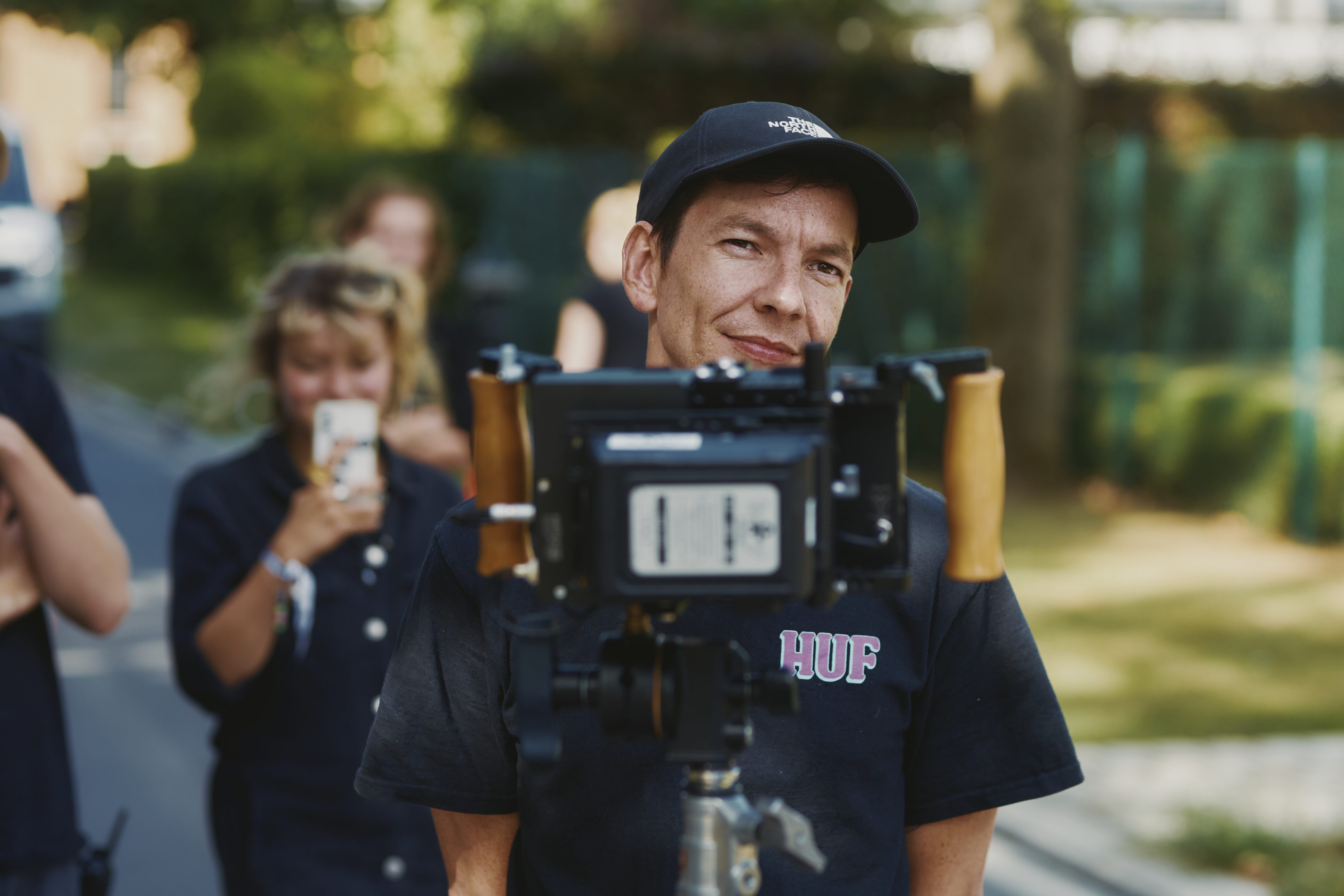
VOA: The scenes, such as Elias coming out and the reunion with Alexander, are powerful. How did you approach directing and filming these emotionally charged moments?
AS: On the fifth day of shooting, between our twenty-nine-day shoot, it was going to be an emotional day. It was a particularly heavy day as we tackled interior scenes at the Den Hotel, amidst a flurry of activity including numerous press engagements and a surprise visit from my ex-partner. As we went into the car scene, I knew this was going to be a tough moment for me.
With minimal rehearsal, I instructed Lou to go straight into the scene without overthinking. Lying in the trunk with my monitor, I quietly observed as the camera rolled. There was a raw authenticity in the moment as Lou’s character came out. Though tears were not the objective, the emotional depth he brought was intense. Following that single take, I found myself overwhelmed with emotion, needing to momentarily step away from the set to collect myself. Upon returning home to my mother’s, where I had been staying during the shoot, I tried to maintain composure; however, upon seeing her, I couldn’t contain the flood of emotions any longer. In that moment, with my stepfather’s comforting presence, the weight of what we had captured on screen washed over me. I simply cried in my mum’s arms.
VOA: What about the scene when the boys are reunited?
AS: Well, my passion for Hollywood cinema, especially films like Titanic, Moulin Rouge, and The Holiday, has always been a driving force in my life. So, naturally, when it came to creating the grand finale for my own film, I aimed for something equally impactful. Despite the doubts from those around me, I was determined to embrace slow-motion to capture every moment with cinematic flair.
The challenge was daunting, especially considering it was the first major shoot of the project. With limited time due to child actors needing to adhere to strict schedules, we only had a narrow window of five hours to work with, beginning at dusk and ending before the early hours of the morning. It was also the first time we had such a large number of extras on set, thankfully drawn from my own village community. Adding to the complexity was the fact that it was the first on-screen kiss for the two young actors. They were nervous, but their genuine friendship helped ease any pressure. I recall the humorous moment when, to demonstrate the desired kiss, I spontaneously kissed my best friend, who was caught off guard [laughs], but this moment broke the tension and made it easier for the boys to act the scene out. Despite the pressure and chaos of the night, it all ended successfully. However, reflecting on the experience, I realised the toll it took on my crew, particularly my Director of Photography and first Assistant Director. My single-minded determination to achieve perfection left little room for communication or explanation, leading to a sense of disconnect within the team. The combination of music, atmosphere, and hard work from everyone involved made that scene perfect!
VOA: The music in the film is amazing. How did you work with Ruben De Ghesell to enhance the emotional resonance of the story?
AS: I met Ruben through my work directing Lionsgate’s TV show, Northern Lights, which was filmed in Dublin last year. Even before our formal introduction, Rubin’s music had already left an impression on me, as he often wrote music to accompany different screenplays. His talent for bringing emotions through his compositions made me realise that his music would work perfectly with the tone of my film. Throughout the production process, Ruben and I maintained a close dialogue, with me occasionally sharing scenes or images from the film to inspire his compositions. He composed over sixty melodies, each made with care and precision. Together, we carefully selected the pieces that best complemented the narrative, testing them in the editing process to ensure they integrated with the visuals. Ruben’s intuitive understanding of the film’s themes and characters allowed for a connection between the music and the storytelling.
VOA: Let’s talk about cinematography. How was that for you, and your work with Pieter van Campe?
AS: Pieter and I have been collaborating for the past four years, having worked on two series together. We’ve known each other for quite some time, having initially met while I was working as a camera assistant and an extra. Over the years, we’ve developed a strong friendship, which was incredibly important to me. Rather than solely seeking out someone with extensive experience in filmmaking, I prioritised surrounding myself with people I genuinely care about and who understand my vision.
When it came to directing my first feature film, Pieter and I were on the same page creatively. We drew inspiration from nostalgic family movies from the 90s, such as The Parent Trap and Mrs. Doubtfire. I envisioned a joyful and vibrant film that captured the energy of the characters, so we adopted a flexible and free-spirited approach to filming. This meant allowing the actors the freedom to move around the set naturally without imposing too many restrictions. Despite encountering technical challenges, such as filming on a moving train, we approached each obstacle with confidence and determination. Our close friendship allowed us to communicate effectively with just a glance, understanding each other’s needs and making necessary adjustments on the fly. I’m incredibly grateful to have worked with Pieter.
VOA: The film explores themes of self-discovery, coming of age, and dealing with disapproval. What message do you hope viewers will ultimately glean from the film?
AS: My primary message with this film was to convey a sense of hopefulness. Many people have asked me if it’s easy to come out in Belgium, and the truth is, it’s not. Each person’s journey is unique, and there are often challenges along the way. Some may argue that it’s too simplistic to just let people in, but I believe that everyone has the right to follow their heart, especially when they are surrounded by accepting and supportive individuals.
It’s crucial to embrace who you are and not waste time pretending to be someone else. I hope that through this film, people realise the importance of authenticity and being true to themselves. It’s my wish that not only young people but also parents initiate more open and honest conversations. Sometimes, parents wait for their children to approach them, but it’s equally important for parents to reach out and communicate their support.
Written and interviewed by Maggie Gogler
Featured image courtesy of Thomas Nolf
View of the Arts is an online publication that chiefly deals with films, music, and art, with an emphasis on the Asian entertainment industry. We are hoping our audience will grow with us as we begin to explore new platforms such as K-pop / K-music, and Asian music in general, and continue to dive into the talented and ever-growing scene of film, music, and arts, worldwide.

 VIEW OF THE ARTS