
FREE PASS isn’t your typical K-pop group, between them their talents range from video producers, dance teachers to award-winning gymnasts. Made up of four members: Kay-G, Tae-U, Jean Paul, and Sanghee, they have lived a jam-packed life leading up to their latest release in May with their 7th digital single Kill This Love. Having debuted in 2019, they have done things at their own pace, which breaks the mould from the rigorous comeback schedules.
Back with new music, Kill This Love focuses on navigating the pain and heartbreak that comes with love, and it saw a fresh side to the group in comparison to their previous singles. 2021’s Summer Love jumped straight out the page of a beautiful K-drama basking in the glow of love. And Kill This Love is the mature, sexier, and heartbroken sister.
They’ve recently appeared on “Busker to Stage 2,” “The Shocking Starring Night Concert,” and recently KBS’s “SML.”
It’s safe to say that 2024 is on the rise for the quartet. We spoke to the charming members about their music, their transition from sports to idols, and how their athletic background has helped them maintain discipline within the music industry.
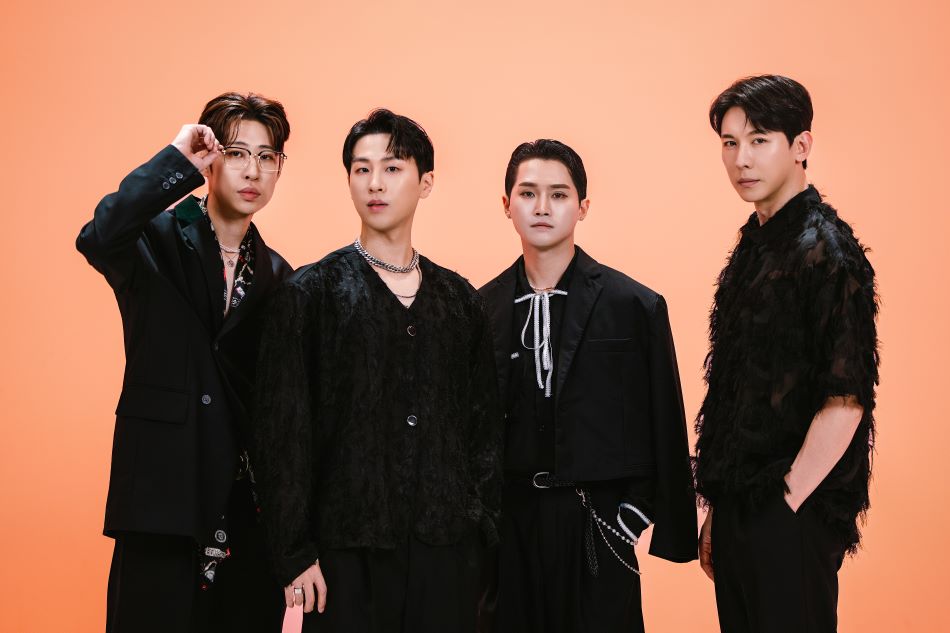
View of the Arts: The four of you debuted in 2019. How did the group come together, and what does the name “FREE PASS” mean? How would you describe the group’s sound to new listeners?
Jean Paul: Let’s start with the name FREE PASS. It’s literally a FREE PASS. And we came together, we were all doing our own thing, we were all friends, we were always hanging out, and we were like, ‘What? Okay, come on, let’s make our own music.’ I believe that’s how it came to be this time, but shouldn’t there be some kind of stage greeting?
Kay-G: [Yes, it was like] Okay, let’s come in and we’ll have a little chat.
Jean Paul: Let’s do music. Let’s do an activity together. I think that’s how this came about.
VOA: In May this year, you released Kill This Love, a song that expresses the feelings of separation and the pain of a breakup. How do you capture the raw emotions needed for songs like these?
Tae-U: It really got to me. ‘How could I love you digging into me like that?’ I just went in like this [laughs], and it reminded me of a song. I thought about it a lot, and it was heartbreaking.
Kay-G: Think about how we imagined the pain and difficulty of love while recording the song.
Tae-U: Hyung, You made it like this [laughs].
Kay-G: Art is imagination [laughs.
Jean Paul: But, you said you have done it all.
[Group laughs]
Sanghee: He’s experimental [laughs].
VOA: Kill This Love has a more mature sound than tracks like 2021’s Summer Love. Do you go into the recording studio with a specific sound you want to create, or is it a playful creative process?
Kay-G: Well, first of all, I was involved in writing and composing Kill This Love. I wanted the song to have a bit of a sexier feel, right? Now, the guys have added a slightly sexier emphasis to it, and they recorded it so smoothly that the process was easy.”
Tae-U: That was my favourite thing.
Kay-G: I like sexy things, so I don’t know if it’s sexy, but it’s sexy right? But I think as the years went by, it was easy for me to quickly catch what I wanted and record it.
Tae-U: Good job [laughs].
VOA: The music video for Kill This Love is simple yet effective, shot in black and white as if life has been drained of colour before bursting into brightness in the second half. What was the concept for the video?
Sanghee: It wasn’t necessarily a concept. I was looking for references and thinking about what I wanted to do, and then I thought, ‘Why don’t I just dance in a clean, white space?’ But I realised that simply filming it that way wouldn’t be anything different, so I decided to put it in black and white. It kind of matched our vibe, and I thought that was cool. About halfway through, after the first verse, I thought, ‘What if we switched it back to colour?’ So I made some vague edits, and that’s how it turned out. I think it came out really well.
VOA: Sanghee, you directed the music video. What were some of the biggest challenges you faced, both in directing and editing? Has videography always interested you?
Sanghee: Thank you for your interest. I’ve been doing video work for FREE PASS for a while, filming performances and creating graphics. This experience has gradually built up, and I’ve been thinking about how I would film and edit our FREE PASS choreography. I’m always considering and researching how to shoot more impressively.
VOA: Tae-U, like Sanghee, you are also a dance teacher. Has dancing always been a part of your life growing up? What made you want to teach dance?
Tae-U: Yeah, I always say that when you’re growing up and dancing, you’re maturing, but not in your body. It’s just that I’m getting better at expressing myself.
Sanghee: I used to do the same thing because I liked dancing and other forms of movement, but now that I think about it, I realise I was more focused on acting rather than just dancing like that.
Tae-U: Oh, I can’t really describe teaching; it’s indescribable. There’s definitely something rewarding about it. I think there’s something special about teaching someone a dance, seeing them grow as they learn gives me a huge dopamine rush.
Kay-G: That’s what makes you so unique?
Tae-U: Yeah, that’s right, you can’t put it into words.
VOA: So, you both have a background as dance instructors. Do you think you two have a good balance when it comes to choreographing for Freepass?
Sanghee: When the two of us work together, there’s nothing to fear. It’s just the two of us in the evenings, and it just comes out perfectly, because we’re so alike.
Tae-U: So we’ve been dancing since we were kids, and we’ve been doing it all at once. We complement each other well and can create choreography easily.
VOA: How do the two of you come up with ideas that can inspire future work?
Tae-U: Sanghee is looking for the rhythm, so did I play a little bit of a joke on you? It comes out like that. it’s not really about each other, but we know each other well.
Tae-U: We know each other well. You know, if you do this, they’ll move like that. We’ve been doing it for a long time. When I was younger, I practised dancing harder to become a singer, but now I feel it’s more about expression. It makes me feel more like a singer. I think being a singer is much more expressive.
Sanghee: We know each other, but I’m still watching and studying new dance videos. I ask myself if our dances are up to date. Since I keep looking at choreography and idol trends, I think, ‘Oh, we should add this here.’ It feels like a form of grafting. This is a connected fingerprint, and I ask myself, as a dancer, how do I move my body to connect with the emotions expressed in the song?
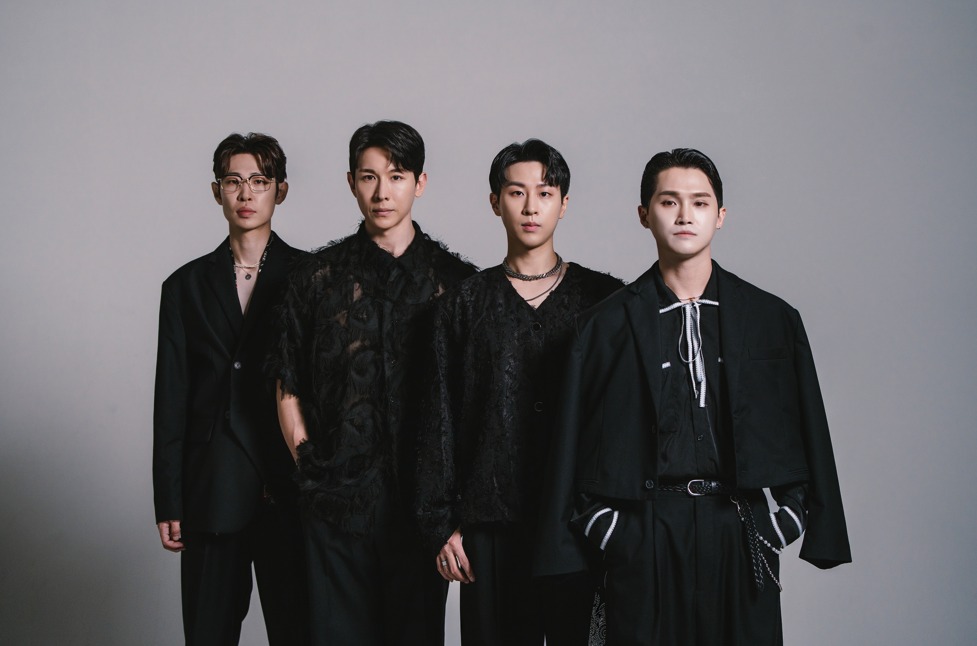
VOA: How do you move your body as a dancer to connect with the emotions expressed and reflected in the song?
Sanghee: I put on some music and videos, and I snack on almonds. I see it as a way to substitute my usual routine. We practise the story of the dance while listening to the music and work hard to express it more effectively
VOA: On average, how long does it take for you all to get up to speed on the choreography that we do?
Jean Paul: For now, but I think it’s over 3 hours to learn and I think it’s a couple of weeks to polish more details to make it look perfect.
VOA: Each of you has impressive individual accomplishments. Kay-G, you were a former aerobic gymnastics athlete who was crowned world champion in 2012. Having been used to learning gymnastic routines, do you approach learning and memorising choreography the same way?
Kay-G: Yes, I think there are similarities between learning gymnastics routines and memorising dance choreography. For both, it’s all about practice, practice, practice. The goal is to make the movements your second nature, so I can fully integrate them into my body and not overlook any details. The emphasis on repetition and continuous practice is the same, whether I’m working out or dancing.
Jean Paul: I’m impressed with each of your individual achievements.
VOA: Kay-G and Jean Paul, you both have YouTube channels where you provide fun content like reactions and covers. What type of content do you enjoy making, and what would you love to create next?
Jean Paul: Well, I like a little bit of funny content, mock-ups, gags and stuff like that. But the other content that I would like to do more of is vlogging, and maybe a little bit more beauty.
Kay-G: You have been doing all the beauty YouTube content lately. He loves this kind of thing.
Jean: I was doing it. It’s called “Butter-Hyung.”
[Group Laughs]
Jean Paul: I was doing it, but then I got too busy.
Kay-G: In the beginning, I worked hard on it for about two years, but then I started to find it a bit boring, so I took a break. After that, I helped out occasionally while still on my break, and now I’m doing Freepass again because I’ve been doing something consistently and steadily. I might continue this later when things are more stable. I’d be really grateful if you could subscribe. Although the ‘TaegiHwaNi’ channel is currently on pause, we plan to upload videos again someday
VOA: You’re all very sports-oriented, and Jean Paul, you hold a 3rd dan black belt in Taekwondo. Do you think your mentality, determination, and self-discipline have served you well as artists in the industry?
Jean Paul: We did taekwondo until middle school, and then we stopped. I played field hockey and continued to play it until college. The thing that helps in sports, like taekwondo, is that it teaches manners and builds character. I think to succeed in anything, you need to have some character, as well as skills, and that’s why I was good at sports at the time. I think this has also been very helpful in my career as a singer.
Taekwondo also helped me improve my movement and form. I feel like I’m always connected, whether I’m working out or performing lyrics. The mindset of always doing my best has greatly helped me, both in sports and as a singer.
Tae-U: Your strengths come from your taekwondo training. The team needs people who can perform dance moves with a certain style and coolness, and that’s where you shine. You’ve got a unique edge. Is this a result of your workouts?
Kay-G: I always have the passion to do my best, whether it’s in workouts, lyrics, or anything else. Having the right mindset really helps. When I was a kid, I was very focused on exercise, and it helped both my body and mind. Honestly, I think everyone should participate in sports a little when they’re young. It’s great for our mental health.
VOA: How did you all go from competing in sports to working in the music industry? What made you want to change professions?
Jean Paul: For me, the change started with my military service. Initially, I was focused on sports, and in Korea, if you want to continue in athletics, you have to join a specialised athletic unit. But getting into those units is incredibly challenging, and I realised it might be easier to complete my mandatory military service first and then explore other options afterwards. At first, I thought I might pursue a career in physical education, especially with the growing interest in fitness and children’s sports programs.
However, once I was in the army, I began to explore other interests. I even considered a career in beauty and hairdressing and started learning about it. I practised hair styling and studied hairdressing, but my outgoing personality led me in a different direction. I loved singing and was always very loud and enthusiastic in the army, to the point where my seniors jokingly nicknamed me “idol.” Several of them suggested I had the personality of an idol. By the time I was a sergeant, I recognised that I had a passion for performing. On a whim, I decided to audition during a leave, and that’s how my path shifted from sports to becoming an idol in the music industry.
Kay-G: I thought about it after I got out of the military, too. I was an athlete before joining the military, and before that, I felt invisible and like I was starting late in life. It’s been a long time, and that phase is over now, but even at that late stage, I thought, ‘I should become a singer now.’
Jean Paul: From the time I was a kid all the way through my college years in the army, I never once considered becoming a singer—it never even crossed my mind. Then, suddenly, something a monk said caught my attention, and I thought, ‘Oh my God, maybe this is something I should explore.’
Sanghee: I always wanted to be a singer.
Tae-U: I’ve always been around, but I was living in the provinces, and back then, there weren’t opportunities like talent schools or auditions. It wasn’t easy for just one or two people to make their way to Seoul alone. Because of this, I didn’t have many opportunities in my teens or early twenties. Instead of pursuing formal training, I became a b-boy and spent my time in Seoul, just moving around and exploring. That’s how it all began for me.
VOA: As a group, you recently celebrated your fifth anniversary since debut. It’s a hard question, but if you were to pick just one, what has been the most memorable moment for all of you since debuting?
Sanghee: The longest 5 years [laughs].
Kay-G: It’s hard to choose just one moment because these past five years have been incredible. From the very beginning until now, every experience has been so rewarding, and it feels like I’ve grown so much as a person. If I had to pick one, I’d say every step of this journey has been memorable in its own way.
Sanghee: Yeah, I think that’s the biggest thing, but even since we’ve been on Shocking Starring Night We’ve gotten busier and busier and more events, so that’s the biggest thing.
Kay-G: I think Shocking Starring Night is the biggest one.
VOA: You’ve been performing across Korea and recently performed at the Pohang Songdo Beach Retro Festival. Will overseas fans be able to see you anytime soon? Where is your dream country to visit and perform in?
Jean Paul: Oh, first of all, we absolutely love our overseas fans. We really want to go abroad because there are so many international fans who are interested in us. For those fans in countries like Brazil, the Philippines, Japan, or anywhere else that invites us, we’re determined to make it happen. We have to bring our performances to them.
VOA: So, which country would you most like to visit and perform in? Do you have a dream country?
Kay-G: A dream country, hmm? What do you think mine is?
Tae-U: Isn’t it America?
Sanghee: Actually, I’ve never had a specific place in mind, but since I love singing and dancing on stage, I’d be happy to perform anywhere abroad as long as there’s a stage.
Jean Paul: We have to go to the U.K., right?
VOA: What does the rest of 2024 have in store for Free Pass?
Jean Paul: We are currently preparing for overseas performances. We also have quite a few domestic shows lined up, but our main focus is on international events. We really want to make those happen.
Kay-G: We also have some TV appearances coming up, and there might be some good news in the future as well.
Jean Paul: Yes, that’s right.
Kay-G: And we might even be on foreign TV. You could see us there, or we might meet directly if we go abroad. Anyway, thank you so much for all the love and interest in Free Pass.
Jean Paul: To our fans abroad, we promise to find a way to meet you, so please wait for us and keep loving us. We’ll make it happen.
Tae-U: We’re working hard, so please keep supporting us. We love you all so much. We’ll stay active with FREE PASS, so please stay tuned.
Sanghee: We love you.
Kay-G: That’s right! Everyone is happy. Thank you, thank you, thank you!
Written and interviewed by Kirsty Bright
Featured image courtesy of Badboss Entertainment
View of the Arts is an online publication that chiefly deals with films, music, and art, with an emphasis on the Asian entertainment industry. We are hoping our audience will grow with us as we begin to explore new platforms such as K-pop / K-music, and Asian music in general, and continue to dive into the talented and ever-growing scene of film, music, and arts, worldwide.

 VIEW OF THE ARTS