
South Korea’s drag scene is home to some of the most creative and talented queens out there. The community is thriving with performers ranging from cabaret singers like Hurricane Kimchi to Dragula’s Hoso Terra Toma. In Itaewon, Seoul’s main LGBTQIA+ district, you’ll find diverse communities and clubs, including Trance, one of the longest-running LGBTQIA+ nightclubs and where superstar NANA Youngrong Kim performs.
NANA Youngrong Kim, who began their drag career back in 2007, has gained recognition by advocating for positive change and helping to normalise drag as an art form. Like many drag queens growing up, NANA Youngrong Kim saw themself reflected in iconic LGBTQIA+ films such as 1994’s Priscilla, Queen of the Desert, and Hedwig and the Angry Inch. Talk to any drag queen, and they’ll tell you how films like these allowed them to escape from the world outside and dive into the colourful, fearless stories onscreen.
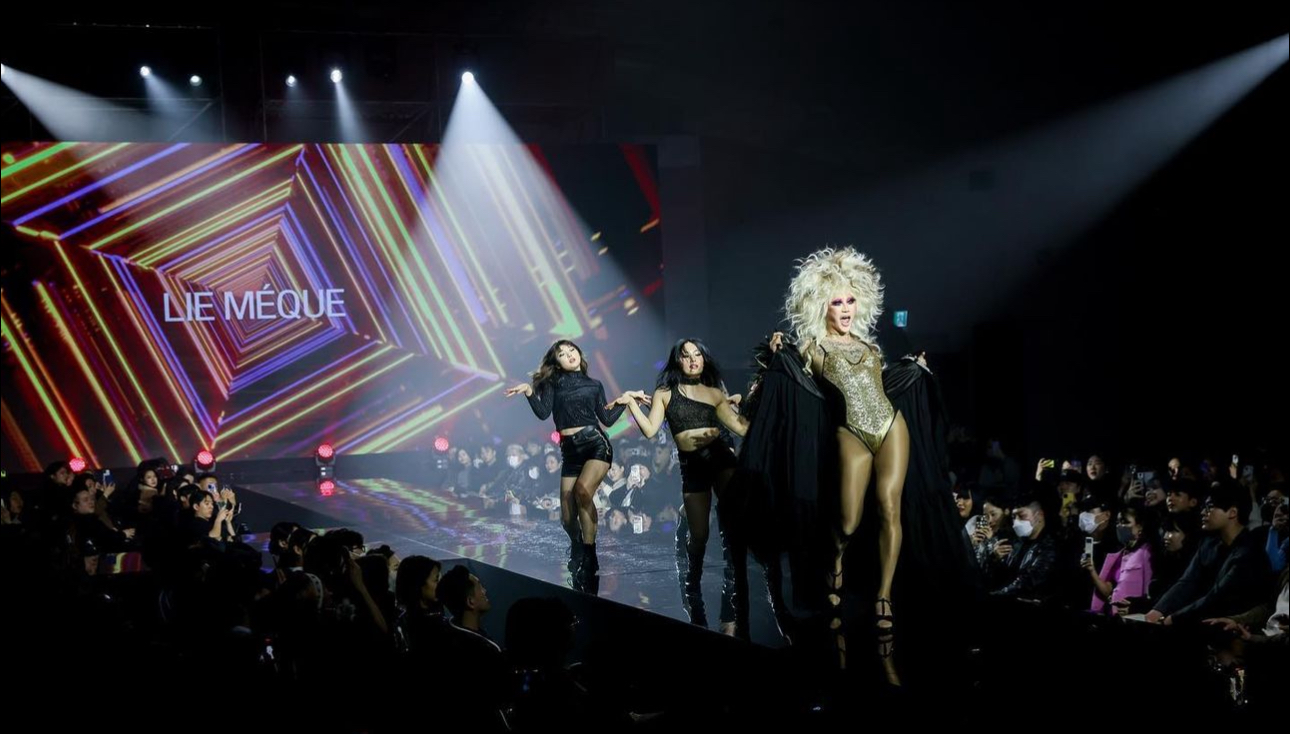
NANA Youngrong Kim has been pushing limits, and slowly bringing drag from the underground into the mainstream, with cameos in K-pop videos like HELLO Gloom’s Dancing In The Dark and MAMAOO’s HIP Performance Rockstar. Their style isn’t tied down to one single look; instead, they dresses based on how they feel, embracing bold and adventurous fashion, something that can easily be applied to who they are as a person in and out of drag. This made them a perfect fit for events like C.at Work Festa where they appeared this month, doing what they do best taking to the catwalk for Sun Woo like any top-tier supermodel.
Right after the C.at Work Festa, we had the honour of speaking with NANA Youngrong Kim about their appearance at the event, their journey in drag, and the progress being made in the local drag scene.
I was a kid who always loved dressing up, so naturally, watching dazzling films featuring drag queens like Priscilla and Kinky Boots, I started seeing myself in them. – NANA Youngrong Kim

View of The Arts: You attended the C.at Work Festa this month. What do you enjoy most about participating in such a creative event?
NANA: I enjoyed interacting with people I wouldn’t normally meet. Some may be seeing drag culture for the first time, while others may know about it but haven’t experienced it. I think the joy of meeting those people is always the highlight.
VOA: You performed at the event last year and are set to retake the stage. How do you typically prepare for a show? Can you walk us through your creative process, from choosing your performance style to bringing it to life on stage? What do you focus on to make each performance memorable?
NANA: This year, I participated as a runway model for the brand Sun Woo. For performances, I often focus on matching the brand’s identity or reflecting the designer’s requests when setting up the stage and choosing songs. Since the runway is not just about me, expressing the brand’s value is the biggest factor, so I focus more on the brand than on myself.
VOA: How do you go about selecting the tracks for your performances? Is your decision influenced more by what you anticipate will entertain the audience, or do you prioritise your own artistic preference and connection to the music?
NANA: It depends on the situation. The way I choose songs and plan the performance changes depending on the type of stage and the audience. What I prioritise can vary depending on the circumstances.
I think there’s been a lot of progress. Now, there are so many more drag queens, and there are more venues where drag queens can perform. – NANA Youngrong Kim
VOA: When performing, do you have a core set of songs that you consistently connect with, giving you the confidence to deliver your best on stage? Are there particular tracks that energise you and elevate your performance each time?
NANA: Most drag queens have signature songs they’ve been performing for a long time, and I’m no different. There are a few songs that people love and want to see, so I often perform those. Sometimes I worry that people might get tired of hearing them, but there are still so many who haven’t seen a drag show yet, and they say it never gets old.
VOA: You’re undoubtedly one of the most respected and recognized drag queens in Korea. How important is it to showcase drag art in Korea from your position?
NANA: Since this culture is still more underground than mainstream, there can be a perception that underground is somehow inferior to mainstream. I work to elevate the quality and artistry to show that this isn’t the case. Wouldn’t it be great if people remembered us as performers rather than just clowns? Though, to be honest, I like being a clown too.
VOA: You’ve mentioned that movies like Priscilla, Queen of the Desert and Hedwig and the Angry Inch inspired your journey into drag. How have such films shaped your understanding of drag culture, and how have they influenced your artistic expression?
NANA: I was a kid who always loved dressing up, so naturally, watching dazzling films featuring drag queens like Priscilla and Kinky Boots, I started seeing myself in them. Nobody forced me; I just picked up a brush and lipstick on my own. It feels like I grew up destined to become a drag queen.
I always found joy in creating new looks, which allowed me to experiment. Of course, I’m less daring now than I used to be (maybe it’s because I’m getting older), but I still get excited when I look in the mirror before starting makeup, wondering what kind of face I’ll create today. – NANA Youngrong Kim
VOA: You’ve collaborated with various K-pop artists from HELLO Gloom to MAMAMOO. How do such collaborations come about, and how important is it to work with well-known artists to raise the profile of drag in the mainstream?
NANA: Media is the fastest way to promote this scene, and one of the quickest ways to reach a large audience these days is through K-pop idols. Usually, the artist’s company reaches out to me with proposals.
VOA: In 2007, you started drag. How has the drag scene changed since then? Do you feel there has been progress?
NANA: I think there’s been a lot of progress. Now, there are so many more drag queens, and there are more venues where drag queens can perform.
VOA: This September, you walked the runway at Milan Love Seoul and have appeared in various fashion campaigns. Have you always had a passion for fashion?
NANA: As I mentioned earlier, I’ve always had a passion for dressing up. I used to imagine myself as a diva on stage, and I always thought that I would bring this identity into the modelling world through drag, and I made that dream come true.
VOA: Costume, makeup, and stage presence are essential elements of drag performance. How do you approach the process of transforming into NANA before a performance? How do your aesthetics and style evolve with each performance?
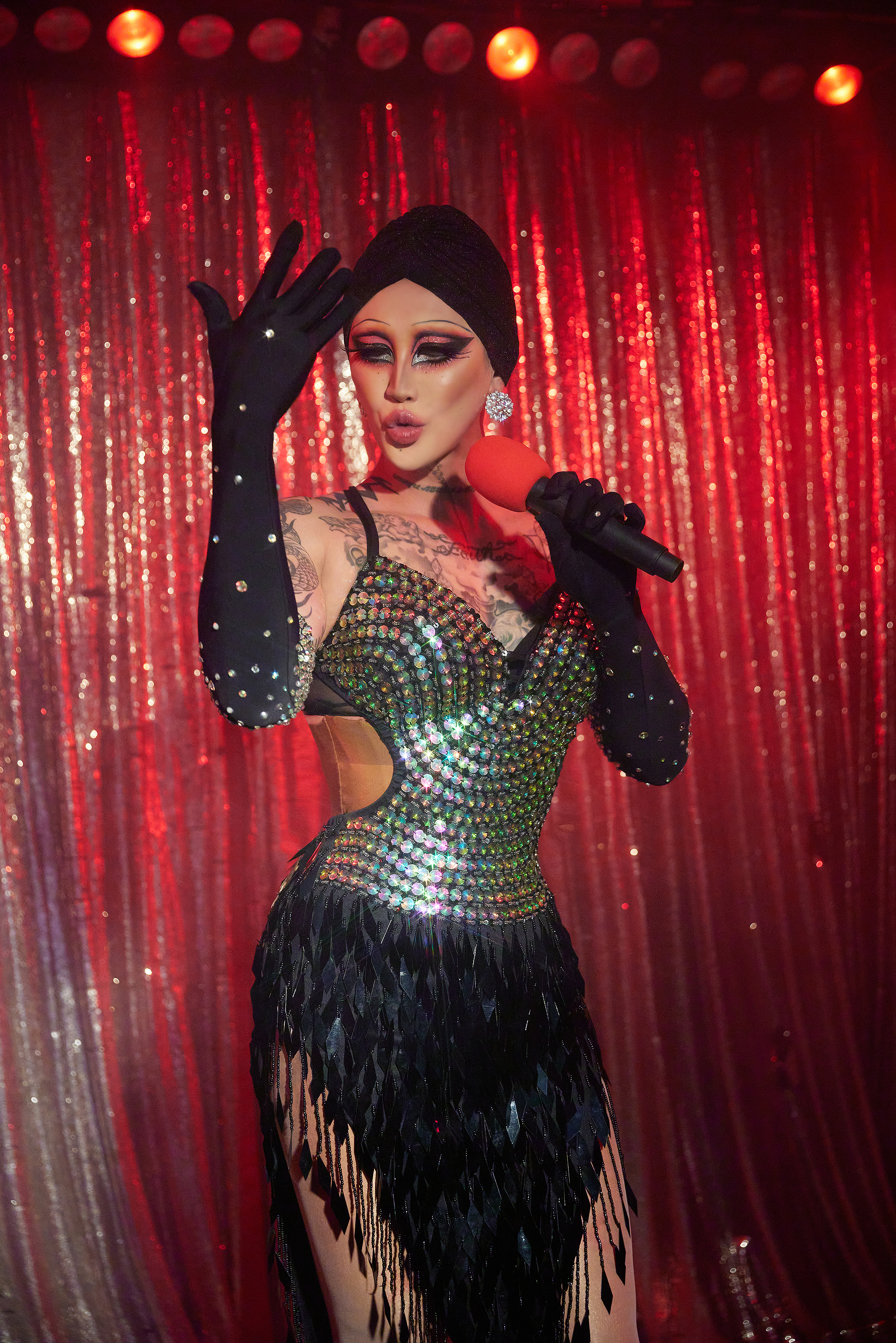
NANA: Compared to other drag queens, I’ve been more adventurous with makeup, enjoying the use of diverse colours and bold lines. I always found joy in creating new looks, which allowed me to experiment. Of course, I’m less daring now than I used to be (maybe it’s because I’m getting older), but I still get excited when I look in the mirror before starting makeup, wondering what kind of face I’ll create today.
VOA: Finally, what’s next for NANA in the remainder of 2024?
NANA: Stay healthy and enjoy life. I’m a very simple person, so nothing too grand. I just want to be happy and healthy for the rest of 2024. That’s it.
Written and interviewed by Kirsty Bright
Featured image courtesy of NANA Youngrong Kim
View of the Arts is an online publication that chiefly deals with films, music, and art, with an emphasis on the Asian entertainment industry. We hope our audience will grow with us as we explore new platforms such as K-pop / K-music, and Asian music in general, and continue to dive into the talented and ever-growing scene of film, music, and arts, worldwide.

 VIEW OF THE ARTS