
The Korean music industry is surely shaped by commercial appeal, however, many artists follow their own path, without being boxed into the craziness of the mainstream market. And 4BOUT is one of those musicians. His music is not only heard but also truly felt. Formerly known as ABOUT, Jo Taekyoung has built a career on honesty, bringing his own lived experiences into melodies that speak to those who have faced similar struggles. Now, with the release of his latest EP, Wilder Sadness, he continues to use his emotions to create and connect with listeners, finding freedom in writing about his feelings.
Looking at his repertoire, it feels like music was calling to 4BOUT, a medium where he could tell stories through words, sound, and sentiment. His 2019 debut single, Wither, introduced his style: music that doesn’t shy away from difficult topics and gives voice to hidden struggles. Even before his official debut, his OST work had already earned him recognition. However, instead of chasing mainstream success, he took a path that allowed him to explore human emotion freely.
His latest work, Wilder Sadness, does just that. As the title suggests, the EP captures sorrow in its rawest form, but not as passive lament. Instead, it seeks to make sense of emotions that resist neat categorisation. Throughout his career, 4BOUT has described his music as “cry together music,” a term that perfectly reflects his desire to create a space where listeners find safe space and peace in shared pain. This time, however, his sound feels even more expansive.
Recently, we had the honour of speaking with 4BOUT about the duality of his creative process – the push and pull between personal catharsis and the weight of artistic expectation. As an independent artist, he maintains immense control over his music, from production to recording, yet this freedom comes with its own burdens. His songs, often drawn from personal moments, are not only his artistic expressions but pieces of himself laid bare for the world to witness. He is acutely aware of the emotional labour that comes with this kind of storytelling, sometimes questioning whether music is the path he chose or the only one available to him. Yet through that reflection, he finds purpose – not in fame or recognition, but in the knowledge that his music reaches those who need it most.
Beyond being a remarkable artist in his own right, 4BOUT also produces and composes music for others, including some of the most prominent K-pop idols. Yet, despite working within the industry, he remains true to himself, never losing sight of his artistic identity.
With Wilder Sadness, 4BOUT can be seen as one of the most compelling singer-songwriters of his generation. His music does not offer easy answers, nor does it seek to. Instead, it provides a rare kind of companionship, one that acknowledges the weight of sorrow while embracing the beauty that can be found within it.
Every lyric and every story in my albums comes from my own life. There isn’t even 1% of fiction in them. I don’t force my music to fit a certain narrative to gain sympathy or appeal to a specific audience, and I never will.
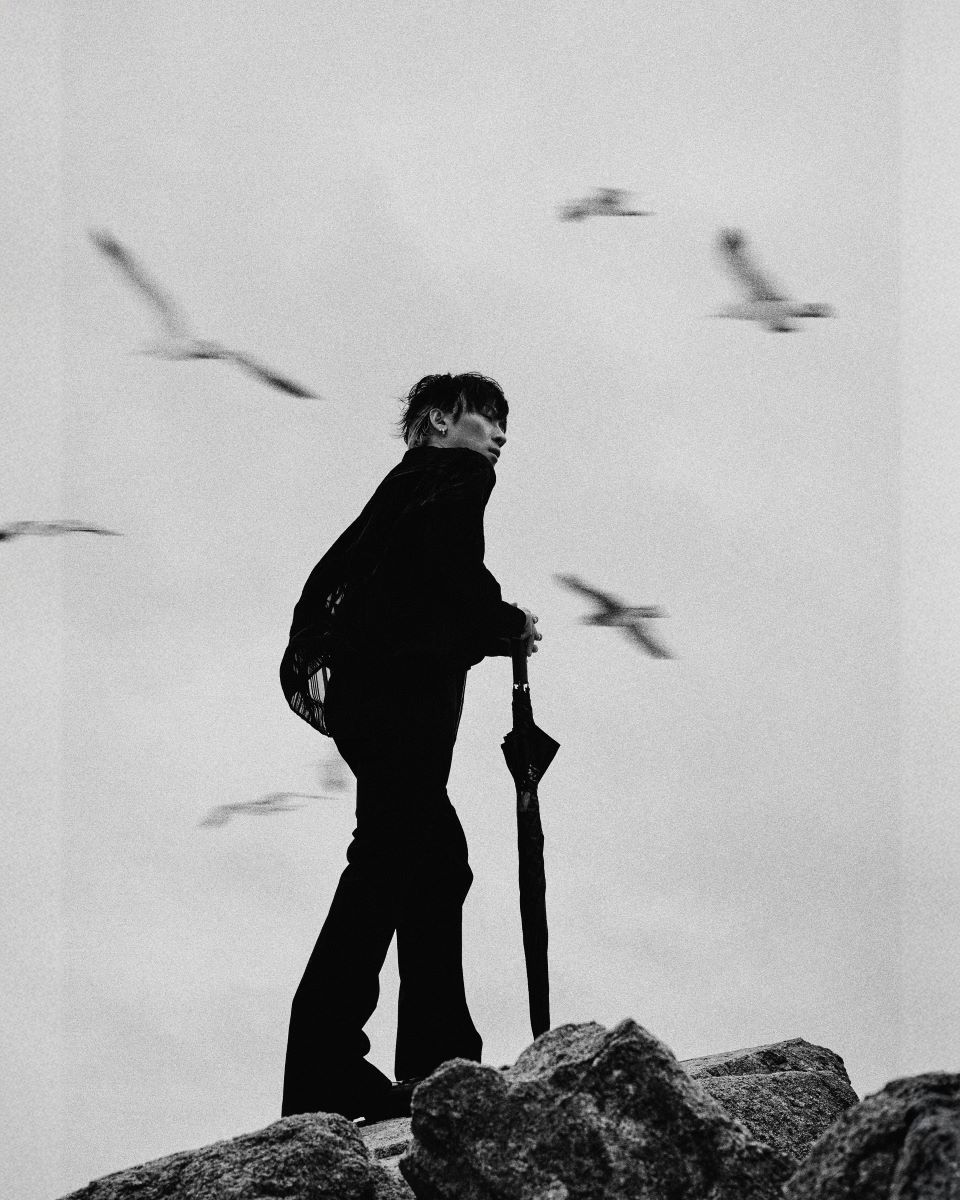
VOA: Your new release, Wilder Sadness, explores sadness not as a singular emotion but as something fluid and diverse. What inspired this conceptual approach? And how did you arrive at the perspective of coexisting with sadness rather than avoiding it?
4BOUT: In Korean society, showing emotional or physical vulnerability is often met with extreme resistance. It’s not just about personal relationships; this attitude is deeply ingrained in our social fabric. There’s this contradiction where people offer comfort when someone breaks down, yet silently judge them for being weak. Everyone pretends otherwise, but the truth is, we must acknowledge reality as it is. It’s a society full of emotional contradictions and distortions.
At some point, everyone will face their own breaking moment. But how many of us can truly process that collapse and integrate it into our being? The fact that South Korea has held the highest suicide rate among OECD countries since 2004 is already an answer in itself. If people continue to suppress their emotions, choosing to stand tall just because everyone else does, they will only snap under pressure – just like brittle branches in the cold.
I have personally felt these contradictions not only as an individual but also as an artist. Having spent my childhood and teenage years immersed in sorrow, pain, and financial struggle, the music that naturally emerged from me was, of course, drenched in those emotions. But my first agency didn’t care. They bleached my hair blonde, forced me to lose weight until I was 58kg, introduced me to all sorts of shady people, and pushed me into making upbeat, tropical pop songs while pretending to be happy.
When I played the demo of Summertime (which later made it onto my debut album in 2020), one of the directors told me: “Music like yours will never sell. If you keep doing this, you’ll spend your whole life performing in front of 20 people, living as a poor musician. If you want to succeed, you have to change.”
I was 21 at the time. And even though that man was just another washed-up industry figure spewing nonsense, I felt like I had to believe him. That’s how deeply I had already lost my artistic self-worth. However, when I finally left my first agency and became independent in 2019, I made a promise to myself that I want to make music that allows people to cry together, without forcing joy upon them. Music that tells my real story – without even 1% of a lie. Music that, when someone is breaking down, can be there with them and maybe, just maybe, help them stand up again. This has been my guiding principle ever since.
VOA: Releasing music means letting go of something deeply personal. What does that process feel like for you? Is it cathartic, or does it come with a sense of vulnerability?
4BOUT: For me, releasing an album is a repeated act of liberation. I’ve never felt vulnerable in this process – if anything, I feel increasingly free every time.
VOA: Many of the songs on Wilder Sadness feel like deeply introspective narratives. How much of your own personal experiences shape your music, and where do you draw the line between autobiography and artistic storytelling?
4BOUT: Every lyric and every story in my albums comes from my own life. There isn’t even 1% of fiction in them. I don’t force my music to fit a certain narrative to gain sympathy or appeal to a specific audience, and I never will.
VOA: Your lyrics often explore contradictions, like in Sentimental Monster, where there’s a desire to let go yet also a fear of the emptiness that follows. Do you see your music as a way of reconciling these contradictions within yourself?
4BOUT: If I were to put it simply, my music is a byproduct of processing my emotions. Humans are inherently contradictory creatures. We justify and rationalise those contradictions until the day we die.
VOA: You worked with other composers on this EP. How did that collaboration influence the final sound and themes of Wilder Sadness?
4BOUT: Since I started taking my role as a writer and producer more seriously in 2022, I’ve built many creative relationships. When I work as a writer for others, I’m very open to collaboration. But as an artist, I tend to be much more selective. Still, I wanted to challenge myself this time and try something new. And I’m glad I did.
VOA: Improvisation can be a powerful creative tool. Have you ever incorporated improvisation into your songwriting process?
4BOUT: Music itself is, in a way, improvisation – shaped by the data and experiences we accumulate. The only difference is that we now record and repeat those improvisations.
For me, no song I’ve ever released has taken longer than two hours to write the lyrics and topline. Some take as little as five minutes. Of course, the post-production process takes much longer, but the essence of the song – its core emotion – is captured in that first burst of inspiration. Holding onto a song for too long doesn’t make it better. What matters most is that one single trigger.
VOA: The EP shifts from melancholic ballads to dramatic, almost theatrical moments. How did you balance these contrasting moods to create a cohesive flow?
4BOUT: Every time I create an album, I structure it like a theater script. In my teenage years, I studied theater acting for four years, aiming to major in drama. I never planned to become a musician. That experience shaped how I tell stories through music. With Wilder Sadness, I didn’t worry about whether it was cohesive or commercially viable. I just created the way I wanted to.
No one will live your life for you. No one is responsible for your happiness. Accept that, and even if you break, you’ll learn how to stand again.

VOA: Loneliness Always Follows Me Wherever I Go presents loneliness as an existential presence rather than a fleeting emotion. Do you believe loneliness is something we carry within us rather than something imposed by external circumstances?
4BOUT: Loneliness is like death – it has always been inside us, whether we acknowledge it or not. To prevent it from consuming us, we must embrace it, and befriend it. Only then can we truly connect with others.
VOA: Burning Rose explores our attraction to destruction, even when we know the consequences. Do you believe this is a universal human experience?
4BOUT: I wrote the first sketch of Burning Rose at 7 AM the morning after I returned to New York. And that morning, I was the happiest I’d been in a long time. It takes an enormous amount of energy to look directly at pain and suffering. But the truth is that humans are self-destructive by nature. We just don’t recognise it as self-destruction when we choose it. It’s only when we lose control – when subject and object reverse – that we realise we’ve fallen into that abyss.
Choosing to be an artist is both a blessing and a curse. If I could live without creating, I would quit tomorrow. But I can’t kill my own self, so I keep creating.
VOA: Everlasting Lover challenges the line between devotion and self-destruction. Do you believe that love, in its purest form, always carries an element of danger?
4BOUT: There’s no such thing as unconditional love. If you believe that, you might as well live in a Disney movie. To reach something truly pure, you must first face the filth, the resentment, the ugliness of love. Nothing comes without risk.
VOA: Dancing With The Pain suggests embracing sadness instead of resisting it. Was this song based on your own emotional process?
4BOUT: Absolutely. I’ve had moments where I couldn’t stop hating myself, where I couldn’t stop resenting others. But instead of using that as fuel for destruction, I’ve learned to coexist with those feelings. I had no choice but to make peace with my pain.
VOA: What impact do you hope Wilder Sadness has on those struggling with sorrow?
4BOUT: No one will live your life for you. No one is responsible for your happiness. Accept that, and even if you break, you’ll learn how to stand again.
VOA: If Wilder Sadness had a visual representation, what would it be?
4BOUT: The movie Demolition (2015), starring Jake Gyllenhaal. Please watch it.
Written and interviewed by Maggie Gogler
Featured image courtesy of tory_photo
The interview was conducted before 4BOUT singed a deal with BIG BLUE, an independent record label in Seoul. CONGRATULATIONS!
View of the Arts is an online publication dedicated to film, music, and the arts, with a strong focus on the Asian entertainment industry. While we already offer rich content to our readers, we aim to expand our reach and grow alongside our audience by exploring Asian music in greater depth. At the same time, we remain committed to present the vibrant and ever-evolving global landscape of film, music, and the arts, celebrating the immense talent and creativity that shape these industries worldwide.

 VIEW OF THE ARTS