
Divine Sung is a filmmaker based in Seoul with an MFA in Film Directing from the Korea National University of Arts. She has directed short films such as True Story (2018) and My Boyfriend and Our Yesterday (2023). Summer’s Camera is her feature film debut.
Summer’s Camera had its world premiere at the 39th BFI Flare: London LGBTQIA+ Film Festival. It tells a heartfelt story about love and self-discovery. After losing her father, high schooler Summer (Kim Si-a) finds his old camera and, through its photos, uncovers both her first love with Yeonwoo and a hidden part of her father’s past. The film beautifully explores grief and self-acceptance, focusing on love naturally and gently. With Kim Si-a’s (Kill Boksoon, Sweet Home) emotional performance, great camera work, and sound, Summer’s Camera is a moving story about growing up and finding the courage to be yourself.
After the world premiere, we had the chance to sit down with Divine Sung to discuss the inspiration behind the film and its potential impact on the LGBTQIA+ community. The filmmaker also shared insights on Kim Si-a’s portrayal of Summer and the music featured at the beginning and end of the film.
I aimed to create a world where characters could comfortably talk about their identities and where LGBTQIA+ individuals could feel safe – even if only in this small cinematic space.
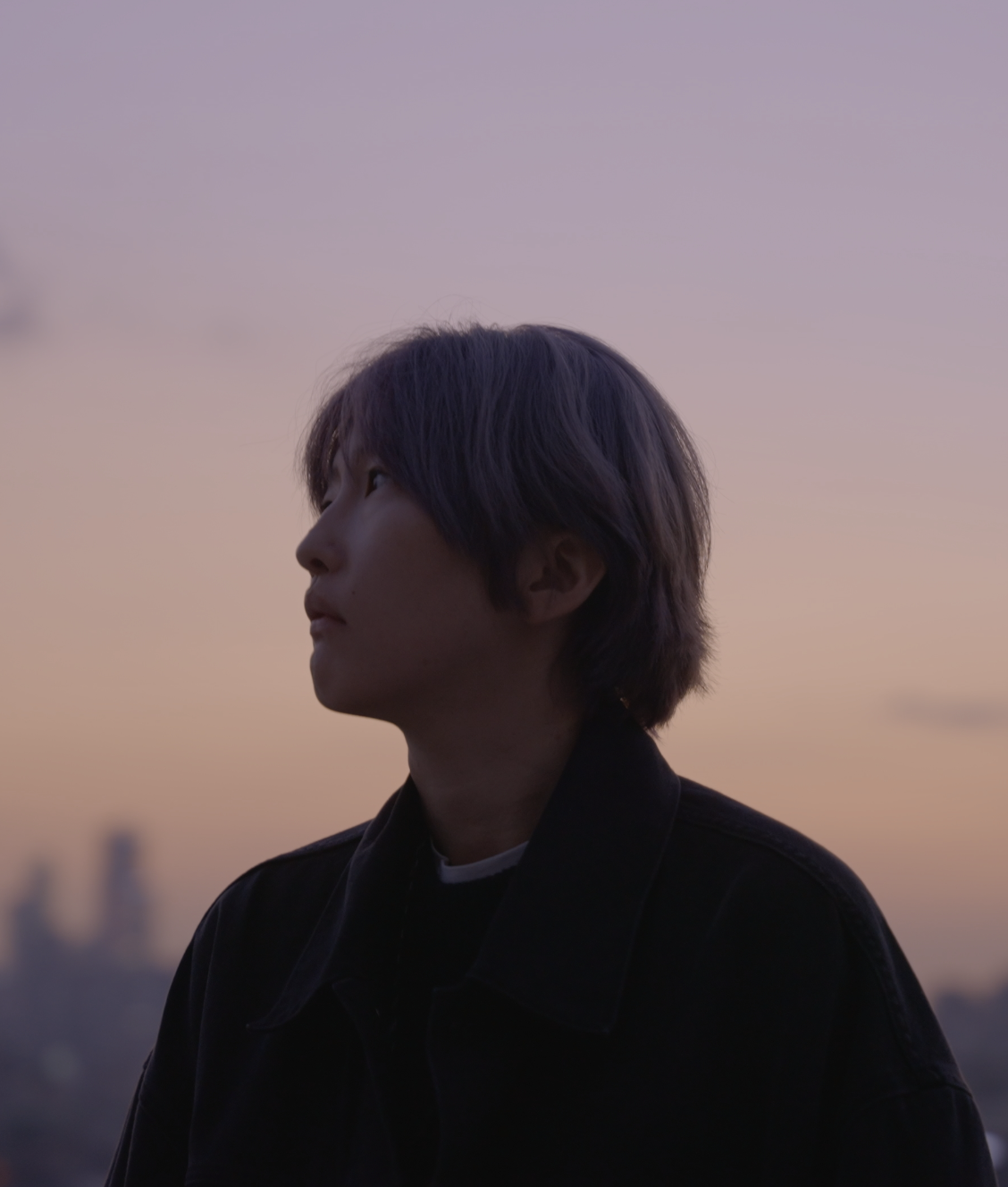
View of the Arts; What inspired you to use the camera as a symbol of memory, identity, and hidden truths in Summer’s Camera?
Divine Sung: In Summer’s Camera, the camera serves as a tool for remembering her father, uncovering his hidden truths, and recording and confirming her feelings for Yeonwoo. Through the camera, Summer observes others but ultimately comes face-to-face with herself. I set it up this way because, before starting filmmaking, I once dreamed of becoming a photographer. Back then, I used to carry a small film camera and take pictures of landscapes. I believed that photographs materialised memories. In other words, I have always thought of the camera as a way to capture fragments of my memories, and I believe this idea is reflected in Summer’s Camera.
VOA: How did you balance Summer’s grief for her father with her growing feelings for Yeonwoo to ensure both emotional arcs felt equally powerful?
DS: From my high school years into adulthood, I have felt that death and separation bring similar emotions, as both mean never seeing someone again. That’s why I wanted Summer’s longing for her late father and her feelings for Yeonwoo to run parallel, ultimately intersecting at the moment of ‘farewell.’ As she comes to terms with parting from Yeonwoo, she also learns to accept her father’s death, leading to her growth
In most films, the object of the protagonist’s questions and the object of their emotions are often the same, but I divided them into two so that I could carry both plotlines. The big question of the film is directed at the father, while the emotional immersion happens through Summer and Yeonwoo’s relationship. To make this approach effective, I amplified the narrative so that as Summer grew closer to Yeonwoo, she also deepened her search for traces of her father.
VOA: What challenges did you face in portraying LGBTQIA+ themes authentically and respectfully, particularly within the context of South Korean society?
DS: The world I depicted in the film is different from South Korea’s conservative views on LGBTQIA+ issues. The world of Summer’s Camera is freer for LGBTQIA+ individuals than South Korean society. However, this also made me concerned that the film might not be accepted in South Korea. In a way, my challenge was in my own decision to create a world where LGBTQIA+ people could feel safe.
VOA: You chose to emphasise quiet intimacy between Summer and Yeonwoo rather than focusing on physical attraction. What message did you hope to convey through this portrayal of their relationship?
DS: Rather than highlighting physical attraction, I wanted to capture the emotions of first love. Just like my own first love, I wanted to portray the kind of clumsy love where one adores the other deeply but doesn’t know how to approach them. Additionally, Summer’s way of loving Yeonwoo is like capturing her through a camera—it’s her way of preserving moments in her memory. In that sense, I hoped that the audience would connect more with the quiet intimacy rather than physical attraction. Ultimately, I wanted to express that love is a collection of precious moments.
Summer’s way of loving Yeonwoo is like capturing her through a camera – it’s her way of preserving moments in her memory.

VOA: Kim Si-a’s performance is incredibly nuanced and heartfelt. How did you guide her to capture the emotional complexity of Summer’s journey, especially given her age? And how was the casting process for Summer’s role?
DS: First, I had already seen Kim Si-a’s previous works and knew what a talented actress she was. Then, when I saw the bright energy she showed in a magazine interview, I felt that she would be a great fit for Summer – a layered character who carries pain but also warmth. So, I offered her the role, and fortunately, she joined our production. Kim Si-a is a professional, but since Summer’s emotions are complex, I tried various directing methods. Sometimes I explained her backstory, other times I only described the exact emotion I wanted, and at times, I even quantified emotions using numbers to help her understand.
VOA: The inclusion of punk rock songs at the beginning and end creates a striking contrast with the film’s quieter moments. What inspired this choice, and what emotional tone were you aiming to achieve?
DS: From the moment I first wrote the screenplay, I knew that punk rock music had to be used for the opening and ending. That’s because love is an emotion that disrupts life and ultimately causes some form of damage. I felt that punk rock was the perfect genre to express that. Also, when you fall in love, your heart races when you see the other person, and I thought that rhythm resembled the rhythm of punk rock.
VOA: Given the social challenges faced by LGBTQIA+ individuals in South Korea, did you feel a sense of responsibility when telling this story? What conversations do you hope the film will inspire?
DS: In South Korea, where LGBTQIA+ people still face a lot of societal restrictions, telling their stories always comes with a sense of responsibility. In a reality where LGBTQIA+ individuals often cannot openly express their identities or see their existence recognised, I wanted at least the world in my film to be different from Korean society. I aimed to create a world where characters could comfortably talk about their identities and where LGBTQIA+ individuals could feel safe – even if only in this small cinematic space. I hope this film helps people realise that queer individuals exist everywhere around us.
VOA: The revelation of Summer’s father’s hidden past adds another layer to Summer’s story. How did you approach writing this subplot to ensure it felt both meaningful and natural to the narrative? And why did you choose not to show the father’s face in Summer’s memories?
DS: After establishing Summer as a character who loved her father but felt she didn’t really know him, I had her uncover his secret. As she confronted his hidden past, she also reflected on her own (her sexual identity). Through this, she finally felt closer to him. Rather than presenting the father as a concrete character, I wanted the audience to project their own experiences onto him – the idea of loving someone but not truly knowing them. That’s why I chose to only show his back in Summer’s memories.
VOA: The film’s visual style – from its use of natural light to its thoughtful framing – is superb. What visual techniques did you find most essential in conveying Summer’s inner world?
DS: Summer is a character who doesn’t openly express her emotions in words. Instead of showing her emotions directly, I wanted the audience to feel them through the atmosphere of long shots. I also felt that summer itself supported her inner world. Sometimes, the scorching sun is relentless, and other times, rain falls – just like the fluctuations in her emotions. To unify Summer’s complex inner world visually, I used a high level of colour saturation to finalise the film’s aesthetic.
Written and interviewed by Maggie Gogler
Featured image courtesy of Divine Sung & A Divine Film
The BFI Flare: London LGBTQIA+ Film Festival will take place at BFI Southbank from 19th-30th March. Tickets are on sale now via bfi.org.uk/flare.
View of the Arts is an online publication dedicated to films, music, and arts, with a strong focus on the Asian entertainment industry. With rich content already available to our readers, we aim to expand our reach and grow alongside our audience by delving deeper into emerging platforms such as K-pop and Asian music more broadly. At the same time, we remain committed to exploring the vibrant and ever-evolving global landscape of film, music, and the arts, celebrating the immense talent and creativity that define these industries worldwide.

 VIEW OF THE ARTS