
At just 16, Kim Si-a proved she is a truly talented young actress with her superb performance in Summer’s Camera, directed by Divine Sung. She beautifully portrayed the emotions of a teenager experiencing grief and self-discovery through her first love. After the world premiere at the 39th BFI Flare: London LGBTQIA+ Film Festival, we sat down with Si-a to talk about playing Summer, the character’s emotional journey, and how she brought such a subtle role to life.
Si-a’s career has already been exceptional, starting with her outstanding debut in Miss Baek (2018), where her tender portrayal of a young girl suffering from abuse earned widespread praise. Her performance won her the Best Actress Award at the Sharm el-Sheikh Asian Film Festival (SAFF) in 2019. She later appeared in Netflix’s hit Sweet Home alongside Song Kang and Lee Si-young, as well as Kill Boksoon, taking on roles that demanded intense action and energy. However, her role as Summer in Summer’s Camera truly reveals her talent for portraying a character’s quiet and sincere emotions.
Summer’s Camera is a film that explores the themes of love and self-discovery, following a young girl as she deals with the loss of her father and the experience of first love. Si-a brings a mix of softness and strength to her portrayal of Summer. The story also gains depth through the symbolic old camera, once belonging to Summer’s father, which becomes an important tool in exploring her emotional growth.
On set, the director provided a lot of support, helping me express Summer’s emotions clearly and precisely.
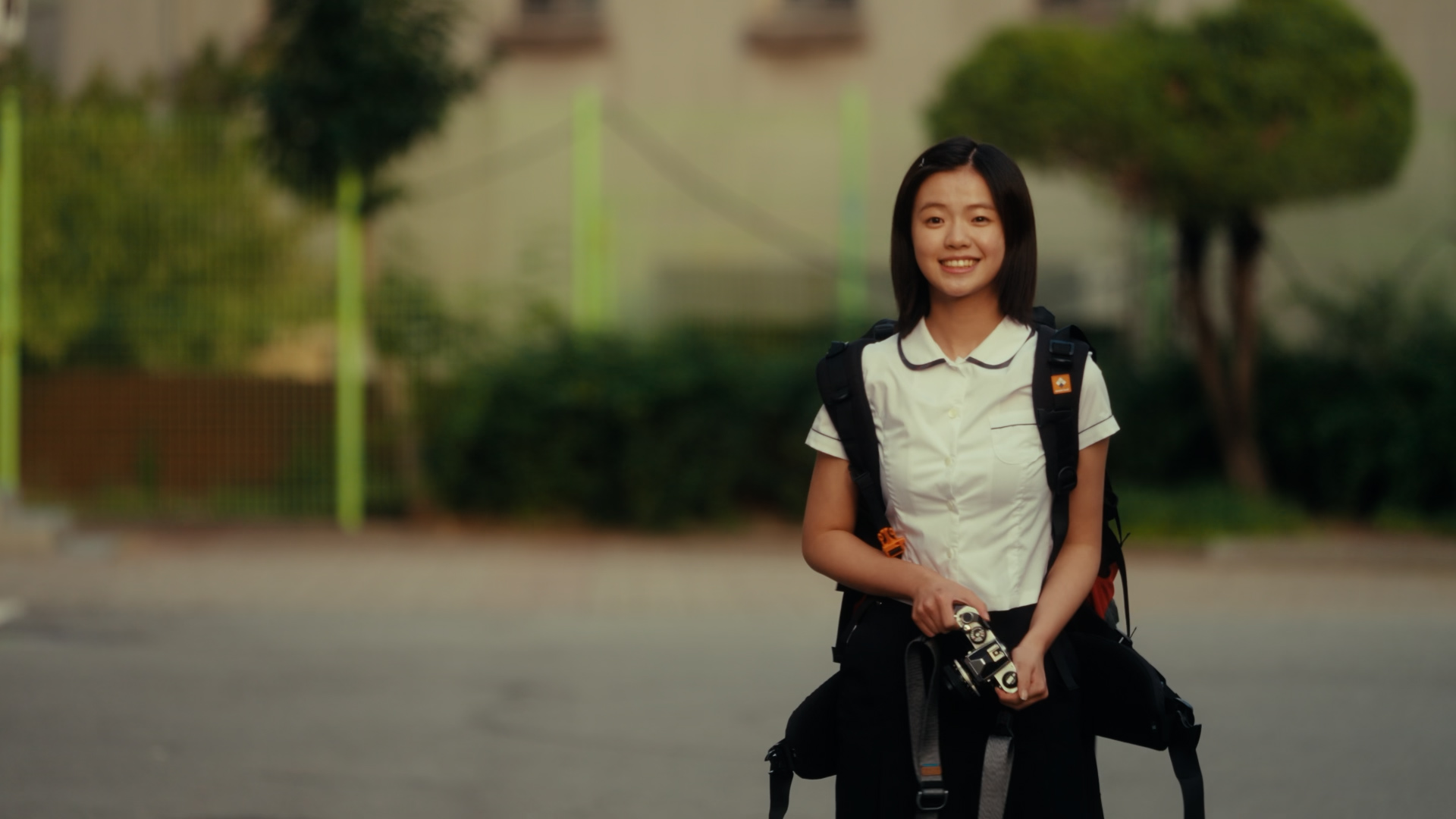
When discussing her preparation for the role, Si-a shared insights into how she approached Summer’s grief: ‘Before filming, I had many conversations with the director about Summer’s emotions.’
The director explained that the feelings surrounding ‘death’ and ‘parting’ are similar in that both involve the idea of never seeing someone again. This perspective helped me understand Summer’s grief over her father’s death and her complex emotions toward Yeonwoo, building up to the moment of ‘farewell.’””
This understanding of grief as something both profound and ultimately unresolvable helped Si-a handle the internal emotional conflict of a young girl who is still coming to terms with a loss that has shaped her world.
Si-a’s portrayal of Summer stands in stark contrast to her previous roles, which were more action-packed and high-drama. In Sweet Home, she played Ai, a character-driven by surface-level feelings of fear and emotion. Likewise, her character in Kill Boksoon, Gil Jae-young, was intense and action-oriented. But in Summer’s Camera, Si-a faced the challenge of portraying a character whose emotions are hidden beneath the surface. Summer is a teenager who struggles to control her emotions, even as they become visible in the smallest, most fleeting moments. “In Sweet Home, the character of Ai and in Kill Boksoon, the character of Gil Jae-young were both characters who express their emotions outwardly,” the actress explained. “But in Summer’s Camera, Summer is someone who tries to control and hide her emotions, yet they are transparent on her face. So, I focused on showing how Summer’s emotions gradually reveal themselves over time.”
This quiet, gradual unveiling of emotion is at the heart of Si-a’s portrayal. Summer’s transformation from grief to self-acceptance is a subtle but meaningful arc, and the actress was determined to ensure her portrayal never felt exaggerated. “Since Summer required delicate emotional expression, I worked closely with the director to build her emotional journey,” she said. “On set, the director provided a lot of support, helping me express Summer’s emotions clearly and precisely.” This close collaboration with the director was crucial to ensuring that Summer’s emotional growth was communicated with precision.
Summer is strong enough to endure grief alone for the sake of others, but ironically, she also has the weakness of not being able to accept her father’s death.

The camera, an object with sentimental value, plays an important role in the film’s exploration of memory, connection as well as identity. Summer’s relationship with her late father, mediated through this camera, becomes a central thread in her journey toward healing. Si-a reflected on this connection: “I see the camera as a symbolic object that connects Summer and her father. Through the camera, Summer can get closer to her father’s hidden thoughts and feelings, which helps her grow.”
In a film full of complex emotions, Si-a’s portrayal of Summer’s inner struggles is truly impressive. “Summer is strong enough to endure grief alone for the sake of others, but ironically, she also has the weakness of not being able to accept her father’s death,” she noted. “Through the camera, I worked hard to express the delicate emotional changes in Summer as she grows.” This vulnerability, along with Summer’s inner strength, creates a complex character.
The themes of first love and loss are at the core of Summer’s Camera, but Si-a was careful not to rely on her own personal experience. “At the time, I relied more on imagination and observing those around me rather than my personal experience,” she shared. “I saw first love as a common yet special emotion that everyone goes through at least once. Everything is new, so it’s clumsy, but I thought it’s also honest and simple because it’s the first time. I similarly approached the theme of loss.” This perspective helped Si-a to capture the innocence and awkwardness of first love, while also conveying the heartache of loss in a way that feels relatable.
I saw first love as a common yet special emotion that everyone goes through at least once. Everything is new, so it’s clumsy, but I thought it’s also honest and simple because it’s the first time. I similarly approached the theme of loss.
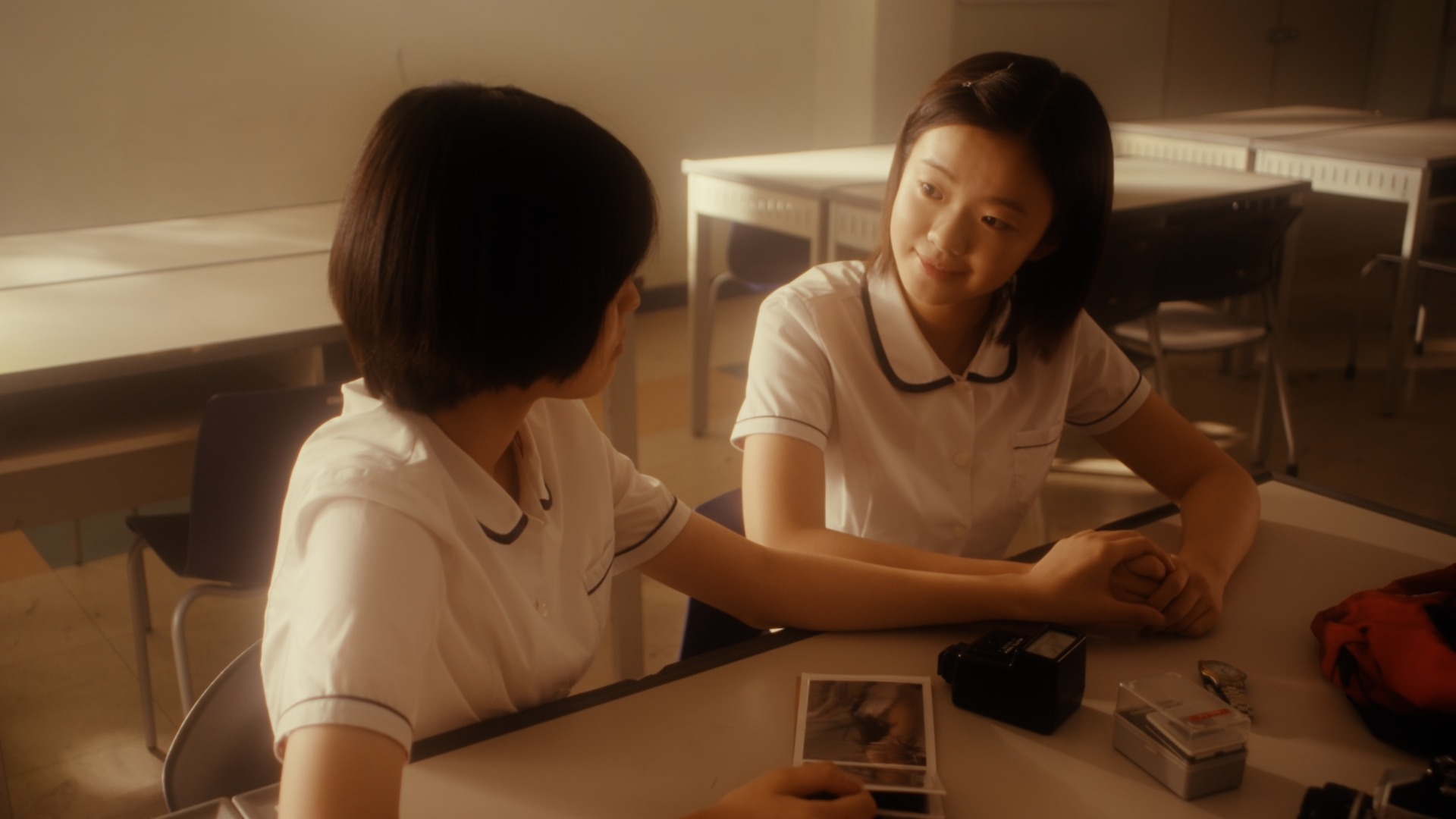
As the film’s pacing is slow and deliberate, it allows the emotional weight of each scene to develop at its own rhythm. Si-a’s work with the director ensured that this reflective pace was maintained throughout, capturing the film’s subtle yet powerful emotional shifts. “I had many discussions with the director to ensure Summer’s tone remained consistent, and we watched the rough cuts after every shoot to make sure the overall mood of the film matched,” Si-a explained. This careful attention to the film’s tone created a space where Summer’s transformation could develop naturally, without feeling rushed or exaggerated.
One of the most significant scenes in the film is the emotional confrontation between Summer and her mother, a moment that touches on themes of self-acceptance and vulnerability. Si-a took extra care in preparing for this scene, ensuring that it reflected the character’s emotional complexity. “Before filming began, I worried about how to express Summer’s honest emotions and identity in her confrontation with her mother. Both before and during filming, I had many conversations with the director and did multiple takes. I varied the intensity of the emotions during filming, but in the end, I believe the emotions that fit the overall tone of the movie came through, and I’m satisfied with the final result.”
Si-a’s performance in Summer’s Camera shows her incredible talent and emotional maturity. She skillfully portrays the balance between vulnerability and strength, as well as grief and self-discovery, proving she’s an exceptional actress far beyond her years. As her career progresses, Si-a, without a doubt, will keep taking on challenging roles and delivering performances that continue to demonstrate her talent. With Summer’s Camera, she has firmly established herself as one of the brightest young stars in Korean cinema.
Written and interviewed by Maggie Gogler
Featured image courtesy of BH Entertainment
The BFI Flare: London LGBTQIA+ Film Festival will take place at BFI Southbank from 19th-30th March. Tickets are on sale now via bfi.org.uk/flare.
View of the Arts is an online publication dedicated to films, music, and arts, with a strong focus on the Asian entertainment industry. With rich content already available to our readers, we aim to expand our reach and grow alongside our audience by delving deeper into emerging platforms such as K-pop and Asian music more broadly. At the same time, we remain committed to exploring the vibrant and ever-evolving global landscape of film, music, and the arts, celebrating the immense talent and creativity that define these industries worldwide.

 VIEW OF THE ARTS