
Korean-Canadian singer-songwriter JUNNY returns with his second studio album, null, arriving three years after his 2022 release Blanc. We’ve had the pleasure of speaking with JUNNY twice before, and each conversation has been a delight; now, for the third time, he sits down with View of the Arts to share insights on his latest work.
JUNNY used the intervening years to live, grow, and allow the right stories to emerge naturally, creating an album that feels timeless. null draws on JUNNY’s experiences working with other creatives to expand the album’s textures and perspectives. Each track not only balances vulnerability but it also reveals the singer’s soul in so many diffrent ways. And, I love how JUNNY moves effortlessly between different moods and emotions, making the music feel incredibly close to the heart.
The exciting news is that JUNNY will perform the album on his upcoming European tour, including a stop in London, giving fans a live experience full of the same emotion and richness as the record.
After “blanc“, I knew I didn’t want to rush into another full album just for the sake of putting one out. I needed to live a little, experience new highs and lows, and let the right stories come to me.

READ MORE: JUNNY ON “blanc”
View of the Arts: This is your second studio album, arriving three years after Blanc (2022). Some people say that time is essential to create something truly special, and null certainly feels like that. Could you walk us through why this album took three years to shape – was it about finding the right sound, waiting for the right stories to reveal themselves, or something else entirely?
JUNNY: It was a mix of everything. After blanc, I knew I didn’t want to rush into another full album just for the sake of putting one out. I needed to live a little, experience new highs and lows, and let the right stories come to me. The sound also took time to refine, because null wasn’t about chasing trends. It was about finding something timeless and true to where I am now. Those three years were about growth, not just as an artist but as a person, and I think you can hear that patience in the record.
VOA: Given that it features both your own songwriting and collaborations with other creatives, how did you balance your personal storytelling with the input of others? Were there moments where compromise reshaped your original intent, or did those exchanges actually help you dig deeper into your emotions and experiences?
JUNNY: Personal storytelling can be vulnerable, but I think that’s what makes it powerful. There were definitely moments where another perspective shifted the way I first saw a song, for instance, Next To Me, but instead of diluting my story, it usually made me dig deeper. Sometimes someone will challenge you with a question like, “Is this really how you felt?” and it forces you to be more honest. I see collaboration as a mirror because it reflects back parts of your truth you might have missed on your own.
Writing can be cathartic because it takes something heavy off your chest and gives it form. But sometimes it also means reopening wounds you thought had healed.

VOA: In No Morning, the arrangement is incredibly minimal – just your voice, keyboard, and background vocals – which allows the emotion of the lyrics to shine. What was your intention behind choosing such a stripped-down arrangement, and how does musical simplicity amplify or even challenge the way you express vulnerability as a vocalist?
JUNNY: With this song, I wanted to start the album with nothing to hide behind. The objective was to show the final version of myself first after the story I’m about to tell through the album. The stripped down arrangement was intentional- it puts the focus entirely on the emotion of the song. We even went far enough to record the beginning of the song with my phone. Singing in that space is scary, because there’s no wall of production to lean on, but that’s also what makes it powerful. I’m really proud of how it turned out.
VOA: From the quiet track No Morning to the vibrant intensity of Passion, Pain, Pleasure, the album moves through very different moods and arrangements. How intentional was this contrast, and do you see these shifts as reflections of different sides of yourself, or more as explorations of love’s emotional spectrum?
JUNNY: It’s all intentional. I wanted to bring the listener back to how it all started, and how I saw things before it all happened. Passion, Pain & Pleasure captures that part of me before love comes into my life.
VOA: SOUR has that old R&B energy – I would say the early Usher – yet it still feels distinctly like a JUNNY track. What elements do you consciously take inspiration from in those classic influences, and what do you make sure to add in order to maintain your own musical fingerprint?
JUNNY: I grew up on that era of R&B, so it’s naturally in my DNA – the grooves, the melodies, the way the songs balance smoothness with raw emotion. But when I approach it, I always filter it through my own lens. My tone, my writing style, my perspective. I think what makes SOUR distinctly mine is that I’m not trying to copy the past; I’m honouring it while placing my own story right at the center.
“null” tells the story I needed to tell right now, but of course there are chapters I haven’t opened yet. Some emotions are still unfolding in my life, and some things I’m not ready to put into words just yet.

VOA: Both Energy and Provider are songs about devotion and commitment, but they differ in tone – one feels magnetic and open, the other firm and declarative. Was this contrast planned, and do they reflect different ways you personally approach love and connection?
JUNNY: Yes, absolutely. Love isn’t always expressed in one way. Sometimes it’s light, playful, magnetic like Energy. Other times it’s solid, certain, and almost protective like Provider. Both songs chronologically come from the same heart, but they show that devotion can be expressed with both openness and strength.
READ MORE: JUNNY ON HIS DEBUT
VOA: You’ve worked with Colde and Seori on null, and those collaborations bring entirely different textures to the record. What did you discover about your own artistry by stepping into their creative spaces as much as they entered into yours.
JUNNY: Working with Colde and Seori reminded me how limitless collaboration can be. Colde has this way of creating space – his delivery feels effortless but layered. Seori, on the other hand, has this dreamlike tone that makes every lyric feel otherworldly. Also she was able to give perspective of the other side for the listener which made it even more special. Working with them showed me how different textures can transform a song. It also reminded me not to box myself in and my voice can adapt, expand, and live in new worlds if I let it.
VOA: You personally wrote several tracks – Dangerous, Residue, and Weight of Time, with the latter dealing with lingering memories and emotional burden. Do you find writing from such personal reflection cathartic, or does revisiting those emotions in songwriting sometimes make them harder to let go?
JUNNY: It’s both. Writing can be cathartic because it takes something heavy off your chest and gives it form. But sometimes it also means reopening wounds you thought had healed. For me, the important part is that once the song is finished and released, it doesn’t just belong to me anymore. It becomes something listeners can carry, and in that way, it actually helps me let go. That’s why relatability is that important for me when I start writing.
Working with them [Colde & Seori] showed me how different textures can transform a song. It also reminded me not to box myself in and my voice can adapt, expand, and live in new worlds if I let it.
VOA: With null, do you feel you’ve fully told the stories you wanted to tell at this stage in your life, or do you already sense there are narratives you’ve held back for a potential third studio album?
JUNNY: null tells the story I needed to tell right now, but of course there are chapters I haven’t opened yet. Some emotions are still unfolding in my life, and some things I’m not ready to put into words just yet. That’s the beauty of making albums – they capture where you are in that exact moment, but there’s always another story waiting for the next one.
VOA: You’re soon bringing null to Europe, including London. For listeners who may have only experienced the album through headphones, what can they expect from seeing these songs live? Do you plan to reimagine arrangements for the stage, or are you aiming to recreate the emotional intimacy of the record as closely as possible?
JUNNY: Both, actually. Some songs will stay close to the record because the intimacy is what makes them powerful. Others will be reimagined for the stage, because a live performance has its own energy. it’s going to be more immediate, more alive. What I want is for fans to feel the full range of null in real time. The quiet, the chaos, the raw emotion, and the release. I’m working really hard for this tour and hopefully they will enjoy it.
Written and Interviewed by Maggie Gogler
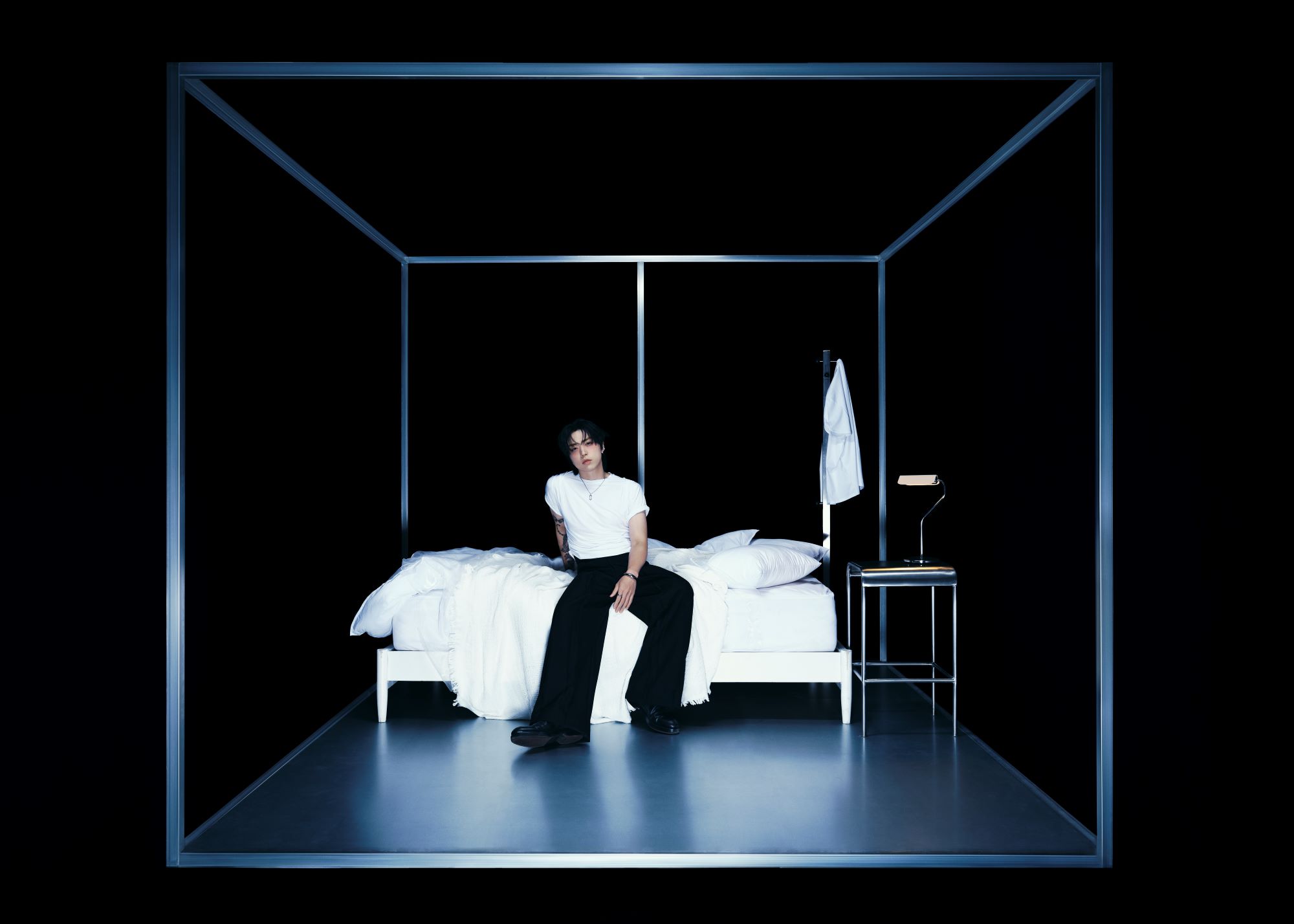
Featured image courtesy of MAUVE Company
View of the Arts is an online publication dedicated to films, music, and the arts, with a strong focus on the Asian entertainment industry. With rich content already available to our readers, we aim to expand our reach and grow alongside our audience by delving deeper into emerging platforms such as K-pop and Asian music more broadly. At the same time, we remain committed to exploring the vibrant and ever-evolving global landscape of film, music, and the arts, celebrating the immense talent and creativity that define these industries worldwide.

 VIEW OF THE ARTS