
Kang Hyeonggu, better known as KINO, is the kind of artist who can completely reorient your musical world in seconds; that’s how good he is at what he does. A producer, dancer, composer, and lyrical architect, KINO first captured hearts as the creative engine of PENTAGON, but his solo work proves he was never built to live inside neat little boxes. He’s the kind of musician who treats genres like suggestions, not rules; one moment you’re in a sweat-soaked underground club, the next you’re floating through R&B haze or screaming into a distorted rock song. And somehow, it all feels intentional. Dangerous, right?
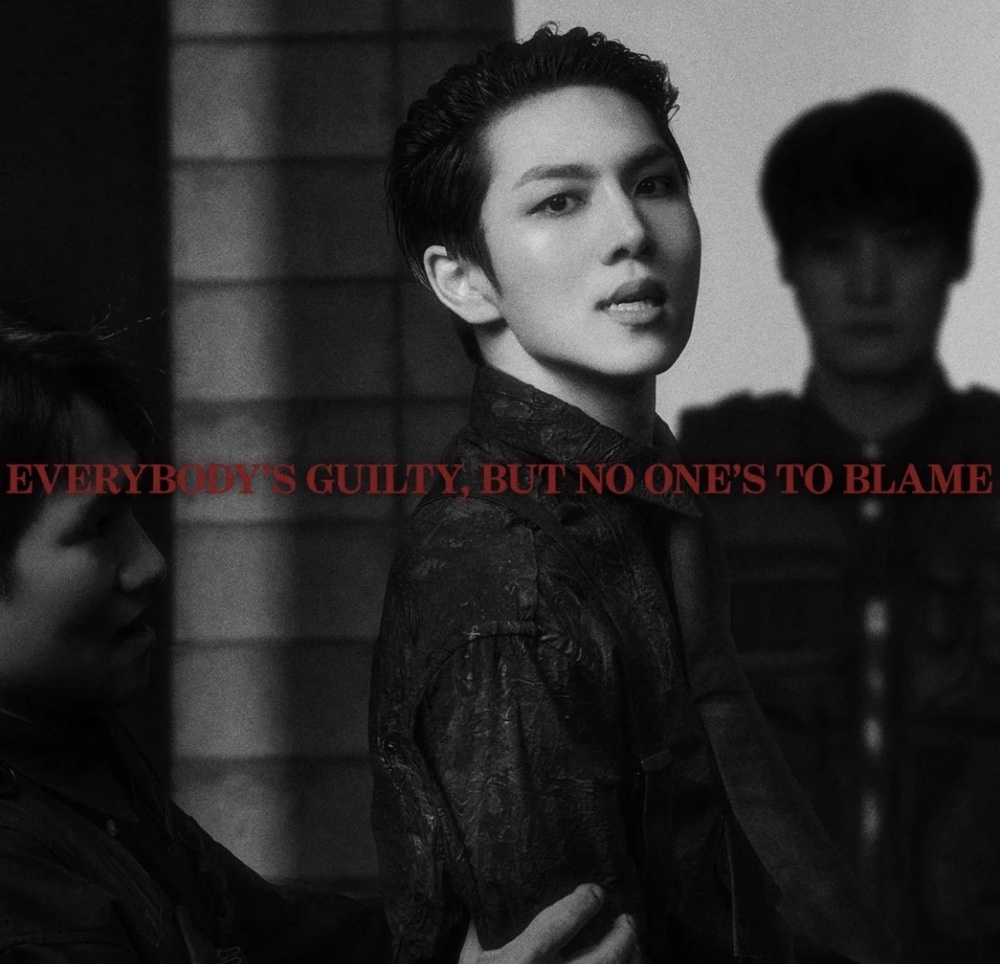
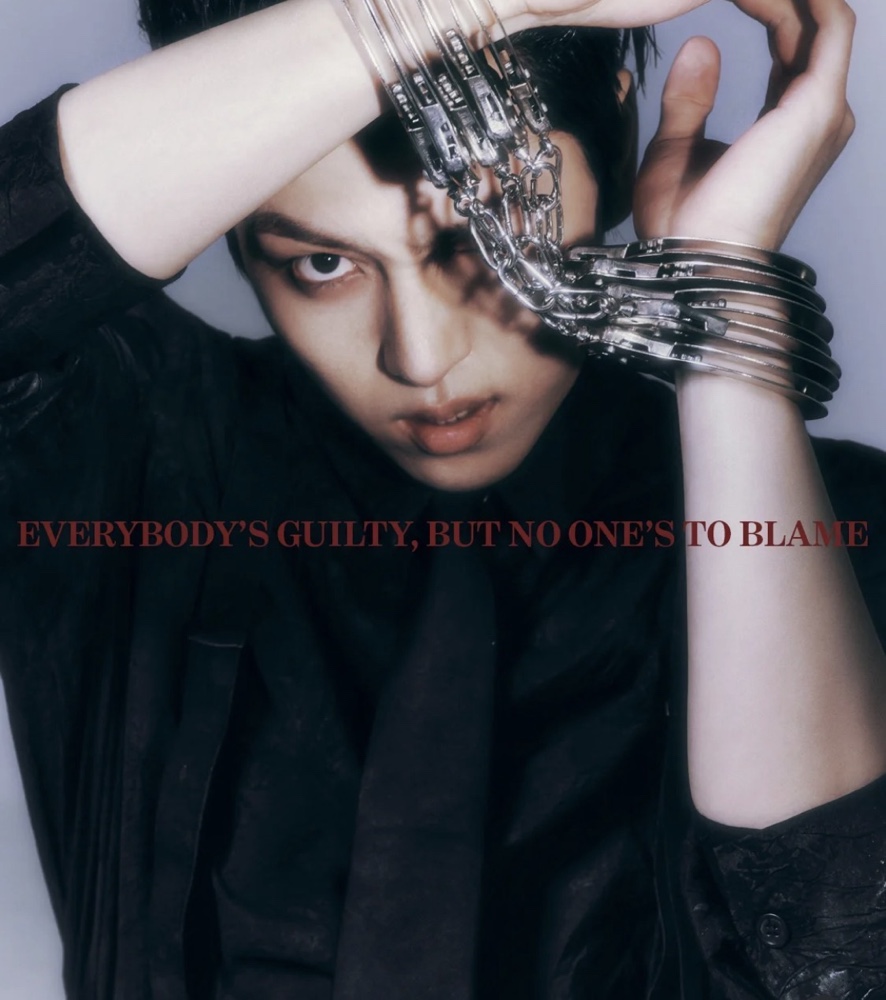
His latest release, EVERYBODY’S GUILTY, BUT NO ONE’S TO BLAME, is an emotional exorcism. It drifts across turmoil and tenderness, creating something truly beautiful: explosive club tracks, sharp confidence, burned-out confessionals, and moments of devastation that will sit with you for a while. Since leaving Cube and founding his own one-man agency NAKED, KINO has stepped fully into his artistic freedom, and the result is superb and almost uncomfortably honest. He’s not trying to look perfect, he’s trying to feel real. And that’s far more powerful.
And let’s be honest, there’s something beautifully ironic about him. His name stands for innovation, and he lives up to it every single time. He’s the “dance master” who will also destroy you emotionally with one lyric. The polished idol who writes about burnout, temptation, and the softest corners of loneliness. He’s funny, fearless, and just self-aware enough to know that art doesn’t come from perfection; it comes from the mess. KINO is here to pull you into his world and make you feel seen while doing it.
We recently sat down with the artist and spoke about EVERYBODY’S GUILTY, BUT NO ONE’S TO BLAME, his solo career, and the upcoming FREE KINO World Tour.
The concept of [the upcoming] tour is freedom – not just mine, but the audience’s as well. I want the show to feel like a place where people can drop whatever has been weighing them down and just breathe again.
View of the Arts: First of all, KINO, congratulations on your new EP, EVERYBOY’S GUILTY, BUT NO ONE‘S TO BLAME. I have to say, I absolutely love it. Let’s talk about that sound journey: you open the EP with two explosive club tracks like MY TURNTABLE IS CONCRETE PT.2 and DIRTY BOY (feat. JAMIE & UWA), fast-paced, energetic, and then, suddenly, we’re vibing to MAPSI with that R&B edge, and later CLUB SEX CIGARETTES brings this bold rock energy. Then we’re back again to that club sound. Was that dynamic flow something you planned consciously while producing?
KINO: Thank you so much! To be honest, I didn’t plan the flow at the very beginning. What I prioritised was the “emotion” I wanted to express. Whenever I worked on a song, I asked myself, “Which feeling am I going to face today?” And whatever emotion came up determined the sound.
For example, when I was stuck in my studio feeling frustrated, a club sound naturally came out. When I wanted to feel witty and confident, “MAPSI” was born. And when I hit my emotional limit, that rough rock texture in “CLUB SEX CIGARETTES” made perfect sense.
So the flow wasn’t built by genre – it was built by the different versions of myself I met while making the album.
VOA: Speaking of MAPSI – what a bold track! You co-wrote, composed, and produced it with two other creatives, and the lyrics are fearless: sexy, confident, straight to the point. What was your creative mindset while crafting MAPSI? Were you intentionally pushing lyrical boundaries this time?
KINO: I got the idea from something I said jokingly to fans: “Be careful when you meet a man. All men are animals.” I laughed, but the truth behind it stayed with me. So I thought, “Okay, what if I make a song that shows that duality — our instincts versus the polished image we show to the world?” That’s how “MAPSI” came to life. There was no intention to push boundaries with the lyrics or for attention. It was about being real and taking myself less seriously.
VOA: Okay, I have to talk about WURK (feat. jungwooseok) – wow, what a song. You and Wooseok created something really interesting musically here. It’s not one straight melodic line; there’s so much happening – layers, transitions, shifts. How did that sound come about? When you work on a track like this, what usually comes first for you – melody, beat, or lyrics?
KINO: For “WURK,” the lyrics actually came first. I wasn’t thinking about what kind of song I wanted to make at first. I was just writing down the emotions I was experiencing at that time. The words were about working endlessly towards success and the moments of frustration that appear along the way. Once I went over what I had written, I realised that the theme felt very “Korean.” That is why I brought in elements of Korean labour songs and the traditional rhythm “Jajinmori.” Once that direction became clear, the rest of the track naturally grew around it.
VOA: Now CLUB SEX CIGARETTES – oh boy, this one. I know some people might focus on the profanity, but honestly, I love how raw and unrestrained it feels. You’ve built such a strong musical identity for yourself, and this song really shows it. What was going through your mind when you were writing this song?
KINO: That song came from pure frustration. There was a period when I tried so hard to hold it together every day – smiling, pretending everything was okay. One day, I thought, “Why am I still trying to please others even when I’m breaking inside?” So, I wrote the song as if I were finally saying everything out loud. Not politely, but honestly. Some people focus only on the profanity, but for me, those taboo words were a form of exaggeration – a way to express the level of stress and show how someone explodes when they can’t take it anymore.
VOA: I have to say, to me, CLUB SEX CIGARETTES sounds like an anthem for burnout. It’s got this tension between joy and exhaustion, like trading polish for honesty. The lights, the noise, the release, but also that refusal to keep performing for the grind. It feels so human. Was that feeling of catharsis – of letting go – something you experienced while writing or recording it?
KINO: Absolutely. I remember recording the second verse. I was unbearably exhausted at that time, stressed out by work and the process of making the album, but the moment I screamed those lines, it felt like someone finally allowed me to breathe. I guess that’s why we shouldn’t hold everything in – we have to learn to let negative feelings out to let them go. It wasn’t a dramatic healing moment, but more like a moment of letting myself go. The kind of release we all wish for after a long week. I think that’s why people relate to it. We’ve all had days when we want to throw everything away and just feel alive again.
The biggest thing I’ve learned is that I don’t need to be perfect to be loved. For a long time, I thought I had to hide my flaws and only show the bright, polished side of myself. But the more honest I became, the more people connected with me.
VOA: And about that rock sound in CLUB SEX CIGARETTE – you really surprised me again! How do you decide on the musical direction for each track? Do you start from emotion and then say, “Okay, this one needs to be rock,” or does the sound itself inspire the lyrics?
KINO: Emotion usually comes first for me. When I sit in the studio, I don’t tell myself, “Okay, today I’m making a rock song.” It’s more like, “Which feeling is taking over me right now?” That’s where it begins. Once the emotion finds its home in a sound, the lyrics or the story based on those emotions come almost immediately.
VOA: DEVIL ON MY SHOULDER brings us back into that club atmosphere – it’s hypnotic but also darkly reflective. What kind of story or emotion did you want to convey through this track?
KINO: This track is about the quiet moments when temptation whispers louder than logic. We all have those days when choosing a bad decision feels easier than choosing the right one. During that time in my life, I was juggling three balls: exhaustion, ambition, and pressure. So I imagined it was like the “devil” telling me, “Just skip responsibility. Take the shortcut.” The song is about realizing that those inner conflicts shape who we become, and that sometimes we give in to temptations. We learn and grow from those mistakes.
VOA: Then we arrive at ANNIE, totally different vibe, more stripped down. So I have to ask: who is Annie? What’s the story behind this song, and how does it fit into the emotional landscape of the EP?
KINO: I wrote this song during one of the darkest periods of my life. At the time, I was staying alone in my room a lot, feeling very small and unsure about where I was heading. I started writing the lyrics (and yes, I was crying), and it felt like I was finally telling someone the things I had never said out loud. That’s why the track sounds quieter and more stripped-back. I wanted the listener to feel like they were sitting in that same room with me. On the album, Annie is the moment where all the noise stops, and you finally face the truth you were running away from. I want people to accept Annie as the “anything” you have lost, not “someone.”
VOA: Now, onto something more exciting – your upcoming “Free KINO” World Tour in 2026! I know fans are already buzzing about it (especially in Europe, where we’re all waiting patiently!). What can you tell us about the concept of this tour and what fans can expect from the live experience?
KINO: The concept of [the upcoming] tour is freedom – not just mine, but the audience’s as well. I want the show to feel like a place where people can drop whatever has been weighing them down and just breathe again. During the concert, I want the crowd to chant “FREE KINO” together, making it a signal for everyone to break out of whatever they’ve been stuck in. I’m very excited to bring this experience to London and all across Europe. You guys have something special. The energy there is always different, and I can’t wait to meet everyone in person after all these years.
VOA: You’ve been working non-stop, and we can feel that growth in your music. How have you been holding up personally through all this creative momentum? How do you balance being “KINO the artist” and just “KINO the person”?
KINO: It’s still something I’m figuring out – running my label by day and writing songs at night. During that time, there are moments when I feel like I’m living two different lives. Sometimes I finish a Zoom meeting still wearing stage makeup, which reminds me that this rhythm is not easy. What helps me is being honest about how I feel. If I am tired, I say I am tired. If something feels overwhelming, I allow myself to take a short break. I used to think that being perfect 24/7 and hiding my agony was mandatory for me, but now I realise that taking care of myself is also a responsibility. So. the balance isn’t perfect, but I try to stay aware of what I need each day.
VOA: Lastly, looking back at your journey – from debuting with PENTAGON to this point as a solo artist and producer – what’s something you’ve learned about yourself that continues to guide your music and your life today?
KINO: The biggest thing I’ve learned is that I don’t need to be perfect to be loved. For a long time, I thought I had to hide my flaws and only show the bright, polished side of myself. But the more honest I became, the more people connected with me. That changed everything. Now, I try to make music from a more humane place. I want to share the various sides of myself that are confused, tired, hopeful, or even scared, because everyone carries those same emotions. And if my music can help someone feel relieved and know that it’s okay to feel that way – even just a little – then I think I’m moving in the right direction.
Written and interviewed by Maggie Gogler
Featured image courtesy of NAKED
Tickets for KINO’s show are available here.
A big thank you to Onion Production for their support with this interview.
View of the Arts is an online publication dedicated to films, music, and the arts, with a strong focus on the Asian entertainment industry. With rich content already available to our readers, we aim to expand our reach and grow alongside our audience by delving deeper into emerging platforms such as K-pop and Asian music more broadly. At the same time, we remain committed to exploring the vibrant and ever-evolving global landscape of film, music, and the arts, celebrating the immense talent and creativity that define these industries worldwide.

 VIEW OF THE ARTS