
Behind the alias EL CAPITXN stands Jang Yi Jeong, whose career has evolved across nearly every corner of the industry: idol, songwriter, topliner, producer, and now a fiercely independent solo performer. Born in South Korea and first introduced to audiences as a member of HISTORY, he has become one of the most trusted creative forces behind the console at HYBE.
Yet to describe him only by credits would be wrong. EL CAPITXN is not someone who simply makes songs, but an artist who creates spaces where various emotional states can exist side by side. Whether producing for others or stepping onto the stage himself, he approaches music as if it were the last day of his life; there is so much passion, beauty, and feeling (whether negative or positive doesn’t matter; what matters is that I, as a listener, can take both on board).
Within K-pop’s machinery, EL CAPITXN shines. His production work – including collaborations with artists such as Suga, RM, j-hope, IU, ENHYPEN, TXT, Paul Kim, Yerin, and PSY, just to name a few – reveals a superb work “obsessed” with detail: frequencies most people never notice, lyrics refined for days, emotional beats that land a fraction later than expected. The same precision is applied to his solo music, built on countless unseen hours chasing sounds listeners may never consciously register. Paradoxically, that labour is what gives his work its density; you feel it before you understand it.
When it comes to his solo work, alongside those unforgettable OSTs, there are wonderful songs worth holding onto. Yet my personal favourite, I’ll keep to myself, because it’s one of those rare songs that keeps you alive, carrying you forward when you need it most.
Just like I used to write music for others, now I write music for myself. Fortunately, I’m someone who can write songs for the artist called ‘me,’ freely and without compromise.

But what makes EL CAPITXN a wonderful artist is the beauty of his soul that permeates everything he creates. There is a gentleness to his persona, even when the music is born from darker times. After months of listening to his catalogue and speaking to those who have listened to him since day one, I have learnt that everyone absorbs his music differently, and that is precisely his power. He opens himself completely to the listener, without armour. It is a frightening thing for any artist to do, yet he does it anyway, as if honesty were the only possible escape. When you’ve endured your own difficult seasons, you recognise the truth in his voice and production immediately.
Perhaps that is why his music feels medicinal, like a pill dissolving into your body. There are moments when his music simply switches something off in your mind, easing the noise you didn’t realise you were carrying. You can’t quite explain how or why; it just happens.
EL CAPITXN offers something extraordinary: the courage to stand unhidden. He has that rare ability to make strangers feel a little less alone. It’s this kind of power that the artist is set to bring to Europe with his WHO KILL EL? World Tour, including Warsaw and Munich. And just ahead of it, we sat down to discuss his career and the world of music.
View of the Arts: First of all, thank you so much for taking the time to answer these questions. We are very excited about your European tour, WHO KILLED EL?.The tour has been described as a story of loss and return. How do you translate such a personal narrative into a live performance, and what can we expect from you on this tour?
EL CAPITXN: I’m someone who makes music, but I’m also someone who has lived through that time. Those experiences constantly stimulated me, broke me down, and rebuilt me again. It wasn’t just a musical change; it felt like my very existence was slowly transforming.
People always want to do more of what they’re told not to do. The more the world tried to hide me, the more I wanted to express myself. I hated seeing myself staying still like a fool. There were times I hated myself, and even hated other people. I even hated the world for no reason. But after fully exhausting that anger and resentment, I realised something: the world is not on the side of those who stay hidden. You have to keep shouting, colliding, even struggling desperately for it to look your way even once. Quietly disappearing is too easy.
That’s why I keep saying the name EL CAPITXN. The world is especially cold towards those who shout. People might curse you or call you arrogant or reckless, but I think that’s better than being thrown away without ever speaking. At least, that’s not how I want to live.
This tour will feel like the process of picking up the things I lost. And instead of doing that alone, I want to go through it together with the audience.
I feel grateful. I’ve taken on many roles in the music industry, and none of those paths were easy or ordinary. Because of that, my story became unique, and through that story, EL CAPITXN’s identity was formed.
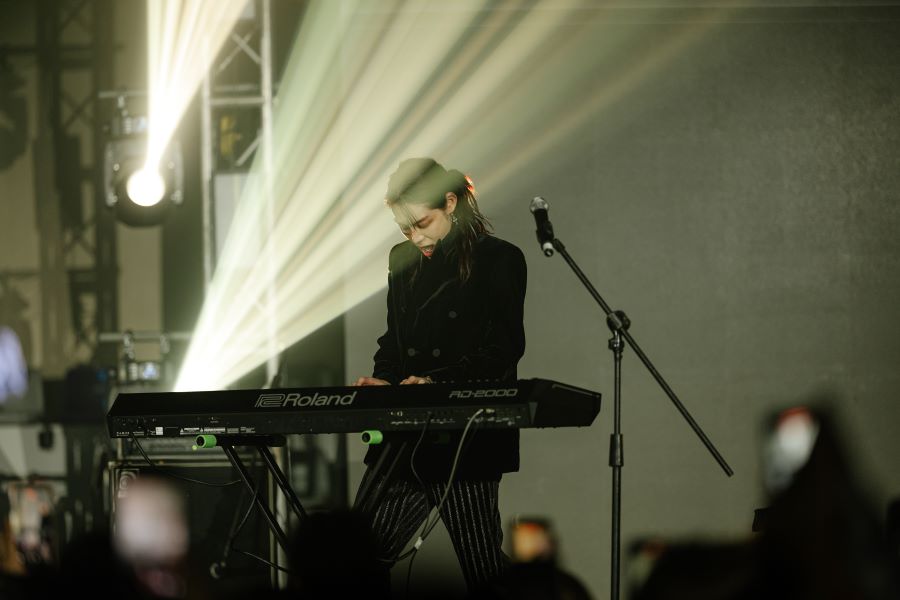
VOA: The WHO KILLED EL? tour combines live instrumentation with performance. How did you envision this hybrid format, and what does it allow you to express that a standard DJ set wouldn’t?
EC: I wanted to reveal myself more on stage. If I wanted more people to truly know me, moving only inside a DJ booth wasn’t enough. It felt like another frame, another boundary that confined me. Safe, but suffocating. There were voices I couldn’t shout out for years, and I wanted to finally let them out. If I couldn’t explode through singing, I wanted to borrow the voices of instruments instead. Even if my own voice isn’t perfect, I wanted to speak directly to my fans with it, without hiding behind the music.
That’s why I chose this format. I just wanted to show more – even the mistakes. Not a finished version of myself, but who I am right now. It’s a process of building myself piece by piece.
VOA: You were a member of HISTORY, and now you are a solo artist as well as a producer. How has your creative process evolved since stepping out on your own?
EC: Not just my creative process, but the whole structure of my life has changed. After going through so many things, even my old memories have become blurry; both the happy and painful ones. I just kept living, and somehow that shaped who I am now.
It’s hard to explain exactly what changed. Honestly, I don’t fully know either. But if before I was focused on “doing well,” now I’m more focused on “being honest.” I think that difference shows up in my music.
VOA: As a producer who has worked with some of K-pop’s biggest acts, how do you balance working behind the scenes versus performing your own music in front of an audience?
EC: Just like I used to write music for others, now I write music for myself. Fortunately, I’m someone who can write songs for the artist called ‘me,’ freely and without compromise.
Rather than balancing, it feels like my role has simply changed. Before, I completed someone else’s story behind the scenes. Now, I push my own story all the way through. Maybe that means I carry even more responsibility.
(…) The world is not on the side of those who stay hidden. You have to keep shouting, colliding, even struggling desperately for it to look your way even once. Quietly disappearing is too easy.

VOA: Many listeners may not realise how much work goes into producing a song. What do you wish the public understood about the labour and artistry behind it?
EC: It’s difficult because there’s no right answer. Sometimes you spend days worrying about a single frequency that no one else can even hear. You stay up all night for details no one will ever notice. You obsess over one line of lyrics to give it meaning. You try to compress someone’s life into two or three minutes, or squeeze years of emotions into a short piece. Sometimes it feels like writing a 300-page book would be easier. It’s incredibly delicate, mentally exhausting work. But ironically, even if no one knows about that process, I still love that time. It makes me feel alive. That’s why I keep doing it – whether anyone sees it or not.
VOA: When writing for yourself versus other artists, how does your approach change?
EC: It’s simple. When I write for someone else, I tell their story. When I write for myself, I tell myself. But when it’s my own story, I can’t run away or make excuses. So it becomes more raw and exposed.
VOA: Your lyrics feel very narrative. Do you start with a story, or do melodies guide the words?
EC: It depends on the song and how I’m feeling at the time. My memory isn’t always clear, but one thing is certain: when I make my own music, something I want to say comes first, and the sound follows.
VOA: Collaboration is a big part of your work. How do you choose collaborators, and what is the exchange like in the studio?
EC: To be honest, collaboration can be annoying. But you also learn a lot. It’s not always happy. Sometimes you have to lower yourself, sometimes you have to shout louder. Emotions clash. You have to acknowledge each other’s music and be acknowledged in return. It’s not easy, but something meaningful always comes out of that process.
VOA: Was there a collaboration that challenged you artistically?
EC: Working on Daechwita with Suga taught me something important. Music that gets recognised isn’t decided by luck. Countless trials and struggles accumulate inside the music, and that density is what people feel.
VOA: You’ve seen the industry from many angles: idol, producer, songwriter. How has that shaped your artistic identity?
EC: I feel grateful. I’ve taken on many roles in the music industry, and none of those paths were easy or ordinary. Because of that, my story became unique, and through that story, EL CAPITXN’s identity was formed. I avoided the easy roads and ended up on strangely difficult ones, but now, I have many adventures to share with the world, and that makes me happy.
This tour will feel like the process of picking up the things I lost. And instead of doing that alone, I want to go through it together with the audience.

VOA: Where do you feel most creatively alive?
EC: On tour. Every time I perform, I feel my understanding of creativity expanding.
VOA: How does your mental or emotional state influence your music?
EC: It’s not about my condition, but whether I can immerse myself or not. Even if I’m physically sick or mentally tired, there’s a state of deep focus I sometimes enter. I can’t really explain it, but that’s what affects creation the most.
VOA: How do you decide which songs to perform live versus keeping them as studio tracks?
EC: I’ve thought a lot about this, and I once believed I knew the answer. I thought it depended on whether people liked the song or whether I could immerse myself in it. But now, I’m not so sure. In the end, I think you only know after putting it on stage and facing the audience. My standards and the public’s reactions both change in the moment. So action comes first. The stage isn’t a place for calculation; it’s a place for confirmation.
Written and interviewed by Maggie Gogler
Featured image courtesy of EL CAPITXN
View of the Arts is an online publication dedicated to film, music, and the arts, with a strong focus on the Asian entertainment industry. As we continue to grow, we aim to deepen our coverage of Asian music while remaining committed to exploring and celebrating creativity across the global arts landscape.

 VIEW OF THE ARTS