
We met Pedro Santos shortly after his performance on BST Hyde Park’s Rainbow Stage and found a quiet spot in one of the festival’s shaded chill-out areas. Relaxed, smiling and still energised from the set he had just played, the British-Portuguese singer-songwriter reflected on performing at one of London’s biggest festivals, the emotional honesty behind his latest music, and why he finally feels comfortable embracing exactly the artist he wants to be.
Watching Santos perform, you could see that he was enjoying every minute of it. With strong vocals, plenty of energy and a leather jacket that he later admitted was a questionable choice on one of London’s hottest days of the year, he delivered an amazing set. Yet behind the humour and charisma is an artist who is still discovering new sides of himself through his music.
Santos laughed when asked how the experience compared to what he had imagined. He admits that he’s learnt over time to keep his expectations in check when it comes to major moments in his career. “I always try and keep my expectations as low as possible,” he says. “Because anything above that is a bonus.”
For Santos, however, success was never really about the size of the festival or the prestige of the slot. Sitting comfortably in the shade after his performance, still processing the experience, he appears most pleased not by the size of the festival, but by how much fun he had performing.
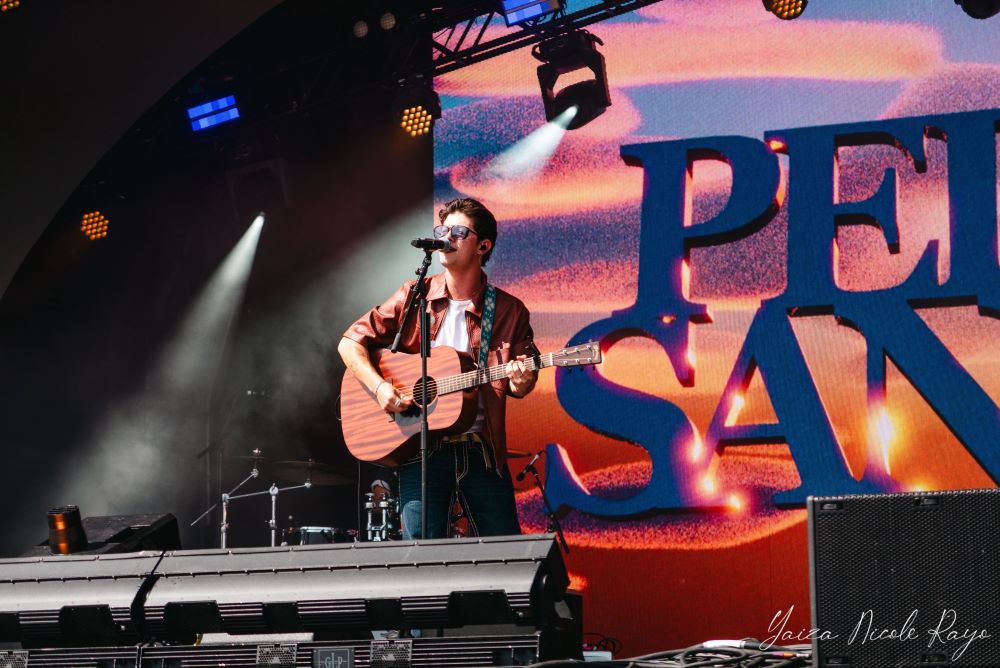
“The most important thing for me was to have fun, which I definitely did,” he says. “Although I did walk on wearing a leather jacket, which was a really bad idea. After the second song, it came off, and I felt much freer.”
He laughs again, but behind the self-deprecating humour is the satisfaction of someone who knows he has connected with the audience. After leaving the stage, Santos spent time meeting fans, many of whom had just heard a few of his unreleased songs for the first time. Their reaction appears to have mattered to him as much as the performance itself: “I showed a lot of new material, and they absolutely loved it,” he says with a smile. “To me, that’s a very, very big win.”
Much of Santos’s music comes from personal experience, and I Don’t Know Me may be his most honest song yet. I suggest as much, and he doesn’t hesitate to agree. “I would probably say so, yeah.”
The song was written during a period of personal change, when Santos found himself reassessing not only his relationship with music, but also the people around him. “I Don’t Know Me came about because I had a bit of a rejig in my life,” he explains. “Something happened that I wasn’t necessarily expecting, and I realised how much I couldn’t do without certain people.”
As he speaks, you clearly see that the song was never solely about one person or one experience, touching instead on broader themes of gratitude and human connection: “I’ve always been grateful for those things, but sometimes you have a moment where you realise that without them, you could literally have nothing.”
Perhaps this explains why the song has been relatable in so many different ways. Santos recalls how everyone involved in writing it interpreted it through their own experiences, “When we were writing it, everyone in the room saw it differently,” he says. “One person said it reminded them of their dad. For me, it was about music. For someone else, it was about their sister. That’s what I loved about it. It’s a very simple idea, but it’s something that everyone can relate to.”
This way of thinking also influences how Santos approaches songwriting. While many artists begin with a lyrical concept, he admits that melody almost always comes first, “I’m definitely more of a melody person,” he says. “When I’m sitting with songwriters, I’ll give them this huge word-vomit of emotion, and then they’ll help shape it into something.”
He pauses briefly, searching for the right way to explain what music means to him, “I genuinely believe melody is a universal language. Lyrics become universal when people understand them, but melody reaches everybody.”
Santos admits that he finds it difficult to write about experiences that don’t feel real to him, “I don’t really like writing unless somebody in the room has specifically said they want to write about something, or unless it’s something I’ve experienced myself.”
For many artists, releasing personal music can feel uncomfortable or even exposing. Santos appears to accept vulnerability as part of the process, “I don’t mind exposing myself,” he says matter-of-factly. “You can’t expect people to relate to you if you’re not willing to be honest.” He believes listeners recognise authenticity almost immediately.
“If you don’t believe what you’re singing, then you can’t expect anyone else to believe it either.”
Santos also explored these ideas in Should Have Known Better, one of several unreleased songs he introduced during his BST Hyde Park performance. “It’s really about bad habits,” he explains. “About knowing you shouldn’t be doing something, but doing it anyway.”
While the song eventually evolved into a relationship narrative, its origins were much broader: “It could be anything,” he says. “Going back to an ex, smoking, overthinking, anxiety. Sometimes we return to things we know aren’t good for us because they’re familiar. That’s really what the song is about.”
What impressed me most during Santos’s Hyde Park performance was Crash Out, an unreleased pop-rock track. Judging by both the performance itself and Santos’s enthusiasm when discussing it, this pop-rock direction may become a bigger part of his future work – and I sincerely hope so.
“I think that kind of music gives me confidence,” he explains. “When I perform something more aggressive, more pop-rock, I feel like I’m exactly where I’m supposed to be.”
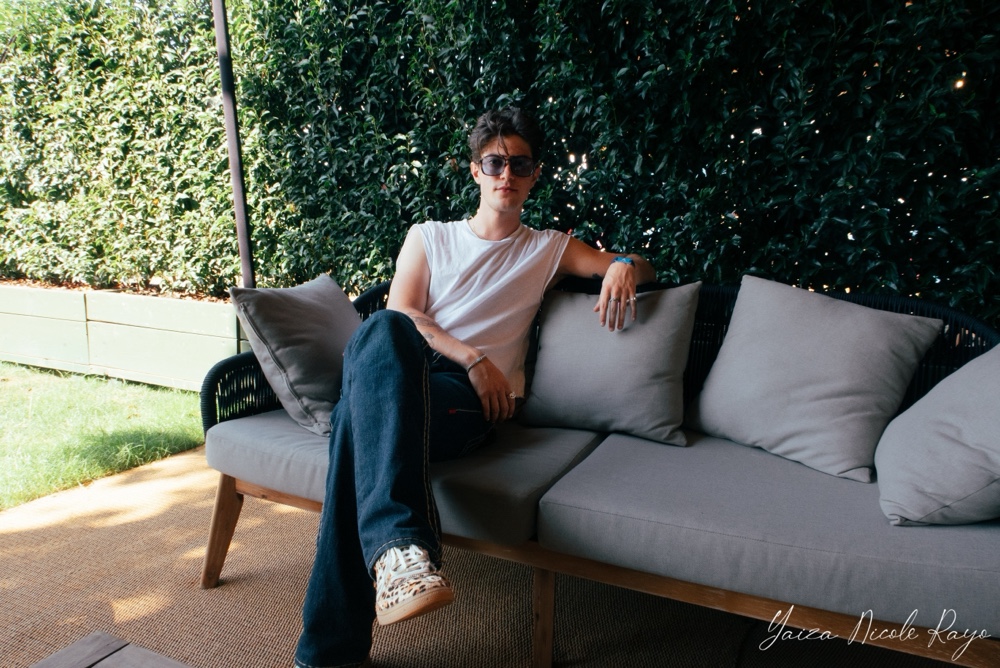
Chatting to Santo is very refreshing; he is an open, fun, and down-to-earth young man. During our conversation, he also admits that confidence has not always come easily.
“I think I lost it a little bit for a while. But when I started writing songs like that, I felt like I could finally be the person I’ve always wanted to be,” he laughs, then continues, “Now I can just say, ‘This is my music. If you like it, great. If you don’t, that’s fine too.'”
Like many songwriters, Santos also has his dream collaborators already mapped out. At the top of his list are two names whose influence on contemporary pop music is impossible to ignore.
“John Bellion,” he answers immediately. “Definitely John Bellion. I think the way he sees music is completely different from how I do. I’d love to understand how his brain works.”
The second choice was perhaps fitting, given where the conversation was taking place.
“And Ryan Tedder, [OneRepublic],” he adds. “I know he’s here today, so maybe I should go and find him.”
He laughed again.
“He’s written so many songs that I love. And I think he has this amazing ability to make things feel simple and warm.” For now, however, Santos remains focused on his own journey. Since releasing I Don’t Know Me in January, he has continued writing and recording, while also preparing for a major support slot with Lewis Capaldi in Portugal later this month.
“I know people have been waiting for new music,” he says, then adds, “I appreciate that a lot of people have been waiting for some sort of music since January the 9th, which was I Don’t Know Me. I mean, I Don’t Know Me has had a course of its own. We went number one in Portugal. I got a Lewis Capaldi gig in Portugal on the 18th of July, which will be life-changing in Figueira da Foz, which is between Porto and Lisbon. And then from then on out, really, it’s just writing loads of music, giving the fans what they want, which is music, writing it and releasing it. And then, I hope touring again.”
After spending time with Santos, you get the sense that he isn’t chasing a different version of himself, but slowly growing into who he already is.
Written and interviewed by Maggie Gogler
Featured image © 2026 Nicole Rayo for View of the Arts
View of the Arts is an online publication dedicated to film, music, and the arts, with a strong focus on the Asian entertainment industry. As we continue to grow, we aim to deepen our coverage of Asian music while remaining committed to exploring and celebrating creativity across the global arts landscape.


