
For ALAMAT, taking their music outside the Philippines has never meant changing who they are to make themselves easier for an international audience to understand, because the Filipino languages, sounds, stories and traditions in their work are not something they add for effect; they are simply part of who the group is. And now, as their music begins to travel further and reaches people who may know very little about the Philippines, they seem even more determined to take that part of themselves with them rather than leave it behind.
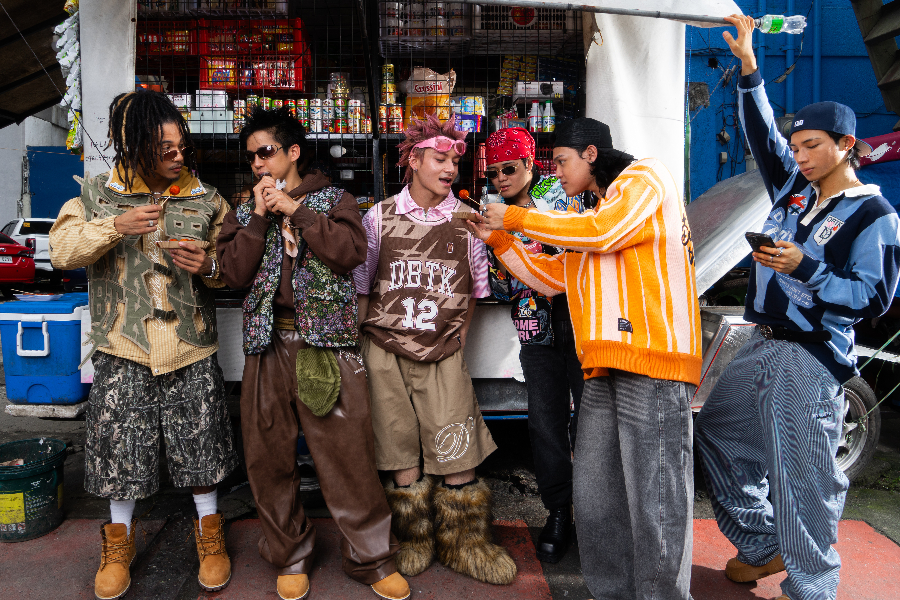
The six members – Taneo, Mo, Jao, Tomás, R-Ji and Alas – come from different parts of the Philippines, and those different backgrounds naturally find their way into the music they make, from the languages they sing in to the stories they tell and the influences they bring into R&B, pop and hip-hop. You can see it just as much as you can hear it, because Filipino culture also appears in their choreography, clothes and visuals, with movements inspired by traditional folk dances becoming part of performances that still feel completely modern. When we spoke to ALAMAT, they explained that they have never felt the need to choose between tradition and the kind of music they want to make today; for them, the two have always belonged together.
As ALAMAT’s music reaches more people outside the Philippines, many of those listening will not necessarily understand every language they hear in their songs, but the group does not see that as something that needs to change. A song can connect with someone before they understand every word, whether through the melody, the voices, the rhythm or simply the feeling behind it. “Emotion doesn’t always need translation,” they told us, and if that first connection makes someone curious enough to look up a Filipino word, learn about a tradition or discover the story behind a song, then the music has already done its job.
Their latest single, Sinigang, shows just how those ideas can become part of an ALAMAT song. It is an R&B track that first started with Mo, before Taneo and Tomás joined him in writing it and Alas took care of the production, but there is also a very Filipino story behind the title itself. “Sinigang” plays with the words “SINIsigaw HangGANG ngayon”, while also referring to the Filipino dish that many people immediately associate with home, family and sharing food with the people close to them. The song also says quite a lot about where ALAMAT are now creatively, with the members becoming much more involved in writing, arranging and producing the music themselves.
Soon, European audiences will have the chance to experience ALAMAT for themselves. On 24 October, the group will come to Paris for The A Festival at Paris Event Center, where they will perform in France for the first time.
The members already seem genuinely excited about what that first performance in France could bring, not only for ALAMAT but also for people in Paris who may know very little about Filipino music before seeing them on stage. Taneo is looking forward to letting the audience hear the different Filipino languages that appear throughout their songs, while Alas hopes people will notice that their culture is present in the way they perform too, including choreography influenced by Filipino folk dances and traditions. Mo summed it up beautifully when he said they want to bring “Filipino talent, skill, culture, and heart for the craft” to Paris, and for Filipinos living far away from their country, he hopes that seeing ALAMAT perform might bring back a little feeling of home, while those discovering them for the first time might leave wanting to know more about the Philippines.
Before ALAMAT make their way to Paris for their first performance in France, View of the Arts spoke with the group about the Filipino languages, stories and traditions that have stayed with them from the beginning, how much more involved they have become in creating their own music, the story behind their latest single, Sinigang, and what they are looking forward to when they finally perform in front of a French audience, alongside fans travelling from different parts of Europe to see them.
View of the Arts: ALAMAT’s music is difficult to place into just one genre. It mixes R&B, pop, and hip-hop with traditional Filipino sounds and instruments. If somebody outside the Philippines was hearing ALAMAT for the first time, how would you describe your sound to them?
ALAMAT: We’d describe our sound as Filipino music brought into the music we make today. We mix R&B, pop, hip-hop and other contemporary sounds with Filipino instruments, rhythms, melodies, languages and influences from different regions of the Philippines. Even our choreography draws inspiration from Filipino folk dances and cultural traditions, so our identity goes beyond what you hear – it’s also something you can see in the way we move and perform.
What makes ALAMAT different is that, for us, tradition and modern music have always belonged together. We want Filipino culture to be part of the music and performances we create today without having to change it or leave behind what makes it Filipino. We also want our music to introduce younger people, as well as listeners from other countries, to Filipino stories, folklore, languages and traditions. So if ALAMAT is completely new to you, you might hear something that feels familiar at first, but then notice certain sounds, words or details that make you curious about where they come from.
VOA: Your music is connected to Filipino culture, but you’re now reaching more listeners outside the Philippines. When international fans connect with your songs even if they don’t necessarily understand every language or cultural reference, what does that recognition mean to you?
ALAMAT: It means a lot to us because our language and culture are such a big part of why we make music. When someone from another country connects with a song even without understanding every word, it reminds us that emotion doesn’t always need translation.
We know that some of our songs use different Philippine languages and references that may be unfamiliar to international listeners. But we believe that people can still connect through the melody, rhythm, emotion, voices, and performance. And when that connection makes someone curious enough to learn what a Filipino word means, discover a tradition, or look into one of our stories and myths, that means even more to us. We don’t want to remove the Filipino elements from our music just to make it easier for an international audience to understand. We want to stay true to who we are and allow people to discover the Philippines through our music.
As ALAMAT, we hope to reach more people without having to let go of what makes us Filipino. That’s what makes this journey especially meaningful to us.
VOA: “Sinigang”, your latest single, is such a beautiful R&B song, and there’s an interesting story behind its making. Mo originally began it, with Taneo and Tomás later contributing to the writing and Alas producing it. What was it about this particular song that made you feel it deserved to become one of the songs representing this era of ALAMAT?
ALAMAT: What made “Sinigang” special to us is that it feels very personal while still being very ALAMAT. The song, [like you said], started with Mo, with Taneo and Tomás later contributing to the writing, while Alas took on the production; it became a collaborative piece where each of us was able to bring something different to the song.
The title itself is meaningful. “Sinigang” is a wordplay on “SINIsigaw HangGANG ngayon,” which speaks to the idea of continuously expressing or carrying a feeling. At the same time, sinigang is something deeply familiar to us as Filipinos. It’s a dish that can bring back memories of home, family, and the people we share it with. That connection between the title, the emotion of the song, and something so distinctly Filipino is what makes it special to us. We also feel that “Sinigang” represents how much we’ve grown as artists. We’re becoming more involved in the creative process; we write, arrange, produce, and develop our own music. Everyone brought their own touch to the song, and that collaboration helped shape it into what it is today.
Even though it’s an R&B song, it still carries a strong Filipino identity; we wanted to take something familiar and rooted in our culture and translate that feeling into a modern sound. That’s why “Sinigang” feels right for this era of ALAMAT. It represents where we are now as artists: exploring different sounds, becoming more confident in telling our own stories, and continuing to create music that feels authentically Filipino.
VOA: Taneo, this question is for you. As ALAMAT’s leader, you’ve watched the group develop from your debut to where you are now. What do you think has changed most about ALAMAT musically, and what part of the group’s original identity are you determined never to lose?
Taneo: I think the biggest change in ALAMAT musically is how much more confident we’ve become in exploring our sound. When we first started, we were still discovering who we were as artists, but now we have a clearer understanding of what we want to say and how we want to say it. We’ve become more versatile while still keeping our Filipino identity at the heart of our music. But one thing I never want us to lose is our authenticity and our core. From the beginning, ALAMAT has always been about representing Filipino culture, languages, stories, and people in our own way. No matter how much we grow or how big the opportunities become, I want us to stay rooted in that.
I want people to hear an ALAMAT song and not only enjoy the music, but also feel encouraged to embrace themselves and be proud of who they are.
VOA: Mo, you started writing the chorus of “Sinigang” around two years before it was completed, and you’ve said you initially hesitated to add anything because you already loved what you had written. What finally helped you let the song grow beyond that original idea, and how did it feel hearing the finished version for the first time?
Mo: I actually wrote the chorus four years ago, back in 2022, and it was one of many drafts I had at the time, but I couldn’t really add anything to it because I think I was being too careful with something I already loved. I was honestly scared that if I started adding more words, especially when it came to the verses, I might lose some of the feeling that was already there, and because the emotion behind the chorus was so strong for me, I didn’t want to force the rest of the song just for the sake of finishing it.
It wasn’t until I eventually finished the song with ALAMAT that I realised it was actually meant for us, and when I heard the completed version for the first time, I remember thinking, “This is what I was looking for.” I think that is also something I’ve learned over the years: you have to be honest with what you’re feeling, try not to be afraid or overthink everything too much, and sometimes you simply have to do it even when you’re scared and just go all in. That’s exactly what happened with Sinigang.
VOA: Tomás, you contributed the pre-chorus to “Sinigang”. When you’re writing for six different voices rather than only your own, do you naturally think about which member will eventually sing a particular part, or does that come much later?
Tomás: When I write, I don’t really think about which member is eventually going to sing a particular part, because at that stage I’m much more focused on whatever I’m feeling and getting those thoughts into the lyrics. I’m never sitting there thinking, “Okay, this part should go to this member,” or wondering whether what I’m writing will suit a particular voice, because I think that would limit me too much and probably change the way I naturally write.
I prefer to write whatever feels right to me in that moment and let the emotion come first, because I want the lyrics to feel honest before we start thinking about the more technical side of the song. Later, when we all begin working on it together, that’s when we can figure out how the different parts fit together and which member feels right for each one. And because there are six of us, I actually really like that something I wrote from a very personal place can change once it reaches the other members. They bring their own voices, emotions and interpretations to it, so what may have started as something that belonged only to me can eventually become something much bigger than I originally imagined.
VOA: Alas, you produced “Sinigang” and have explained that you used its lyrics and Filipino sad love songs as inspiration for the chord progression and bridge. How do you know when a production needs more layers and when emotion is actually stronger if you keep the music simpler?
Alas: The first thing I do is work out which chords will help the listener really feel the emotion of the song, so I pay a lot of attention to whether they match the mood and meaning of the lyrics, especially with Sinigang, because Filipino sad love songs were one of the inspirations behind it. I listen to the chord progression and ask myself whether it gives me the feeling I’m looking for, whether that is sadness, nostalgia or something more emotional, and only then do I start thinking about whether the song needs anything else, such as additional instruments or sounds.
I don’t like adding layers just to make a song sound fuller, because for me there has to be a reason for them to be there and they need to add something to the emotion of the song. If the lyrics are already coming through strongly and the instruments are doing enough to support them, I would much rather keep things simple than add more just for the sake of it.
In the end, I listen to the song again and again until I get that feeling of, “This is it.” If I can already feel the emotion even when the arrangement is quite simple, then I know the chords and the layers we have are enough.
VOA: Jao, ALAMAT’s identity goes beyond the music itself – choreography, fashion, language and Filipino culture all become part of how you tell a story. When you’re preparing a new era, what do you pay the most attention to as you think about how that story will translate to the stage?
Jao: For me, I always start with the story. Before we think about the clothes, the choreography, or even how we’re going to perform the song, I want to understand what world we’re creating and what we want people to feel when they enter that world with us. Then I think about how every element can support that story. The fashion becomes part of the character, the choreography becomes another language and even the way we use our Filipino languages and cultural references becomes part of the world-building.
I’m very particular about the visual details because I believe an era should feel like more than just a collection of songs. When you see ALAMAT on stage, I want you to feel like you’ve stepped into a story and hopefully, a story that makes you want to know more about where we come from.
VOA: R-Ji, ALAMAT are beginning to perform for audiences who may have never seen you live before. What side of yourself comes out when you’re on stage, and what do you hope someone remembers about you after seeing ALAMAT perform for the very first time?
R-Ji: When I’m on stage, I really want people to see my passion for music and the different things I love to do, especially singing, dancing, and playing instruments, especially the guitar. Performing gives me the chance to show those different sides of myself and share the things I’m passionate about.
I hope that after watching ALAMAT perform, people remember the energy and passion that we put into what we do. Personally, I want them to see my talents not just as a performer, but also as a musician. But at the same time, I think it’s also interesting to leave some room for people to have their own interpretation of who R-Ji is. I want them to experience the performance for themselves and take away whatever they connect with most.
VOA: Your appearance at The A Festival in Paris will be ALAMAT’s first performance in France. For many people there, it could also be their first opportunity to experience P-pop live. Going one by one, what can each of you tell us about what we should expect from ALAMAT in Paris?
Jao: Expect a whole experience. For me, ALAMAT has always been about combining music, dance, fashion, and storytelling, so we want the performance to feel very alive. Paris is also such an exciting place for us creatively, so we’re really looking forward to seeing how our Filipino identity connects with the audience there.
Tomás: I think what people can expect from ALAMAT in Paris is a performance that really represents who we are. Since it’s our first time performing in France, we’re very excited, especially knowing that for some people, this might also be their first time experiencing P-pop live. We want to give them something memorable and give them a good introduction to what ALAMAT is about.
Taneo: I’m excited for them to experience the different Filipino languages that we use in our songs. We know that some people in France may not understand everything we’re saying, but we believe that music can connect people even beyond language. Even if they don’t understand every lyric, we hope they can still feel the emotion, rhythm, and energy of our songs.
Alas: I’m excited for them to experience the energy we have as a group. ALAMAT isn’t just about the music. We also put a lot of thought into our choreography, including movements inspired by Filipino folk dances and cultural traditions. So hopefully, when they watch us perform, they won’t just hear our music but also see a part of the Philippines through the way we move and perform.
R-Ji: For me, I hope people can see the different talents and personalities we bring as individuals, while also experiencing us as one group. We want to show our passion for music and performance, and hopefully they’ll discover something they connect with, whether it’s through the songs, the dancing, or the energy we bring on stage.
Mo: They should expect Filipino talent, skill, culture, and heart for the craft. Performing in another country is such an honor and a blessing for us, so we want to make every moment count. We want to represent the Philippines and P-pop with everything we have and give our best on that stage. For the Filipinos who will be watching us in Paris, I hope our performance can also feel a little bit like home. A lot of Filipinos living abroad are far from their families and the Philippines, so hopefully, for those moments, our music can make them remember home and where they came from. And for those who aren’t Filipino, we hope they can discover something about our culture and become curious about the Philippines. We also hope this performance opens the doors for more opportunities not just for ALAMAT, but for P-pop and Filipino artists as a whole. We’re excited to share what we can bring to the world.
Written and interviewed by Maggie Gogler
Featured image courtesy of VIVA ARTISTS AGENCY
*A big thank you to 5 Oceans Entertainment and The A Festival for their help in arranging this interview, and to ALAMAT for taking the time to answer our questions.
View of the Arts is an online publication dedicated to film, music, and the arts, with a strong focus on the Asian entertainment industry. As we continue to grow, we aim to deepen our coverage of Asian music while remaining committed to exploring and celebrating creativity across the global arts landscape.


