
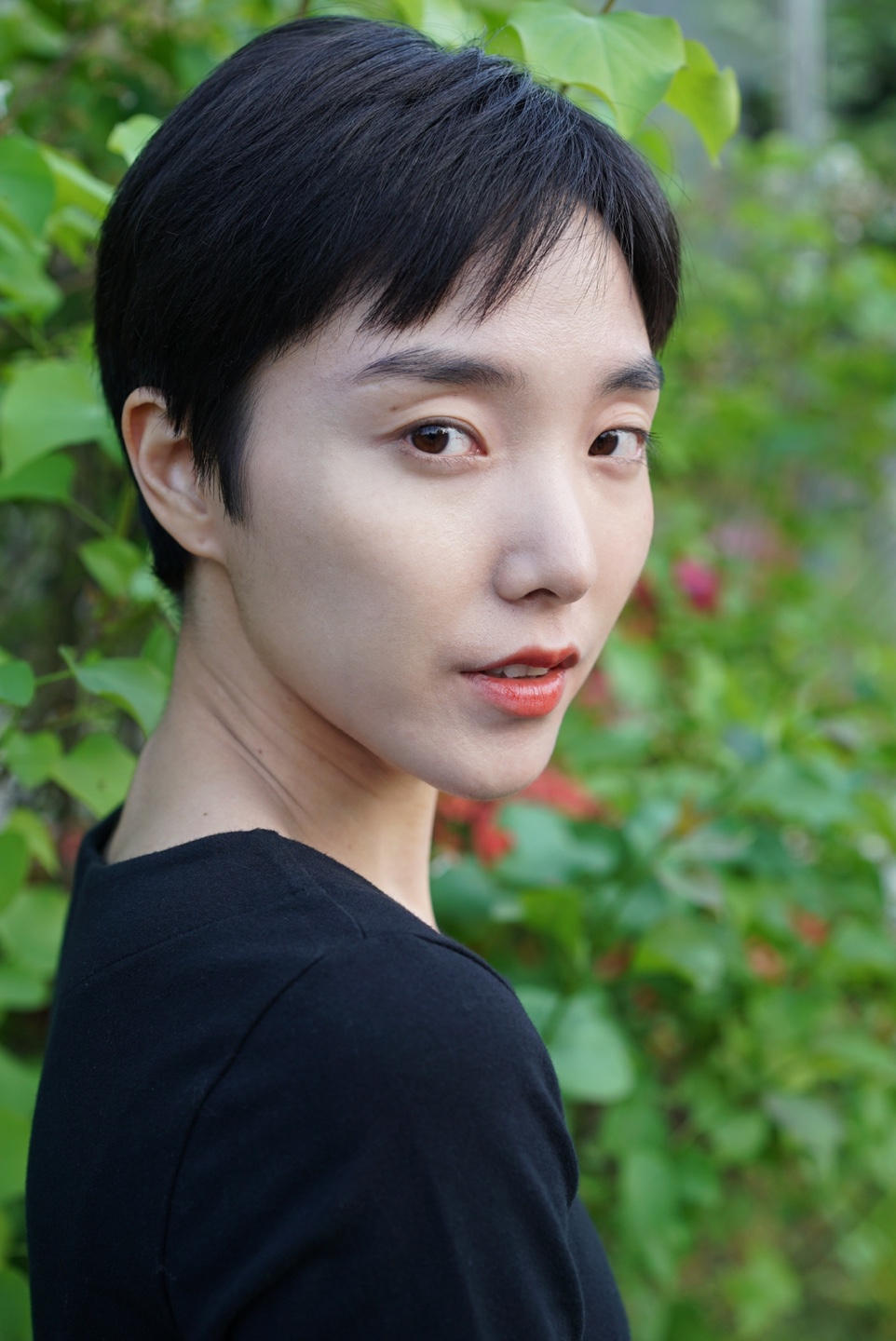
In films, where stories are displayed like flower petals in the wind, there’s a special place where characters come alive, showing us what it means to be human. And one of the shining stars is Han Hae-in. She’s known for her amazing talent in bringing characters to life on screen. Before she portrayed Su-an in Heavy Snow, Han Hae-in graced the silver screen in many compelling roles, including in Ghost Walk, The Daughter, and Our Midnight. Han Hae-in’s repertoire is very diverse; she also ventured beyond the silver screen and tried her luck in the drama Tomorrow, alongside Rowoon, a former member of SF9. However, it is in Heavy Snow that Han Hae-in’s acting talent truly shines. Not only does she bring Su-an to life with breathtaking genuineness, but she also lends her talents behind the scenes, working as an editor on this film. During the 38th BFI Flare: LGBTQIA+ Film Festival, we spoke to the actress and discussed her role in Heavy Snow, her work with Han So-hee and Yun Su-ik, as well as the film’s thematic resonance.
View of the Arts: What initially attracted you to the role of Su-an in Heavy Snow, and how did you prepare for such a complex character?
Han Hae-in: I decided to join this project because it seemed like a beautiful story about two characters finding their true selves and maturing through love. For me, the key aspect of Su-an was ‘freedom’. Despite Su-an experiencing a range of emotions and conflicts in her journey of growth, I aimed to maintain the uniqueness of her character. Keeping this in mind, I made sure to maintain a balance that allowed emotions to flow naturally in each chapter of the film.
VOA: The on-screen chemistry between you and Han So-hee is captivating. Can you share memorable moments from your rehearsals or discussions about your characters’ relationship? Also, how do you approach the topic of LGBTQIA+ representation?
HHI: While I didn’t have extensive discussions with Han So-hee, I felt a connection that mirrored the relationship between Su-an and Seol. I saw aspects of myself in So-hee, fostering a sense of connection between us. Regarding LGBTQIA+ representation, I aim to avoid adopting a specific perspective, as I believe it risks objectification or othering. I hope for a world where individuals can authentically express their love and identity without needing to justify it.
VOA: Heavy Snow explores themes of love, acceptance, and identity. How does Su-an’s journey contribute to the film’s exploration of these themes?
HHI: To Su-an, Seol represents more than just romantic love. Su-an’s complex emotions and growth are intertwined with her connection to Seol. Through this exploration, the film delves into the complexities of love and identity, revealing the nuances of Su-an’s journey.
VOA: Heavy Snow also depicts the challenges of adolescence and the complexities of love and identity. What aspects of Su-an’s journey did you find most challenging to portray?
HHI: Su-an grapples with a rush of unfamiliar emotions during her adolescence, making it difficult for her to articulate her conflicts and feelings. The most challenging aspect for me was capturing this mix of unnamed emotions authentically.
VOA: Filming surfing scenes in winter must have posed challenges. Can you share insights into the preparation and filming process for these sequences?
HHI: Before shooting, I spent over a month near the Yangyang Sea in Gangwon-do, acquainting myself with the winter sea and surfing. Despite the challenging conditions during filming in the winter sea, we had to adapt to unpredictable weather and tidal currents, making it difficult to control certain aspects. Effective communication on set was crucial as we took on board these challenges.
VOA: As Su-an rises to stardom and confronts her past, what do you see as key moments of growth or transformation for your character?
HHI: Su-an’s realisation that she feels disconnected from her desired life as an actor signifies her understanding of Seol, albeit belatedly. Her self-destructive choices serve as signals for her to confront the emotions she had long avoided, essential for her growth.
VOA: Su-an’s journey revolves around self-discovery and acceptance. How do you think her experiences resonate with audiences, especially within the LGBTQIA+ community?
HHI: While each individual’s journey is unique, if Su-an’s experiences can evoke even a semblance of connection or empathy with the audience, it holds significant value in conveying the essence of film art.
VOA: Some directors grant their actors artistic freedom on set. How much artistic freedom did you experience during the filming of Heavy Snow?
HHI: I provided input to bring Su-an, as envisioned by the director in the screenplay, to life, and Director Yun entrusted me with many choices.
VOA: What is your acting process, and how do you feel moments before portraying a character on camera?
HHI: Authenticity is paramount to me. Through my acting career, I’ve learned to embody the character as myself, rather than striving to imitate someone else. I focus on portraying the characters as they are, without idealising or sympathising with them. I believe that maintaining this balance naturally guides the character’s journey on camera.
VOA: What can we anticipate from you in 2024? Are there any new projects on the horizon?
HHI: I’m waiting for the domestic theatrical release of Heavy Snow in Korea and am looking forward to engaging in diverse projects moving forward.
Written and interviewed by Maggie Gogler
Featured image courtesy of BFI Flare
View of the Arts is an online publication that chiefly deals with films, music, and art, with an emphasis on the Asian entertainment industry. We are hoping our audience will grow with us as we begin to explore new platforms such as K-pop / K-music, and Asian music in general, and continue to dive into the talented and ever-growing scene of film, music, and arts, worldwide.

 VIEW OF THE ARTS