
There is no doubt that music is a universal language that connects people across the globe. While some artists achieve massive mainstream success, countless talented musicians remain under the radar, many of whom hail from Asia. Beyond the global phenomenon of K-pop, South Korea, in particular, boasts a rich and diverse music scene that spans genres like R&B, hip-hop, rock, punk and more. These genres are teeming with remarkable artists whose creativity deserve greater recognition. One such group deserving of the spotlight is South Korean duo t024.
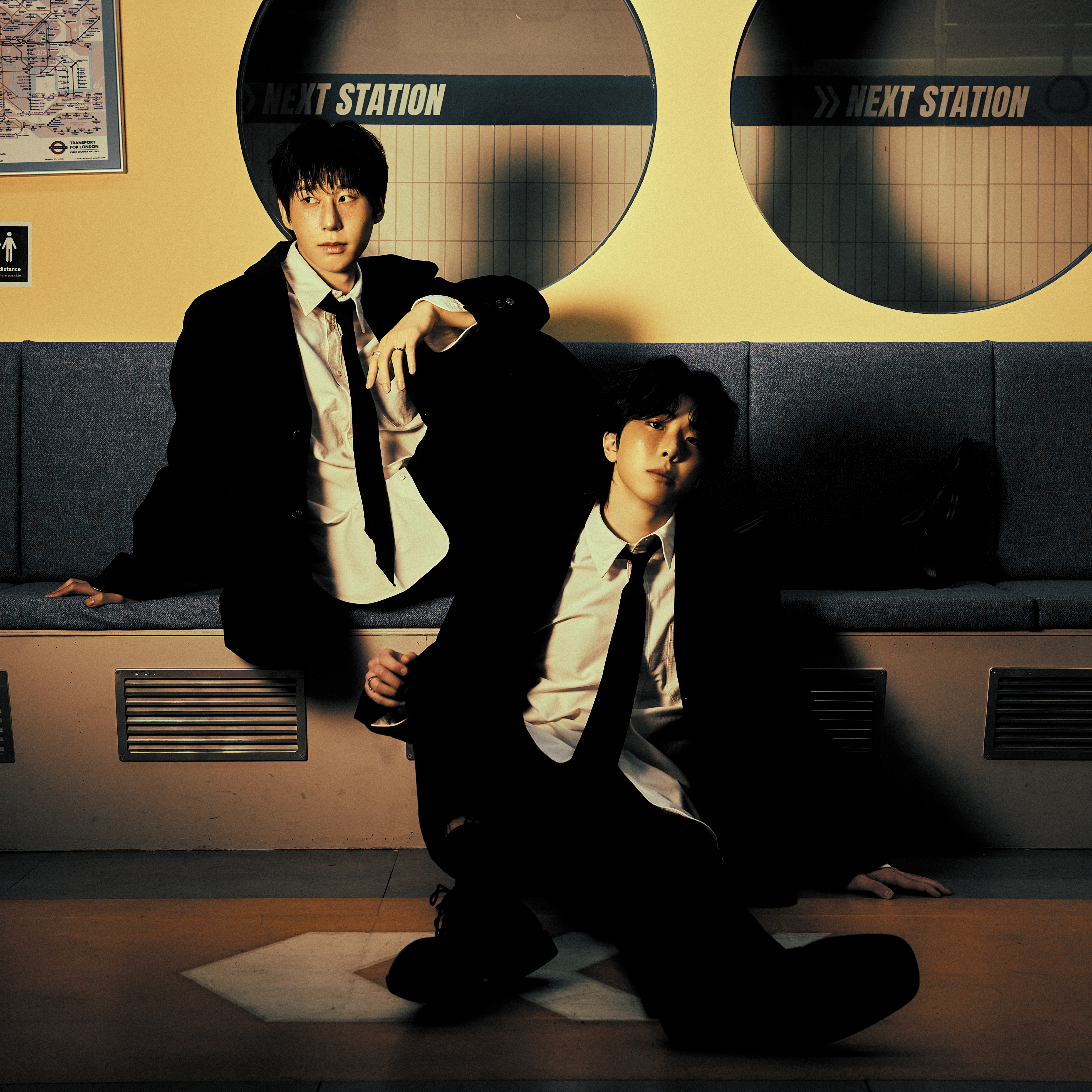
Composed of Senji and Nap!er, t024 have already proved they are an ambitious and hardworking duo that is ready to add to the richness of South Korea’s music scene beyond K-pop. Their sound beautifully mixes the melodic sensibilities of Alt-Pop and the emotional richness of R&B with influences drawn from the vibrant spirit of ‘70s and ‘80s New Wave, Synth Pop, and the rebellious edge of College Rock.
Apart from their work as t024, Senji’s exceptional songwriting talent extends to working with NCT DREAM on 잘 자 (Teddy Bear), Blue Voyage for LUCY, as well as contributing to the discography of OnlyOneOf. Meanwhile, Nap!er’s production sensibilities have shaped several of OnlyOneOf’s tracks, alongside his work on KB’s be free, Xydo’s dynamic ootd (feat. Coogie), and Haelil’s lil time (feat. Audrey Nuna).
t024 debuted on December 8, 2021, with their EP leftovers, which includes their most-streamed single, fox. In between the duo released more music, inducing FFY in 2023. Marking their first release of 2025, TRACE includes eight diverse tracks that explore themes of self-discovery, self-reflection, and love. TRACE is a superb piece of music, featuring excellent lyrics and masterful musical arrangements. With their progressive sound and growing influence, t024 continues to prove that there is so much more to Korean music than meets the eye – or ear.
View of the Arts had the opportunity to sit down with t024 for an exclusive interview. We discussed everything from the making of their new EP, TRACE, to their thoughts on music in general.
I’m just doing what I love, and I’ve always been like this. Ever since I was a kid, music has been my biggest passion, and it still is – making music and singing is where I find the most joy. – Senji
View of the Arts: TRACE is centered around the concept of “scent” and “after-scent,” an abstract yet deeply evocative theme. What drew you to this metaphor, and how did you translate such an intangible sensation into music?
Senji: I think it’s those vague memories and impressions that remain after some time passes that truly reveal each person’s most instinctive nature. That’s why, for every track, we focused on leaving space for individual interpretation and ensuring each listener can carry that feeling for a long time.
VOA: Since you both wrote and composed the entire EP, what was your collaborative dynamic like? Were there moments when your artistic visions diverged, and how did you navigate those differences?
Nap!er: Before we start working on a track, we share the music or visuals we each like. Once we both get that “This is it!” feeling, we jump in and naturally find our flow. Because we’re a two-person team, communication really is everything.
VOA: The album explores different forms of tension – whether in relationships, self-reflection, or emotions like excitement and anxiety. Did any particular personal experiences shape the themes and narratives of TRACE?
Senji: Rather than pouring a single emotion into each track, we try to blend at least two different feelings. People experience all kinds of complex emotions, right? You might initially label our album as having “happy songs” or “sad songs,” but if you listen closely, you’ll see each track tells a completely different story. Reflecting on my personal experiences was a big help in exploring those deeper layers.
VOA: Given that TRACE is an immersive experience blending auditory, visual, and even olfactory elements, did you have specific imagery or mood in mind when making the soundscape of each track?
Nap!er: When we design the sound, we pay close attention to how it complements the vocalist’s tone and respects the genre’s core. Even if we opt for bold transformations or variations, we make sure they’re still accessible to listeners. Visually, I’d describe it like a neat outline filled with rough, raw elements – chaos within a clean frame.
VOA: You are unafraid to play various genres, that said, were there any particular artists, sounds, or experiences that influenced your musical direction for this EP?
Nap!er: We were actually more afraid of sticking to just one genre. Without constant experimentation, it feels like we’d end up making the same thing over and over. So we tried to break boundaries and explore new territory. We’re inspired by timeless classics that span generations – like The Beatles, Red Hot Chili Peppers, and Michael Jackson. I think their music has influenced us the most.
Before we start working on a track, we share the music or visuals we each like. Once we both get that “This is it!” feeling, we jump in and naturally find our flow. – Nap!er
VOA: Tracks like Got My Attention and Make the Vibe lean towards a more rhythmic, dance-oriented style, while Why and Bridging Time Zones have a more contemplative and emotional tone. How do you balance contrasting moods while maintaining a cohesive album identity?
Senji: I believe what really matters is the “t024 vibe” more than any specific genre or style. We’re always asking ourselves, “What exactly is the core identity of t024?” As long as that’s clear, people will recognize our music no matter what genre or mood we explore. We’re still figuring it out every day, but I’m glad we got to show our color through various genres in this album.
VOA: Your sound incorporates both digital and analog elements – like the interplay between synthesisers and organic instruments in Make the Vibe. How do you approach mixing modern production techniques with more traditional instrumentation?
Nap!er: While working on this album, we tried to keep the fundamentals of pop in mind. That meant starting with analog instruments and chord progressions people grew up listening to, then finding ways to seamlessly introduce fresh elements – like distortion or daring modulation – so they blend naturally with the familiar.
VOA: Many of your songs capture fleeting moments, emotions, and transformations. When writing lyrics, do you prioritise personal storytelling, or do you aim for a more universal relatability?
Senji: We wanted to strike a balance. If we only focus on stories everyone can relate to, we lose some of our personal spark. But if we only talk about our own stories, it’s harder for people to connect. That’s why I usually share my story honestly first, and if it resonates, I hope it encourages listeners to bring in their own experiences alongside the song.
VOA: Bridging Time Zones is the final track, bringing the album to a grand conclusion. What inspired this song, and how does it tie together the overall narrative of TRACE?
Senji: I wanted the last track to feel like a postscript to a letter. Even though the album officially ends there, I hope people will revisit it whenever they think of us. And when we return, I’m really looking forward to greeting everyone again – hopefully with even more excitement.
VOA: Your EP features contributions from globally renowned engineers and musicians who have worked with artists like Coldplay, Tove Lo, and Taylor Swift. What was it like collaborating with such high-profile industry figures, and did their expertise influence your artistic choices?
Nap!er: They fully understood our music and added their own style bit by bit. That made the whole process much smoother. They might not have directly influenced our musical choices, but one thing’s for sure: they helped our music grow in a really positive direction.
VOA: Complete Me takes a bold approach with unconventional structures and non-repetitive melodies. Was this an intentional departure from standard song formats?
Senji: We didn’t set the structure too deliberately. I asked myself how I wanted people to experience the song, and I realized I wanted it to flow like someone speaking right in front of you. That’s how this arrangement naturally took shape.
VOA: With TRACE now released, what emotions are you experiencing? Do you feel a sense of closure, or is this just the beginning of something even greater for t024?
Nap!er: Just because the album’s out doesn’t mean we’re done. We still have the big task of figuring out how to use it to really connect with people. Sure, it’s a relief to have it released, but now I feel like we need to buckle down and get even more serious.
Since we invested so much effort into creating it [TRACE], we hope people will keep listening to it for a long time. – Senji
VOA: As artists who not only write and compose for t024 but have also worked with a diverse range of K-pop artists, including NCT DREAM, OnlyOneOf, and LUCY, how do you deal with the creative differences between making music for yourselves versus making songs for other artists? Are there specific aspects of songwriting – whether it’s lyricism, arrangement, or conceptual direction – that you approach differently depending on whether a track is for t024 or another group, and have these experiences shaped your artistic identity in unexpected ways?
Nap!er: There’s not a huge difference in our process, but when composing K-pop, I tend to be more direct rather than vague – I believe you need that immediate hook for people’s ears. Also, when writing for another artist, our style matters, but it’s even more important to think about that artist’s image and direction. Looking at things from different angles like that has helped us broaden our range in terms of genre and style.
VOA: What was the role of music in the early years of your life that made you want to become an artist? Do you feel that you chose your “passion” [in reference to music], or did it choose you?
Senji: I’m just doing what I love, and I’ve always been like this. Ever since I was a kid, music has been my biggest passion, and it still is – making music and singing is where I find the most joy. That’s really all there is to it.
VOA: How does it feel when you release music in general? Personally, I feel like when an artist exposes their work it’s like revealing their soul to the public. I have major respect for that, and I’m curious, how do you feel when you put your music out there for people to judge?
Nap!er: Of course, we want as many people as possible to hear our music, but regardless, there’s always this sense of excitement. I think it comes from seeing all our hard work turn into something real. And when fans truly enjoy and connect with our music, that’s what keeps us going – artists exist thanks to their fans, after all.
VOA: Now that you have released your new EP, what’s next for the duo? What else can we expect from t024?
Senji: First, we want to explore more ways to make the most of this album and actually put those ideas into practice. Since we invested so much effort into creating it, we hope people will keep listening to it for a long time. We also want to communicate more actively with our fans – whether it’s through live shows, social media, or anything else – and find new ways to get closer to them.
Written and interviewed by Maggie Gogler
Featured image courtesy of t024
View of the Arts is an online publication dedicated to films, music, and arts, with a strong focus on the Asian entertainment industry. With rich content already available to our readers, we aim to expand our reach and grow alongside our audience by delving deeper into emerging platforms such as K-pop and Asian music more broadly. At the same time, we remain committed to exploring the vibrant and ever-evolving global landscape of film, music, and the arts, celebrating the immense talent and creativity that define these industries worldwide.

 VIEW OF THE ARTS