
Green Wave, a Chinese comedy-drama, written and directed by Xu Lei, tells a quiet, emotional story – not about big conflicts, but about the distance that can grow between a father (Xu Chaoying) and son (Eric Wang). It focuses on the small tensions that often exist in close relationships.
Instead of using dramatic twists, the film shows everyday space where grief hangs in the air, words don’t come easily, and simple gestures reveal deep and unspoken care. Set in the countryside, the film doesn’t romanticise or criticise the setting – it just lets the story breathe.
The father-son relationship is shaped more by what’s missing than what’s there. Rather than offering a clear resolution, the film leaves us with a quiet understanding: love can still be present, even if it’s not always expressed out loud.
Green Wave moves at a slow, thoughtful pace, giving the audience time to take it all in. Screened at this year’s Far East Film Festival in Udine, Italy, we had the privilege of sitting down with Xu Lei to discuss the film’s themes around the relationships that matter most.
View of the Arts: The film’s narrative feels very understated, almost as if it draws directly from your own experience with your father. Was that the case?
Xu Lei: When I was writing the story, I intentionally avoided making the conflict too dramatic. It’s not a story where father and son are fighting over an inheritance or some big issue. I wanted to portray a more common reality – what I’ve observed in many families. There’s a kind of emotional distance. They’re not hostile, not fighting every day, but they’re also not close. I think that type of family dynamic – where people are supposed to be the closest, yet feel like strangers – is quite typical. So I chose to write a story where the conflict isn’t extreme.
I also believe that when a film is “too full”, the audience is left with little room to engage emotionally. I like to think of a film as a cup – if you leave some space, the audience can pour their own emotions into it. Everyone’s personal feelings are intense, and a less crowded film allows space for that connection.
VOA: I’m particularly curious about the female presence in the story. Was including the mother a deliberate choice to serve as a bridge between father and son?
XL: Yes. Since the story is about a father-son relationship, I felt that without the mother, the emotional dynamic would be even colder. The mother was the emotional glue of the family. In the end, I tried to show that both the father and the son are ultimately lonely – one lost his wife, the other lost his mother. They only have each other left. While their relationship is still far from perfect and may never become warm or affectionate, at least there’s a recognition that they are each other’s only remaining family. That’s enough.
VOA: During the screening, there were several moments where I felt the film might end, but then it continued. Was that intentional?
XL: I did consider ending the film at one of those earlier points. But in the end, I decided to include the father’s return home to bring the story full circle. Since he came, it felt right to show him leaving as well, which gives the narrative more closure. I suppose I played it safe in that decision, wanting to take into account how general audiences might feel and make the story feel logically complete. If this had been a smaller, low-budget film, maybe I would’ve made a bolder choice.
VOA: One last question. Both your first film, Summer Detective, and this film contain elements of rural storytelling. How did you come to focus on the countryside, and where do you see room for growth in rural narratives in China?
XL: I grew up in a rural area, but after I went off to school, I left that life behind. You could say I’m a villager by origin, but I’ve never deeply understood village life. I don’t fully understand my parents or their social behaviors. Their interpersonal obligations seem so overwhelming, like when they’re visiting me in Beijing, but the moment something happens back in the village, they’ll rush back immediately. It’s like these obligations are non-negotiable.
They spend maybe a third of each year tending to relationships – weddings, funerals, rituals. That used to puzzle me. So when my mother got sick, I went back home for a while, and during that time, I gained a deeper understanding of those dynamics. I also read Fei Xiaotong’s books – he explained the logic of rural Chinese society and interpersonal obligations very clearly. It wasn’t until then that I realized: even though I grew up there, I didn’t understand the countryside.
If you haven’t stayed in a village, taken responsibility for a household, and truly participated in that network of relationships, you can’t fully grasp rural life. These people spend their lives helping others and never complain. I think that’s where the potential lies for rural narratives: most people who write about villages don’t truly understand them, including myself. There’s often a sense of detachment, a kind of analytical gaze. What I hope to see is someone like Fei Xiaotong again, someone who approaches rural life with deep empathy and tries to understand people’s emotions and their ways of living.
A lot of rural stories dwell on nostalgic details – like catching dragonflies and similar childhood memories – but unless you’ve lived in the countryside, you can’t fully grasp what those moments truly feel like.
Written and interviewed by Jane Wei Zhenyi
Featured image courtesy of Alice BL Durigatto
This interview was conducted during the Far East Film Festival in Italy, held between April 24th and May 2nd, 2025.
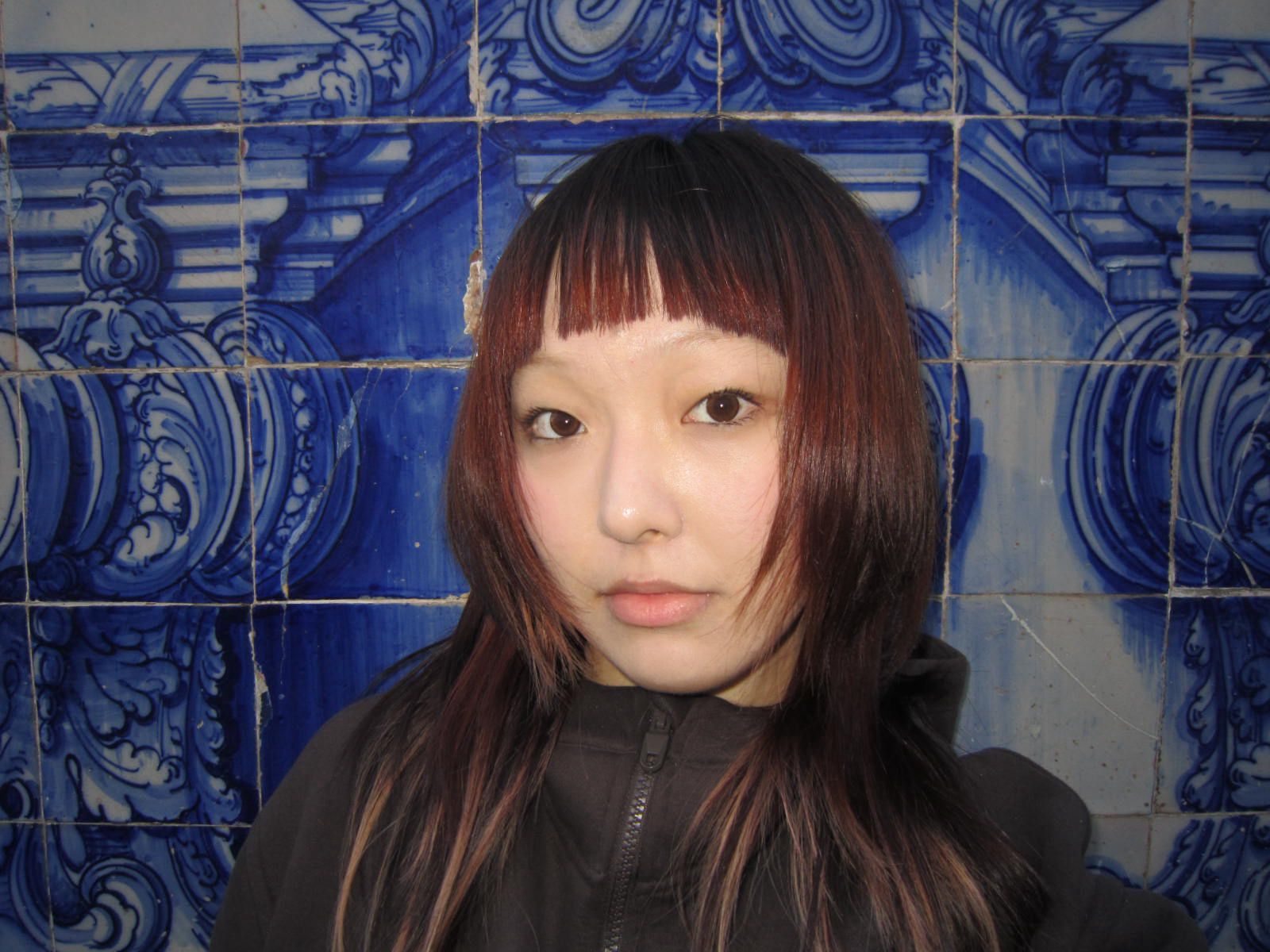
Jane Wei Zhenyi is a sociologically trained film programmer based in London and Berlin. Her curatorial practice explores the intersection of the humanities and art, with a particular focus on marginal cultures in Asian cinema. Dialogues and collaborations on Asia-related creative works are intensively welcome; feel free to reach out anytime!
View of the Arts is proud to support and collaborate with the FEFF Campus – a dynamic training initiative designed for aspiring media and film professionals under 26. Bringing together five participants from Europe and five from Asia, the programme offers hands-on experience in film journalism, festival operations, and industry networking. Through exclusive seminars, interviews, and workshops led by film experts, students gain practical insights into filmmaking, media careers, and the art of cinema.
View of the Arts is an online publication dedicated to films, music, and arts, with a strong focus on the Asian entertainment industry. With rich content already available to our readers, we aim to expand our reach and grow alongside our audience by delving deeper into emerging platforms such as K-pop and Asian music more broadly. At the same time, we remain committed to exploring the vibrant and ever-evolving global landscape of film, music, and the arts, celebrating the immense talent and creativity that define these industries worldwide.

 VIEW OF THE ARTS