
South Korea’s music scene has long drawn the world’s attention through K-pop, but it also shelters an entirely different universe of artists who slip through the cracks of that “typical” market. These musicians create something fresh, and while not for everyone’s ears, there is an undeniable uniqueness to their sound – new textures and new voices that don’t follow the expected path.
YECHAN belongs to that world. He is part of the growing wave of young Korean artists shaping a gentler yet stranger, more intimate soundscape.
For YECHAN, the path into music was never a matter of choice. It was simply the only thing he ever wanted. “It’s very simple,” he says. “I never wanted to do anything other than music. I’ve always wanted to stand on a big stage someday.” There’s something almost disarming about the clarity of that statement, no elaborate origin story, no complicated catalyst. Just a natural draw to music because nothing else ever felt as real.
Unlike many, YECHAN translates his personal emotions directly into his songs, giving them an unusual intimacy. Fiction, for him, feels unnecessary when life already offers more than enough to wrestle with. “I actually hate being alone with my thoughts,” he admits. “But when I’m making music, I can’t avoid anything – it’s the one moment where I face myself honestly.” His songwriting process becomes a space where he slows down long enough to let his emotions surface, forming them into the minimal, textured sonic palette that characterised his two single releases.
That rawness is especially seen in his debut single, Keep Smile, a track made up of just one verse – something almost unthinkable in an industry where layers and embellishments are the norm. But for YECHAN, adding more simply didn’t feel right. “Everything I wanted to say was already in that one verse,” he explains. “To be honest, there was a bit of rebellion in me, too. I simply wanted to release it with just one verse.” Choosing emotion over expectation is what drives his music.
His follow-up single Echo takes that feeling even further. offering us something warm and steady at a time when many young artists chase impact first. Built to feel like a deep inhale, the track’s structure gently loops back on itself before returning with calm inevitability. “The flow felt like something listeners could follow naturally, without any disruption,” he explains. “I wrote and sang it as if I were offering quiet comfort to a close friend or family member.” Familiar to anyone making their way through adulthood in a city like Seoul, “Chasing dreams there brings happiness, but I still find myself overwhelmed by uncertainty,” he says. Lines like ‘We live in love’ speak to an awareness of the warmth that surrounds him, while ‘We have to fall into the rose’ recognises that beauty and pain often arrive hand in hand.
These themes appear visually, too. YECHAN is unusually meticulous about imagery; he believes his music can’t be fully understood without it. The Keep Smile visuals revolve around sunlight. the simplest, most grounding symbol of joy for him. “Sunlight always lifts my mood, so I wanted to express that feeling in the most direct way possible,” he explains. In the video, he stands small against a wide, unfinished concrete room, a subtle metaphor for the grief and hollowness awaiting you after a heartbreak. For Echo, discomfort and comfort collide: he sits on a sofa in an unfamiliar space, bathed in a ray of sunlight, wrapped in colours he currently gravitates towards. Even the short-form video reflects the song’s sonic tension; sharp high-hats, cymbals, and rides appear as “noise,” depicting unease, while YECHAN sits quietly accepting it.
I hope that when people listen to my music, they stop worrying about how they should feel or appear. I want them to find comfort even in their pain – and I hope they come back to my music whenever they need that warmth.
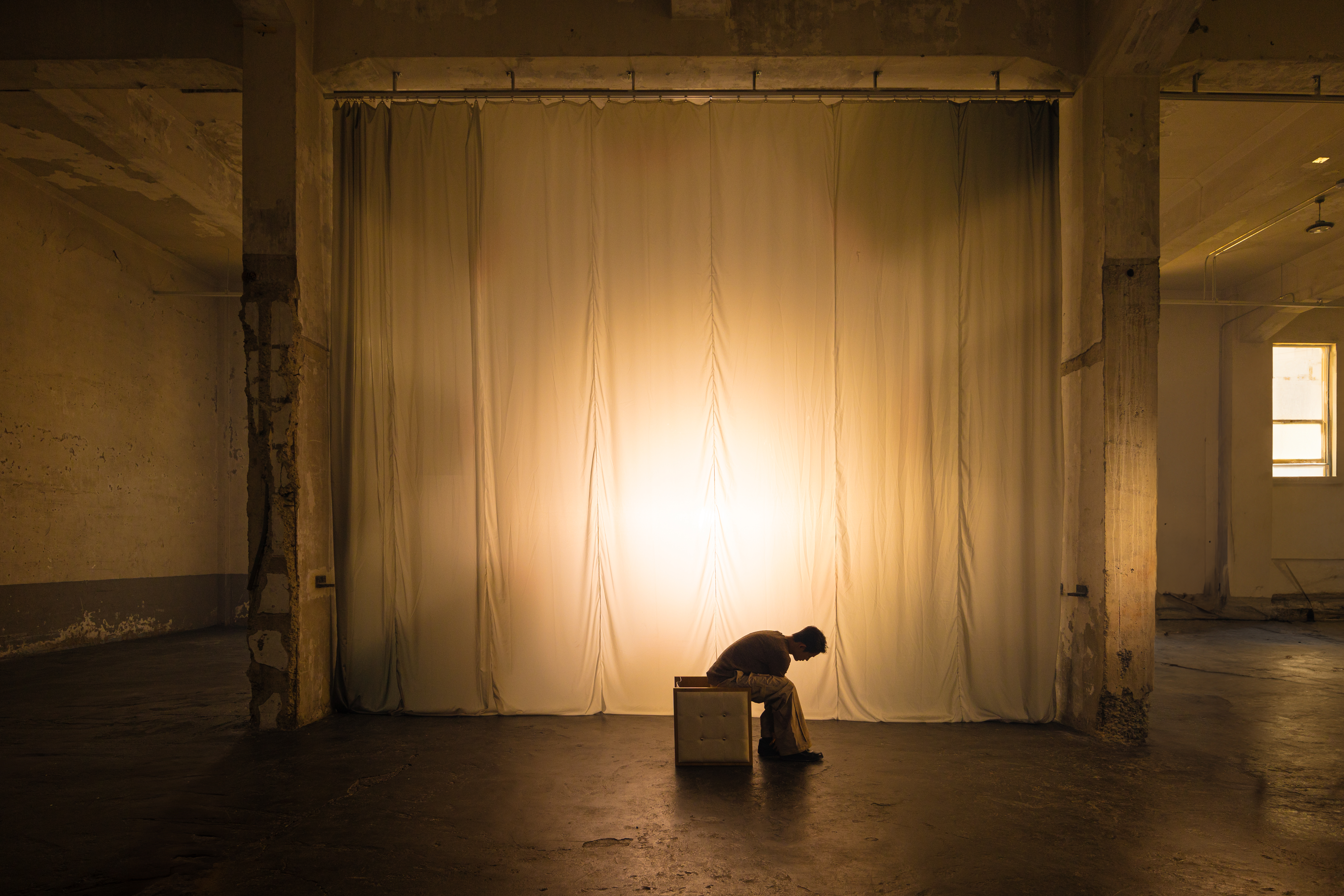
His unplanned experience in modelling naturally influences his visual style. He fell into it almost accidentally after a friend suggested he try it. The first brand that used him was XLIM, now a defining name in Korea’s minimal streetwear movement. Yet modelling arrived during a period when he felt most unsure about his music. “Experiencing something so different made me even more confused about what kind of music I wanted to make,” he says. And still, it helped him recalibrate. XLIM later supported the styling for his music visuals, bridging his two creative worlds. “The clothes were different from what I normally wear, but as YECHAN, I needed a more conceptual image. The experience connected naturally to the identity I wanted to express.”
Musically, YECHAN combines softness with texture, creating an atmosphere that feels delicate and jagged. “I used to think my vocal tone was ordinary,” he reflects. “I didn’t want to make music that was just pleasant to listen to but lacked character.” In embracing the “rough, glitchy parts” of himself, he found a dynamic contrast that became central to his sound. His inspirations – Sampha, Joji, Daniel Caesar, DEAN – all share a strong identity, but YECHAN avoids imitation. “I focus on creating from the things I’m instinctively drawn to,” he says.
This instinctive approach is also what he calls his “stubborn” music, not rebellious for its own sake, but built on something real. “I realised that if I made calculated music just because it’s easy to listen to, I would lose myself,” he says. “I want to hold on to my artistic stubbornness, while still being open to outside influences as long as they come naturally.”
As he looks towards the next year, nothing is fixed; that unpredictability, he admits, is part of the excitement. “I’m creating with the expectation that my music will reach more people,” he says. “New sounds and collaborations will emerge naturally.”
In the end, YECHAN hopes his listeners take away something simple yet profound, the same feeling he experiences while creating. “I hope that when people listen to my music, they stop worrying about how they should feel or appear,” he says. “I want them to find comfort even in their pain – and I hope they come back to my music whenever they need that warmth.”
Written and interviewed by Maggie Gogler
Featured image courtesy of Jooyoung Hong
Video courtesy of Choi Younggeun
View of the Arts is an online publication dedicated to film, music, and the arts, with a special focus on the Asian entertainment industry. Alongside in-depth features on emerging and established musicians, we provide thoughtful coverage of cinema, from independent films to international releases, exploring the stories and work that bring them to life. Through interviews, reviews, and features, we connect our audience with the voices and visions driving the cultural landscape today.


