
Gaho, a South Korean singer, is a one-of-a-kind artist with a strong and characteristic voice that’s easy to recognise and can really imprint on you. The more you listen, the more compelling his sound becomes.
Long before the global rise of K-dramas turned their soundtracks into cultural exports, Gaho’s voice was already doing something rare: it carried feeling in its purest form. Whether soaring through the aching optimism of “Start Over”, the breakout OST from Itaewon Class, or flowing into ballads, his vocals always convey that natural feeling.
It is perhaps this exact vocal power that has allowed his music to travel so far. Even listeners who may not know his name at first often recognise the voice, the one that carried a key drama scene and made the moment unforgettable. In many ways, Gaho has become one of those rare artists whose sound precedes his introduction.
Since his debut in 2018 with Preparation for a Journey, Gaho has built a wonderful musical world. From early releases like “Stay Here” to later singles such as “Rush Hour” and “Ride” and building up to his full-length album Fireworks, his work has consistently been top-notch. His OST catalogue alone (spanning series like My Secret Terrius, The Last Empress, and Start-Up) became, without a doubt, a map of contemporary Korean television.
And yet, for an artist so closely associated with cinematic emotion, Gaho is not one to remain still. And here comes KAVE! A rock band that is something else entirely. The group introduces a different dimension to his artistry, one that is louder on many levels. And now with both solo and the band’s work, the artist is ready to conquer Europe, including London. And ahead of his tour, we sat down with Gaho and discussed not only his solo work but KAVE’s as well.
When I listen to music, I tend to experience it almost like scenes. Sometimes I first imagine colours, the air, or even the time of day, and some songs stay with me as a sense of space.
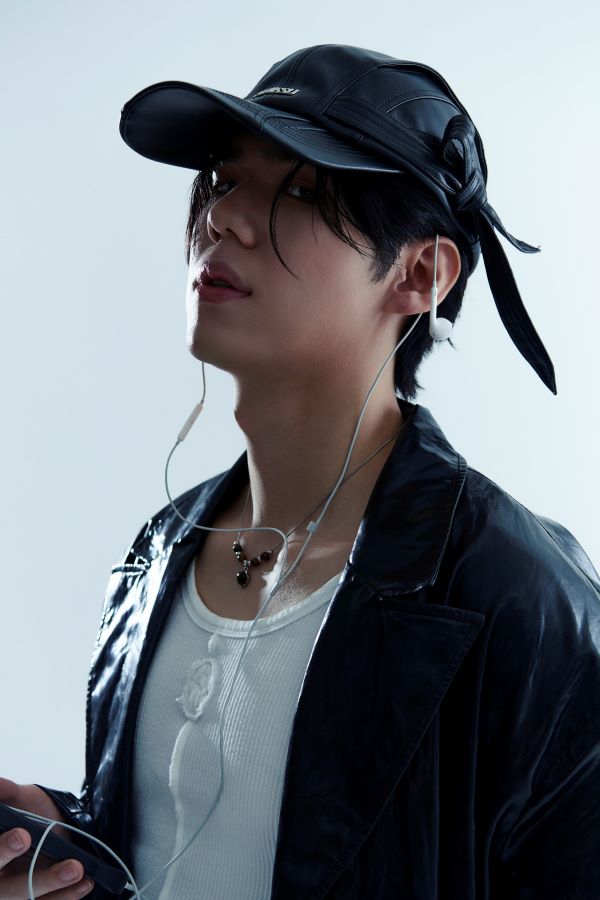
View of the Arts: As the lead vocalist of KAVE and a solo artist, how do you differentiate your solo work from your contributions to the band? How do you keep your solo artistry distinct from KAVE’s cool and edgy sound?
Gaho: For my solo activities, I tend to focus on what’s within me. I can analyse and express my personal feelings or the way I perceive the world in a more accurate manner. On the other hand, KAVE’s music is more than just my own feelings or emotions; it’s the energy that comes within the team, the strength that we have to survive, which comes out more directly.
For an artist so closely associated with cinematic emotion, Gaho is far from remaining still. Enter KAVE, a rock band that is something else entirely. The group adds a new dimension to his artistry, one that is louder on many levels. With both his solo work and the band’s music, he is now ready to conquer Europe, including London. Ahead of his tour, we sat down with Gaho to discuss not only his solo work but KAVE’s as well.
VOA: You recently performed in Milan to an incredible turnout. What was that experience like for you, and what can fans expect from the upcoming European tour, including the London show? I’m especially excited that you’re bringing KAVE to the capital.
Gaho: The concert in Milan was a moment of gratitude for me. I am still amazed by the fact that people half across the world know my music, sing along, and give me the energy back. It gives me a lot of strength.
On the approaching European tour, I want the performances to be even more direct and alive. Since KAVE’s music is even sharper live, at the London show, rather than simply playing music, I want to create the performance together. I hope that at the concert you will not only have fun, but also receive energy that you will take home with you.
VOA: KAVE’s music spans multiple genres and styles. How do you ensure a cohesive sound across such diverse tracks on your group’s releases, Flight of Ideas and Say My Name? What steps do you take to maintain a unified artistic identity while still exploring different genres?
Gaho: Even though the genres are different, I think it all comes down to the question “Is this music really us?” As KAVE, when writing music, rather than deciding on the genre first, we look for the music within our energy and attitude as a team.
No matter how different the musical styles are, our principle is the strength to keep going, the force to push ahead, and the feeling of music coming alive when we play it live. Since we always focus on the criteria, no matter the genre, the music is going to feel KAVE-esque.
I am still amazed by the fact that people half across the world know my music, sing along, and give me the energy back. It gives me a lot of strength.
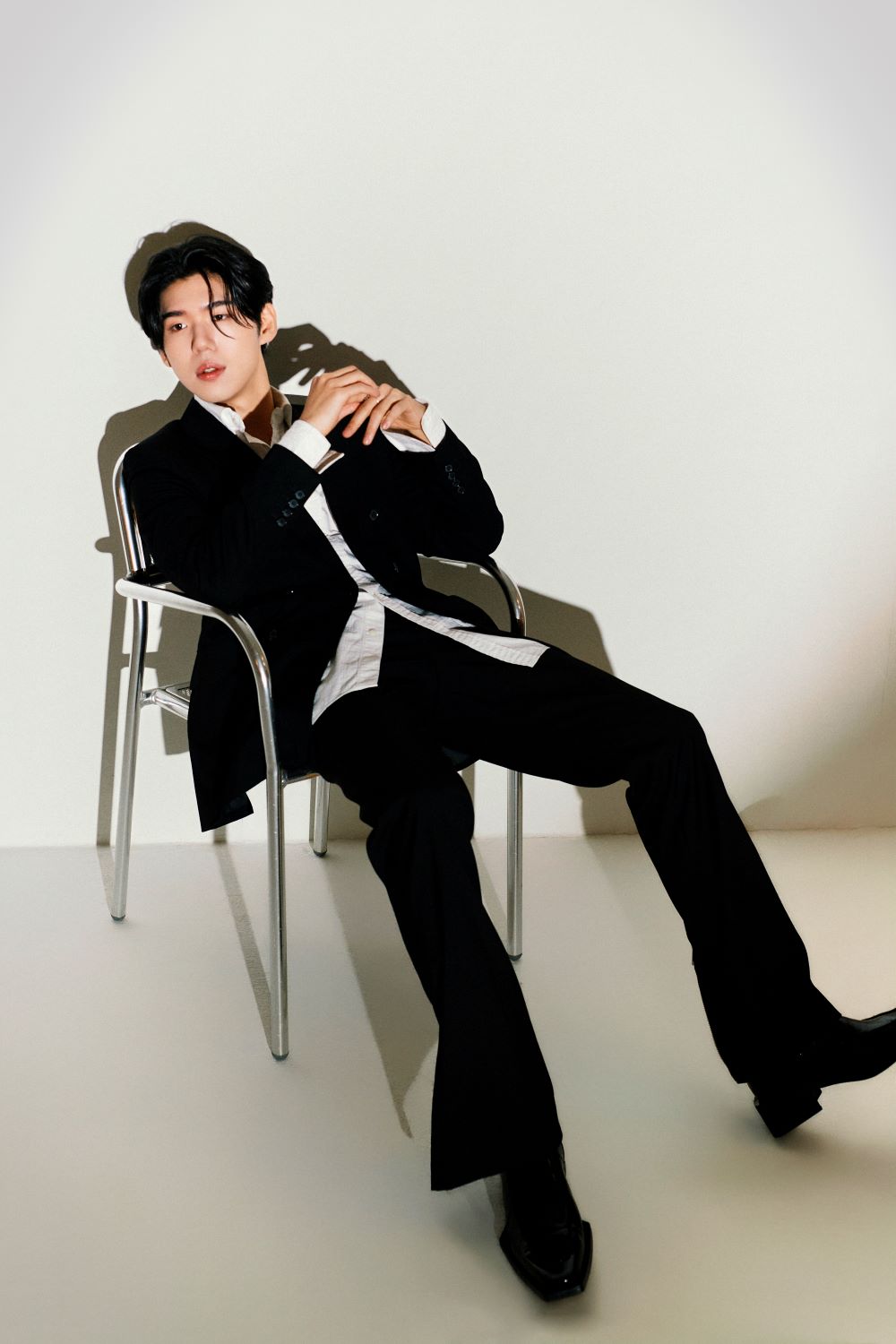
VOA: Your debut EP with KAVE Flight of Ideas includes tracks like Venom, Legend, and Dangerous, while Say My Name includes You and Stone, each with a distinct musical style. How did you decide which genres or influences to incorporate into each song? What was the decision-making process behind the arrangements and production?
Gaho: Every song has a different starting point. Some tracks begin with a riff or a sound, while some begin with a vibe or a sentence. The most important thing is not adjusting the song to a certain genre, but rather finding the direction in which the track can come alive.
All of our members participate in the process of arrangement and production. OWNR looks at the whole picture with a sharp eye. Hyun has the power to completely command the atmosphere through his keyboard playing. Jun brings out the energy through the rhythm and performance, while Jisang maintains sound depth and attention to detail until the very end. That’s how we gather everybody’s opinion, and as a result, we get the KAVE-eqsue conclusion.
VOA: When I listen to music, I often see shapes and colours. What happens in your mind when you listen to your favourite music, and how does it influence your creativity – both in your solo work and with KAVE?
Gaho: When I listen to music, I tend to experience it almost like scenes. Sometimes I first imagine colours, the air, or even the time of day, and some songs stay with me as a sense of space. That has a lot of influence on my creative process. In my solo work, it leans more towards emotional nuance and personal scenes, while with KAVE, those scenes tend to become bigger and a bit rougher. In the end, whether I’m listening to or creating music, I feel like I’m not just hearing the sound – I’m also seeing the atmosphere within it.
VOA: Your solo music often carries a very emotional and cinematic quality. When you write songs for yourself, what usually comes first: the story, the melody, or the emotion you want the listener to feel?
Gaho: I usually begin with a certain emotion or a phrase. Once a word, sentence, or emotion that I want to write about comes around, the melody usually follows right after. Rather than writing to complete a story, I focus on the emotions I feel in that very moment, and that’s how the song grows into completeness. That’s why my music is a diary of some sort. I don’t try to fit within a genre or match anybody’s expectations. I simply follow the honest feelings that surround me in that moment.
VOA: As both a solo artist and the leader of a rock band, what do you believe is the most important role of music today? Is it to comfort people, challenge them, or simply help them escape for a while?
Gaho: I believe that all three are possible. However, I believe that my music would be the closest to ‘giving people the strength to move forward once again’. I do believe that giving comfort and easing one’s emotions is important, but I want to go one step further, and make my listeners believe that they can try again – this is what good music is to me. Even if you want to escape for a while, you will eventually have to come back to reality. And in this moment of return, I hope for my music to give you strength.
Written and interviewed by Maggie Gogler
Featured image courtesy of PLAN-G (Sewon Jun)
View of the Arts is an online publication dedicated to film, music, and the arts, with a strong focus on the Asian entertainment industry. As we continue to grow, we aim to deepen our coverage of Asian music while remaining committed to exploring and celebrating creativity across the global arts landscape.

 VIEW OF THE ARTS