
The Korea Model Culture and Arts Association is slowly changing how the modelling industry is understood in South Korea. Established as a non-profit organisation, its mission is to protect the rights of models, improve working conditions, and elevate their role within the wider cultural and artistic environment. The association positions models as cultural contributors who reflect the aesthetics and identity of their time. Through initiatives ranging from legal support and fair contract systems to education programmes and global cultural exchanges, it is building a more sustainable and respected industry.
At the centre of this vision is Chairwoman Lee Sun-jin, who first rose to prominence as a successful model in the 1990s. Her career on the runway and in media gave her an understanding of the opportunities and challenges within the field. Today, she brings that experience into her leadership, advocating for models not only as professionals but as artists with creative and cultural significance. Under her direction, the association has expanded into areas such as digital content, fashion film production, and model-led cultural projects, connecting traditional fashion with emerging forms of expression.
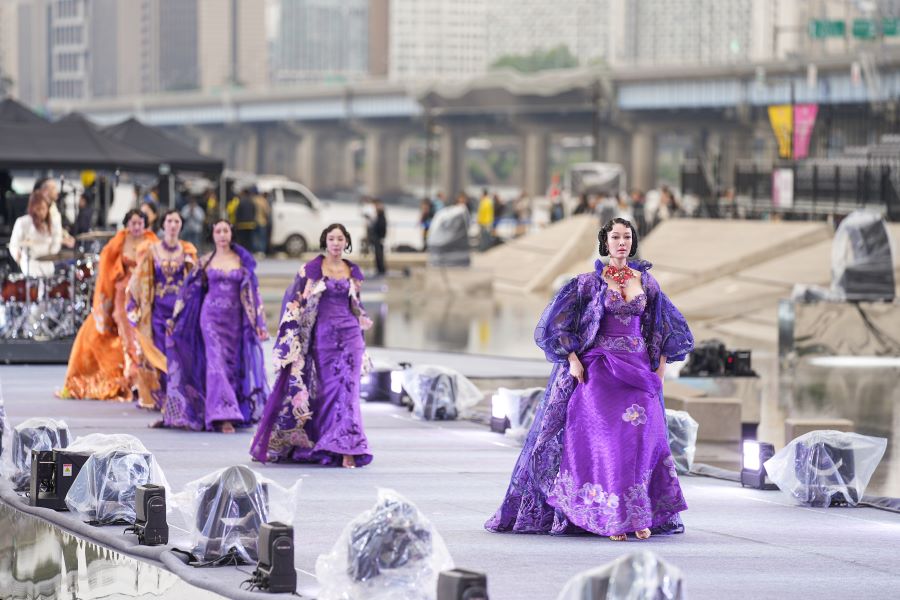
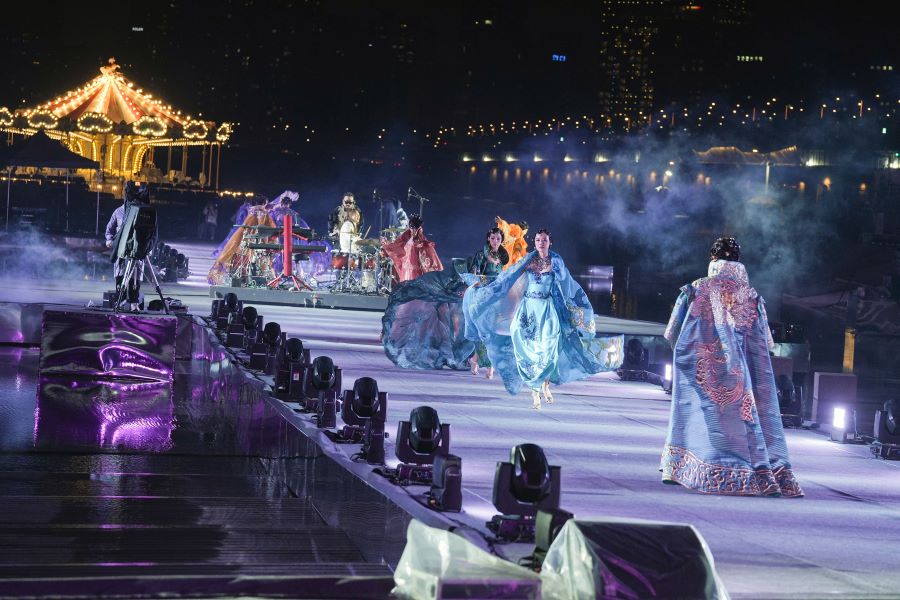
One of the clearest reflections of this ambition was seen on May 3rd, when the association took part in a major runway event during the Seoul Spring Festival. The large-scale show, held before thousands, brought together established figures and rising talent, including well-known names from the Korean entertainment industry. With plans to develop international collaborations, training programmes, and new talent platforms, the Korea Model Culture and Arts Association is positioning itself as a key organization in shaping the future of K-fashion and its global reach.
Not long ago, we had the pleasure of speaking with Lee Sun-jin about the vision behind the KMCAA and how it aims to positively shape the modelling industry.
View of the Arts: From your direct experience in the industry, when did you most strongly feel the need for stronger institutional support for models?
Lee Sun-jin: It was about three years ago, when I became aware of the realities surrounding the “Teaching Artist” system. In Korea, there is a program designed to support the foundational activities of artists by allowing them to teach special classes in schools and receive compensation. However, I learned that the field of “modeling” is effectively excluded from this system.
At first glance, this might seem like a simple issue of models lacking teaching opportunities. But to me, it represented something far more serious. It means that elementary, middle, and high school students are deprived of the opportunity to experience “modeling” as a form of cultural and artistic expression.
I saw this as a clear example of how models are not recognised as an artistic profession within society and are structurally excluded from institutional frameworks. From that moment on, I developed a strong conviction that the institutional status of models must be redefined
VOA: You’ve described models not simply as workers, but as “creators of culture.” How should this perspective change the way society views modeling today?
Lee Sun-jin: In Korean society today, while the profession of modeling is widely familiar to the public, it still lacks sufficient institutional recognition and protection. As a result, modeling is often perceived not as a professional career, but as a temporary activity for tall young individuals, a hobby, or even a form of one-off labour. However, models are far more than people who simply wear clothes and walk.
Models express the image of a brand and an era through their bodies, on stage, and in front of the camera. Through clothing, space, music, lighting, emotion, and movement, they deliver a form of culture to the public. Society must now begin to see modeling not as an appearance-based profession, but as an artistic practice that creates culture through the body, sensory awareness, and expression. Only with this shift in perception can models’ rights and professional dignity be elevated.
VOA: What were the most urgent issues in the industry that led you to establish the Korea Model Culture & Arts Association?
Lee Sun-jin: The most pressing issue was that models exist in a blind spot of institutional protection. Modeling spans a wide range of fields – fashion shows, advertising, film, editorials, home shopping, and digital content. Yet standardized contracts, fair compensation guidelines, and clear agreements regarding portrait rights and content usage are still not fully established.
Additionally, there is often a lack of awareness in the field regarding models’ human rights, safety, working hours, and image usage rights. Cases still exist where models work without contracts or fail to receive fair compensation after long hours.
The Korea Model Culture & Arts Association was founded to address these issues and to ensure that models are recognized as professional artists with both rights and responsibilities within the cultural and creative industries.
VOA: How has your experience as a top model influenced the structure and direction of the association?
Lee Sun-jin: When I began my career in the early 1990s, the modeling industry operated quite differently. However, even then, models had a significant influence on society and popular culture. Despite the passage of time, I find it unfortunate that the treatment and institutional foundation for models have not progressed in proportion to their influence. There remains a considerable gap between the symbolic status of models in public perception and the reality of how they are treated in the field.
Having spent many years in the industry, I have directly witnessed the working environments and recurring challenges models face. Therefore, the association is not focused on networking or events, but rather on rights protection, standardised contracts, education, discovering new talent, public engagement, and improving social awareness. Transforming real-world problems into structured systems and policies is, in my view, one of the association’s most important roles.
VOA: Why is the establishment of fair contracts and rights protection still such a critical issue today?
Lee Sun-jin: In any field, fair compensation for labour must be guaranteed. In advanced societies, regardless of the type of work, it is essential that individuals are compensated fairly and that their rights are protected through contracts. Korea has achieved global recognition in politics, economics, and culture. However, in modeling, compensation standards remain unclear, and legal and institutional protections are still insufficient.
Even today, there are cases where models work long hours without proper pay, or are asked to work for free under the justification that it will benefit their careers. More concerning is that such practices are often normalised. Fair contracts are not merely about money; they are about respecting a model’s time, effort, image, physical expression, and portrait rights. This is fundamentally a matter of human rights, which is why the association places such importance on this issue.
VOA: The association emphasises “convergence art.” How is this realized in practice, and why is it important for the future of K-culture?
Lee Sun-jin: Models are not simply individuals who walk or pose. They are multidisciplinary artists who interpret and express products, clothing, space, music, lighting, and emotion through their bodies. Unlike actors or musicians, models do not have scripts or scores. Yet within brief moments, they must read the atmosphere, create a scene, and communicate a brand’s message to the audience. This process integrates elements of acting, dance, performance, visual art, fashion, and music. As K-culture gains global recognition, the model’s ability to deliver such convergence-based expression becomes a powerful medium for conveying Korean aesthetics and identity.
VOA: What greater role can models play in shaping global perceptions of K-fashion and K-culture?
Lee Sun-jin: Models are among the most immediate and intuitive representatives of K-fashion and K-culture. Even without understanding the language, audiences can grasp meaning through movement, expression, clothing, and attitude. Korean models, in particular, have a unique strength in expressing sophistication, emotion, and restrained beauty.
At the recent Seoul Spring Festival, international visitors expressed that they could feel the beauty of Korea through traditional clothing and the models’ movements. This demonstrates how models can communicate culture without words. Going forward, models can expand their role as global cultural artists by collaborating across fashion, beauty, tourism, and the arts.
VOA: What educational or systemic limitations led you to focus on nurturing emerging model artists?
Lee Sun-jin: The biggest limitation, in my view, is the lack of a structured education system and a fair entry pathway for emerging models. Currently, model training often focuses primarily on walking techniques. However, what models truly need in the field goes far beyond that. They must understand contracts, copyright and portrait rights, professional etiquette, self-management, expressive ability, and career planning. The association does not aim simply to place new models on stage. It is equally important that they understand their rights, manage their image responsibly, and grow as cultural artists.
Since its launch in January, the Korea Model Culture & Arts Association has held two open auditions – one for agency placement and another to select models for the Seoul Spring Festival stage. These auditions are not only selection processes; they are opportunities for emerging models to experience fairness, learn professional standards, and develop awareness of proper working conditions and compensation. Moving forward, we will continue building systems that provide both education and opportunity in a healthier environment.
VOA: The association’s work is expanding beyond fashion into wellness, posture, and walking education. Why is this approach important?
Lee Sun-jin: Model walking is not just a skill for fashion shows. Posture, balance, breathing, gaze, and confidence are elements that connect to everyday life for everyone. In modern society, many people struggle with poor posture, low confidence, and difficulty expressing themselves physically. One of the strengths of model training is that it helps individuals align their bodies, healthily express themselves, and regain inner confidence.
For this reason, the association seeks to expand model education beyond the fashion industry into areas such as wellness, posture correction, youth confidence-building, senior health programs, and teacher wellness initiatives. When the expertise of models extends into public health and cultural education, the industry can create broader social value.
VOA: Many young models face career instability. What qualitative changes does the association plan to introduce?
Lee Sun-jin: The greatest challenge young models face is sustainability. While they may gain occasional opportunities, it is difficult to build a stable, long-term career. To address this, the association focuses on three key directions. First, establishing fair contracts and compensation standards to protect fundamental rights. Second, expanding opportunities across various fields -fashion shows, advertising, film, content creation, education, and public events. Third, supporting models in developing their own content and identity as artists, rather than being consumed solely for their appearance.
Through auditions, training, matching platforms, public projects, and global exchange, we aim to create an environment where models can build sustainable careers rather than remain in one-off roles.
VOA: How can modeling serve as a connection for cultural exchange between countries?
Lee Sun-jin: When fashion, movement, expression, music, and space come together, they form a powerful cultural medium that communicates beyond words. Models are not simply presenters of clothing; they carry a nation’s aesthetic, emotional tone, and spirit of the times. This makes modeling a highly intuitive and sensory form of cross-cultural communication. If young people can experience both classical heritage and contemporary creativity through modeling, it can significantly expand the reach of K-culture. The association plans to collaborate with cities, cultural institutions, and fashion and beauty companies worldwide to provide opportunities for Korean models and aspiring talents to express K-culture on the global stage.
VOA: The association also engages in social contribution activities. How important is it for models to participate in public and social initiatives?
Lee Sun-jin: I believe it is extremely important. Models are professionals who convey images to the public, and therefore, they hold strong potential to communicate meaningful social messages. Social contribution through model education goes beyond volunteering. It can give young people confidence and tools for self-expression, provide seniors with improved posture and vitality, and bring positive cultural energy to local communities. The association plans to expand these efforts through nationwide model education programs, including walking centers, public campaigns, and community-based cultural initiatives. Through such activities, society will begin to see models as cultural artists who contribute to social value.
VOA: Looking toward the next generation, what qualities are essential for a “model artist” today?
Lee Sun-jin: Today, models need far more than physical attributes. The most important qualities are interpretive ability, expressive depth, attitude, and the capacity for continuous growth.
It is no longer enough to simply wear clothing on stage. Models must understand the message behind the garments, read the emotional tone of a brand and its era, and convey it convincingly through their body and expression. In an age shaped by AI and digital technologies, uniquely human qualities – emotion, presence, authenticity, and connection – will become even more important. The model of the future is not just someone who walks, but someone who thinks, interprets, and creates culture.
VOA: What did the large-scale Seoul Spring Festival “Wonder Show” stage represent for the association and the industry?
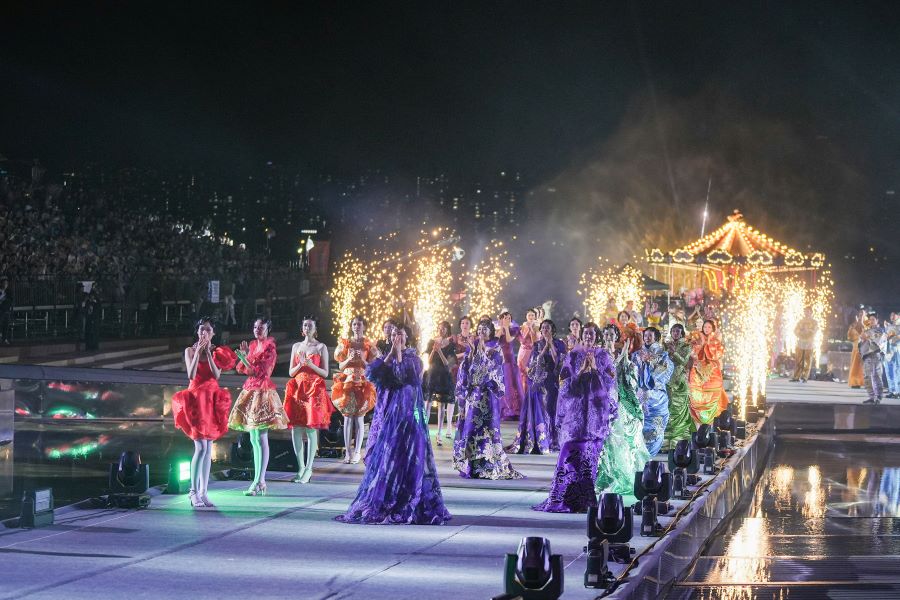
Lee Sun-jin: This stage was highly symbolic as it was the association’s first opportunity to present its vision to the public. The Seoul Spring Festival “Wonder Show,” hosted by the city of Seoul, brought together approximately 6,000 attendees, including seated audiences and outdoor spectators.
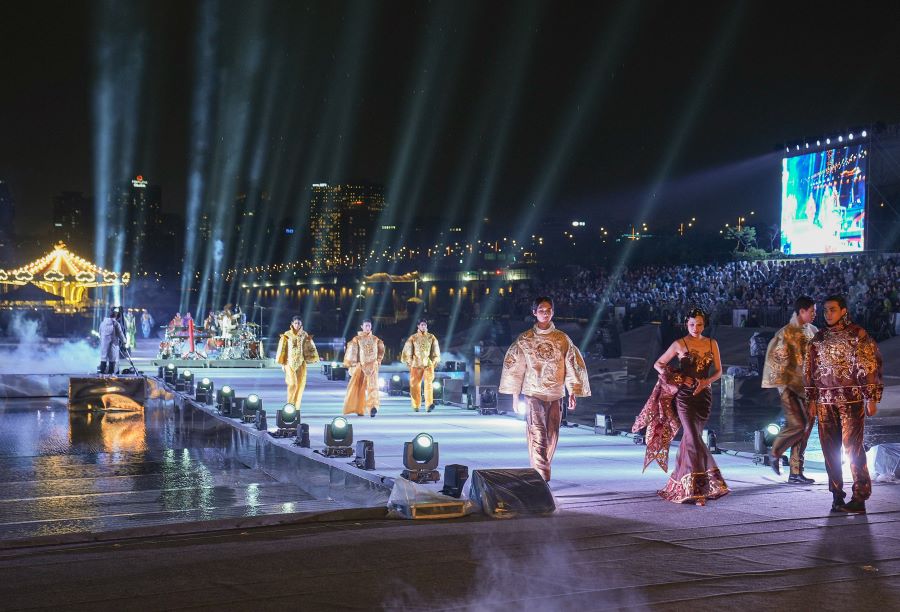
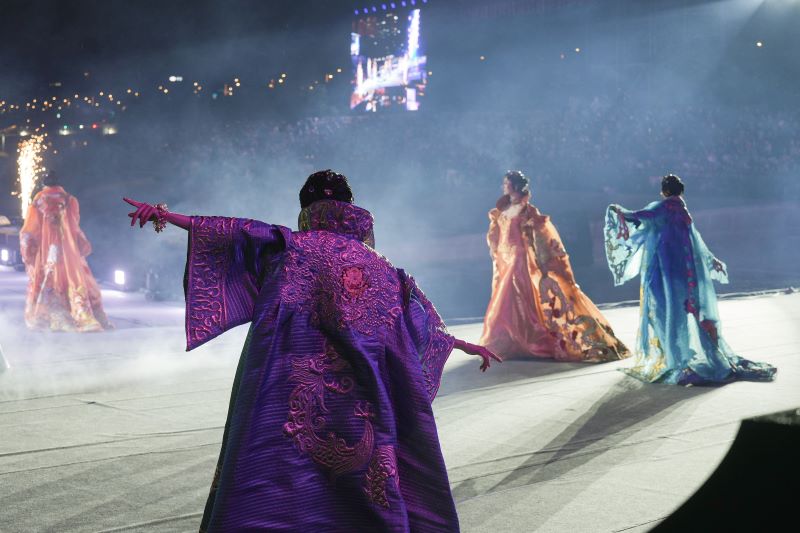
On this stage, models were not simply participants in a fashion show – they stood as performing artists delivering Korean beauty and artistic energy. The performance combined designs by the late André Kim with live drumming by Rino, creating a convergence performance that went beyond a traditional runway show.
For the association, it demonstrated the potential of models as powerful cultural content within public festivals. For the industry, it reaffirmed the artistic and social value of models as performers.
VOA: How does the collaboration “Seoul Wave Runway: André Kim × Rino Park” reflect your vision of intergenerational growth?
Lee Sun-jin: This collaboration embodied both generational connection and artistic convergence.
The 40 André Kim muse models represent an important legacy in Korean fashion history, while the 12 emerging models selected through the association’s auditions represent the future. The addition of live drum performance introduced a contemporary artistic dimension. Bringing established models, emerging talent, and live music together on one stage was deeply meaningful. For new models, this was more than a debut; it was a live learning experience where they could observe the professionalism, presence, and energy of senior models, while also understanding their role as performing artists.
The association aims to create spaces where generations and disciplines intersect, allowing shared growth. Experienced models pass on knowledge and values, while emerging models bring new perspectives, expanding the industry’s expressive possibilities.
VOA: What long-term global changes do you hope the association will bring, and what can Western markets learn from KMCAA?
Lee Sun-jin: The change we seek is to create an environment where models are respected not merely as industry participants, but as cultural artists.
For Korean models to thrive globally, individual talent must be supported by strong systems: education, contracts, rights protection, and international exchange networks. KMCAA’s strength lies in “convergence.” Korea’s cultural ecosystem seamlessly blends fashion, beauty, music, drama, performance, and digital content. Models can serve as central connectors within this ecosystem.
What Western markets may learn from KMCAA is the expanded vision of the modeling industry, not as a purely functional role in runway and advertising, but as a field that connects culture, art, education, public value, and social impact. Moving forward, we aim to build a foundation where Korean models are more respected, fairly treated, and able to sustain long-term careers on the global stage.
Written and interviewed by Maggie Gogler
Featured image courtesy of Lee Sun-ji
View of the Arts is an online publication dedicated to film, music, and the arts, with a strong focus on the Asian entertainment industry. As we continue to grow, we aim to deepen our coverage of Asian music while remaining committed to exploring and celebrating creativity across the global arts landscape.


