
Beneath its suspense and romance, The Wicked Game is a story about choosing to see the good in another person when the world gives every reason not to. Daou’s understanding of Than rests on a simple but powerful belief: that Pheem is fundamentally a good person, even when his actions suggest otherwise. Rather than judging Pheem from a distance, Than moves closer, learning to understand the pain behind his mistakes. In doing so, the series argues that empathy is not passive compassion, but an active commitment to stand beside someone even when they are difficult to love.
Offroad’s portrayal of Pheem intensifies the emotional complexity of the journey; he rejects the idea of Pheem as a villain, instead portraying him as someone trapped by guilt and the fear of loss. His possessiveness, anger, and emotional distance are not signs of cruelty but the scars left behind by unresolved trauma. By looking beyond Pheem’s actions to the wounds beneath them, Offroad brings humanity to a character.
The emotional strength of The Wicked Game also comes from the young men’s partnership. Having shared years of friendship, challenges and growth, Daou and Offroad bring a level of trust that can’t be faked.
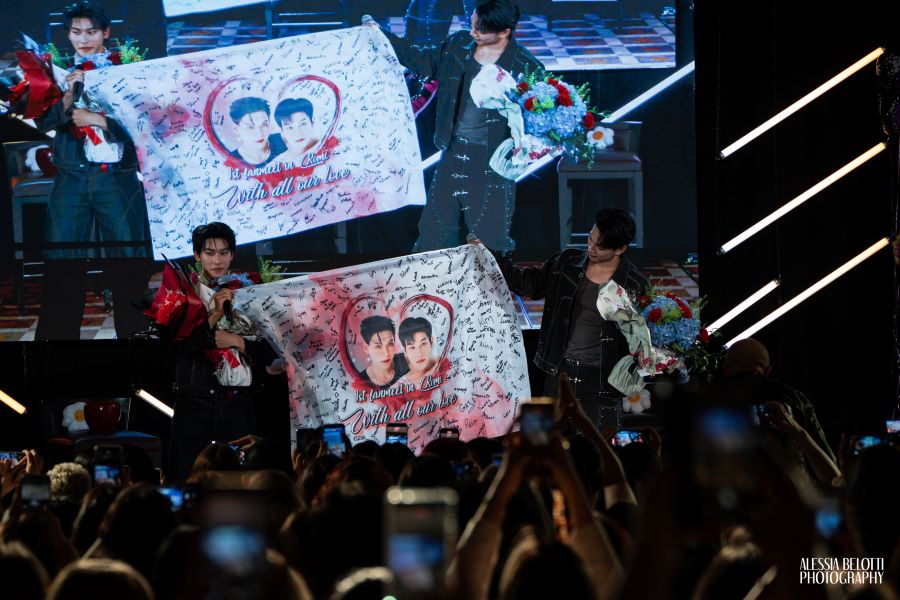
Their first trip to Rome for the JIB DREAM FANMEET was another reminder of how far that connection has travelled. Neither actor arrived with expectations, hoping simply to share a joyful experience with fans. Instead, both were touched by the warmth and enthusiasm they received in return. Daou fondly recalled the relaxed and joyful atmosphere in Italy, while Offroad spoke of being surprised by the amount of love and positive energy he received from the audience.
Straight after the fanmeet, we sat down with Daou and Offroad and discussed their friendship, working together and acting.
View of the Arts: The Wicked Game explores the emotional trauma behind Pheem’s walls and Than’s patient support. How did you approach conveying the subtle evolution of Than’s empathy and professionalism while balancing his growing emotional investment?
Daou: At the beginning of the story, Than doesn’t fully understand Pheem. It’s only after spending more time with him and working closely alongside him that he begins to see the reality of Pheem’s life. He realises that Pheem’s family problems are much deeper and heavier than they first appear. Than grew up in a warm, loving family, so from his perspective, Pheem deserves sympathy and understanding. Deep down, Than believes that Pheem is a good person. As an actor, I relied heavily on that belief. I kept telling myself, “I believe there is good in you.” The closer Than gets to Pheem, the more he wants him to become the best version of himself. Ironically, the more mistakes Pheem makes, the more Than feels responsible for helping him find a better path. In the end, Than becomes emotionally attached too, and finds that he can no longer walk away from Pheem.
VOA: Pheem’s character is emotionally complex: possessive yet vulnerable. How did you explore these contradictions to make him feel authentic rather than purely antagonistic or melodramatic?
Offroad: For me, Pheem is not a bad person. He is someone who has been through a great deal of pain and has had to live with those emotional wounds for a long time. Sometimes, when we’re afraid of losing someone or something important to us, possessiveness can develop without us even realizing it. When preparing for this role, I tried to look beyond Pheem’s actions and understand the emotions behind them. I wanted to know where his fear, anger, loneliness, and guilt came from.
Once I understood the source of those feelings, I began to see Pheem not as someone who simply makes mistakes or hurts others, but as a human being who is trying to cope with his pain in the only way he knows how. To me, Pheem’s vulnerability and possessiveness are not contradictions. They are both the result of his fear of losing someone he loves once again.
VOA: Looking back at Love in Translation, how did your previous collaboration inform or contrast with your performance in the much darker and more intense The Wicked Game?
Daou: They were very different experiences. During our first project together, we had very little preparation time, and honestly, my understanding of acting was still quite limited. As time passed, I learned to be more present in each situation and truly live within the circumstances of the scene. Instead of focusing on results, I started focusing on experiencing the moment. That allowed me to explore the world of acting more deeply, and it made the process much more enjoyable. I think that growth helped me approach with greater confidence and emotional understanding.
Our relationship has a huge impact on our work together. The closer you work with someone, the more important it becomes to communicate, understand each other, trust each other, and respect each other. At the end of the day, everyone has their own thoughts, feelings, and individual needs. – Daou
VOA: Love in Translation had a light, romantic tone, while The Wicked Game required dealing with intense emotional stakes. How did your acting approach change?
Offroad: Love in Translation was the first series where I worked alongside Daou as a lead pair. At that time, we were both still learning a lot about acting, and because the series was a romantic comedy, it had a bright, playful atmosphere. The story and characters were not as emotionally complex as those in The Wicked Game. For that role, I was able to mix a lot of my own personality into Phumjai because there were many similarities between us.
The Wicked Game was very different. Pheem is an emotionally complex character who carries deep emotional scars and experiences that I have never personally gone through in my own life. Because of that, I couldn’t rely on my own personality the way I did before. Instead, I had to focus on understanding his pain, his loss, and the motivations behind every decision he made. My goal was to understand Pheem’s world as deeply as possible before bringing him to life on screen.
VOA: How did you prepare for the action sequences, and did you draw on any personal experiences or research to ground the realism of those moments?
Daou: The action side of the role was actually something I was most excited about. I prepared quite a lot for it. However, filmmaking always comes with practical limitations, and because of various production constraints, we weren’t able to film as many action scenes as we had originally discussed with the director. Even so, action remains something I really enjoy. I also had the opportunity to work with the Punna Stunt team on another project, which people can check out on my YouTube channel.
VOA: The music and survival show background you share with Daou helped build a strong on-screen partnership. How has your shared history influenced the way you interpret Pheem’s trust and gradual emotional opening toward Than?
Offroad: Daou and I have been through so much together, both good times and difficult ones. Because of that, we naturally understand each other in almost every aspect.
If I had to connect that to the relationship between Pheem and Than, I would say it’s about trust. Trust doesn’t happen overnight. It’s built gradually through experiences, mutual understanding, and being there for one another during difficult moments. Having that foundation with Daou in real life helped me better understand why Pheem slowly opens his heart to Than and allows someone into a space he has spent so long protecting.
VOA: As an actor, how do you balance portraying a professional, heroic figure while maintaining believability in a story that mixes romance and suspense?
Daou: For me, my job is to follow the script, almost like a chef cooking with ingredients that have already been prepared. The most important thing is keeping the character human. No matter how dramatic the story becomes, I always try to preserve a sense of humanity within the character while staying true to the script and the director’s vision. That’s what makes a performance feel believable.
VOA: What emotions did you experience meeting international fans in Europe, and how did their reception differ from your Thai fanbase?
Daou: Honestly, I never go into a fan meeting with expectations. I just hope everyone can come together and have fun. Every country has its own culture, atmosphere, and personality. What stood out to me about Italy was how joyful and relaxed everyone was. People really enjoyed the moment and were fully present with us. Their energy made me enjoy the event even more, and I had an amazing time.
VOA: Many non-Thai audiences are discovering your work. How do you feel about the growing reach of Thai BL in Europe?
Offroad: I’m very grateful to see productions from Thailand being welcomed by audiences from so many different countries. What I find most fascinating is how people from different cultures can connect with the emotions and stories of these characters, even if they speak different languages or come from very different backgrounds.
I believe the growing popularity of Thai series internationally is the result of the dedication and sincerity of many people, including actors, production teams, and creators who work hard to tell meaningful stories. As an actor, I don’t see my role as representing any particular culture. What I hope to do is tell stories and portray characters as honestly and sincerely as possible. I believe sincerity is something audiences everywhere can feel and relate to.
VOA: What do you think is the universal appeal of shows like The Wicked Game, and how does it feel to see Thai narratives being embraced globally?
Daou: To be completely honest, I don’t really know the exact reason people connect with a series like The Wicked Game [laughs]
What I do know is that I’m incredibly grateful that audiences enjoy our work. We are only a small part of the Thai entertainment industry, but I’m happy to see Thai series continuously raising their standards, becoming more ambitious, and reaching people around the world. It’s wonderful to see stories from Thailand being embraced globally, and I’m very proud to be a small part of that journey.
I’m very grateful to see productions from Thailand being welcomed by audiences from so many different countries. What I find most fascinating is how people from different cultures can connect with the emotions and stories of these characters, even if they speak different languages or come from very different backgrounds. – Offroad
VOA: In The Wicked Game, Pheem’s trauma is central to the story. How did you prepare mentally and emotionally to portray someone gradually healing while still maintaining his pride and distance?
Offroad: The truth is that Pheem isn’t a cruel person at all. He’s simply someone who has developed very strong defense mechanisms because his life has been filled with pain. One of the most important things that influenced him is the guilt he has carried ever since losing his mother. He believes that she sacrificed her life to protect him, and that feeling of guilt has stayed with him ever since.
When someone lives with pain and guilt for such a long time, their actions can appear distorted from the outside. Pheem builds walls around himself so that no one can see his vulnerability, even though deep down he is incredibly fragile and always on the verge of breaking. That was the perspective I tried to keep in mind throughout the role. His emotional distance, his denial of his feelings, and even some of the choices he makes are not driven by cruelty. They are simply the ways he has learned to protect himself from being hurt again.
VOA: Working alongside Offroad, both on-screen and in real life, how do you maintain professional boundaries while ensuring authentic chemistry
Daou: Our relationship has a huge impact on our work together. The closer you work with someone, the more important it becomes to communicate, understand each other, trust each other, and respect each other. At the end of the day, everyone has their own thoughts, feelings, and individual needs.
When you build that foundation of trust, understanding, and respect, everything flows much more naturally. It helps not only the chemistry on screen but also the overall working environment.
VOA: You have just attended your first JIB DREAM FANMEET in Europe. How was that?
Offroad: Honestly, I didn’t have any particular expectations. My only intention was to come here and share happiness and positive energy with everyone. What surprised me was how much happiness I received in return. The fans supported us wholeheartedly and participated in every activity with so much enthusiasm.
In the end, I felt like I wasn’t the only one giving happiness. I was also receiving so much love, warmth, and positive energy from everyone.
VOA: The Rome fanmeet is a milestone for Thai BL outreach. How important is it for you to participate in these global events?
Offroad: This was my first time visiting Italy, and one of the things that touched me most was realizing how many fans we have here. I honestly never expected it. Seeing people travel from different places to meet us and create memories together was incredibly meaningful.
Beyond meeting the fans, I also had the chance to experience Italian culture, food, and everyday life. I think the beauty of traveling isn’t just about visiting new places, it’s about learning from people, exchanging perspectives, and discovering different ways of seeing the world. That’s something I’ll always remember from this trip.
VOA: If Than could step out of The Wicked Game and have a normal day in Rome, what do you imagine he would do first?
Daou: I think Than would spend the entire day exploring Rome’s historic landmarks with Pheem. He’s someone who would enjoy discovering a bigger world and experiencing new things together. And knowing those two, the day would probably end with some music, a glass of wine, and maybe getting a little carried away before heading home [laughs].
VOA: If Pheem could pick one Italian food to enjoy during your Rome fanmeet, what would he choose, and would he share it with Than or keep it all to himself?
Offroad: I think Pheem would take Than out for some gelato [laughs]. To be honest, that might be more Offroad than Pheem because I personally love gelato. As for whether he would share it with Than… at first, he’d probably pretend not to. He’d tell Than to go buy his own. But in the end, I’m pretty sure he’d hand it over anyway. That’s very much Pheem; his words often say one thing, but his actions reveal something completely different.
Written and interviewed by Maggie Gogler
Featured image © 2026 Alessia Belotti for View of the Arts
A huge thank you to OPEN LABEL and the Jus In Bello team for helping arrange the interview, and to Daou and Offroad for taking the time to answer our questions.
View of the Arts is an online publication dedicated to film, music, and the arts, with a strong focus on the Asian entertainment industry. As we continue to grow, we aim to deepen our coverage of Asian music while remaining committed to exploring and celebrating creativity across the global arts landscape.


I loved the questions and offcourse daouoffroad always give such good responses . A great interview