
Apo Nattawin and Mile Phakphum have become a key screen pairing in Thai entertainment over recent years. From KinnPorsche to Man Suang and now Shine, they have drawn consistent attention for their performances. Their latest project takes them into new creative ground, mixing romance, political tension, comedy, and social themes set in late-1960s Thailand.
In Shine, Apo plays Trin, a man built around structure and a carefully mapped future. Beneath that order is a constant internal negotiation between logic and emotion, responsibility and personal desire. Mile’s Tanwa moves in a different rhythm altogether; he is open and outwardly light, yet while still holding more complex emotions just beneath the surface. Together, their characters constantly challenge each other’s way of seeing the world, and that also becomes the heart of the series.
Speaking to View of the Arts, both actors reflected on the complexity of their roles and the ideas running through the drama. Apo described Trin as someone caught between rational thinking and emotional truth, while Mile spoke about Tanwa’s commitment to freedom and his search for happiness in difficult circumstances. Their perspectives point to the intentions of two characters whose personal arcs sit alongside broader questions of social expectations and individual choice.
The conversation also turned to the international response to the Thai series and their recent appearance at the JIB DREAM FANMEET in Rome.
Freedom of thought and freedom of lifestyle are essential. Freedom isn’t just about doing whatever we want without harming others or society; it also means living in a way that does not harm ourselves. – Mile
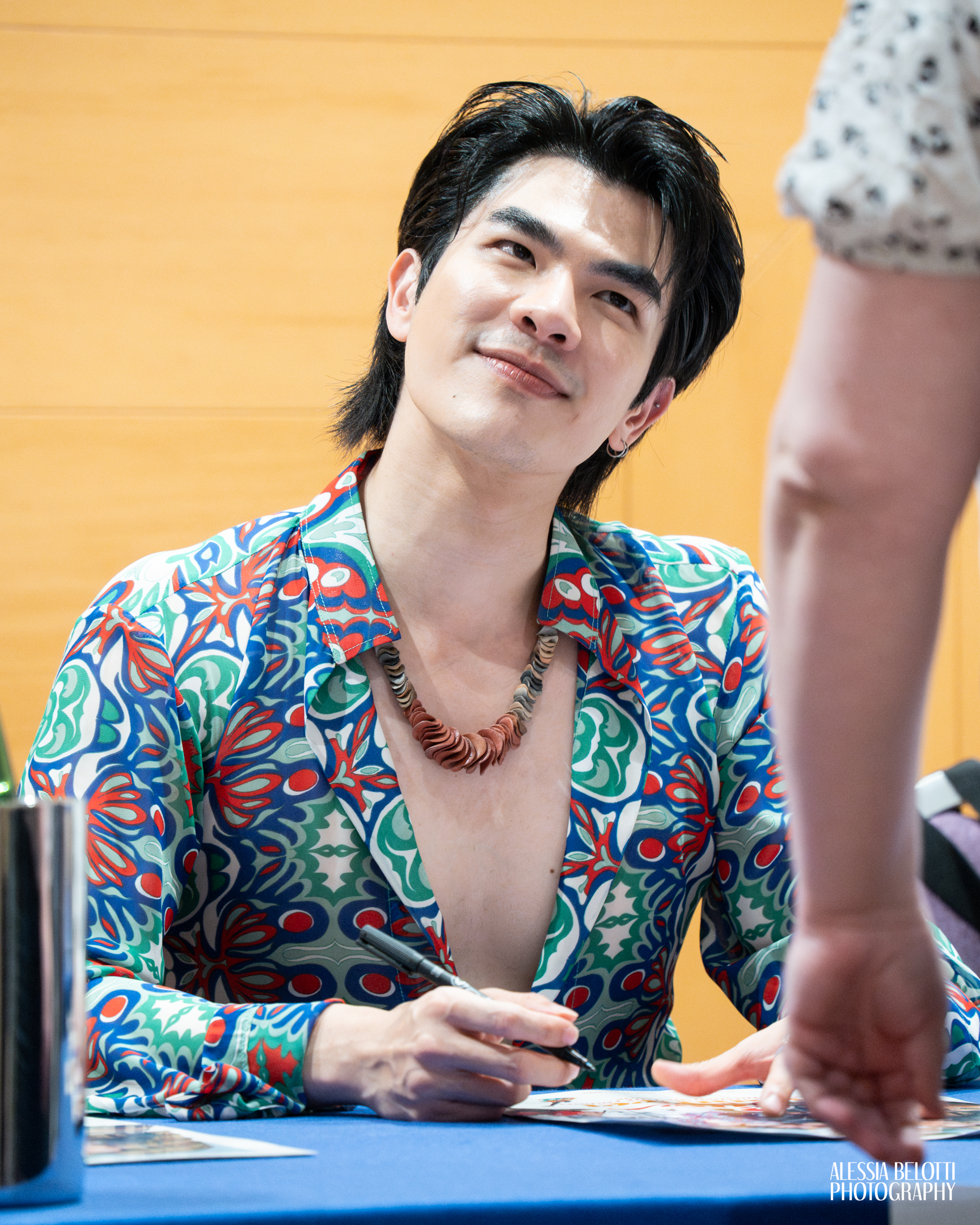
View of the Arts: Trin undergoes a major emotional and ideological shift as he tries to balance his goals with difficult moral choices. How did you show his inner struggle while still keeping his romantic connection with Tanwa believable?
Apo: Trin has a very systematic way of thinking, like 1, 2, 3, 4. Point 1 also has 1.1, 1.2, 1.3. But Trin is also a human being who has love, greed, anger, and delusion. He has desires and dislikes; there are things he doesn’t want to do and things he does. So, because his way of thinking is logical, but he’s still a human with feelings, he has to balance it, like: “Hey, this is something I want to do,” but his systematic thinking often ends up covering up his feelings. He’s someone who uses logic to live his life, so it creates a constant self-contradiction within him. If anyone watches Shine, they will see that in him.
So it becomes serious, romantic, and contradictory all at once. It plays out between him and Tanwa because sometimes when he wants to be serious, Tanwa isn’t. So it creates conflict naturally. You have to watch Shine – everyone will see what I am talking about clearly.
VOA: Tanwa brings freedom and charisma while hiding personal scars. How did you balance the character’s playful, privileged persona with the more vulnerable aspects of his story?
Mile: Understanding the ultimate needs of the character and understanding the needs of each moment (each scene) align with creating and understanding the character’s foundational behaviors. Then, finding the middle ground of these three things in what the character is doing (even if it’s not spoken out loud).
It’s like seeing the small, medium, and large layers of the character, but throwing yourself into that specific moment and having fun with the performance.
VOA: Shine combines political unrest with rom-com elements. How did you handle scenes where the emotional stakes of your character intersect with broader social commentary?
Apo: I have to say the script for Shine is already good. When we read through it, there’s the storyline and then the conflict, which we took from real-life situations as inspiration. No matter how chaotic things are outside, in the end, we humans still have to live in the present. So it creates a romantic comedy angle between the characters amidst a chaotic situation. This is something that really happens in real life, so we call it “It’s life,” because it happens all over the world, not just in Thailand.
VOA: Comedy and romance are central to Tanwa’s storyline, but the show also explores heavy themes. How did you approach moments where humour meets with social or emotional gravity?
Mile: Tanwa isn’t inherently a “comedic” character, but he chooses to express himself with bright cheerfulness to prevent the wounds in his heart from taking over. What made the acting easier was doing extreme homework on his happiness and extreme homework on his sadness, and having a lot of empathy for the character, understanding, and believing in his desires.
VOA: Trin and Tanwa’s relationship evolves from foil to sincere connection. Were there particular moments on set that helped you and Mile build that chemistry naturally?
Apo: So, because we’ve been working together for a long time – around three or four years – we’ve become quite close. That makes working together easy because whenever I need help, Mile is there to support me, and whenever he needs help, I support him. Over time, that experience of working and spending so much time together has created a natural understanding between us, where we automatically support each other.
VOA: As Tanwa, you are a catalyst for Trin’s growth. How did you view your character’s role in forming the narrative, especially in scenes that mix personal and political tension?
Mile: Tanwa represents freedom. He understands that everything is transient (impermanent), and he chooses to seek out and focus on happiness rather than trying to fix things he feels are beyond his control. However, at the same time, he is uncomfortable with the injustice of a distorted society. He breaks down when he realizes that making a decision for someone he loves ends up hurting someone else who didn’t deserve those negative consequences.
My first time in Rome was absolutely wonderful. I was so happy, and everyone was incredibly well prepared. They could sing along to many of the songs from Shine while we performed. I felt very grateful, very happy, and deeply honoured. Thank you. – Apo
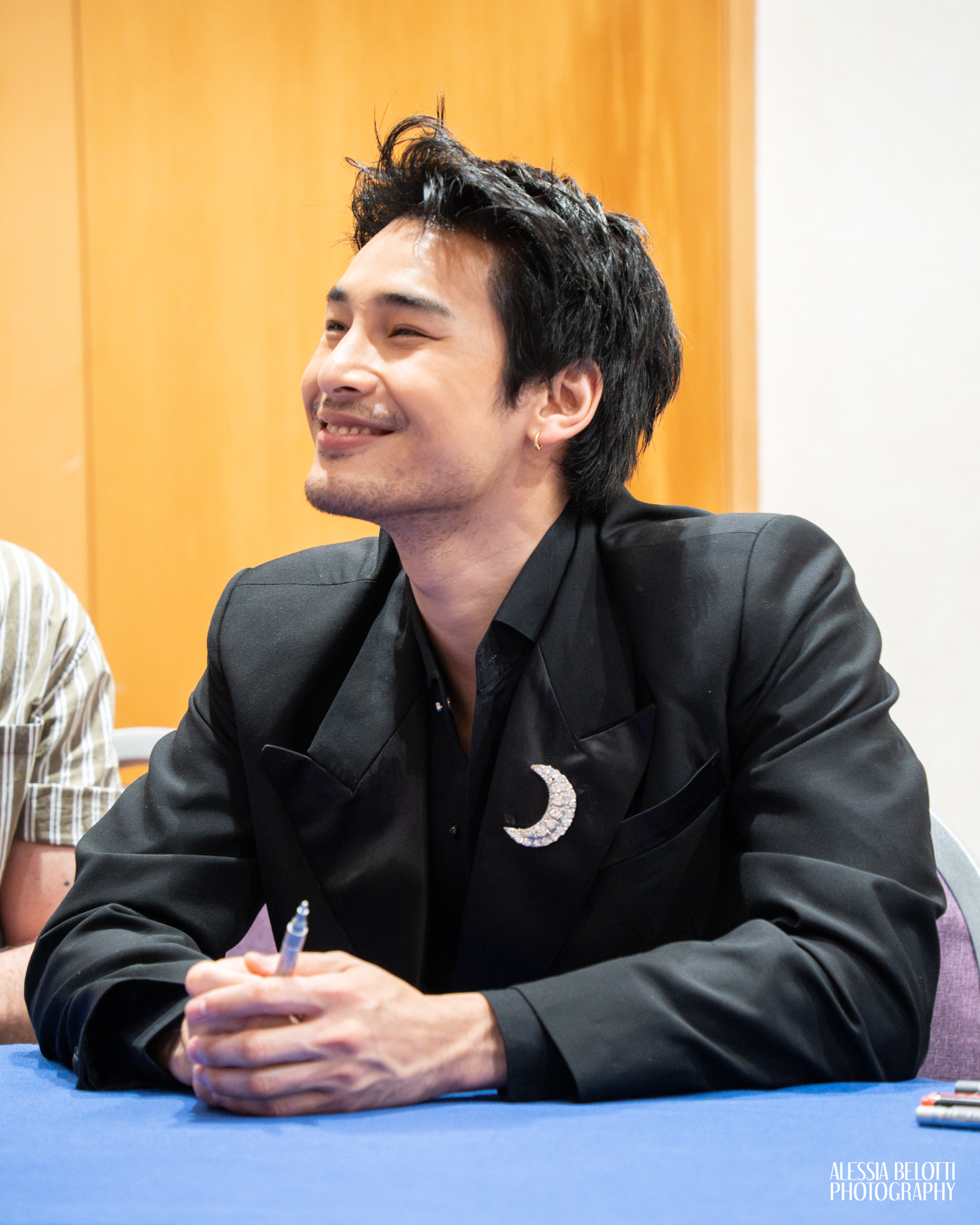
VOA: Costume and era play a huge role in Shine. How did personifying Trin in late 60s Thailand – from structured suits to social etiquette – influence your performance?
Apo: So, during the 1960s, it was an era in which the social structure was quite fixed. Men were expected to behave a certain way, women were expected to behave a certain way, and people were expected to fit particular roles and personalities. Trin was also born into a very well-off family, with an uncle who was highly respected and recognised in society. Growing up in that environment meant learning to stay within the lines and follow the rules.
This shapes the character and gives him a very systematic way of thinking. Even the way he dresses follows traditional norms, where everything has to be flawless because he believes that represents perfection. His background and his family’s prominent position in society influence the way he thinks and lives, right down to his decision to study abroad. Everything in his life is carefully planned, and that all stems from the environment in which he was raised.
VOA: Tanwa’s fashion and hippie aesthetics are visually bold. Did inhabiting this style affect your understanding of his personality or mindset?
Mile: It had a huge impact, especially regarding his freedom of thought and freedom of lifestyle. This naturally reflected back into how I created and executed my performance for this role.
VOA: Your character witnesses privilege and injustice. How did you prepare to portray someone whose ideals are challenged by societal expectations and personal desires?
Apo: Actually, from the past to the present, I believe everyone faces expectations, more or less, regardless of the society they live in or how they were raised. For example, people are expected to grow up to be good, to be smart, or to become someone who can do everything and be anything.
But if we look deep inside ourselves, what we truly want to do or who we truly want to be is already within us. I think that’s something all human beings share, regardless of time or place. For example, imagine my family expected me to become a doctor. But I might feel, “No, I’m someone who is drawn to emotions and feelings.” So I chose to become an actor instead. I think every human being is constantly challenged by the expectations placed upon them by others.
VOA: Shine explores themes of freedom, rebellion and love in turbulent times. Which aspect of Tanwa’s philosophy or approach to life resonated most with you personally?
Mile: Freedom of thought and freedom of lifestyle are essential. Freedom isn’t just about doing whatever we want without harming others or society; it also means living in a way that does not harm ourselves.
VOA: Shine’s fan meet in Rome on May 24th was the series’s first and only European event. What did it mean to you to connect with international fans?
Apo: Yeah, I was very glad and honoured to be invited to Rome. The fans gave us such a warm welcome. Meeting them in person brought me so much happiness and was incredibly meaningful. It wasn’t just about connecting through social media anymore; it was about meeting face to face and seeing the excitement in their eyes as they told us how much they loved the series and how happy they were to meet us.
It made us feel that all our hard work and effort had reached them. Being able to give something back through our performances created happiness for all of us. It was a truly special and unforgettable experience.
My first time in Rome was absolutely wonderful. I was so happy, and everyone was incredibly well prepared. They could sing along to many of the songs from Shine while we performed. I felt very grateful, very happy, and deeply honoured. Thank you.
VOA: The Rome fan meet on May 24th brought Shine to European audiences. How did you feel about representing the series internationally, and what were you most excited to share with European fans?
Mile: Actually, it wasn’t my first time meeting fans outside Thailand. Every time I meet fans, especially European fans, they bring a wonderful energy and warmth. No matter where we meet, I always feel welcomed and supported, even when I’m far from home.
What I looked forward to most was sharing happiness with everyone and receiving that same happiness in return. The event became another joyful and unforgettable experience for me, and I was very grateful to spend that time with the fans.
Written and interviewed by Maggie Gogler
Featured image © 2026 Alessia Belotti for View of the Arts
A huge thank you to BeOnCloud and the Jus In Bello team for helping arrange the interview, and to Apo and Mile for taking the time to answer our questions.
View of the Arts is an online publication dedicated to film, music, and the arts, with a strong focus on the Asian entertainment industry. As we continue to grow, we aim to deepen our coverage of Asian music while remaining committed to exploring and celebrating creativity across the global arts landscape.


