
Des Rocs, a.k.a. Danny Rocco, has never really blended into the modern rock. The artist started performing in bars and basements from a young age, eventually developing a sound that draws from classic rock spirit. Whether on stage with longtime friends William Tully and Eric Mendelsohn or in the studio alone, Des Rocs has always believed that individuality comes first.
Touring alongside acts like Muse, The Rolling Stones, The Cult, Kaleo, and The Struts showed that being true to yourself can be appreciated by the biggest acts. More recently, his reach has extended beyond his own project, including a collaboration with Zayn Malik on Break Free. Through it all, there has been a consistent thread in his work: a focus on creating music that doesn’t follow what others are doing, but instead pushes against it. That mindset runs through his new album, To Hell and Back, a release made from years of experience, struggle, and persistence, where nothing is softened or hidden and every emotion is left open.
Talking to Des Rocs, he speaks about the thinking behind the album and how he balances chaos and focus in his songwriting. He also explains why honesty keeps changing with each record, rather than being something set in stone. We discuss New York’s influence on his sound, the freedom that comes from ignoring trends, and the moments of inspiration behind some of his strongest songs. This is Des Rocs in his own words; direct and still exploring where rock can go next.
The creativity always ebbs and flows. You hit these magical little pockets where the world melts away, and you’re just flowin’. There’s no rhyme or reason to it, and I wish there was.
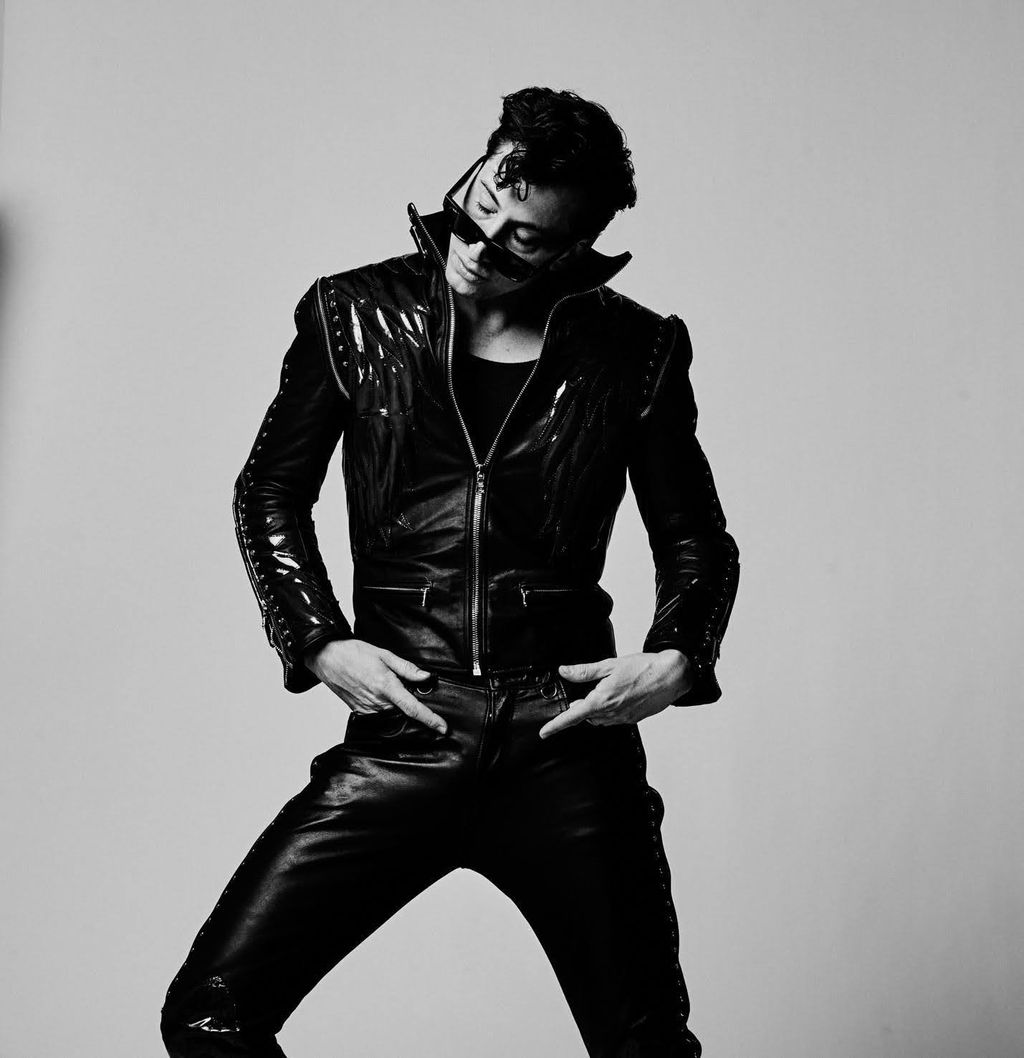
View of the Arts: To Hell and Back is an incredibly personal, driven album shaped by years of struggle. At what point did you realise this album needed to be your most honest record yet?
Des Rocs: There is never any kind of “light bulb moment”. I just make the album I need to make when I need to make it. Each album is honest in its own way for that period in which it was made. I always try to make the most compelling piece of art I can at any given time.
VOA: You describe yourself as being on a mission to re-imagine rock ‘n’ roll. What do you think modern rock is missing right now, and what are you trying to bring back or change through your music?
DR: Have no interest in bringing back anything that once was. I think everyone should do whatever they want to do. The one thing I embrace in my music that I strongly feel differs from my contemporaries is to plainly care nothing about what my contemporaries are doing. I feel like a lot of rock artists lose sight of that because they look at what their contemporaries are doing as models of what they should do – either sonically or from a marketing perspective. That tendency leads rock music to become an average of its parts, as opposed to a beautiful bouquet filled with different kinds of brilliant flowers. I just want to double down on whatever makes me me.
VOA: Growing up in New York clearly influenced your attitude and sound. How much of the city’s energy, pressure, and chaos still lives inside the music you make today?
DR: It is integral to every note and every word. NY is the gasoline that fuels the Des Rocs engine.
VOA: Going back to your album, you’ve described To Hell and Back as an album for people who keep fighting for what they believe in, even when they’re told “no.” Why was it important for you to make perseverance such a central part of this record?
DR: I write what I know. Struggle, pain, perseverance, survival – these are themes that have defined my life and career in many different ways. And if I am to create something authentic, then it must be through the lens of my lived experience. Sometimes, however, I do love to just goof off and write something ridiculous. I often have a blast doing it. But it is exactly the interplay of these two distinct streams of writing that defines a lot of what it means to make a Des Rocs album.
I’m tremendously influenced by music from the 70s and early 80s. It was sonically a real golden age, and the recordings shine brilliantly half a century later. It was an era of profound risk-taking and individuality.
VOA: To Hell and Back includes 11 tracks that each bring a different energy, but some of them really reminded me of the spirit of 1970s rock. “The Riders of Red Hook (Legends Never Die)” gave me that Black Sabbath vibe, while “The King” made me think of The Doors. Even though the album very much has its own identity and sound, there’s also this presence of classic rock that feels increasingly rare today. Looking at To Hell and Back as a whole, which artists or eras influenced the album the most musically, and why?
DR: I’m tremendously influenced by music from the 70s and early 80s. It was sonically a real golden age, and the recordings shine brilliantly half a century later. It was an era of profound risk-taking and individuality. A relentless push to move the genre forward. An era of fierce artistic competition amongst contemporaries. They sought to “out-create” each other as opposed to imitating each other’s successes. That’s a sort of spirit I carry in my art.
VOA: And following that, what was the creative process behind “The Riders of Red Hook (Legends Never Die)” and “The King” specifically?
DR: They were songs written in these kinda violent outbursts of passion and creativity. My favorite kind is where everything pours out incredibly fast and in a way that is so much fun and almost like spiritual. Like the rock n roll rollercoaster just starts, and you’re a captive participant along for the ride.
VOA: I’d love to talk about “War.” When you were writing that track, what was going through your mind at that particular moment? There’s so much intensity and power in the lyrics.
DR: That song was a real struggle. I labored tremendously in both writing and recording it. We went through SO many different versions and variations of both melodies and parts. But there was just a core to the song that I thought was really important for the album. So we kept on chasing. It’s so fierce and sad at the same time. I get a real thrill from the combination of those emotions.
VOA: While making To Hell and Back, when did you feel the most creatively inspired during the lyric-writing process? Was there a specific mindset, place, or moment that brought the strongest ideas out of you?
DR: The creativity always ebbs and flows. You hit these magical little pockets where the world melts away, and you’re just flowin’. There’s no rhyme or reason to it, and I wish there was.
VOA: Producer Joe Chicarelli (known for his work with The White Stripes and The Strokes) helped define the sound of To Hell and Back. How did working with him influence the direction of the album, and what did he bring to your creative process that shifted or changed the final result?
DR: Joe pushed us to track the album live as a band. This was a sizable leap of faith that truly altered the sound of the album. You can feel the push & pull of people inhabiting a shared space, locked together in a way you rarely get when everything is on the grid or dubbed over. There’s some real human emotion to that method – an intangible chemistry that makes for something special and singular.
Written and interviewed by Maggie Gogler
Featured image © 2026 Jimmy Fontaine
View of the Arts is an online publication dedicated to film, music, and the arts, with a strong focus on the Asian entertainment industry. As we continue to grow, we aim to deepen our coverage of Asian music while remaining committed to exploring and celebrating creativity across the global arts landscape.


