
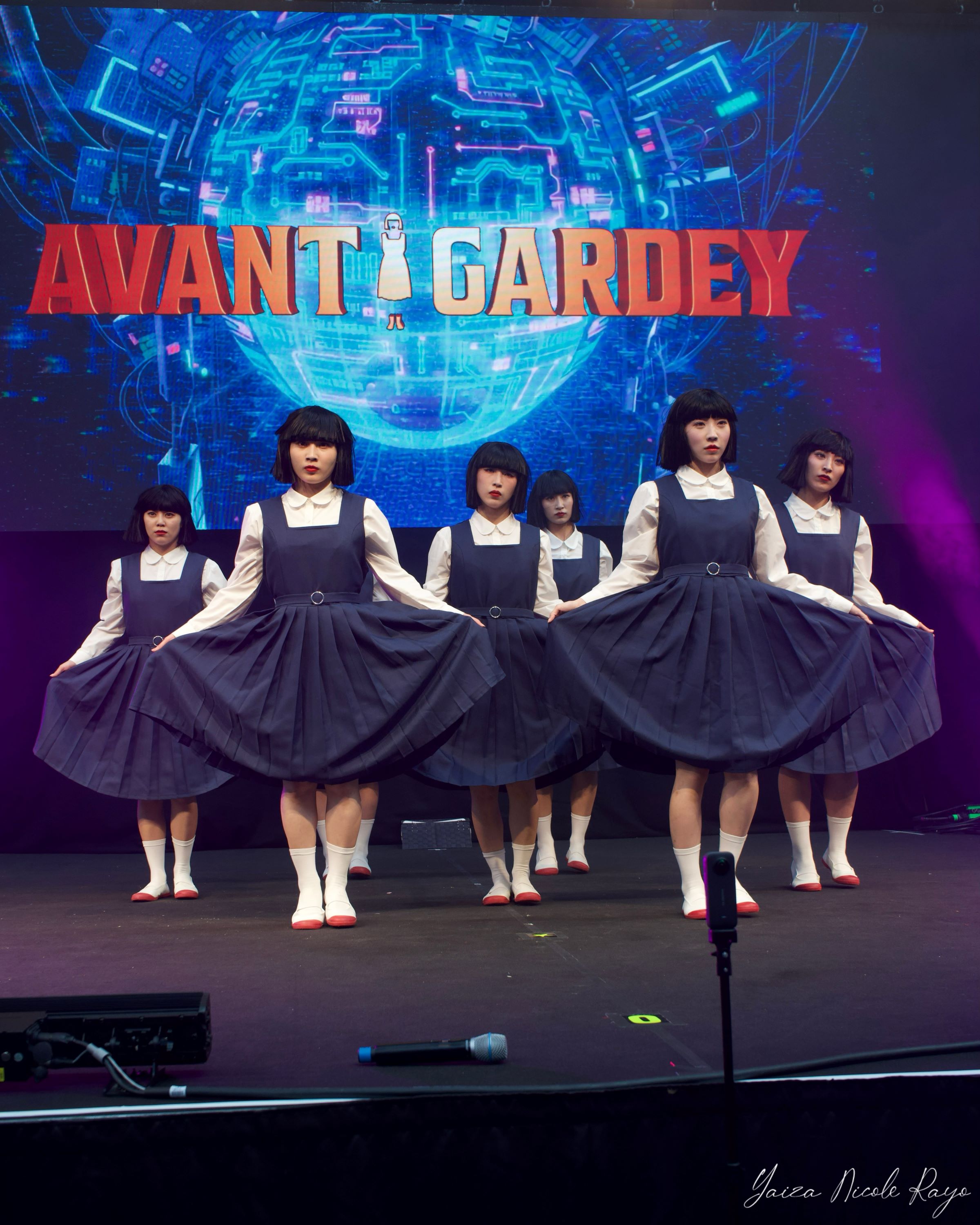
Until you see avantgardey live, it’s difficult to understand why they’ve become such a phenomenon. Watching the seven members – out of sixteen – perform at Hyper Japan in London, I kept trying to pick out one dancer to follow. It lasted only a few seconds before my attention shifted back to the group. Every movement was so perfectly timed that they almost stopped feeling like seven individuals. Their choreography became the focus; it was impossible not to wonder how much work goes into making something so technically demanding look so effortless.
Founded in 2022 by choreographer Akane, avantgardey has become a one-of-a-kind dance performer.
While every one of the sixteen members comes from a different dance background – whether jazz, hip hop or ballet – the group has created something of their own. Their performances lie between theatre, contemporary dance, comedy and robotic movement, all held together by astonishing synchronisation. At times, it genuinely feels as though you’re watching one dancer multiplied into sixteen clones rather than sixteen individuals sharing the same stage.
That style has taken avantgardey far beyond Japan. The group was originally formed for a television dance competition, but social media quickly introduced them to audiences around the world. Since then, they’ve performed internationally, including on America’s Got Talent, and made their UK debut at Hyper Japan.
Less than an hour after stepping off stage, however, the carefully maintained poker faces disappear. Inside Hyper Japan’s press room, the seven members who travelled to London greet us with smiles, polite bows and laughter before taking their seats. During this year’s festival, View of the Arts joined three fellow journalists for a conversation with the group. Over the next hour, we spoke about their first impressions of London, the unexpected journey from a television dance competition to international stages, rehearsing for up to ten hours a day, adapting performances for audiences around the world, and why keeping a straight face on stage can sometimes be the hardest part of the job.
One of the journalists begins by asking about their thoughts of London. Unsurprisingly, the city has already made its impact. The members describe London as feeling strangely familiar, almost as though they had stepped into a film set. After seeing the city countless times in movies and television dramas, walking through its streets felt surreal. Even wandering around without a destination became part of the experience.
Like most first-time visitors, they made time for the landmarks. Some visited Tower Bridge, while another member proudly declared it “mission accomplished” after seeing Big Ben both during the day and illuminated at night. One member chose a more adventurous approach, renting a bicycle and exploring the city on two wheels, joking that cycling through London’s streets made them feel like the main character in a movie. Another admitted that after watching Harry Potter on the flight to the UK, King’s Cross Station had quickly become one of the places they most wanted to visit.
The conversation soon moved to the group’s own story. Looking at avantgardey today – with millions of online views, international performances and fans travelling across continents to see them perform – it’s easy to assume global success was always part of the plan. The reality, however, was far more modest.
The members explain that avantgardey was created simply to compete in a television dance competition. The group itself was assembled from dancers within their agency, with no expectation that it would continue beyond the programme. Everything changed after the competition ended. Rather than disappearing once filming finished, videos of their performances began circulating online. Social media introduced their style to audiences outside of Japan, creating opportunities that none of them had imagined when the group first came together.
“When the group was first formed, we never imagined that one day we would be performing for audiences all over the world,” they admit.
Performing in the UK therefore represented another unexpected achievement.
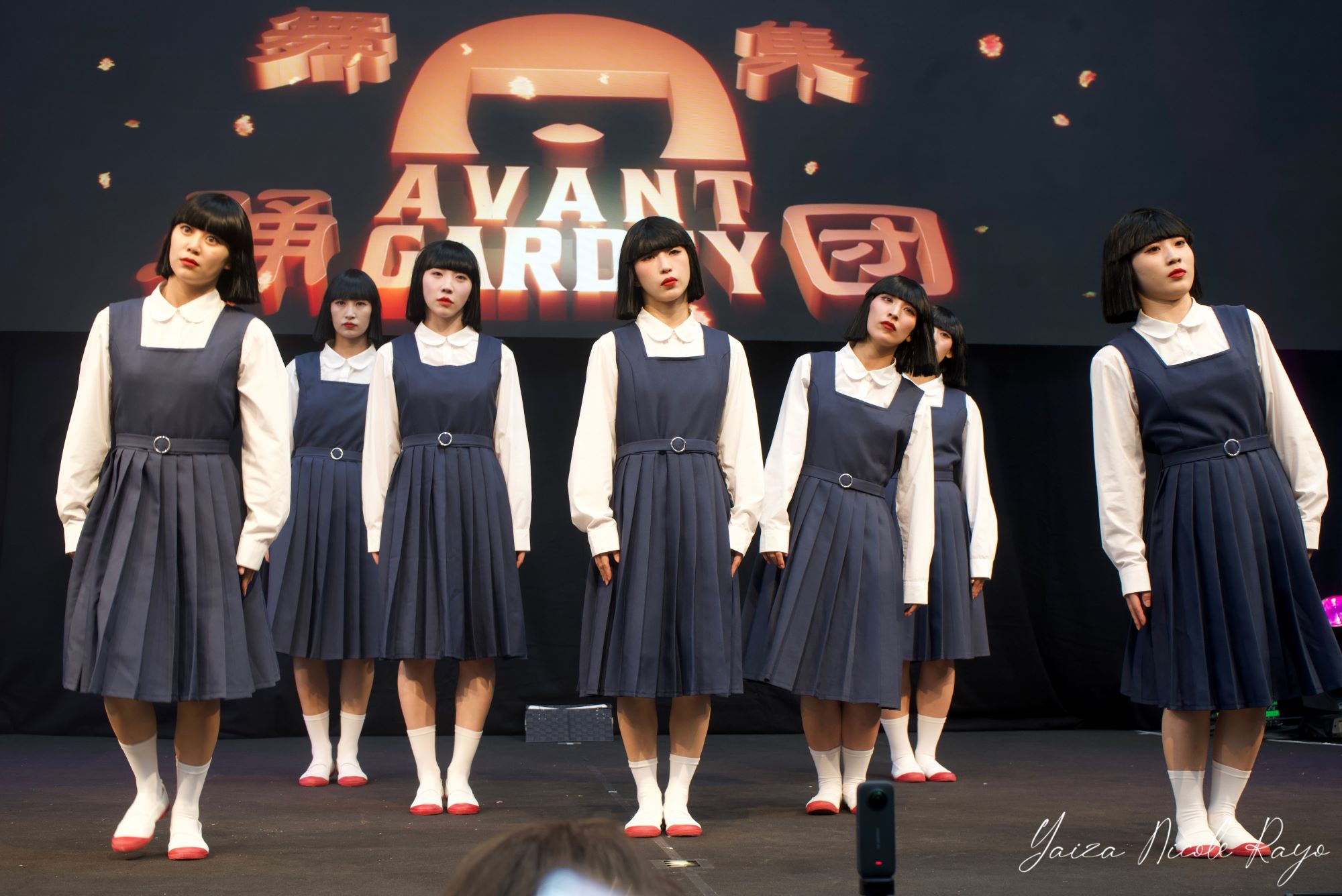
For their Hyper Japan debut, the group prepared a special medley of British songs, including music by Queen and the Spice Girls. Judging by the audience’s reaction, the decision paid off. Fans clapped along, danced together and enthusiastically embraced every performance, creating what the members describe as an “unforgettable experience”.
Another colleague asks whether they change their performances depending on where they’re performing. The answer reveals one of the biggest differences they’ve noticed between audiences in Japan and overseas.
In Japan, they explain, audiences often immerse themselves quietly in the world avantgardey creates on stage. International audiences, by comparison, tend to be much more vocal. They cheer, sing along and openly show their excitement throughout the performance, creating an energy that flows straight back onto the stage.
That enthusiasm has become one of their favourite parts of performing abroad. They recall one overseas performance where the audience unexpectedly sang along during the show. It wasn’t something they had experienced before, but it quickly became one of their favourite memories because of the connection it created between performers and audience.
Because much of avantgardey’s choreography tells visual stories, Japanese songs often influence movement through their lyrics and narrative. Western music presents a different creative challenge. Instead of focusing on storytelling through words, the choreography responds more to rhythm, melody and musical texture, meaning every performance develops its own character depending on the song.
The same journalist points out that when Hyper Japan announced their appearance, fans from as far away as Hong Kong commented that they were planning to fly to London specifically to see avantgardey perform. Considering their growing international following, why do they think audiences around the world have connected so strongly with them?
The members pause for a moment before answering.
Part of the appeal, they believe, comes from their appearance. Sixteen dancers wearing identical school uniforms naturally create an unusual image that immediately catches people’s attention. For many international audiences, it’s something that feels uniquely Japanese while also carrying an element of mystery.
But appearance alone isn’t enough to build a worldwide fanbase. More important than the costumes, they explain, is the feeling they hope every performance leaves behind.
“Our biggest goal is to make people smile and enjoy themselves through our performances.”
It is a surprisingly simple answer, but perhaps also the most honest.
As Japanese entertainment continues reaching wider international audiences, the journalist asks why they think Japanese culture has become so popular overseas; the members see it as a natural exchange.
Just as people in Japan have long been inspired by Western music, films and fashion, international audiences are now discovering Japan through anime, music and performance. Things that feel completely ordinary to them often appear fresh and exciting to people experiencing them from a different culture. Even genres such as city pop, once considered nostalgic within Japan, have found entirely new audiences around the world. For avantgardey, that growing curiosity has opened doors they never expected to walk through.
The conversation then moves away from touring and towards the work audiences never see.
View of the Arts asks whether there has ever been a routine that looked perfect in theory but simply refused to work once rehearsals began.
The members smile knowingly.
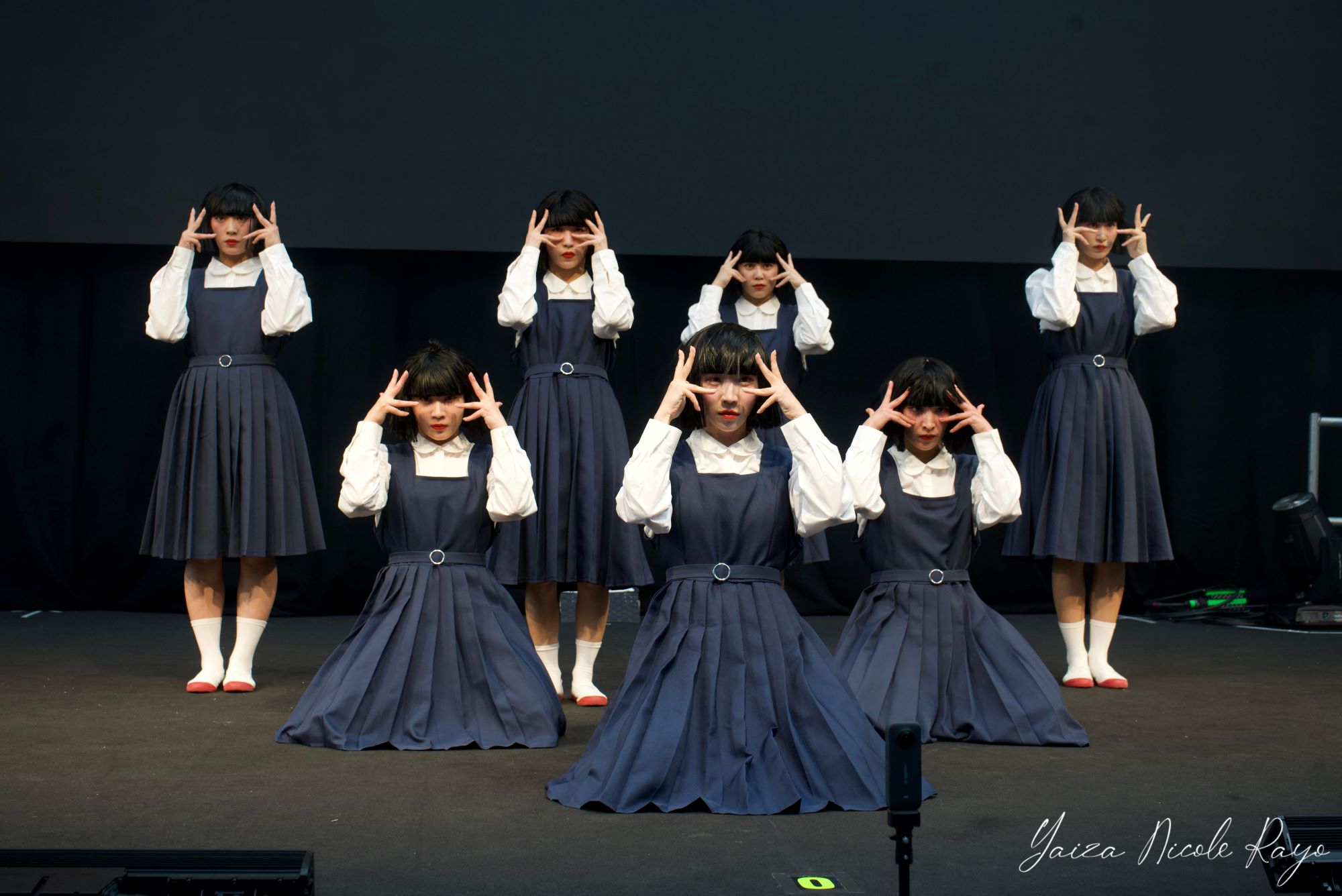
“One of the most important aspects of our performances is the formations. Every routine includes many different formation changes, and we spend a lot of time rehearsing them.
Some of the movements are especially challenging because we have to move backwards without being able to see the other members around us. To perform those transitions accurately, we repeat them over and over again, making plenty of mistakes along the way.
Through constant practice and learning from those mistakes, we’re able to perfect the choreography and bring it to the stage as part of our performances,” they say.
We also wonder how often choreography changes before reaching its final version.
“The time it takes to create a performance varies. Some routines are completed in about a month, while others can take as long as ten months.
Once the choreography and overall stage composition are finalised, we don’t usually make major changes. From that point on, it’s all about repeating the routine over and over through rehearsals, refining the performance little by little as we continue practising,” the dancers confess.
And when we ask how many hours they practise each day, the answer comes without hesitation.
“Around ten hours.”
It’s impossible not to react.
“It is a proper athletic workout,” I comment, prompting laughter around the room.
Considering the accuracy required on stage, the comparison hardly feels exaggerated.
Later, another journalist asks whether performing on America’s Got Talent required a different mindset compared with performing live at Hyper Japan.
Although the stages couldn’t be more different, the members insist their approach never changes. Whether performing in front of television cameras, judges, or thousands of fans, their objective remains the same: to engage everyone watching and ensure they enjoy the performance. The size of the venue doesn’t matter, nor does the country.
What does change is the programme itself.
“Whether people are watching us live in front of the stage or through a camera, our goal is always the same – to involve everyone in the performance and make sure they enjoy it.
It doesn’t matter whether we’re performing on a short, small, large, or television stage. The feelings we bring to our performances never change. We always give 100% and perform to the very best of our ability, no matter where we are.
For example, in the UK we might incorporate British-style dance into our performance, or we might do an anime song medley. We are always thinking about what will be the most enjoyable for the audience watching us, and we carefully choose and tailor our performances depending on the location,” we are told.
The interview ends on a lighter note. One journalist points out that rehearsing for ten hours a day sounds closer to Olympic training than dance practice and asks whether anything has ever gone wrong during a performance – perhaps someone making a mistake or doing something so funny that the others struggled not to laugh.
This time, the room laughs.
“Yes, definitely!”
Despite their famously expressionless faces, the members admit they’re constantly trying not to laugh on stage. After performances, they often watch recordings together before finally giving in and laughing at all the moments they had successfully hidden from the audience.
“Our mysterious, expressionless faces are part of our concept,” one member explains, “but every single one of us is actually really good at making funny faces.”
Sometimes that’s exactly the problem.
One member catches another pulling a ridiculous expression mid-performance, and suddenly everyone is fighting to stay in character. On other occasions, choreography goes slightly wrong and someone accidentally bumps into another member.
The audience rarely notices.
“We’re professionals,” they say with a smile. “No matter what happens, we never break character.”
After spending almost an hour with avantgardey, that’s perhaps the biggest surprise of all. The group known around the world for their perfectly synchronised movements and unreadable expressions are, away from the stage, warm, humorous and so down to earth. The discipline behind every performance is extraordinary, but so is the joy they clearly find in creating them together – and perhaps that’s the real secret behind why audiences, whether in Tokyo, Hong Kong or London, continue to fall in love with avantgardey.
Written and interviewed by Maggie Gogler
Image © Nicole Rayo for View of the Arts
View of the Arts took part in a roundtable interview with avantgardey following their performance at Hyper Japan.
View of the Arts is an online publication dedicated to film, music, and the arts, with a strong focus on the Asian entertainment industry. As we continue to grow, we aim to deepen our coverage of Asian music while remaining committed to exploring and celebrating creativity across the global arts landscape.


