
For South Korean artist, composer and producer EL CAPITXN, also known as Jang Yi-jeong, music has been a huge part of his life for as long as he can remember. He began his career as a singer, believing that his voice would always be at the centre of his future in music; however, when he could no longer sing the way he once had, everything he had worked towards suddenly became uncertain. It was a difficult time, and he eventually found another way to continue making music through songwriting and production. Yet even as his career took a different direction, he never completely left behind the singer he had once been.
Although he could have left the music industry altogether, EL CAPITXN chose to continue as a songwriter and producer, working with some of the biggest names in K-pop. His achievements are impressive, but they tell only part of his story; he has his own ambitions, his own ideas and a great deal he wants to express through his music.
His first full-length solo album, WHO KILLED EL?, is a beautiful piece of work that shows just how much he has to offer as an artist, not only creatively but also personally. Combining classical music, sweeping orchestral arrangements, rock, gospel, R&B and pop, the album has so much variety that it is hard to know what to expect from one song to the next, but that is part of what makes it such an interesting listen, especially when you begin to understand how much of his own life, his experiences and feelings about the past have gone into making it.
Although the album brings together several different musical styles, EL CAPITXN isn’t simply trying to show off his skills as a producer; much of what we hear comes from his own life, from memories he still carries with him to feelings and experiences that aren’t always easy to talk about.
Across the album’s twelve tracks, EL CAPITXN expresses anger, love, bitterness and sadness, sometimes within the same song, and he doesn’t shy away from showing how confusing and contradictory those feelings can be. There is plenty of gothic imagery too, from vampires and bleeding hearts to religious references and ideas about death and salvation, which makes the album all the more fascinating, but what interested me most was learning about the man who created it, what he had been through and why he chose to tell his story in such an unusual way. He speaks openly through his music about the things that have hurt him, the feelings he still struggles with and the experiences that have stayed with him over the years.
Perhaps the most affecting aspect of WHO KILLED EL? is the relationship between the man he once was and the artist he has become. Having lost the ability to use his singing voice as he previously could, EL CAPITXN worked with other vocalists to interpret his compositions, letting their individual voices become part of an intensely personal narrative. The album’s closing track, “I’m crying (Feat. Jang Yi-jeong)”, takes this idea even further, using artificial intelligence to recreate his former singing voice. It is an extraordinary and somewhat unsettling artistic decision, bringing his past and present identities together within a single composition. Listening to the album, I was impressed not only by EL CAPITXN’s talent as a musician, but also by how openly he shares his feelings, even the ones that are difficult to talk about.
In an exclusive interview with View of the Arts, the artist speaks openly about the making of WHO KILLED EL?, the personal experiences behind its music and the complicated relationship he maintains with his former self. His answers are thoughtful and honest to the bone; he does not pretend that creating this album has resolved everything he has experienced, nor does he ask to be admired simply for surviving it.
“Don’t Say Love” captures the collision between wanting love and wanting to reject it, while “I LOVE YOU, I DON’T KNOW” explores the state of being unable to trust even your own feelings; I have no desire to always paint love as something picturesque.
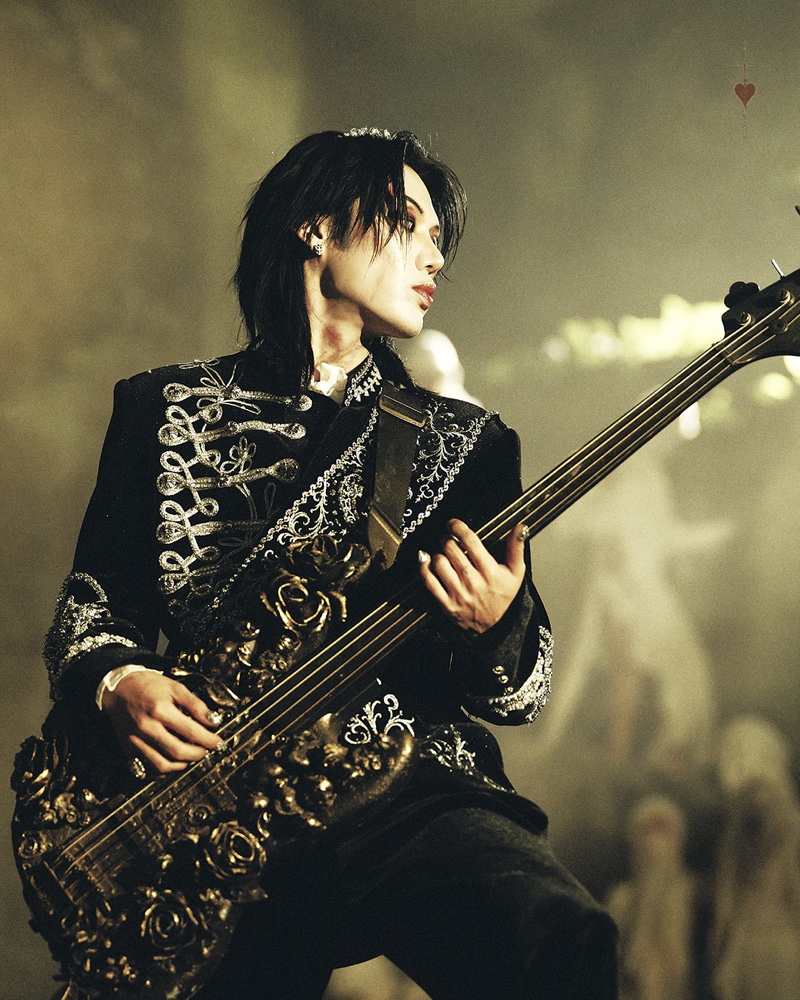
View of the Arts: You open WHO KILLED EL? with “Part 1. Symphony: The Unredeemed”, which I found quite unexpected, especially after listening to the rest of the album and discovering just how musically diverse it is. It’s an unusual way to introduce a record that combines rock, classical music, gospel, R&B and pop. Why did you choose this composition as the opening, and what did you want us, the listeners, to feel before hearing the rest of your story?
EL CAPITXN: If a story begins with someone’s death, I felt I had to start with the funeral. This song is a requiem for the unredeemed. It is an unusual funeral, though, because no one can really explain who died or why. I wanted listeners to step into this track and feel like they had entered somewhere sacred and beautiful, only to realize shortly after that something is horribly wrong with the place. Beautiful things are not inherently good, and sacred things do not necessarily save us. I wanted to offer that degree of discomfort right from the very beginning of the album.
VOA: We live in a music industry where trends and commercial success often seem to matter more than genuine artistic expression. What impressed me about “WHO KILLED EL?” is how much soul, emotion and personal truth you’ve put into it. Many of us are familiar with your story, but hearing this album made me see you as an artist in a completely different light. Your music feels more fearless, uncompromising, emotionally exposed and personal than I expected. Was there ever a moment during its making when you questioned whether you were revealing too much of yourself?
EL CAPITXN: Exposing your inner self is not as pleasant an experience as people might think. People often say they want an artist to be honest, but at the same time, they expect that honesty to arrive in a form that is easy to consume and aesthetically pleasing. When pain is packaged gracefully and anger is properly refined, it turns into great art. Handled that way, misfortune becomes quite a viable product. The things that happened in my life were not always beautiful. At times, they were ugly, cowardly, and pitiful to the point where I would never want to show them to anyone. If you strip all of those pieces away, what is truly left? I am not a perfect victim, nor am I someone who is always in the right. I am simply telling my story. Of course, I have no intention of laying out every single fact. A person without secrets is usually not very interesting anyway.
VOA: The album is incredibly diverse, yet none of the musical changes are out of place. You move from dramatic orchestral compositions to aggressive rock, gospel and more intimate melodies, sometimes making the listener wonder what could come next. Considering your experience producing music for so many different artists, was this musical freedom something you had been waiting to explore for years, or did the different genres develop on the go as you worked through your own experiences?
EL CAPITXN: I am not someone who worships genre like a religion. Whether it is rock, classical, or hip hop, at the end of the day, these are just modes of expression created by human beings. I never understood why someone must remain loyal to a single genre just to convey a single emotion. Human beings are not particularly consistent creatures, and I am no exception. You can love someone in the morning and despise them by evening. You can pray to God one day and curse His existence the next. I think my music resembles that contradiction. That is why certain scenes called for a guitar, others required an orchestra, and some needed a full choir. I never set out with the goal of blending genres. A more accurate description would be that I was simply searching for the exact sounds the narrative demanded, and by the time I reached the end, that is just what it had become. Fortunately, spending years as a producer gave me the opportunity to work across various genres, and this time, I was able to dedicate all of that experience entirely to myself.
VOA: One of the most interesting aspects of “WHO KILLED EL?” is how you’ve invited other artists to become part of such a personal story. In some ways, their voices allow you to express feelings that you can no longer communicate through singing as you once did. How did you explain those emotions to your collaborators, and were artists such as Jagwar Twin, Beauty School Dropout, Cautious Clay and the others chosen specifically because you felt their voices could represent different parts of you?
EL CAPITXN: Isn’t it somewhat ironic that someone who used to be a singer is now selecting other vocalists to sing on his own record? It is probably one of the most ironic parts of my career. Still, I never viewed them simply as replacements for my voice. Jagwar Twin, Beauty School Dropout, Cautious Clay, Jeris Johnson, Bohnes, Rence, Muni Norodom, Samuel Harness, and Aidan Laurent Kim all have their own distinct identities and musical languages; I wanted to respect that completely.
Demanding that someone fully understand my pain is an impossible task, especially when there are emotions inside me that even I do not understand. Instead, I tried to communicate the context in which each song was born and the conflicting emotions clashing within it. From that point on, their interpretation takes over. When someone entirely different from me sings my story, they can reveal emotions that I might not have even recognized myself. After all, humans are rarely the best interpreters of their own selves.
VOA: Losing your singing voice must have changed far more than your career. You began as someone who could express himself directly through singing, and suddenly you had to find another way to communicate through music. When you listen to “WHO KILLED EL?” today, do you hear the person you were before that loss, the person you became afterwards, or someone entirely different who is still trying to understand himself?
EL CAPITXN: That is an interesting question, because sometimes I wonder who I am myself. More accurately, I am quite capricious, so I tend to instinctively choose who I need to be depending on the situation.
The moments when I have to judge things purely rationally and the moments when I have to feel them emotionally are so completely different that it is hard for me to explain. The Jang Yi-jeong from before I lost my voice certainly existed. At some point, though, he only remained as someone in my memory and after that, I looked for ways to survive, became a producer, and now I stand on stage again under the name EL CAPITXN. So which one is the real me? To be honest, I really do not know.
Killing your past self to become a completely new person is much harder than people think, especially when the person you thought was dead is still speaking up inside your head. That is why I think multiple versions of me from different eras coexist in this album. They do not understand one another, and at times they hate each other, yet they are forced to share the same body. I think we live alongside far more ghosts than we realise.
Now, I want to look towards what I can build next; I still do not have a definitive answer to the question, “WHO KILLED EL?”. Perhaps what matters more than identifying the killer is seeing who managed to survive in the aftermath. And I am still alive; though I cannot say for certain which one of us that is.
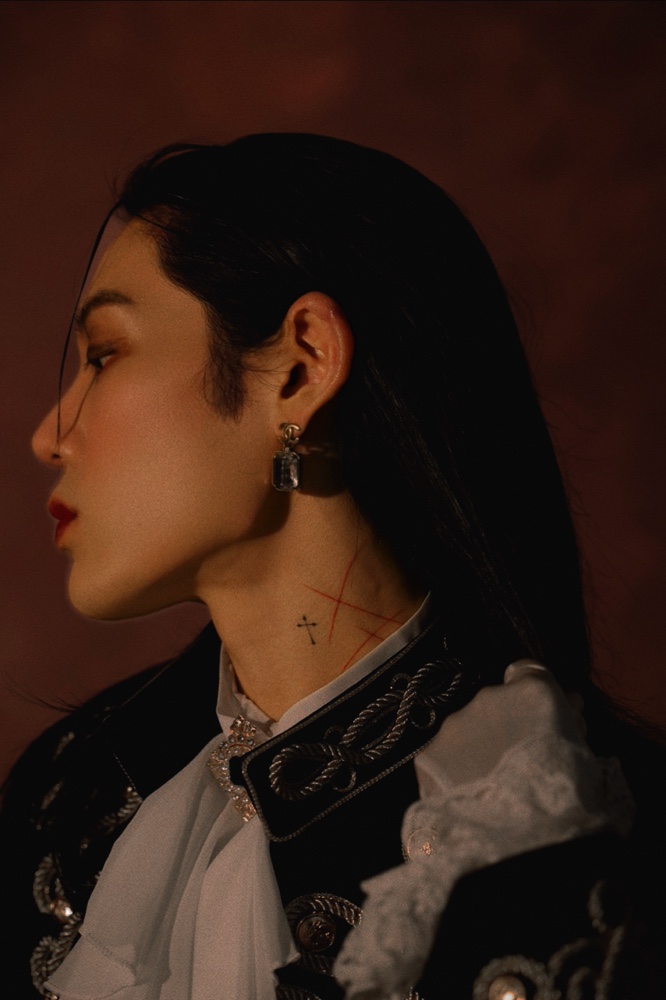
VOA: “Sing This Song For Me” is so powerful because you’re asking other people to sing something you created but can no longer perform in the way you once could. There’s something both heartbreaking and defiant about that idea. When you imagine an entire audience singing those words back to you, what do you think that moment will mean to you personally? Could hearing thousands of people sing your music bring a different kind of satisfaction from performing it yourself?
EL CAPITXN: I used to be a singer, and I became unable to sing. Yet, oddly enough, I still find myself wanting to stand on stage. Looking at it objectively, I suppose I am a rather inefficient human being. Sing This Song For Me is very much a song about that version of myself. The title might sound like a gentle request, but in reality, it is closer to a shameless demand. It is me saying, I cannot sing this, so you sing it for me. Of course, an audience is under no obligation to do what I say. If the day ever comes when thousands of people sing the song I made back to me, I will likely just be standing on stage taking it all in. Once upon a time, I sang and people listened, but now, people would be singing while I listen. It is funny, but maybe that is not such a bad thing either. The voice I lost will never return, but the song itself will still be alive. Something is fascinating about the fact that something you thought had died can survive far more loudly than you ever could.
VOA: “Don’t Say Love” explores a struggle between wanting to express affection and feeling unable to do so, while “I LOVE YOU, I DON’T KNOW” brings another kind of struggle to understand one’s own feelings. Throughout the album, love seems to be something you desperately want but also find difficult to accept. Has your experience of losing your singing voice affected the way you express love towards others, or even the way you allow yourself to be loved?
EL CAPITXN: Love is a strange emotion. People believe that receiving love will make them happy, yet when someone actually steps closer, they often turn and run. They push others away out of a fear of getting hurt, while secretly hoping that person never leaves them. It sounds selfish, doesn’t it? Yet I believe that is simply what being human is.
I cannot say that losing my voice changed the entire way I approach love; human emotion is far too layered to be explained by a single turning point. Still, someone who has experienced real loss might naturally treat the things they love a little differently. Don’t Say Love captures the collision between wanting love and wanting to reject it, while I LOVE YOU, I DON’T KNOW explores the state of being unable to trust even your own feelings; I have no desire to always paint love as something picturesque. Sometimes, the cruelest acts are carried out in the name of love. Perhaps love feels so dangerous because we desperately want to believe it is only ever beautiful.
VOA: Your album has a strong gothic identity, with religious imagery, vampires, bleeding hearts and references to salvation appearing throughout its visual world. However, beneath those darker elements, I hear someone who is incredibly vulnerable and still searching for affection and understanding. What attracted you to this imagery, and do you think creating such a dramatic artistic identity has made it easier to express feelings you might struggle to discuss openly?
EL CAPITXN: I find it intriguing that many of the most captivating symbols humanity has ever created are tied to suffering and death. Consider the cross, paintings of martyrs, or countless pieces of religious art. We portray the suffering figure with striking grace, and we kneel before it, yet in everyday reality, I am not so sure we are equally kind to people who are hurting. I think that contradiction is what draws me in.
Vampires are fascinating figures for the same reason; they live forever yet exist in perpetual yearning, capable of loving someone while holding the power to destroy them. It reflects the different personas living inside me. Jang Yi-jeong, whom I often consider dead, represents the human side that wants to love, while EL CAPITXN is the persona formed through the process of survival as Jang Yi-jeong was fading away. I do not view one as good and the other as evil. Sometimes love turns a person ruthless, and ruthlessness is what keeps someone alive. These symbols allow me to articulate emotions that would otherwise be difficult to explain. Hiding behind black garments and a bleeding heart is certainly one way to frame it. Curiously enough, I feel much more honest when I am shielded behind them.
VOA: I found the decision to close the album with “I’m crying (Feat. Jang Yi-jeong)” really moving, especially knowing that you used AI technology to recreate your former singing voice. Hearing a voice that once belonged to you, but which you can no longer use in the same way, must be an extraordinary and possibly painful experience. What was your first reaction when you heard it again? Did it bring you comfort, sadness, or feelings you hadn’t expected?
EL CAPITXN: I think technology has evolved to a point that feels almost cruel; a voice that once belonged to me, one I can no longer use the way I used to, can now be replayed by a computer. That does not mean the voice has truly returned. I still cannot sing like I once did, and the person I was back then is not coming back either. What we created was a reproduction of a fragment of the past, not a turning back of the clock.
Using AI on I’m crying was never about introducing a fresh vocal feature. I wanted to build a moment where the present EL CAPITXN and the past Jang Yi-jeong could cross paths again inside a single piece of music. It feels a bit like uncovering an old recording of someone who has passed away. Though when that deceased person happens to be yourself, the story turns far more uncanny. Whether this song is a comfort, a lingering regret, or an unfinished conversation is something I prefer not to conclude too easily. Certain voices keep echoing within us long after they can no longer be sung.
Killing your past self to become a completely new person is much harder than people think, especially when the person you thought was dead is still speaking up inside your head. That is why I think multiple versions of me from different eras coexist in this album.
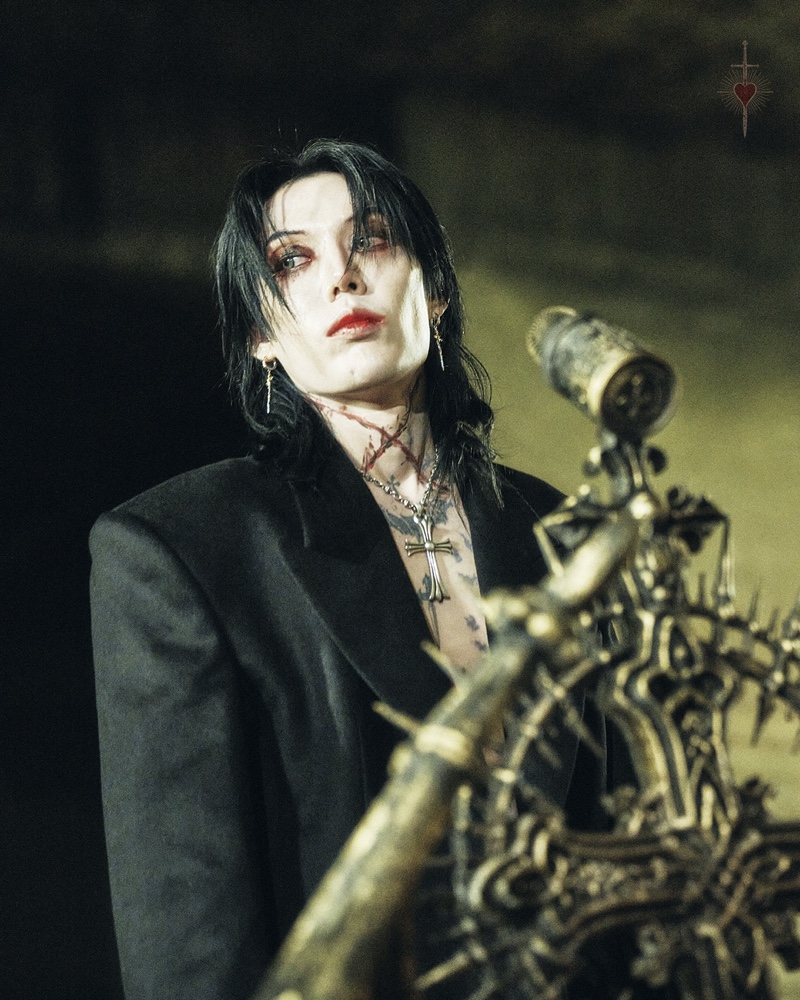
VOA: The title “WHO KILLED EL?” is a powerful statement in itself. Having listened to the album, I don’t see it simply as a story about losing your voice, but also about anger, identity, survival and the difficult process of accepting a life you never expected to have. You’ve created something beautifully personal out of an experience that could easily have ended your relationship with music altogether. Now that you’ve shared this part of yourself with the world, has your understanding of who EL CAPITXN is changed? And perhaps more importantly, have you found any peace with what happened to Jang Yi Jeong?
EL CAPITXN: When a tragedy concludes, people usually hope the protagonist has found a sense of peace; probably because that is what gives a story a neat, satisfying resolution. My life is far from over, and I am not someone who lives to orchestrate a picturesque ending.
If you ask whether I have fully made peace with what happened to Jang Yi-jeong, honestly, I am still not sure. Some things happen for a reason, and other things happen for no reason at all. Human beings are not particularly good at enduring meaningless misfortune, so they resent God, blame others, and ultimately end up hating themselves. I lived through that exact cycle and I do not want to claim that this album healed every wound or that I have reached complete closure with my past. That simply would not be true; however, one thing is clear to me: I spent far too long dwelling on everything that was taken away. Now, I want to look towards what I can build next; I still do not have a definitive answer to the question, WHO KILLED EL? Perhaps what matters more than identifying the killer is seeing who managed to survive in the aftermath. And I am still alive; though I cannot say for certain which one of us that is.
Written and interviewed by Maggie Gogler
Featured image © Elia Gabassi
View of the Arts is an online publication dedicated to film, music, and the arts, with a strong focus on the Asian entertainment industry. As we continue to grow, we aim to deepen our coverage of Asian music while remaining committed to exploring and celebrating creativity across the global arts landscape.


Ele transformou a própria historia em uma obra incrível. É difícil e doloroso, mas também é belo. Who Killed EL? É muito humano.
Esta é, de longe, a melhor entrevista que já pude ler. Estou tão emocionada com as entranhas virada do avesso, tão absurdamente honesta e transformadora de Jan Yi-Jeong. Ele merece todo respeito e reconhecimento. Amo você Jan Yi-Jeong.
Esta é, de longe, a melhor entrevista que já pude ler. Estou tão emocionada com as entranhas virada do avesso, tão absurdamente honesta e transformadora de Jan Yi-Jeong. Ele merece todo respeito e reconhecimento. Amo você Jan Yi-Jeong.