
By all accounts, Park Junhee, a.k.a JUNHEE, has spent his life preparing to be an artist, and he has the seven years of trainee life, a handful of almost-debuts, and a historical BL drama to prove it. But ask him why he chose this path, and you don’t get a polished, media-trained monologue. You get something more human, more meandering, and, true to JUNHEE, slightly self-deprecating.
“Truthfully, at the time, I’m certain I had a strong sense of determination and great aspirations for myself,” he begins, then pauses, already amused at his own memory. “But now, I can’t quite recall the specifics,” he says with a laugh, the kind that sounds like he’s gently patting his younger self on the back while also shaking his head. “I think I simply wanted to be someone well-known, a star big enough to appear on television. I chose the path I felt most confident in, thinking that I could earn a living by doing something I loved. It seemed admirable, and I believed that becoming that kind of person would bring me happiness.”
It’s a striking admission, not because it’s cynical, but because it’s so clear-eyed. There’s no dramatic origin story here, no teary moment in childhood when music “called” to him like a guardian angel. Instead, there was instinct. A sense that if he moved towards a spotlight, any spotlight, he might find something worth holding onto. “Looking back now,” he continues, “I realise that perhaps there wasn’t a clear or genuine desire rooted in those ambitions. That’s not to say those thoughts were wrong or misguided in any way, absolutely not. But in the end, I think the decision to become an idol was what ultimately led me to become the person I am today.”
I’m still not quite sure what the definition of success is… These days, I feel that finding personal happiness is far more important than chasing success. And in that sense, I’m happy right now.

JUNHEE leans into the idea that maybe it was fate, something inexplicable, a quiet gravitational pull towards music, cameras, crowds. “In a way, it feels as though I was following a path set by fate, almost as if I was being guided by it.” He lets out another laugh, this time at the whimsy of the idea. Then, with a slight shift in tone, he adds something more tender, more telling: “These days, my main sources of motivation are, I would say, my fans, and perhaps my tendency towards daydreaming or my vivid imagination.”
It’s the kind of thing you’d expect from an artist, but when JUNHEE says it, it doesn’t sound performative. It sounds like someone who genuinely loses himself in thought, probably while brushing his teeth or walking home at night. “I often find myself coming up with all sorts of ideas, some entertaining, some quite eccentric,” he says. “These moments of imagination often serve as a major source of creative inspiration for me. I frequently find myself thinking, ‘Wouldn’t this be something fans would enjoy?’ or ‘This could be something new and fun that people haven’t seen before.’ And when I say ‘fun,’ it also carries with it a sense of personal fulfillment and joy.”
In other words, JUNHEE might have entered the industry to become a star, but he stayed because of the strange, wonderful things that bloomed in his head and the people who believed in them. It’s that combination, unfiltered honesty and quiet artistic fire, that makes him so fascinating, even now.
Now that I’m in my thirties, I can no longer say I’m simply young. Before my body grows older and starts to feel the strain, I decided to pursue what I truly want to do, regardless of the outcome. That way, I won’t have any regrets later in life.

But how did it all start?
In 2017, JUNHEE debuted with A.C.E, a five-member group whose name stands for “Adventure Calling Emotions.” Their debut song, CACTUS, was a great gut punch, intense, industrial EDM at a time when most K-pop rookies were going the bubblegum route. “To be honest, I remember having a lot on my mind during that time,” he says. “I was young, and hard EDM music was quite unfamiliar to me… and I often wondered, ‘Will this resonate with people?’ Doubts such as this would constantly linger inside my head.” However, the lyrics of our debut track were written around the real stories of us A.C.E members, and with that, we felt a strong sense of ownership: ‘Only we can pull off this song.’ That gave us the courage to move forward with it. In the end, I have no regrets. We poured everything we had into it, wholeheartedly.”
But even before his debut, JUNHEE was quietly building his name through covers and dance content posted on A.C.E’s YouTube channel and the 1MILLION studio. “No pain, no gain,” he says, summing up those years of practice room sweat. “The process of creating content or artistic work requires a tremendous amount of effort; it’s genuinely difficult and demanding. But when we pushed through those tough times… we were rewarded in ways that matched the effort.”
That reward came in the form of devoted fans, viral performances, and eventually, acting gigs. A cameo in Twenty-Twenty led to Sometoon 2021, and then, in 2021, a lead role in Tinted With You, a quiet, luminous drama that allowed him to stretch beyond idol expressions into full-on emotional resonance. “Sometimes, I get goosebumps, realising, ‘Oh, so I’m someone who is capable of expressing this, too,’” he says, eyes wide with something between awe and disbelief.
But behind the scenes, the pressure was building. In 2024, after years under BEAT Interactive, JUNHEE and his fellow A.C.E members faced a crossroads. Contract renewal talks fell through. Burnout hit. And as a leader, JUNHEE was the one who had to steer the ship through the storm. “Making that decision was incredibly hard and emotionally draining. There were different options on the table, but at that point, all of us were feeling mentally and emotionally exhausted. We felt that we needed time to reflect, reset, and take care of ourselves individually,” he recalls. “Even though I was dealing with extreme stress and a deep sense of burnout. And more than anything, I was concerned about how we would break the news to our fans. I remember losing sleep for days, even having nightmares.”
These days, my main sources of motivation are, I would say, my fans, and perhaps my tendency towards daydreaming or my vivid imagination.

It was during this liminal phase, fresh out of contract, deep in reflection, that JUNHEE did something quietly revolutionary: he reclaimed his name. No longer “Jun” of A.C.E, he became Park Junhee again. “Now that I’m in my thirties, I can no longer say I’m simply young,” he says. “Before my body grows older and starts to feel the strain, I decided to pursue what I truly want to do, regardless of the outcome. That way, I won’t have any regrets later in life.”
That includes solo music, and Your Idol, his haunting, powerful cover of the track from Netflix’s K-pop Demon Hunters, was the first sign that he was ready to fly. “Truthfully, when I first heard the song through my fans, I thought, ‘Oh? I think I could sing this well,’” he says with a grin. Then he discovered the original singer was Andrew Choi, one of his favorite composers. “I thought, ‘Well, I should give this a proper try.’” The result? A performance drenched in charisma and eerily pristine vocals that felt like a mirror and a challenge to the K-pop system itself.
But don’t call it a rebellion. JUNHEE isn’t interested in burning bridges; he’s building new ones. “I now feel more empowered to present a bolder and more authentic side of myself,” he says. “When I was signed with a company, there were numerous limitations… but from the initial stage of sharing ideas to executing projects, I now enjoy a much greater degree of freedom.”
I hope to be someone people want to keep seeing. Someone who comes to mind often and brings joy when they do.
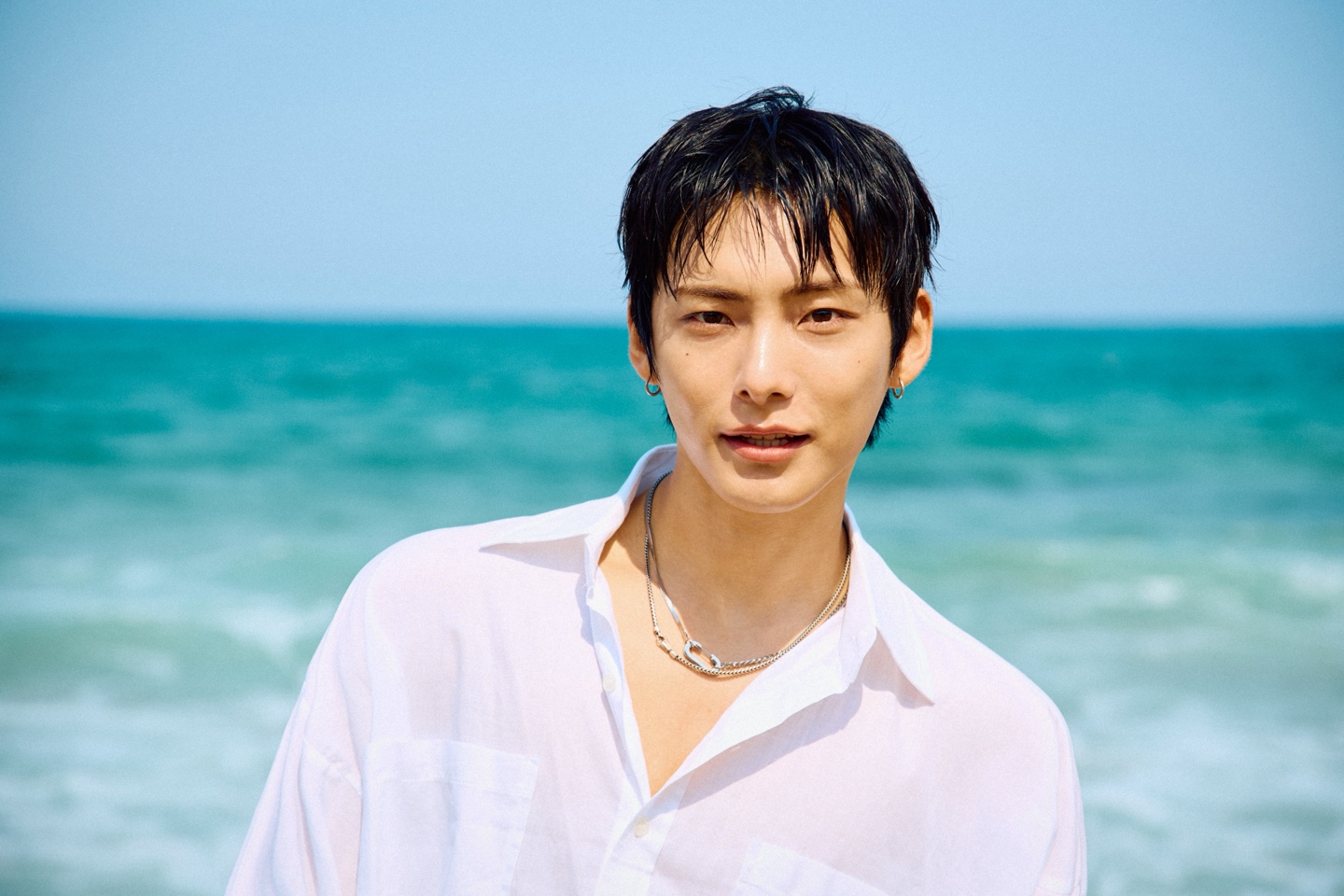
That freedom extends to his current solo album-in-the-making, though he teases that A.C.E might return too. “Please look forward to both,” he says. “We will find a way to come back to you with a new A.C.E album.”
And that’s music to the ears of European fans who saw A.C.E on tour last year, including in London. “From the cities, the fans, the food, the culture, everything was incredible,” he beams. “Trying Schweinshaxen in Germany, sipping port wine in Lisbon, thinking we were in heaven driving through Switzerland… How could we not fall in love?”
Of course, even as he prepares new music, JUNHEE is also quietly contemplating something deeper: What does it mean to succeed? “Is it about making a lot of money? Becoming famous?” he muses. “I’m still not quite sure what the definition of success is… These days, I feel that finding personal happiness is far more important than chasing success. And in that sense, I’m happy right now.”
So what’s left for a man who’s already overcome seven years of training, multiple almost-debuts, a contract split, and a pandemic?
More. But on his terms.
From acting to songwriting, from EDM cactus boy to one of K-pop’s most emotionally articulate vocalists, JUNHEE has never forced the story; he’s just lived it, line by line, chord by chord. “I hope to be someone people want to keep seeing,” he says. “Someone who comes to mind often and brings joy when they do.”
And honestly? That’s success enough.
Written and interviewed by Maggie Gogler
Featured image © H&P Entertainment
View of the Arts is an online publication dedicated to films, music, and the arts, with a strong focus on the Asian entertainment industry. With rich content already available to our readers, we aim to expand our reach and grow alongside our audience by delving deeper into emerging platforms such as K-pop and Asian music more broadly. At the same time, we remain committed to exploring the vibrant and ever-evolving global landscape of film, music, and the arts, celebrating the immense talent and creativity that define these industries worldwide.

 VIEW OF THE ARTS
This is so lovely, Junhee is really the best
Hi, did you mean 2024 was the year that renewal fell through?
Yes, 2024 🤪 thanks!
This was great! Thank you for giving us a little more insight into Junhee.