
Yeon Woo-jin is one of South Korea’s most versatile and compelling actors. Rising from a background in modeling to presence on screen, Yeon’s early recognition came with his role in Arang and the Magistrate (2012), which earned him a Best New Actor nomination. Since then, he has consistently demonstrated an ability to inhabit a wide range of characters, from romantic leads in Marriage, Not Dating (2014) and Divorce Lawyer in Love (2015), to complex historical and legal figures in Queen for Seven Days (2017) and Judge vs. Judge (2017).
Throughout his career, Yeon has tackled projects that demand subtlety and depth. His collaborations with director Kim Jong-kwan on films like The Table and Shades of the Heart have shown that he can take on nuanced storytelling. In his latest project, Frosted Window, Yeon fully dives into personal exploration, letting the streets of Seoul’s Seochon neighborhood shape a performance that is interesting and moving. The film had its world premiere in London at the 20th Korean Film Festival at the British Film Institute, signifying another step in Yeon’s growing international recognition.
And finally, after all those years watching the actor on TV and the big screen, we caught up with Yeon at the London Korean Film Festival and spoke with him about his ongoing collaboration with director Kim Jong-kwan and his role in Frosted Window.
I’m always delighted and grateful when a project I’ve worked on reaches a wider audience. I’m especially curious to see how viewers from different cultures will receive our story. I also felt that Director Kim’s mood and cinematic style would harmonize beautifully with the vibe of London.
View of the Arts: Congratulations on your new film, Frosted Window. It’s a beautifully subtle and reflective story. What drew you to this project when you first read the script, and what aspect of the narrative resonated most with you?
Yeon Woo-jin: Director Kim structured the film as an omnibus, so I didn’t get to see the stories I wasn’t part of. I only read Breather, the chapter I was offered, and even the title was enough to captivate me. The phrase Breather seemed to capture the director’s thoughts and questions throughout his creative journey. I joined the project hoping that participating would allow me a glimpse into the ideas and reflections he was exploring.
VOA: You’ve collaborated with director Kim Jong-kwan before on The Table (더 테이블) and Shades of the Heart (아무도 없는 곳). How would you describe your creative relationship with him? Has your dynamic evolved since your previous collaborations?
YWJ: The shared experiences we’ve built over time are our greatest asset. We can talk comfortably about our working styles and the stories we want to tell, and it all feels natural. It’s likely because we share similar emotional wavelengths. Over time, as Director Kim’s stories have resonated with me more deeply, I feel that our creative partnership has grown stronger and more solid.
VOA: Frosted Window has been described as a “Rohmer-esque love letter to Seochon.” How did the city’s atmosphere and quiet rhythm influence your performance and emotional approach to the role?
YWJ: Seochon is a wonderful place to get lost in thought. It’s quintessentially Korean and full of sights, yet as you walk through the area, its atmosphere envelops you, bringing a sense of calm and quiet. I believe it’s a place where you can take a ‘breather’ for both your mind and thoughts. This mood helped me focus and fully immerse myself in the shoot, and I often wandered the area to gather my thoughts.
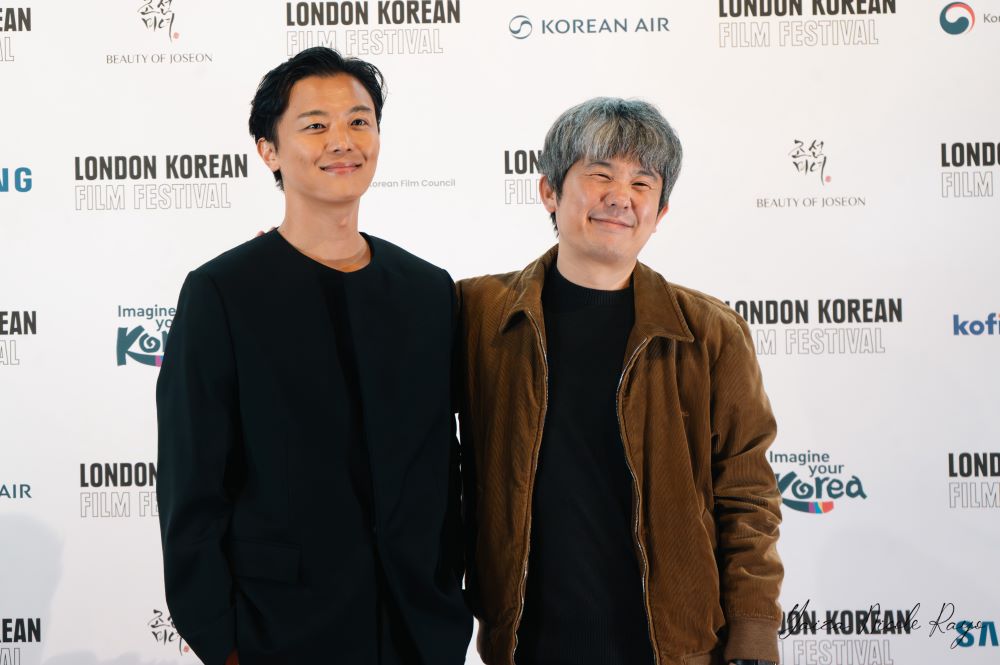
VOA: The film had its world premiere at the 20th London Korean Film Festival, screening at the British Film Institute. How did it feel to have your work presented in such a prestigious international setting?
YWJ: I’m always delighted and grateful when a project I’ve worked on reaches a wider audience. I’m especially curious to see how viewers from different cultures will receive our story. I also felt that Director Kim’s mood and cinematic style would harmonize beautifully with the vibe of London.
VOA: You’ve taken on an impressive range of characters throughout your career. What guides your decision when choosing new roles?
YWJ: I don’t have a set criterion for choosing roles. For me, acting is ultimately about understanding. My thoughts and philosophy evolve gradually over time, so I focus on what I feel and comprehend in the present moment. The characters I’ve played throughout my career are the result of my commitment to living fully in each moment.
VOA: Having worked in both television and film, what do you find most distinct about performing for the big screen versus a long-form drama series?
YWJ: Production moves very quickly these days, so I don’t see a huge difference between film and TV. However, I make sure not to miss anything on set, even when everything is happening so fast and frantically. I stay prepared and put in the effort to keep up and handle situations smoothly.
I feel proud as an actor who introduces culture and art to many people. I will keep acting, but even if I take a step away from my acting career, I want to continue to stay in the vicinity and keep introducing great art and culture.
VOA: Many of your recent roles explore quiet emotional tension and inner transformation. Do you find yourself drawn to more restrained, reflective characters as your career evolves?
YWJ: After playing a role that focuses on a character’s internal thoughts and emotions, I feel as if I’ve read a well-written novel. It touches something deep inside me, bringing a sense of healing, comfort, and courage. At this point in my life, with many concerns and questions, I find myself seeking solace and reassurance through my work.
VOA: Over the years, you’ve built a reputation for bringing authenticity and depth to your performances. How do you prepare for a role internally – is there a specific method or mindset that helps you connect with your characters?
YWJ: Thank you. I try to cherish my time outside of work as much as possible. I’m good at separating acting from my daily life, and the gratitude I carry inspires my motivation and drives me to give my best performance as an actor.
VOA: As an actor, you’ve worked with a variety of directors and experienced many different creative approaches on set. Have you ever thought about stepping behind the camera yourself – perhaps to direct or write in the future?
YWJ: I don’t have any set plans yet, but I often get inspired by interesting stories. I feel proud as an actor who introduces culture and art to many people. I will keep acting, but even if I take a step away from my acting career, I want to continue to stay in the vicinity and keep introducing great art and culture.
Written and interviewed by Maggie Gogler
Featured image © Nicole Rayo for View of the Art
View of the Arts is an online publication dedicated to films, music, and the arts, with a strong focus on the Asian entertainment industry. With rich content already available to our readers, we aim to expand our reach and grow alongside our audience by delving deeper into emerging platforms such as K-pop and Asian music more broadly. At the same time, we remain committed to exploring the vibrant and ever-evolving global landscape of film, music, and the arts, celebrating the immense talent and creativity that define these industries worldwide.

 VIEW OF THE ARTS