
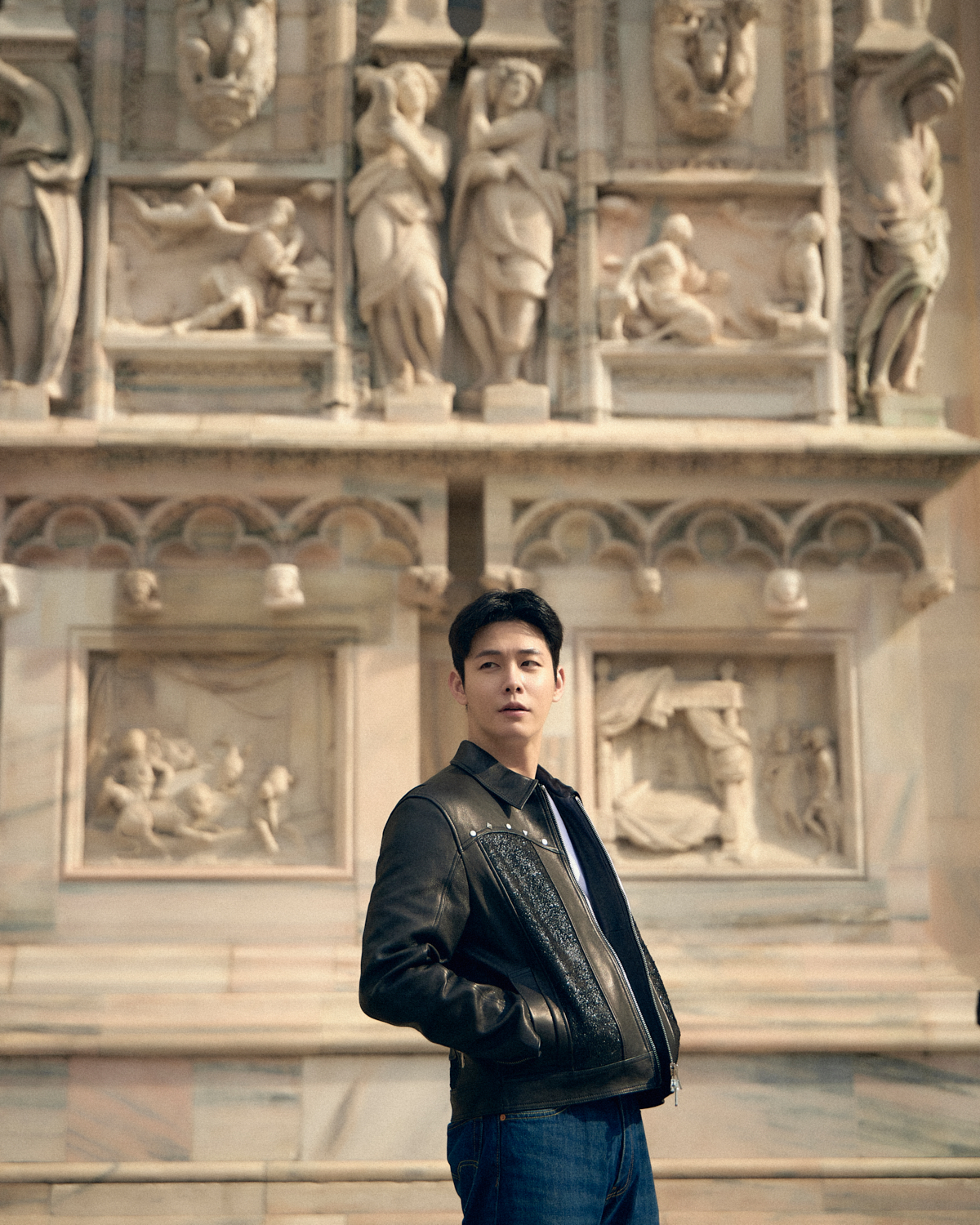
“I don’t define success as money or fame. Success, for me, is freedom – the freedom to express my world exactly the way I see it.” This is what Jang Theo says when asked about the success and it clarifies the logic behind every decision that has guided his career so far.
What impressed me about this young man is how he speaks about work the way a producer or director might, attentive to process and control. For him, acting is not a tool for attention but a means of understanding how stories are constructed.
Many viewers first encountered him through Single’s Inferno season four, Netflix’s reality programme, where he stood out for his calm personality and a great sense of humour. The show quickly expanded his visibility, but it did not lay the foundation for his career. By the time audiences recognised his name, he had already spent years moving between modeling, commercials, and television dramas, learning the grammar of film sets from the inside.
I was aiming for directing and producing, and that’s still the goal. I got into acting because I thought it was the fastest way to really understand what directors and producers need from an actor.
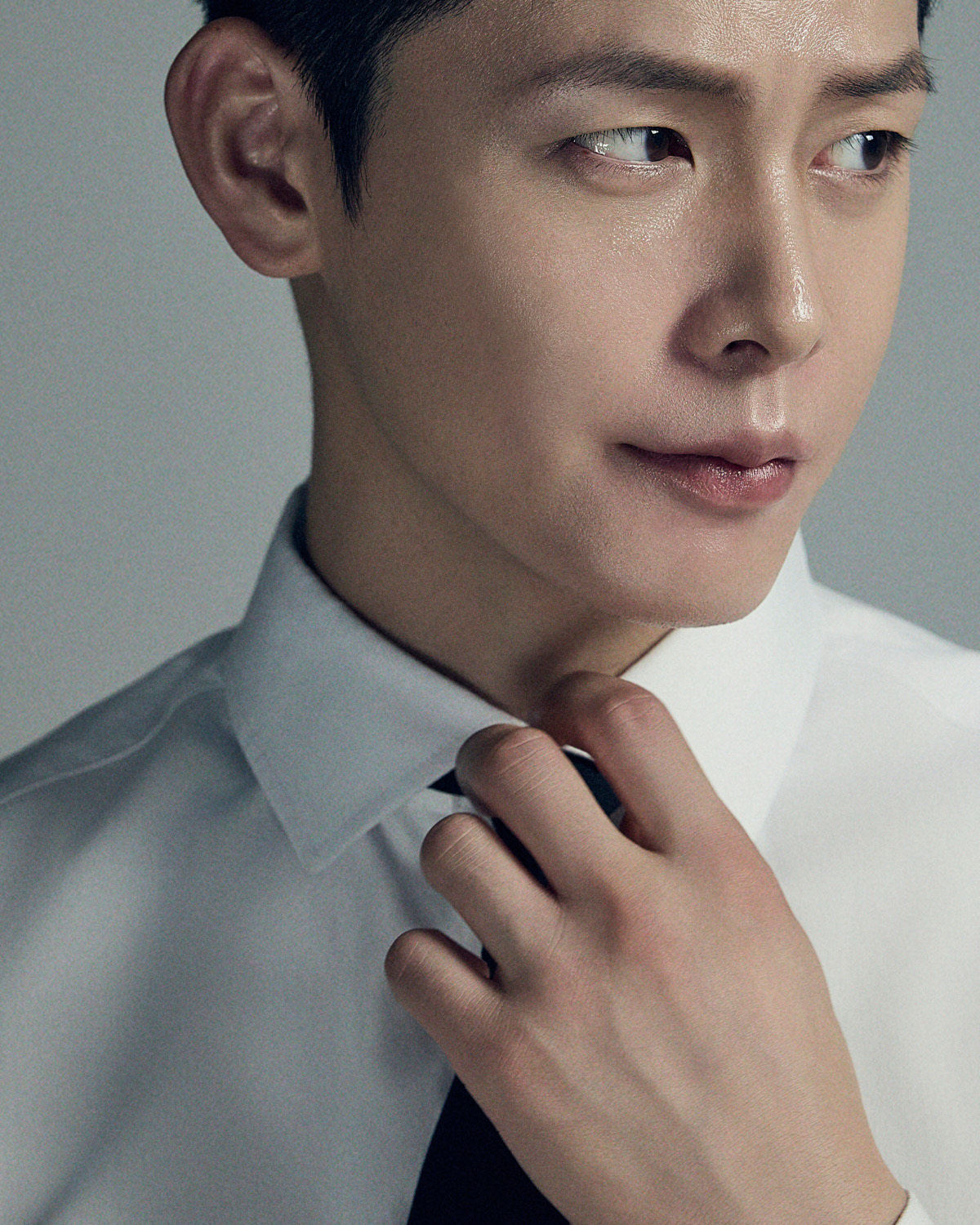
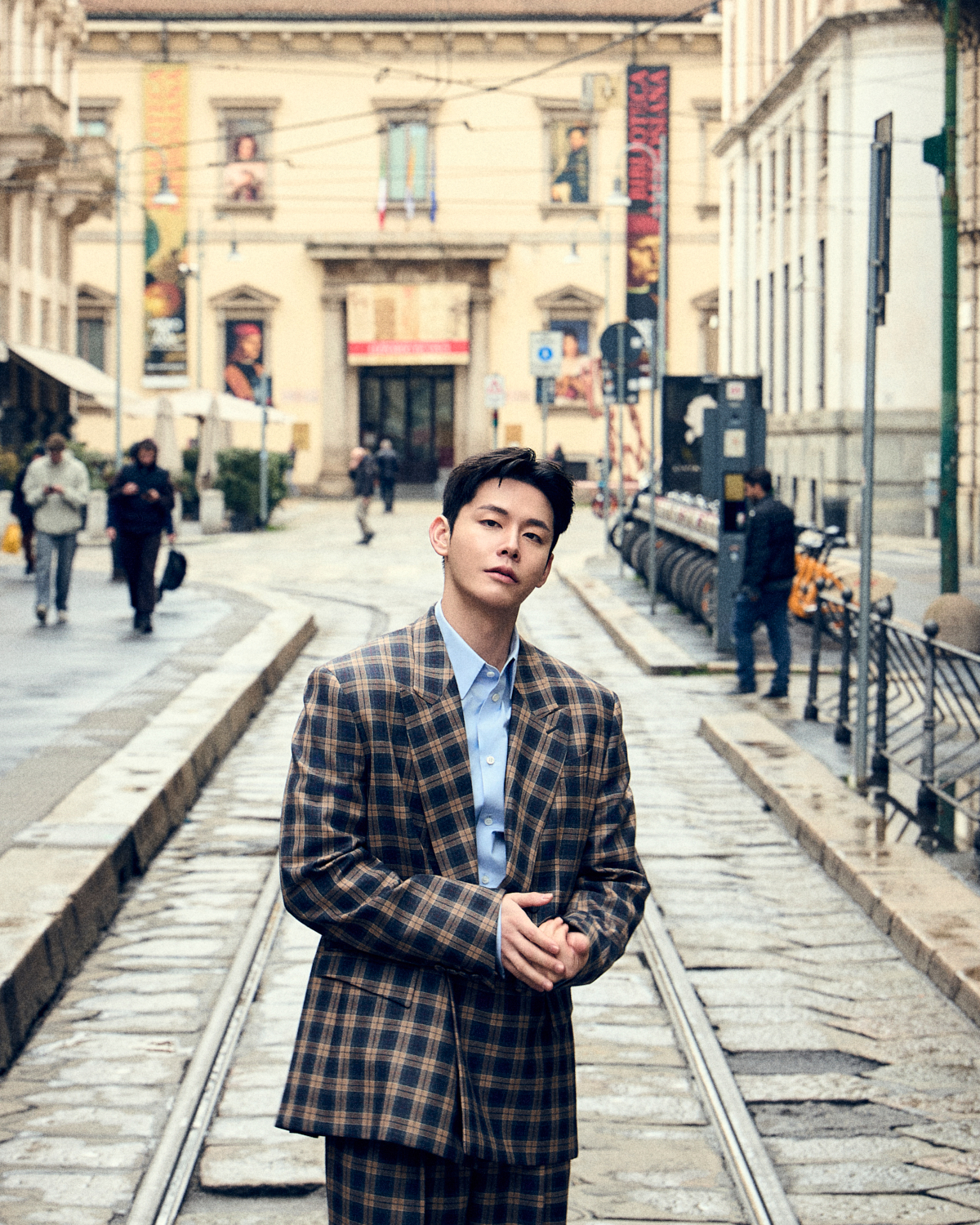
His early credits include series such as A Man in a Veil and The King of Tears, Lee Bang Won, followed by the 2024 Malaysian crime thriller Oppa and the 2025 Korean-Filipino romantic comedy Finding Santos, which brought him recognition abroad. Taken together, these projects trace a career built gradually rather than through overnight success.
The origin of that path is unexpectedly practical; acting was never Theo’s first plan. “I started studying film while I was in the military,” he explains, continuing, “I was aiming for directing and producing, and that’s still the goal. I got into acting because I thought it was the fastest way to really understand what directors and producers need from an actor.” Reflecting on a performance that began as research, he admits, “I ended up getting hooked. I’m naturally pretty logical, and acting pulls you into emotional places that don’t always make sense on paper. That gap is exciting. Learning to live inside that chaos taught me a lot about myself.”
The attraction lies in the contradiction between logic and feeling. He approaches characters analytically, yet he is interested in the points where analysis fails. That balance has attracted the kinds of roles he finds most demanding.
“Romance, especially melodrama, is the hardest genre for me,” he admits. “It’s not just about hitting marks. You need real trust with your scene partner. I don’t open up instantly, so building that connection fast was tough.” He envisions himself in worlds defined by structure and profession. “I want characters with strong identities and clear roles – detectives, prosecutors, lawyers, doctors. People with sharp goals and a real edge.”
Music is my inspiration and my sanctuary. I really love playing the piano. I didn’t major in it because I knew I wasn’t naturally talented enough, but I’ve always admired jazz pianists. Jazz is unpredictable – it’s improvisation and rhythm – and that matches how I like to act.
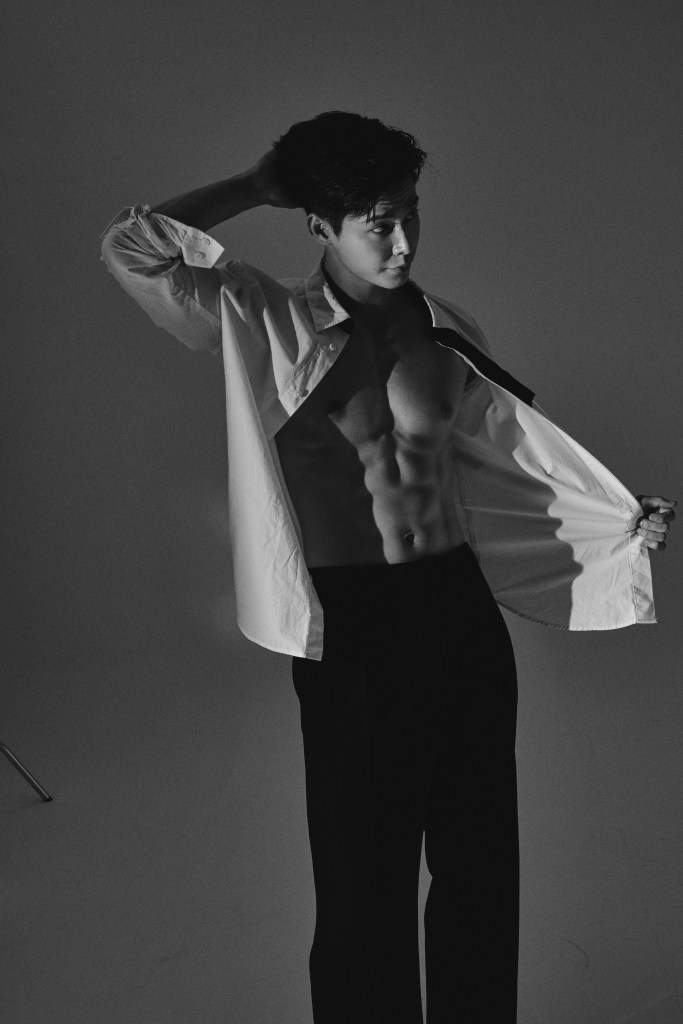
These are roles described by purpose, with an appeal based in structure, and Theo clearly prefers characters formed by systems rather than by emotion. His time training abroad strengthened this approach, as he immersed himself in New York programs that demanded speed and adaptability in English-language performance.
“I honestly think English and Korean sit at opposite ends of the spectrum. The mindset behind them is different, the way you express emotion is different, and even the musicality, the rhythm, and the cadence feel completely flipped. The more I trained in English, the more rhythmic and flexible I became as an actor,” Theo admits then adds, “In New York, I went through short, intense training. Every week I memorised around twenty to thirty pages of script, and on site we did a lot of cold work. They would hand you random pages and pair you with a random partner, and you had to perform immediately. The room was incredibly diverse. There were Juilliard students, friends who are performing on Broadway right now, and actors of all ages, from college students to grandmothers and grandfathers. Some moments felt more tense and pressure packed than any shoot I have done. But I adapted, and that process became a real asset for me.”
The more you learn about Theo, the clearer it becomes that this experience made acting about reflex and presence, where preparation had to coexist with unpredictability. He recently filmed the Hollywood film The Blowout, shot in Malaysia alongside Philip Zelanick, Jay Tan How Yi, Marie Kawarai, and Trenton Sikes. Reflecting on the experience, Theo says, “I joined because Jay is a close friend and we go way back. He is the reason I got to be part of it, even briefly, and honestly it was such a fun experience.”
He continues, “This project felt meaningful because it brought together a truly international team. Isabella Hoffman came on as an executive producer, and we had LA-based actors as well as cast and crew from Korea, Japan, the US, and Malaysia. Being in that kind of mix, where different cultures and working styles collide in a good way, is one of the most exciting parts of acting for me.”
Theo also expresses a personal connection to Malaysia: “My first real step into film happened there, so coming back for this project felt like returning to a place tied to the start of my career. This was my second time shooting a film there, and I will probably be back again soon. I am expecting to join about two more films there this year.” He adds, “It is an incredibly attractive country. The people are warm, the food is amazing, and the cultural variety is something you do not easily experience in one place. Every time I work there, I leave with more energy than I arrived with.”
I don’t define success as money or fame. Success, for me, is freedom – the freedom to express my world exactly the way I see it.
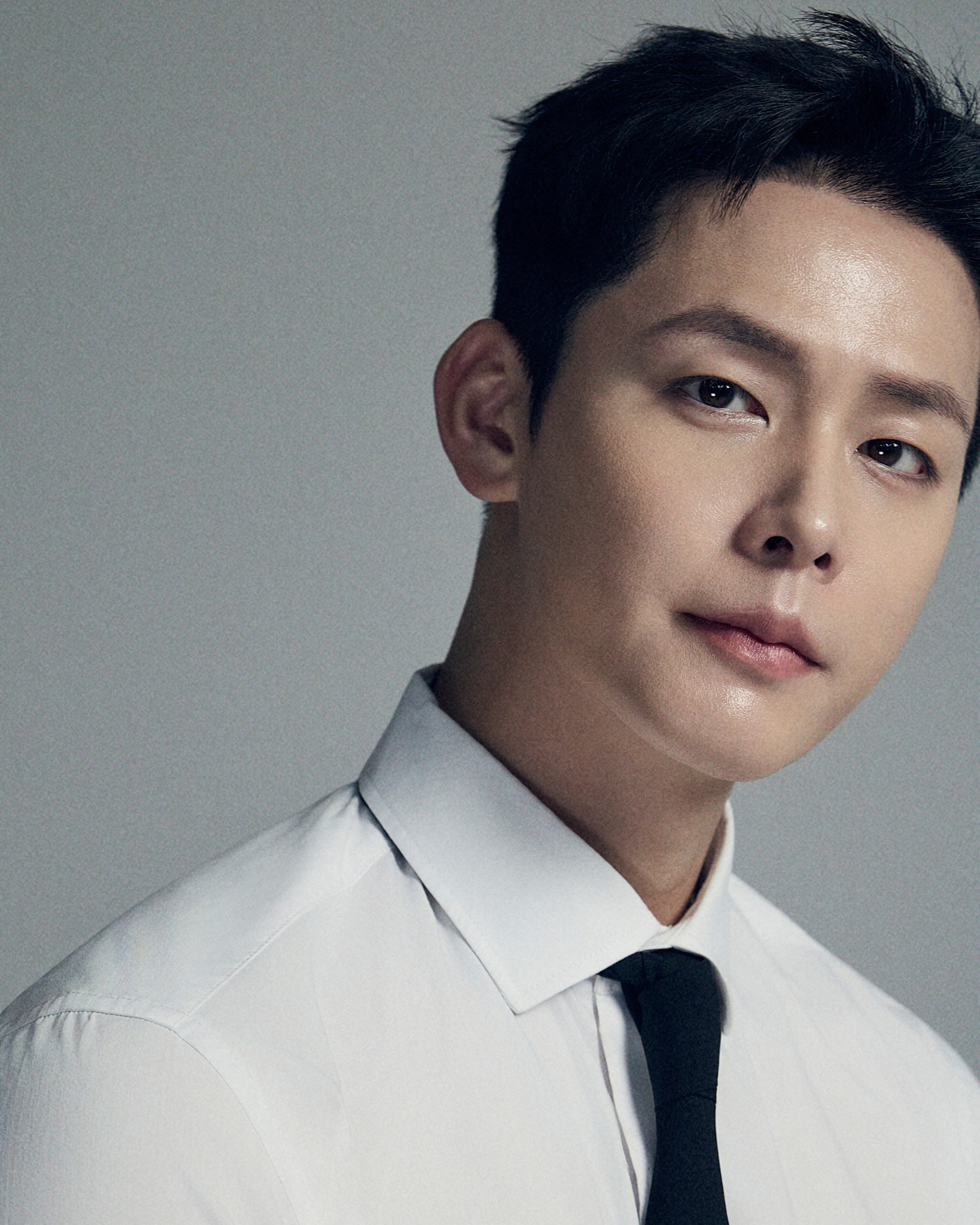
Earlier, Pillow Armor introduced him to another system. “It was an American film I had dreamed about for a long time, so even now it still feels unreal. Pillow Armor was the first time I got to experience the Hollywood system up close,” he explains.
“Every set is different, of course, but what struck me in the US was the baseline culture. It is very encouraging and engaging, and that positive energy genuinely makes actors come alive. From the director to the crew, everyone treated me with real respect and helped me a lot. I left feeling like I owe them something, in the best way. That warmth and gratitude is something I will never forget,” Theo continues. “At the same time, because I wanted to do so well, I actually have more regrets than satisfaction. Not in a negative way, but in a hungry way. It made me realise I want more chances like that, and I want to be better every time. I am going to use that experience as a stepping stone and keep pushing into the US market.”
For Theo, growth comes step by step, with each project preparing him for the next, while living in Hong Kong, Turkey, Malaysia, and New York has infulanced his sense of where he belongs. “Honestly, growing up in Korea, I was seen as a bit different. I was kind of rebellious and quirky. I had ideas that did not always fit the standard box,” he reflects. “Being abroad taught me how to absorb cultures without friction. It also made me care less about what other people thought. As an actor, that helped me look at a character core with less bias. Those years of wandering became the backbone of my acting.”
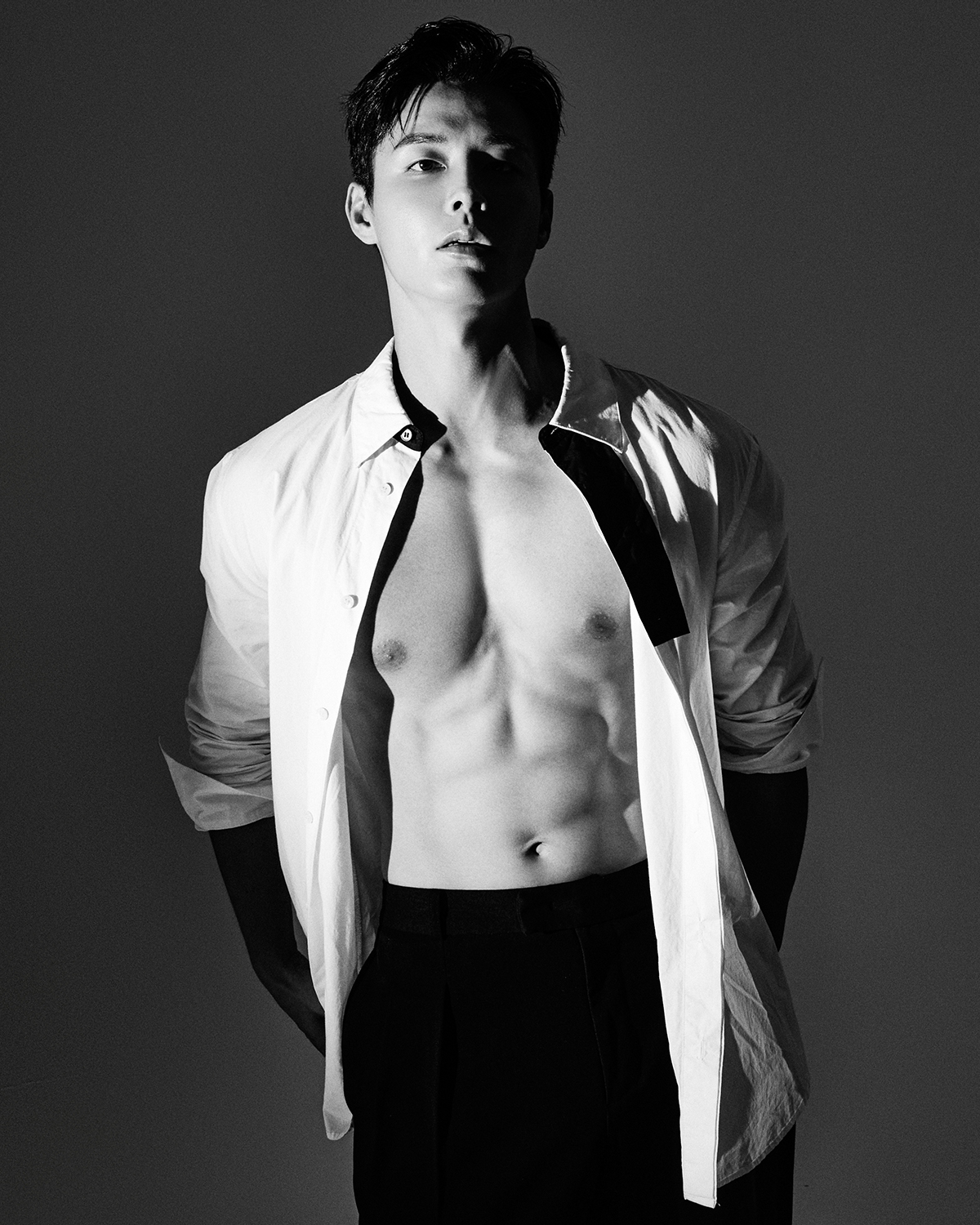
But outside all of that, Theo also has a strong background in modeling and fashion campaigns. Fashion, he explains, plays a direct role in bringing out his confidence and presence, whether on set and in everyday life.
“For me, fashion is like speaking a foreign language. What I wear changes my posture, my walk, even my breathing. I can feel myself becoming a different person. That is true as a model, but it also matters a lot for acting. Wardrobe is like a switch. It helps me step into the character in the most instinctive way.”
What characterises Theo’s public image is its polish without feeling alienated. He presents himself with an awareness that style is a form of communication. Personal branding, he believes, has become an essential tool for actors and models balancing a saturated industry.
“Style and branding matter now. If you water yourself down just to be liked by everyone, you don’t leave a strong impression on anyone. I know I can be polarising, and I don’t try to force a safe image. That edge is part of who I am. Instead of chasing wide, shallow attention, I’d rather build a better connection with the people who actually understand and love my narrative. To me, that’s the strongest branding you can have today.”
And honestly, I couldn’t have agreed more.
Honestly, growing up in Korea, I was seen as a bit different. I was kind of rebellious and quirky. I had ideas that did not always fit the standard box. Being abroad taught me how to absorb cultures without friction.
Music occupies a quieter, more private corner of his creative life. Away from sets and scripts, he returns to the piano, more as refuge. To him playing piano is a way to settle his thoughts and reconnect with intuition.
“Music is my inspiration and my sanctuary. I really love playing the piano. I didn’t major in it because I knew I wasn’t naturally talented enough, but I’ve always admired jazz pianists. Jazz is unpredictable – it’s improvisation and rhythm – and that matches how I like to act. I don’t want to cling to a rigid plan. I want to ride whatever the set throws at me and stay in the moment. That musical sense helps me create tempo in my lines and those small shifts in emotion.”
It is really admirable, nothing is treated as ornamental; each of his interest feeds back into the work.
And when the conversation returns to Single’s Inferno, he remains unsentimental. Theo speaks about the aftermath of the show with an almost disarming pragmatism, gently undercutting the mythology of overnight success.
“People are like, you made it, you must be living a totally different life now. Honestly, not really. My life did not magically change overnight. I did not suddenly become rich. I still think twice before spending money on something stupidly overpriced, like those Dubai style cookies,” Theo admits, then adds, “The only real change is the one that actually matters. I gained people who genuinely care. Fans. That still hits me sometimes. I am like, wait, why do you love me. Thank you so much. Seriously. But my values did not move. Followers, headlines, attention, none of that really changes how I see myself. I am still the same person. I do not get attached to the noise.
If anything, the show was just a wild variable. My trajectory was always the same. I was always pushing myself. I was always building and pushing forward. That part would have happened with or without it.”
It is a pragmatic conclusion, consistent with everything he has said. Exposure feels incidental; the work itself is what endures. Much of his recent projects remain in production, scattered across countries and languages, awaiting release. For now, it is enough to wait for the films and see where that deliberate path leads him.
Written and interviewed by Maggie Gogler
Featured image courtesy of Jang Theo
Our thanks to Jang Theo for taking the time to answer our questions, and to his management team for assisting with the interview.
View of the Arts is an online publication dedicated to film, music, and the arts, with a strong focus on the Asian entertainment industry. As we continue to grow, we aim to deepen our coverage of Asian music while remaining committed to exploring and celebrating creativity across the global arts landscape.


