
Building a career in the Korean music industry is no easy task, especially as musical tastes constantly change and new artists compete for the public’s attention. Staying active and creatively involved for twenty years says a great deal about dedication and talent.
For South Korean singer, songwriter and producer JeA (제아), those two decades have included great success as the leader of Brown Eyed Girls, years of writing and producing music for other performers, solo releases and the experience of mentoring a younger generation of singers. Yet, despite everything she has achieved, she has decided to discover what she can accomplish with complete creative freedom.
Earlier this year, JeA made the decision to become an independent artist, taking greater responsibility for the music she releases and the direction she wishes to pursue. It is an interesting decision for someone who has already established herself as one of the most respected vocalists of her generation, but perhaps independence means something different after twenty years of experience. JeA has reached a point in her career where she can make her own creative decisions, explore different musical ideas and enjoy the freedom of making music that truly reflects her personal tastes and ambitions.
“I wanted to make everything with my own hands, from the moment of choosing a song to the final result,” she tells View of the Arts. “I’m free, and that means the responsibility is all mine too. But that’s why every single song feels more like my own.”
Coming from JeA, those words mean a great deal, especially when you consider how many years she has spent working not only on her own music and with Brown Eyed Girls, but also writing and producing songs for other artists. Now, the decisions she makes, from selecting a song to completing its production, belong to her. Obviously, that freedom brings uncertainty and additional pressure, but JeA seems to welcome the responsibility that follows it. To understand why this moment matters, however, it is worth returning to where her career began.
When Brown Eyed Girls released Abracadabra in 2009, they attracted attention on a completely different scale. The song was a huge success, and its electronic sound, daring music video and famous hip-swaying dance quickly became part of K-pop history. At a time when many female idol groups were expected to maintain a specific image, Brown Eyed Girls were happy to do things differently. They were confident, mature and brave enough to push boundaries, something that appealed to audiences who wanted to see more variety in Korean pop music. They continued in a similar direction with later releases such as Sixth Sense, a vocally demanding song that showed us just how talented the four women were as singers.
Being part of Brown Eyed Girls for so many years has undoubtedly meant a great deal to JeA, not only because of the success they enjoyed together, but also because of everything she learned along the way, from developing her confidence as a singer and songwriter to working closely with three women who each had their own musical strengths and personalities. Those experiences remain an important part of her career, and even as she continues to pursue her own music, her years with the girls will always be part of who she is as an artist.
“Brown Eyed Girls is the root of my music,” she says. “What I’m proudest of is that my members and I pulled off songs like Abracadabra that are still loved today, and I want to keep adding the story of JeA as a solo artist on top of that.”

Her solo career is not something she has only recently begun exploring, either, as she has been writing and producing songs for other Korean artists for years. Back in 2013, she released her first solo mini-album, Just JeA, working with musicians including American R&B singer Eric Benét and Korean vocalist Jung Yup, and giving herself the chance to try musical ideas that were different from what she was doing with Brown Eyed Girls.
Over the years, she has also written music for performers including Ailee, LABOUM, April and Weeekly. Such work requires a different kind of understanding from performing one’s own material. A songwriter must consider another artist’s vocal strengths, personality and the emotions they wish to communicate. JeA has spent years working within those creative relationships, helping other singers find the right music for their voices.
When asked whether composing for herself is easier or more difficult than writing for others, JeA speaks about the importance of bringing her different creative roles together.
“The JeA who makes songs is a big part of me too,” she explains. “Of the songs I’ve written for other artists, the one I’m proudest of is Every Moment With You by JAESSBEE. Since going independent, singing and making music have become one thing, so I can show more of myself as a creator.”
JeA has never been exclusively a vocalist who depends on other people to create her music. Composing and producing have long been part of her professional identity, although audiences may not always be familiar with the extent of her work behind the scenes. Independence now lets those different skills come together more directly, giving her the chance to present herself not only as the person singing a song, but also as the musician responsible for its making.
JeA’s first independent single, ROMANCE, released in June, brought a cheerful disco-pop sound, while her latest song, Promises, released on November 18, takes listeners back to the pop music of the early 2000s. Although the two songs sound quite different, they give JeA the chance to enjoy making the kind of music she likes without feeling that every release needs to follow the same style.
“With ROMANCE I learned what I love and how far I can go,” she says. Promises was made standing on that, looking somewhere wider. The sound is different, but both are the music I want to make right now.”
It is encouraging to hear an established artist speak about continuing to learn what she enjoys. Twenty years of experience have not removed JeA’s curiosity, and there is no suggestion that she considers her musical identity complete. Each release lets her experiment, understand her preferences a little better and decide what she would like to explore next.
The emotional centre of Promises is interesting because, although the song can be interpreted as a romantic expression of affection and longing, its meaning for JeA is considerably broader. It speaks about memories, the people who remain important to us and the commitments we make, sometimes without knowing how much effort it will take to honour them.
“I thought of my members, my family and my fans, who have stayed by my side for such a long time,” she explains. “It’s a promise to them, and a promise to myself. While writing it, I thought of an old promise I made to myself. I guess you could also call it a dream. The promise I made to myself at debut, and have kept, is to keep making music for a long time.”
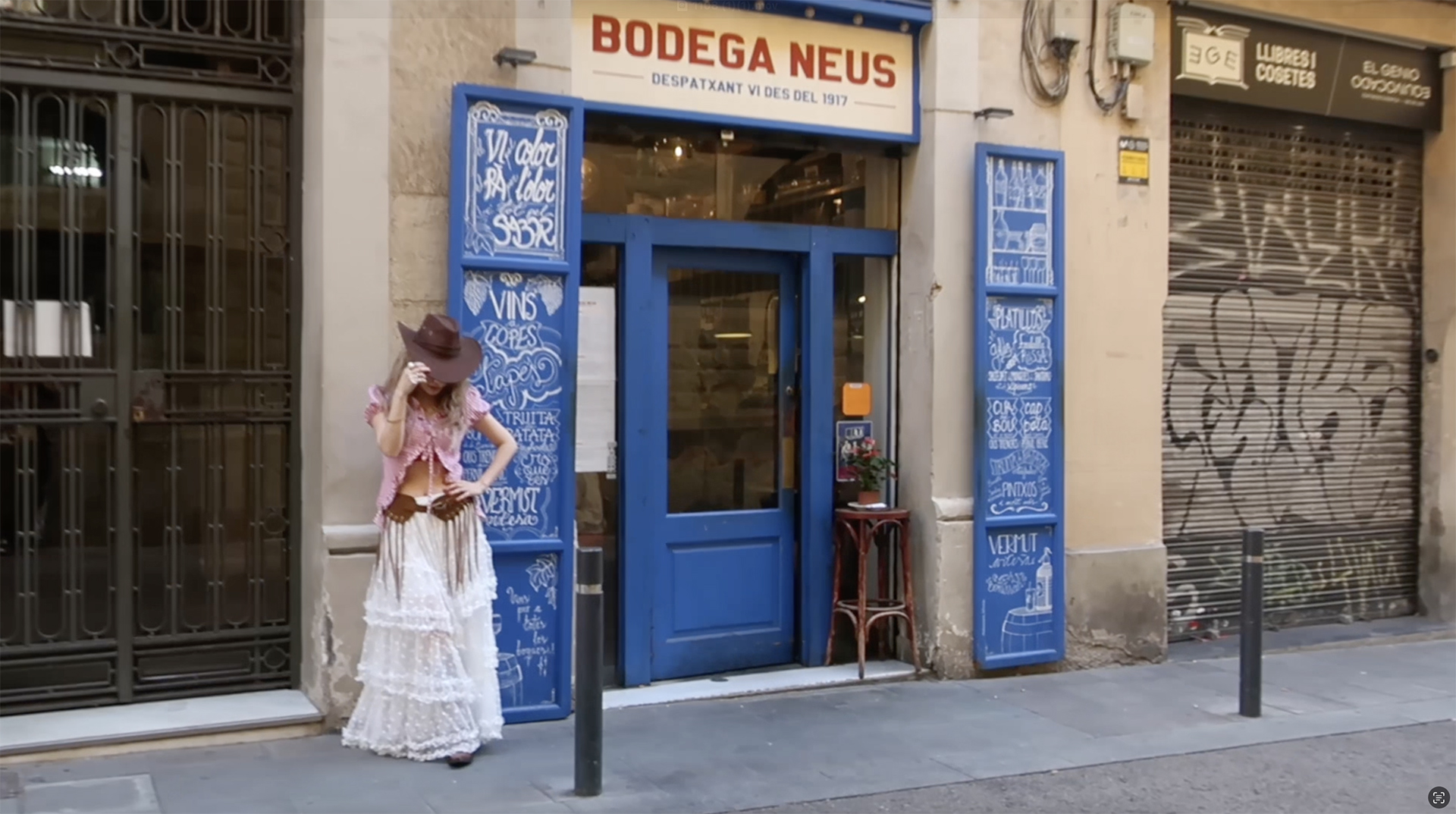
The release also introduces an international element to her music. Alongside the English-language version, Promises, JeA recorded Promesas, which features a Spanish chorus, with each version accompanied by its own music video. Although Korean artists have increasingly explored multilingual releases to communicate with the global audience, JeA’s motivation appears to come from a desire to acknowledge the listeners who have supported her throughout her career.
“I wanted to speak to my Spanish-speaking fans, who have listened to my music for so long, in their own language,” she says. “I also felt this song and Spanish would go together really well. It was a musical challenge too. I wanted to find out whether the emotion of this song would still reach people in Spanish. When I sing in Spanish, it somehow feels more passionate, like the emotion rises.”
Singing in Spanish seems to have brought out a different side of JeA, allowing her to express herself in ways she had not experienced before. For someone who has spent so many years singing, discovering something new about her own voice must be exciting; however, there is also another side to her story worth exploring.
JeA has always been admired for her powerful voice and ability to handle difficult songs, but even after twenty years of singing, keeping her voice in good condition has not always been easy. Earlier this year, she spoke openly about still working to regain her vocal strength.
When asked how her relationship with her voice has changed over the years, JeA offers a brief but meaningful response.
“I’ve recovered a lot. Maybe not 100%, but I’m so grateful just to be able to do what I’m doing now.”
She does not elaborate on the circumstances surrounding her recovery, and it would be inappropriate to make assumptions about experiences she has chosen not to discuss in detail. It is something audiences rarely think about, especially when they are used to hearing a singer perform so well. But voices change over time, and even experienced singers like JeA can go through periods when singing feels harder than it used to, no matter how much care they take of their voice.
Perhaps that is why JeA’s gratitude is so sincere; after so many years of singing, composing and performing, being able to continue making music is something she clearly values.
JeA’s experience has also let her work with younger performers who are only beginning to understand the realities of professional music. In 2016, she appeared as a vocal trainer on Mnet’s Produce 101, helping aspiring singers prepare for an industry that demands quite a lot from young performers.
One might expect an experienced vocalist such as JeA to describe that role primarily in terms of passing on her knowledge, but her memories of the programme are surprisingly modest and affectionate.
“On Produce 101, I learned more than I taught, and I loved getting close to the other mentors,” she says. “The hard part was staying up all night so often.”
Becoming independent may give JeA more freedom to make her own decisions, but that does not mean she wants to do everything alone. Quite the opposite, in fact, her curiosity about different languages and her interest in working with international artists shows that there is still plenty she wants to try. After more than two decades in music, she continues to look for new experiences and ways to grow as a solo artist.
And, of course, there is still Brown Eyed Girls.
In 2026, the group celebrates its twentieth anniversary, an impressive achievement in an industry where few groups remain together with all their original members. JeA, Narsha, Miryo and Ga-in have built a superb career together, earning respect for their music, bold concepts and strength to challenge expectations of female K-pop artists.
For fans who have followed Brown Eyed Girls over the years, the thought of seeing all four members together again is certainly exciting. Narsha has previously spoken about hoping for a reunion to celebrate their twentieth anniversary and JeA’s recent comments suggest that the members have also been talking about how they could celebrate this special occasion. Nothing has been officially confirmed yet, but there is certainly something for fans to look forward to.
“Right now I’m building up my own colour one single at a time,” JeA says when asked about her plans for 2027. “I’m also open to singing in other languages and working with artists overseas. The four of us in Brown Eyed Girls also have our 20th anniversary just around the corner, so we’re thinking about what kind of gift to give you.”
It is a lovely thought to end our conversation on; JeA is looking towards the future without forgetting the women who have shared so much of her musical journey. There is room for both the group and her individual ambitions and perhaps that is one of the advantages of reaching this stage of her career.
What I find lovely about JeA is that, despite everything she has achieved, she still talks about music with such curiosity. She has enjoyed success with Brown Eyed Girls, established herself as a composer and producer, worked with younger artists and built her own solo career. Yet there is still so much she wants to try, from exploring different sounds and languages to working with musicians from around the world.
Her answers may be brief, but they show someone who appreciates the people she has worked with, takes pride in her music and remains grateful for the opportunity to do what she loves.
Promises may be her latest release, but it also brings us back to the young singer who once hoped to spend her life making music. Twenty years later, JeA is still doing exactly that, only now with more experience and the freedom to make her own choices. And perhaps that is what makes her story so special. After two decades in the industry, JeA still has plenty of ideas, ambitions and music to share. And I, for one, look forward to hearing what comes next.
Official music videos: Promises · Promesas
Written and interviewed by Maggie Gogler
Translated by FLUXUS
Featured image courtesy of FLUXUS
View of the Arts is an online publication dedicated to film, music, and the arts, with a strong focus on the Asian entertainment industry. As we continue to grow, we aim to deepen our coverage of Asian music while remaining committed to exploring and celebrating creativity across the global arts landscape.


